
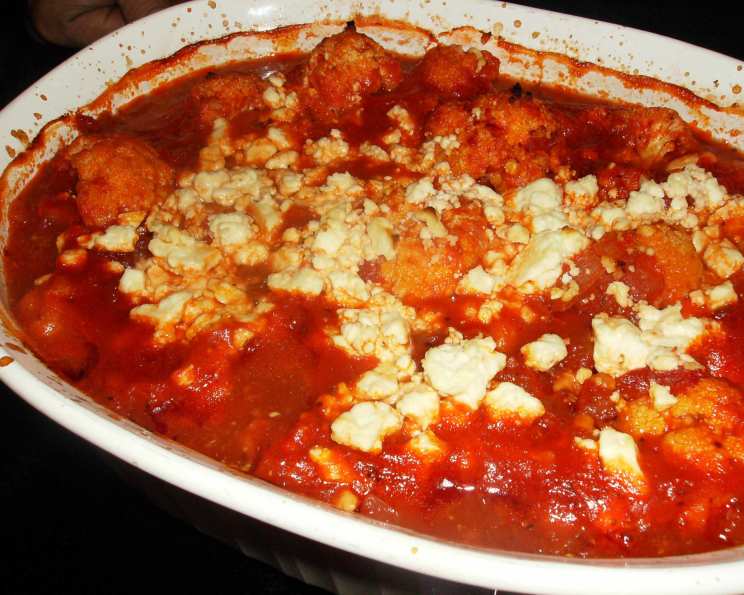
Kounoupithi: A Symphony of Cauliflower, Feta, and Sun-Kissed Tomatoes
There are certain dishes that transport you instantly to a sun-drenched kitchen, the air thick with the scent of herbs and simmering tomatoes. For me, Kounoupithi, or baked cauliflower with feta and tomato sauce, is one of those culinary anchors. I remember the first time I encountered it, not in a bustling taverna, but in a quiet village home in Crete. The aroma that wafted from the oven was intoxicating, a complex blend of sweet tomatoes, pungent feta, and a whisper of something warm and exotic – the cinnamon, a delightful surprise that elevated the humble cauliflower into something truly extraordinary. It was a revelation, a testament to how simple ingredients, treated with respect and a touch of inspired spice, can create magic.
Recipe Overview
- Prep Time: 15 minutes
- Cook Time: 30 minutes
- Total Time: 45 minutes
- Servings: 4-6
- Yield: 1 dish
- Dietary Type: Vegetarian
Ingredients
This dish celebrates the humble cauliflower, transforming it with the vibrant embrace of a flavorful tomato sauce and the salty tang of feta.
- 4 tablespoons olive oil, divided
- 3 cloves garlic, minced
- 1 large yellow onion, chopped
- 30 ounces Italian plum tomatoes, preferably fresh, or 1 (28-ounce) can of high-quality whole peeled tomatoes, crushed by hand
- 1 bay leaf
- 2 teaspoons dried Greek oregano
- 2 inches cinnamon stick
- Salt, to taste
- Freshly ground black pepper, to taste
- 1 large head cauliflower
- 1 tablespoon fresh lemon juice
- 5 ounces feta cheese, crumbled
Equipment Needed
- A large sauté pan or Dutch oven with a lid
- A shallow, ovenproof baking dish
- A grater (for the feta)
- Measuring spoons and cups
- Cutting board and knife
Instructions
Embarking on the creation of Kounoupithi is a journey of layering flavors and textures. Follow these steps to unlock its full potential.
- Preheat your oven to 375 degrees Fahrenheit (190 degrees Celsius). This initial step ensures your oven is at the perfect temperature to begin the baking process.
- In your sauté pan or Dutch oven, gently cook the minced garlic and chopped yellow onion in half of the olive oil (which is 2 tablespoons) over medium heat. Sauté until the onions are soft and translucent, taking care not to brown them. This gentle cooking will release their sweetness and aromatics.
- Add the Italian plum tomatoes (if using fresh, roughly chop them; if using canned, ensure they are crushed by hand for a more rustic texture), the bay leaf, dried Greek oregano, and the cinnamon stick to the pan. Season generously with salt and freshly ground black pepper.
- Cover the pan and simmer the tomato sauce mixture for approximately 5 minutes. This short simmering period allows the flavors to meld and the spices to begin infusing the sauce.
- While the sauce simmers, cut the cauliflower into florets. Aim for bite-sized pieces that will cook evenly.
- Stir the cauliflower florets directly into the simmering tomato sauce mixture. Ensure the cauliflower is well coated with the sauce.
- Cover the pan again and cook for another 10 minutes over medium-low heat. This step begins the tenderizing process for the cauliflower, allowing it to absorb the delicious tomato flavors.
- Transfer the entire cauliflower and tomato mixture from the sauté pan into your shallow, ovenproof dish. Distribute it evenly.
- Drizzle the remaining olive oil (2 tablespoons) over the mixture. Then, evenly drizzle the fresh lemon juice over the top. The lemon juice will add a bright, zesty counterpoint to the rich sauce and feta.
- Grate the feta cheese directly over the top of the cauliflower and tomato mixture, creating a beautiful, cheesy blanket.
- Finish by garnishing with a final grind of fresh black pepper.
- Bake in the preheated oven at 375°F (190°C) for approximately 25 minutes. The cauliflower should be tender when pierced with a fork, and the feta should be softened and lightly golden in spots.
Expert Tips & Tricks
- Tomato Choice: While fresh Italian plum tomatoes are ideal for their sweetness and texture, high-quality canned San Marzano tomatoes, crushed by hand, will yield excellent results. Avoid pre-crushed or diced tomatoes as they can have a less vibrant flavor.
- Cauliflower Uniformity: Try to cut your cauliflower florets into relatively similar sizes. This ensures that they cook at the same rate, preventing some pieces from becoming mushy while others remain firm.
- The Cinnamon Secret: Don’t be tempted to skip the cinnamon stick. It’s the unsung hero here, adding a subtle warmth and aromatic depth that makes this dish truly unique and intriguing without making it taste overtly sweet or “dessert-like.”
- Feta Placement: Grating the feta over the top ensures it melts and slightly browns, creating a delicious crust. If you prefer a more distinctly “cubed” feta texture, you can crumble larger pieces and scatter them over the top.
- Checking for Doneness: A fork should slide easily into the thickest part of a cauliflower floret when it’s perfectly tender. Avoid overcooking, which can lead to a watery texture.
Serving & Storage Suggestions
Kounoupithi is a wonderfully versatile dish. It shines as a vegetarian main course, perhaps accompanied by a simple crusty bread to mop up the delectable sauce. It also makes an exceptional side dish, complementing grilled meats, fish, or even a hearty lentil stew.
To serve, let the dish rest for a few minutes after it comes out of the oven. This allows the flavors to settle and makes it easier to serve. Garnish with a few fresh oregano leaves or a sprinkle of fresh parsley for a burst of color and freshness.
Storage: Leftovers can be stored in an airtight container in the refrigerator for 2-3 days. The flavors often meld and deepen overnight, making it delicious the next day.
Reheating: Reheat gently in a low oven (around 300°F/150°C) or in a covered skillet over low heat to prevent the cauliflower from becoming mushy. You can also reheat portions in the microwave, but be mindful of the cooking time to maintain texture.
Nutritional Information
This information is an estimate and can vary based on specific ingredients and portion sizes.
| Nutrient | Amount per Serving (approx. for 6 servings) | % Daily Value |
|---|---|---|
| Calories | 332.1 kcal | N/A |
| Calories from Fat | N/A | 200 g |
| Total Fat | 22.3 g | 34% |
| Saturated Fat | 7.7 g | 38% |
| Cholesterol | 33.4 mg | 11% |
| Sodium | 494.8 mg | 20% |
| Total Carbohydrate | 26.4 g | 8% |
| Dietary Fiber | 8.8 g | 35% |
| Sugars | 13.9 g | 55% |
| Protein | 12 g | 23% |
Note: The provided nutritional data required some interpretation and reorganization to fit the requested table format. The “% Daily Value” is a general guideline based on a 2,000-calorie diet.
Variations & Substitutions
While this recipe stands beautifully on its own, here are a few ideas to tailor it to your preferences:
- For a Spicier Kick: Add a pinch of red pepper flakes to the tomato sauce along with the oregano.
- Adding Greens: Stir in a handful of fresh spinach or kale during the last few minutes of simmering the cauliflower. The greens will wilt beautifully into the sauce.
- Herb Variations: While Greek oregano is classic, you could also experiment with a pinch of dried thyme or rosemary in the tomato sauce.
- Vegan Adaptation: To make this dish vegan, omit the feta cheese. You can substitute it with a generous sprinkle of nutritional yeast for a cheesy flavor, or use a dairy-free feta alternative if available.
FAQs
Q: Can I use frozen cauliflower for this recipe?
A: Yes, you can use frozen cauliflower florets. Add them directly to the simmering sauce, but you may need to slightly increase the simmering time to ensure they are tender.
Q: My tomatoes are very acidic. How can I balance the flavor?
A: A pinch of sugar or a touch of honey added to the tomato sauce can help to balance out excessive acidity.
Q: How do I prevent the feta from burning?
A: Grating the feta evenly and baking at the recommended temperature of 375°F (190°C) for 25 minutes usually prevents burning. If you notice it browning too quickly, you can loosely tent the dish with foil for the last few minutes of baking.
Q: Can I make the tomato sauce ahead of time?
A: Absolutely. The tomato sauce can be made a day or two in advance and stored in the refrigerator. Simply reheat it before adding the cauliflower.
Q: Is this dish suitable for a make-ahead meal?
A: While best served fresh, the assembled dish can be prepared up to the point of baking and then refrigerated. Add a few extra minutes to the baking time if baking directly from the refrigerator.
Final Thoughts
Kounoupithi is more than just a recipe; it’s an invitation to explore the delicious possibilities of simple ingredients. It’s a dish that speaks of tradition, comfort, and the joy of sharing good food. I encourage you to embrace its subtle complexities, to savor the unexpected warmth of the cinnamon, and to let the flavors transport you. Whether you serve it as a centerpiece for a vegetarian feast or as a comforting side, I’m confident this baked cauliflower will find a cherished place in your culinary repertoire. I’d love to hear about your creations and any delightful twists you discover along the way!