 critical cactus
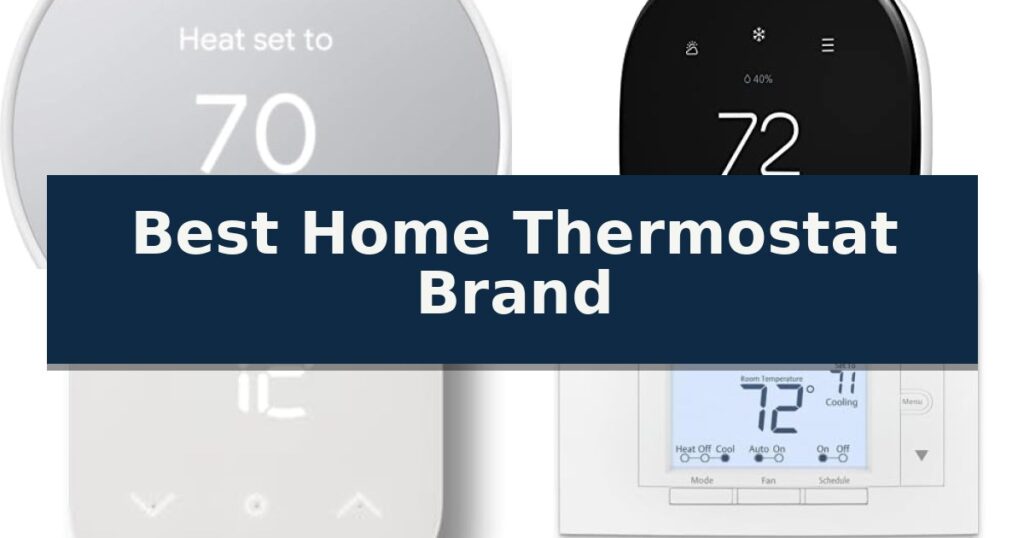
Google Nest Smart Thermostat is our pick for the Best Home Thermostat Brand because it integrates seamlessly into the Google Home ecosystem while offering intuitive energy-saving features for most households. The ecobee Smart Thermostat Enhanced follows as a strong alternative for those prioritizing advanced occupancy sensing, while the Amazon Smart Thermostat provides a budget-friendly solution for users already invested in the Alexa platform.
Selecting the right thermostat requires balancing your home's existing HVAC configuration with your desired level of automation. While some models offer advanced geofencing and remote sensor capabilities, others focus on simple, manual control for users who prefer a traditional interface without the complexity of constant app updates or cloud connectivity.
Compatibility remains the most critical factor for any buyer, as many modern smart thermostats require a C-wire for consistent power. Before settling on a brand, verify your current wiring setup to avoid the additional cost of power extenders or the frustration of an incompatible system that cannot support advanced smart features.
If you are interested in exploring more advanced automation options for your residence, our guide on Best Home Smart Thermostats provides a deeper look at the latest connected technology.
10 Best Home Thermostat Brand in 2026 Honest Reviews
Quick Comparison
| Product | Best For | Key Strength | Score |
|---|---|---|---|
| Google Nest Smart Thermostat | Best Overall | ENERGY STAR certified for efficient energy management. | 4.9 |
| ecobee Smart Thermostat Enhanced | Advanced Occupancy Sensing | Advanced occupancy sensing automatically adjusts temperatures to save energy. | 4.3 |
| Amazon Smart Thermostat | Best Value for Alexa Users | ENERGY STAR certified for energy efficiency. | 4.5 |
| Sensi Smart Thermostat | Easiest DIY Installation | No c-wire required for most installations. | 4.3 |
| Honeywell Home T5 Smart Thermostat | Reliable Geofencing Technology | Geofencing technology automatically adjusts temperatures based on smartphone location. | 4.6 |
| Honeywell Home X2S Smart Thermostat | Matter Certified Connectivity | Matter Certified for broad smart home platform compatibility | 4.9 |
| Honeywell Home X2P Programmable Thermostat | Simple 5-2 Day Scheduling | No C-wire required due to battery-powered operation. | 4.6 |
| Riseem Non-Programmable Thermostat | Budget Friendly Manual Control | Simple manual interface with a clear backlight LCD. | 4.5 |
| Suuwer Non-Programmable Thermostat | High Visibility Blue Backlight | High-visibility blue backlight and large display for easy reading. | 4.8 |
| Honeywell Home RTH111B Digital Thermostat | Precise Digital Temperature Control | Precise temperature control within 0.5 degrees Celsius. | 4.4 |
How We Chose
Evaluating the best home thermostat brand involves assessing how well a device bridges the gap between complex HVAC hardware and daily user comfort. An experienced reviewer examines the physical installation process, software reliability, and the depth of energy-saving features to determine which units provide the most consistent performance across diverse residential heating and cooling systems.
- HVAC System Compatibility
- Installation Complexity and Wiring Requirements
- Smart Home Ecosystem Integration
- Energy Management and Scheduling Features
- User Interface and Remote Accessibility
1 Google Nest Smart Thermostat — Best for Google Home Ecosystem
Maintaining an ideal indoor climate requires a reliable system, and the Google Nest Smart Thermostat offers a streamlined approach to home temperature management. This device focuses on energy efficiency by automatically adjusting settings when it detects you have left the house, helping to reduce unnecessary heating or cooling in empty spaces.
Designed for modern connectivity, this ENERGY STAR certified thermostat utilizes Wi-Fi to allow remote control via the Google Home app on your smartphone or tablet. It integrates seamlessly into existing smart home setups, supporting Google Assistant and Matter-certified voice assistants for hands-free temperature adjustments.
Installation is simplified for many users, as the unit is designed to function without a C wire in most homes. However, users with specific setups—such as heating-only, cooling-only, zone-controlled, or heat pump systems—may require a C wire or a compatible power accessory to ensure proper operation.
Beyond basic scheduling, the system includes HVAC monitoring that tracks your heating and cooling equipment. It provides proactive alerts if it detects potential issues, offering reminders to simplify routine maintenance. Additionally, the Savings Finder feature suggests schedule tweaks to help optimize energy usage, while Nest Renew allows users to prioritize energy consumption during times when electricity is cleaner or less expensive.
Best for: Homeowners integrated into the Google Home ecosystem who want an energy-efficient, app-controlled thermostat with proactive HVAC monitoring.
Skip if: Users with complex HVAC systems like heat pumps or zone-controlled setups who are unwilling to install a C wire or additional power accessories.
- ENERGY STAR certified for efficient energy management.
- Remote control via smartphone or tablet app.
- Proactive HVAC monitoring and maintenance alerts.
- Voice control compatibility with Google Assistant and Matter-certified devices.
- Requires a C wire or power accessory for specific HVAC configurations like heat pumps or zone-controlled systems.
2 ecobee Smart Thermostat Enhanced — Advanced Occupancy Sensing
Maintaining a comfortable indoor environment while managing energy consumption is a primary challenge for homeowners, and the ecobee Smart Thermostat Enhanced addresses this by integrating advanced occupancy sensing technology. This device is designed to automatically adjust temperature settings based on your presence, helping to optimize heating and cooling efficiency without requiring manual intervention.
The ecobee Smart Thermostat Enhanced offers broad compatibility, working with approximately 90% of existing HVAC systems. For installations lacking a C-wire, the package includes a Power Extender Kit (PEK) to facilitate setup. The unit also features a clean, modern aesthetic and includes a Trim Kit to ensure a professional finish on your wall.
Beyond basic scheduling, this thermostat utilizes eco+ technology to analyze your routine, local weather data, and grid activity to further improve efficiency. Users can manage their home climate from anywhere using the dedicated smartphone app or via integration with major smart home platforms including Amazon Alexa, Google Assistant, Apple HomeKit, and SmartThings.
For those looking to refine their home climate further, the system supports the addition of optional SmartSensors to monitor occupancy and temperature in specific rooms. The unit is backed by an industry-leading 3-year manufacturer warranty, providing long-term peace of mind for your home climate investment.
Best for: Homeowners seeking an energy-efficient, smart-connected thermostat that supports remote management and occupancy-based automation.
Skip if: Users with HVAC systems incompatible with the unit's wiring requirements or those who prefer a traditional, non-connected manual thermostat.
- Advanced occupancy sensing automatically adjusts temperatures to save energy.
- Broad compatibility with 90% of HVAC systems.
- Includes a Power Extender Kit (PEK) for easier installation in older homes.
- Comprehensive 3-year manufacturer warranty.
- SmartSensors for room-by-room monitoring must be purchased separately.
3 Amazon Smart Thermostat — Best Value for Alexa Users
The Amazon Smart Thermostat provides a streamlined approach to home climate management by integrating directly with Alexa for voice-activated temperature adjustments. This device is designed to replace traditional units, offering a modern interface that prioritizes energy efficiency and remote accessibility through the Alexa app.
Built with Honeywell Home Thermostat Technology, the unit leverages over 130 years of industry experience to ensure reliable operation. It supports the creation of comfort zones when paired with compatible Echo devices or the Amazon Smart Air Quality Monitor, allowing the system to react to presence detection or specific temperature readings.
Installation is supported by guided instructions within the Alexa app, though users should note that a C-wire is required for power. Once connected, the thermostat can automatically transition between home, away, and sleep modes, helping users manage their energy consumption effectively.
Beyond basic scheduling, the device is ENERGY STAR certified, which aligns with EPA estimates for potential savings on annual energy bills. Amazon also provides information regarding available rebates from local energy providers, adding a financial incentive to the upgrade process.
Best for: Homeowners who already utilize an Alexa-based smart home ecosystem and require a straightforward, energy-efficient climate control upgrade.
Skip if: Users whose existing HVAC wiring does not include a C-wire and who are unable or unwilling to install one.
- ENERGY STAR certified for energy efficiency.
- Seamless Alexa integration for voice and app-based control.
- Reliable performance backed by Honeywell Home Thermostat Technology.
- Supports automated comfort zones with compatible smart home devices.
- Requires a C-wire for installation.
4 Sensi Smart Thermostat — Easiest DIY Installation
Managing home climate control requires a reliable interface that balances modern connectivity with straightforward operation. The Sensi Smart Thermostat distinguishes itself by maintaining a traditional aesthetic that fits the same wall footprint as older units, eliminating the need for patching or painting during installation. Its design prioritizes a familiar button-based interface, which serves as a practical upgrade for those seeking to modernize their home heating and cooling management without abandoning the tactile feel of a standard thermostat.
Designed for accessibility, the Sensi Smart Thermostat features an easy DIY installation process supported by a built-in level and clear, step-by-step app instructions. It is engineered to work with most standard HVAC equipment and notably functions without requiring a common wire (c-wire) in most home applications, which simplifies the upgrade process for older homes. This hardware flexibility ensures that users can integrate smart features without extensive electrical modifications.
Beyond its physical design, this ENERGY STAR-certified device provides tools for efficiency, including flexible scheduling and remote access. Users can monitor their system through smart maintenance features, which deliver usage reports and automated alerts for equipment performance or filter replacements. These tools help homeowners track their system's efficiency over time, potentially contributing to energy savings.
The manufacturer emphasizes user data security, explicitly stating that it will not sell personal information to third parties. By combining these digital capabilities with a familiar, non-touchscreen interface, the Sensi Smart Thermostat offers a balanced solution for users who prioritize privacy and ease of use over high-profile display aesthetics.
Best for: Homeowners who want smart, remote-accessible climate control without the need for extensive wall repairs or complex wiring modifications.
Skip if: Users who prefer a touchscreen interface or a high-profile, modern aesthetic that deviates from the traditional thermostat form factor.
- No c-wire required for most installations.
- Maintains traditional footprint to avoid wall damage.
- Privacy-focused data policy.
- Smart maintenance alerts for filter changes and system efficiency.
- Button-based interface lacks the modern touchscreen aesthetic found in some competitors.
5 Honeywell Home T5 Smart Thermostat — Reliable Geofencing Technology
The Honeywell Home T5 Smart Thermostat provides a flexible approach to climate management by offering both traditional 7-day programming and modern geofencing technology. This device uses your smartphone's location to detect when you are away or returning home, automatically adjusting settings to prioritize comfort while you are present and energy savings when the house is empty.
Designed for efficiency, this ENERGY STAR certified unit helps users track heating and cooling usage through monthly reports. The system is compatible with most heat and cool oil furnace setups, though it requires a C-wire for operation. If your current wiring configuration lacks a C-wire, a power adapter is necessary to ensure proper functionality.
Beyond standard scheduling, the thermostat integrates with utility-led demand response programs. Eligible users can receive rewards for allowing the utility company to make minor adjustments to furnace or AC settings during periods of high energy demand. This feature, combined with the device's adaptive scheduling, aims to lower annual utility costs.
Installation requires verifying your existing system's compatibility to confirm the presence of a C-wire. Once installed, the touchscreen interface provides a straightforward way to manage temperature settings manually or through the automated geofencing mode, making it a functional choice for those looking to integrate smart technology into their home heating and cooling infrastructure.
Best for: Homeowners with a C-wire connection looking for automated geofencing and utility-linked energy savings.
Skip if: Users with heating-only oil furnace systems or those lacking a C-wire who are unwilling to install a power adapter.
- Geofencing technology automatically adjusts temperatures based on smartphone location.
- ENERGY STAR certification supports energy tracking and potential utility rebates.
- Flexible 7-day programming allows for manual or automated scheduling.
- Integration with demand response programs for potential utility rewards.
- C-wire required for operation, which may necessitate an additional power adapter.
- Not compatible with heating-only oil furnace systems without a C-wire.
6 Honeywell Home X2S Smart Thermostat — Matter Certified Connectivity
Managing home climate control requires a system that integrates seamlessly with modern smart home ecosystems, and the Honeywell Home X2S Smart Thermostat offers a robust solution through its Matter Certified connectivity. This certification ensures that the device functions reliably across various smart platforms, allowing for centralized control of your heating and cooling systems without the typical fragmentation found in older smart home setups.
The Honeywell Home X2S Smart Thermostat provides significant flexibility in scheduling, offering 7-day, 5-1-1 day, 5-2 day, or 1-week programming options to match diverse household routines. It also includes an auto-away functionality designed to reduce energy consumption when the home is unoccupied. Users can monitor indoor humidity levels and receive helpful filter change reminders, ensuring that maintenance is addressed proactively rather than reactively.
Compatibility is a key strength of this model, as it supports up to 2 heat/2 cool conventional systems and up to 2 heat/1 cool heat pump systems with electric backup. It is also suitable for hot water heat and forced air systems using gas, oil, or electric power. Please note that this unit requires a C-wire (24 VAC) for power and does not support electric baseboard heat (120-240V).
Installation and daily operation are supported by the First Alert app, which enables remote adjustments over 2.4GHz or 5GHz WiFi networks. With its Energy Star certification and support for demand response programs, this thermostat is engineered to assist in lowering overall energy usage while maintaining a comfortable indoor environment.
Best for: Homeowners seeking a Matter-certified smart thermostat that integrates with multiple smart home platforms and requires flexible scheduling options.
Skip if: Users with electric baseboard heating (120-240V) or those whose homes lack a C-wire connection should choose a different system.
- Matter Certified for broad smart home platform compatibility
- Flexible scheduling options including 7-day and 5-1-1 day modes
- Energy Star certified with demand response capability
- Comprehensive compatibility with most conventional and heat pump systems
- C-wire required for installation
- Incompatible with high-voltage electric baseboard heating
7 Honeywell Home X2P Programmable Thermostat — Simple 5-2 Day Scheduling
Managing home climate control often requires balancing simplicity with consistent performance, and the Honeywell Home X2P Programmable Thermostat addresses this by focusing on straightforward 5-2 day scheduling. This unit is designed for users who prefer a reliable, programmable interface without the complexity of smart-home integration or constant connectivity requirements.
The Honeywell Home X2P Programmable Thermostat features a large, clear backlit display that prioritizes readability, making it easy to adjust settings at a glance. It offers a non-programmable option for those who prefer manual control, alongside the standard 5-2 day scheduling that allows for distinct weekday and weekend temperature profiles. An extended 32°F low-heat setpoint is included, providing additional flexibility for maintaining baseline temperatures.
Installation is streamlined through the use of the Honeywell Home UWP wall plate, which is engineered to simplify both the initial setup and any future device upgrades. The system is battery-powered (2 AA), meaning it does not require a C-wire, which can be a significant advantage in older homes where wiring may be limited. It is compatible with 1 Heat/1 Cool systems, including forced air (gas, oil, or electric) and hot water heat.
While this model is highly functional for standard HVAC configurations, it is important to note that it is not compatible with electric baseboard heat (120-240V). The inclusion of change air filter reminders and customizable display settings adds a layer of maintenance awareness, ensuring the device remains a practical tool for daily home climate management.
Best for: Homeowners seeking a reliable, battery-powered programmable thermostat for standard 1-heat/1-cool forced air or hot water heating systems.
Skip if: Users with electric baseboard heating (120-240V) or those requiring smart-home connectivity and remote mobile app control.
- No C-wire required due to battery-powered operation.
- Easy installation with the included UWP wall plate.
- Flexible scheduling options including 5-2 day or non-programmable modes.
- Clear backlit display for improved visibility.
- Not compatible with high-voltage electric baseboard heat.
- Batteries not included in the package.
8 Riseem Non-Programmable Thermostat — Budget Friendly Manual Control
Maintaining consistent indoor comfort does not require complex digital interfaces or constant software updates. The Riseem Non-Programmable Thermostat offers a straightforward, manual approach to climate control, featuring a clear, easy-to-read backlight LCD display that provides essential temperature data at a glance.
Designed specifically for single-stage heating and cooling systems, this unit simplifies operation with dedicated controls. It supports dual power supply options, functioning via 24VAC power or 2 AA batteries, which provides flexibility for various home setups. The device is engineered to maintain accurate temperature control of +/-1-Degree F, ensuring the environment remains stable within a range of 44°F to 90°F.
Installation is streamlined through the use of large terminal blocks and a universal sub-base, allowing for setup in under 30 minutes for those familiar with basic wiring. The unit includes a separate heating and cooling swing adjustment, which allows users to calibrate the cycle rate to potentially reduce energy usage by shortening or prolonging the temperature open time.
Compatibility is a primary consideration for this model. It is intended for conventional systems such as gas, oil, or electric furnaces, boilers, and gas fireplaces. Users must verify their wiring before purchase, as the base supports a maximum of 2 to 5 wires; it is not compatible with multistage systems, heat pumps, or electric baseboard heat.
Best for: Homeowners seeking a simple, manual, and reliable interface for standard single-stage heating and cooling systems.
Skip if: You require smart home connectivity, multistage system support, or have a heat pump or electric baseboard heating system.
- Simple manual interface with a clear backlight LCD.
- Dual power supply options for installation flexibility.
- Adjustable cycle rate for heating and cooling to manage energy usage.
- Easy installation with large terminal blocks.
- Limited compatibility with complex or multistage HVAC systems.
- Wiring restrictions requiring a maximum of 5 wires.
9 Suuwer Non-Programmable Thermostat — High Visibility Blue Backlight
The Suuwer Non-Programmable Thermostat features a high-visibility blue backlight and a large digital display, specifically designed to provide clear, easy-to-read temperature information for users who prefer a straightforward, non-programmable interface. This unit serves as a reliable replacement for conventional single-stage heating and cooling systems, including gas, oil, and electric furnaces.
Engineered for simplicity, this thermostat supports up to 1 heat and 1 cool configuration. It offers flexible power options, operating via 24VAC power or 2 AAA batteries, and notably does not require a common wire (c-wire) for most installations. The device includes technical features such as a selectable 5-minute compressor delay protection and an adjustable temperature swing range from 0.2°F to 2°F to maintain consistent comfort levels.
Installation requires careful verification of existing wiring, as the unit is compatible only with 2 to 5 wire setups. It is important to note that this model is not intended for multistage systems, heat pumps, line voltage systems, or specialized HVAC configurations like PTACs. Users should verify their existing base and wiring ports against the provided instructions to ensure compatibility before purchase.
For added precision, the thermostat allows for room temperature calibration adjustments of +/- 1-degree F. The temperature display ranges from 41°F to 95°F, with a control range of 44°F to 90°F. The unit is backed by a 2-year warranty, providing long-term support for standard single-stage residential climate control setups.
Best for: Homeowners with simple, single-stage conventional heating and cooling systems who prefer a high-visibility, non-programmable interface.
Skip if: Users with multistage HVAC systems, heat pumps, line voltage baseboard heaters, or those requiring programmable scheduling features.
- High-visibility blue backlight and large display for easy reading.
- No common wire (c-wire) required on most conventional systems.
- Dual power options using 24VAC or 2 AAA batteries.
- Adjustable temperature swing and calibration for precise control.
- Incompatible with multistage systems, heat pumps, and line voltage setups.
- Requires manual verification of wiring compatibility before installation.
10 Honeywell Home RTH111B Digital Thermostat — Precise Digital Temperature Control
Managing indoor climate control requires a reliable interface, and the Honeywell Home RTH111B Digital Non-Programmable Thermostat simplifies this task with a straightforward, user-focused design. This unit prioritizes ease of use through a clear digital display and intuitive soft-touch buttons, allowing for quick temperature adjustments without the complexity of scheduling menus.
Engineered for accuracy, this model provides precise temperature control of +/- 0.5 degree Celsius. This level of sensitivity ensures that your heating or cooling system maintains a consistent environment. Furthermore, the device is designed to be resilient during power interruptions; the set point is retained in memory so that your preferences remain intact once power is restored.
Installation and maintenance are streamlined by the inclusion of an easy-access battery compartment and a built-in change battery reminder. These features ensure that the unit remains operational without requiring frequent troubleshooting. The thermostat is compatible with standard heating, cooling, and heat pump systems, provided they do not require auxiliary heat or multi-stage configurations.
While this thermostat excels in simplicity, it is important to verify system compatibility before installation. It does not support electric baseboard heat (120-240 V), heat pumps with backup, or complex multi-stage HVAC setups. For those seeking a basic, reliable, and responsive manual control interface, this unit offers a practical solution.
Best for: Homeowners seeking a simple, non-programmable digital interface for standard single-stage heating and cooling systems.
Skip if: Users requiring smart connectivity, complex multi-stage scheduling, or compatibility with high-voltage electric baseboard heating systems.
- Precise temperature control within 0.5 degrees Celsius.
- Memory retention of set points during power outages.
- Simple, soft-touch interface for straightforward operation.
- Easy-access battery compartment with a maintenance reminder.
- Not compatible with electric baseboard heat or multi-stage HVAC systems.
- Lacks programmable features for automated temperature scheduling.
Best Home Thermostat Brand Buying Guide
Understanding HVAC Compatibility
Before purchasing any thermostat, you must confirm whether your existing HVAC system is compatible. Most modern smart thermostats require a C-wire, or common wire, to provide continuous power to the device's Wi-Fi and display components.
If your home lacks a C-wire, you may need to look for models that include a power extender kit or specifically support battery-operated configurations. Always check the manufacturer's compatibility tool against your current wiring to prevent installation failures.
Smart Ecosystem Integration
The value of a smart thermostat often depends on how well it communicates with your existing smart home devices. Brands that support Matter, Apple HomeKit, Google Assistant, or Amazon Alexa allow for centralized control and voice-activated temperature adjustments.
Consider whether you want a device that acts as a standalone controller or one that participates in broader home automation routines. Ecosystem-specific thermostats often offer deeper functionality, such as presence detection triggered by other smart sensors in your home.
Energy Efficiency and Scheduling
Programmable and smart thermostats aim to reduce energy consumption by adjusting temperatures when you are away or asleep. Look for features like geofencing, which uses your smartphone's location to automatically switch between home and away modes.
Some models also provide detailed energy reports and maintenance reminders, such as filter change alerts. These insights help you monitor your system's efficiency and identify opportunities to lower your utility bills throughout the year.
Installation and User Experience
Installation difficulty varies significantly between models, with some designed for quick DIY setups and others requiring professional assistance. Units that include built-in levels and clear, step-by-step app instructions significantly reduce the time and effort required to get your system running.
Once installed, the user interface should be intuitive enough for all household members to operate. Whether you prefer a physical touchscreen or app-based control, the device should provide clear feedback on current settings and system status.
Manual vs. Smart Control
While smart thermostats dominate the market, manual or non-programmable thermostats remain a reliable choice for simple, single-stage systems. These units offer straightforward operation without the need for Wi-Fi or complex software configurations.
If you prefer a 'set it and forget it' approach, a high-quality manual thermostat provides precise temperature control with fewer points of failure. These are often the most cost-effective solution for basic heating and cooling needs.
Frequently Asked Questions
Do I need a C-wire for all smart thermostats?
Not necessarily, but many smart thermostats do require one for consistent power. Some models include a power extender kit to bypass this requirement, while others are designed to run on batteries.
Can I install a smart thermostat myself?
Many smart thermostats are designed for DIY installation with clear app-guided instructions. However, if you are uncomfortable working with electrical wiring, it is best to consult a professional.
How do smart thermostats save money?
They save money by automatically adjusting the temperature when you are away or asleep, preventing the system from heating or cooling an empty home unnecessarily.
What is geofencing in a thermostat?
Geofencing uses your smartphone's location to detect when you leave or return home, allowing the thermostat to adjust the temperature automatically to save energy.
Will a smart thermostat work with my old furnace?
Most smart thermostats are compatible with standard 24V heating and cooling systems, but you should always check the manufacturer's compatibility checker before purchasing.
Conclusion: Our Top Pick
Choosing the right thermostat comes down to matching your home's infrastructure with your desire for automation. For most users, the Google Nest Smart Thermostat offers the best balance of ease of use and smart features, while other options like ecobee or Honeywell provide specialized benefits for specific HVAC setups.
Take the time to verify your wiring and system type before making a final decision. Investing in a compatible, well-supported device ensures long-term reliability and consistent comfort for your home environment.