 critical cactus
Google Nest Learning Thermostat is our top choice for the Best HomeKit Compatible Thermostats, offering advanced energy-saving learning capabilities that adapt to your home's unique thermal profile. For those requiring specific high-voltage support, the Meross Smart Baseboard Thermostat serves as a specialized alternative, while the Portexa FocusPRO S200 provides a reliable, straightforward solution for standard 24V single-stage systems.
Selecting a smart thermostat for an Apple HomeKit environment requires balancing native ecosystem integration with the specific wiring requirements of your HVAC system. While many modern devices now support Matter for broader compatibility, verifying that your chosen hardware matches your existing heating and cooling setup remains the most critical step in ensuring reliable, long-term performance.
Beyond basic connectivity, effective climate control involves managing schedules, remote access, and energy usage monitoring. Whether you are looking to automate temperature adjustments based on occupancy or simply want a more intuitive interface for your wall-mounted controls, the right thermostat should bridge the gap between complex HVAC hardware and simple, voice-activated home management.
For those looking to expand their smart home capabilities, our guide to the Best HomeKit Compatible Smart Thermostat provides additional context on selecting devices that work seamlessly with your existing infrastructure.
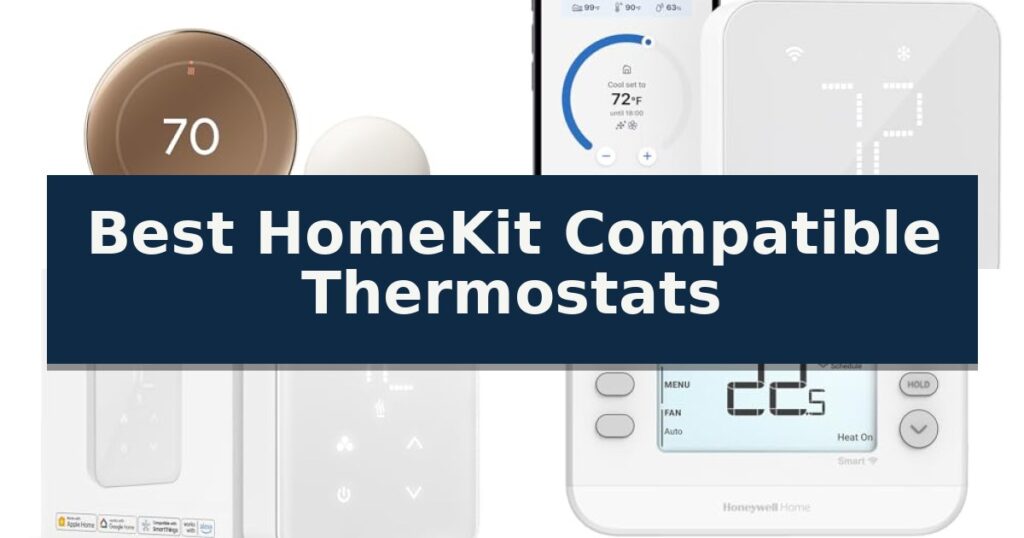
6 Best HomeKit Compatible Thermostats in 2026 Reviews
Quick Comparison
| Product | Best For | Key Strength | Score |
|---|---|---|---|
| Google Nest Learning Thermostat | Best Overall | Significant energy savings of up to 31% on heating and cooling bills. | 4.9 |
| Meross Matter Smart Thermostat | Universal Matter Connectivity | Local Matter integration for reliable, cross-platform smart home connectivity. | 4.6 |
| Meross Smart Baseboard Thermostat | Specialized for High-Voltage Heating | Broad smart home compatibility including Apple HomeKit, Alexa, and Google Home. | 4.5 |
| Portexa FocusPRO S200 Smart Thermostat | Reliable Single-Stage Control | Broad smart home compatibility including Apple HomeKit, Alexa, and Google Assistant. | 4.6 |
| Meross Matter Electric Baseboard Thermostat | Open Window Detection Logic | Universal Matter compatibility for multi-ecosystem support. | 4.3 |
| Hubitat Elevation C-8 Pro Hub | Local Control for Ecosystems | Local-first architecture ensures automations run during internet outages. | 4.3 |
How We Chose
To determine the best HomeKit compatible thermostats, we evaluate hardware based on its ability to integrate seamlessly into an Apple-centric smart home while maintaining robust control over various HVAC configurations. We prioritize devices that offer clear installation requirements, reliable connectivity, and meaningful energy-management tools that translate technical specifications into practical, daily comfort for the user.
- HVAC system compatibility (24V vs. high-voltage)
- Native Apple HomeKit and Matter integration
- Energy-saving features and scheduling flexibility
- Installation requirements and C-wire necessity
- Remote control and app-based monitoring capabilities
1 Google Nest Learning Thermostat — Advanced Energy-Saving Learning
The Google Nest Learning Thermostat (4th Gen, 2024) introduces a 60% larger display with Dynamic Farsight, allowing users to view critical climate information from across the room. This latest generation prioritizes energy efficiency through intelligent learning, capable of helping users save up to 31% on heating and cooling bills by adapting to environmental changes and occupancy patterns.
Designed for broad compatibility, this unit works with most 24V systems, including gas, electric, oil, forced air, heat pump, and radiant setups. Installation is streamlined for many homes as it typically does not require a C wire. Integration into a smart home ecosystem is simplified through Matter compatibility, enabling seamless control via the Google Home app, Alexa, Siri, or Google Assistant.
The device features New Adaptive Eco and Natural Heating and Cooling algorithms, which monitor outdoor temperatures to determine when to pause systems, such as when sunlight naturally warms a room. Users receive notifications for schedule changes, providing transparency and control over energy-saving adjustments. The included Nest Temperature Sensor (2nd gen) helps manage specific hot or cold spots in the home, ensuring consistent comfort.
With its polished gold finish and intuitive interface, the thermostat balances aesthetic appeal with functional utility. It automatically adjusts screen brightness for readability, though manual overrides are available. By learning individual preferences and external weather impacts, the system creates a personalized climate schedule that prioritizes both comfort and efficiency.
Best for: Homeowners seeking an energy-efficient, learning-capable thermostat that integrates with major smart home platforms including Apple HomeKit.
Skip if: Users who require a basic, non-learning manual thermostat or those whose HVAC systems are incompatible with 24V smart thermostat standards.
- Significant energy savings of up to 31% on heating and cooling bills.
- Broad system compatibility with most 24V heating and cooling setups.
- Matter support for easy integration with Apple HomeKit and other smart home ecosystems.
- Includes Nest Temperature Sensor to address hot and cold spots in specific rooms.
- Requires verification via the Nest Compatibility Checker to ensure specific HVAC system support.
- Advanced learning features may require a period of data collection to reach peak efficiency.
2 Meross Matter Smart Thermostat — Universal Matter Connectivity
Modernizing your home climate control often begins with finding a device that bridges the gap between complex HVAC systems and intuitive smart home ecosystems. The Meross Matter Smart Thermostat simplifies this by offering local Matter integration, which allows it to communicate directly with platforms like Apple Home, Amazon Alexa, and Google Home without relying on cloud-based workarounds.
Designed for versatility, this thermostat is compatible with approximately 95% of HVAC configurations, including furnaces, boilers, and heat pumps. Its sleek glass panel aesthetic, available in black or white, is intended to blend into various interior design styles, from minimalist to industrial. The unit requires a C-wire for power, ensuring consistent connectivity for its smart features.
Beyond its physical design, the device emphasizes energy management through 24/7 flexible scheduling. Users can define specific routines for when they are home, away, or asleep, which can be monitored directly through the Meross app. This granular control is paired with smart alerts that notify users about filter life and potential system malfunctions, helping to maintain HVAC health and potentially reduce unnecessary energy expenditures.
Installation is supported by step-by-step guidance within the companion app, and the manufacturer provides direct support channels for those requiring assistance. By centralizing control and reducing the need for multiple disparate apps, this thermostat aims to streamline the management of your home environment.
Best for: Homeowners seeking a locally-controlled, Matter-certified thermostat that integrates seamlessly into existing Apple Home or multi-platform smart home setups.
Skip if: Users with 110V/120V/240V electric baseboard heaters, millivolt systems, or two-wire configurations that lack a C-wire.
- Local Matter integration for reliable, cross-platform smart home connectivity.
- Broad compatibility with 95% of standard HVAC systems.
- Customizable 24/7 scheduling to optimize energy usage.
- Integrated smart alerts for filter maintenance and system monitoring.
- C-wire requirement may necessitate additional wiring for older homes.
- Incompatible with high-voltage electric baseboard heaters.
3 Meross Smart Baseboard Thermostat — Specialized for High-Voltage Heating
Managing high-voltage heating systems requires specialized hardware, and the Meross Smart Baseboard Thermostat offers a direct solution for users looking to integrate electric baseboard, convector, or fan-forced heaters into their smart home ecosystem. Designed specifically for high-voltage setups, this device handles a maximum output load of 16A, supporting up to 1920W at 120V or 3840W at 240V.
Beyond its core heating capabilities, the unit provides extensive smart integrations, including native compatibility with Apple Home, Amazon Alexa, Google Home, and SmartThings. Users can manage their home climate via voice commands or the Meross app, which features a 7×24 hours smart graphic schedule to automate temperature adjustments and optimize energy usage.
The thermostat is built for precision and efficiency, boasting 1℉ temperature accuracy within a range of 41℉ to 95℉. It includes advanced energy-saving features such as Open Window Detection, which pauses heating during ventilation, and an internal electricity meter that generates real-time and historical power consumption reports.
Installation is straightforward for those with the required 4-wire setup, typically taking less than 30 minutes. The device also includes Power-off Memory to retain settings during electrical interruptions and a Summer Mode for systems that support cooling, ensuring the thermostat remains functional throughout the year.
Best for: Homeowners with high-voltage electric baseboard or convector heating systems who want to add Apple HomeKit voice and app control.
Skip if: Users who do not have the required 4-wire configuration in their electrical box or those with low-voltage HVAC systems.
- Broad smart home compatibility including Apple HomeKit, Alexa, and Google Home.
- Integrated energy monitoring with real-time and historical consumption reporting.
- High-voltage capacity supporting up to 3840W at 240V.
- Automated efficiency features like Open Window Detection and programmable scheduling.
- Requires 4 or more wires in the electrical box for installation.
- Not compatible with low-voltage heating systems.
4 Portexa FocusPRO S200 Smart Thermostat — Reliable Single-Stage Control
The Portexa FocusPRO S200 Smart WiFi Thermostat provides a streamlined approach to climate management by integrating directly with modern smart home ecosystems. This unit is specifically engineered for 24V single-stage HVAC systems, offering a straightforward solution for those who need reliable control over conventional heating and cooling or basic heat pump setups.
Beyond its core functionality, the device offers Smart WiFi Control that supports both 2.4 GHz and 5 GHz networks. Users can manage their home environment through the First Alert by Resideo app or via voice commands through Amazon Alexa, Google Assistant, Apple HomeKit, and SmartThings. This connectivity ensures that adjustments can be made remotely, providing flexibility for various household routines.
The thermostat features Flexible Scheduling options, including 5-1-1, 5-2, 7-day, and 1-week cycles, alongside a geofencing auto-away mode to help manage energy usage when the home is unoccupied. The interface consists of a large, backlit LCD display that provides clear visibility of current settings and system status, supplemented by practical features like filter reminders and keypad lockout.
Installation is simplified by the included Install-Ready Package, which contains the UWP mounting plate, a decorative cover plate with a J-box adapter, and all necessary mounting hardware. As an ENERGY STAR certified product, it is built to meet efficiency standards and includes a 5-year limited warranty for long-term peace of mind.
Best for: Homeowners with 24V single-stage HVAC systems seeking a reliable, Apple HomeKit-integrated thermostat with flexible scheduling options.
Skip if: Users with multi-stage heating or cooling systems, or those requiring advanced zoning capabilities beyond standard single-stage control.
- Broad smart home compatibility including Apple HomeKit, Alexa, and Google Assistant.
- Flexible scheduling options including geofencing for automated energy savings.
- Comprehensive install-ready package with all necessary mounting hardware included.
- ENERGY STAR certified for improved energy efficiency.
- Limited to 24V single-stage HVAC systems only.
- Requires hardwired connection for operation.
5 Meross Matter Electric Baseboard Thermostat — Open Window Detection Logic
Managing high-voltage electric heating systems requires specialized equipment, and the Meross Matter Electric Baseboard Thermostat provides a dedicated solution for 120-240V setups. Unlike standard low-voltage thermostats, this unit is engineered specifically for baseboard, convector, and fan-forced heaters, ensuring safe integration with high-line voltage infrastructure.
The integration of Matter compatibility allows this thermostat to function across major smart home ecosystems, including Apple Home, Alexa, and Google Home, simultaneously. This removes the barrier of ecosystem lock-in, enabling users to manage their home climate through voice commands or the Meross app from any location with a Wi-Fi connection.
Efficiency is central to the design, featuring smart scheduling that automates temperature adjustments based on daily routines. By lowering heat output when the home is unoccupied or during sleep, users can actively manage energy consumption. The inclusion of real-time energy monitoring provides historical data, offering insights into heating habits to help refine usage patterns.
A standout functional addition is the Open Window Detection logic. This feature automatically pauses heating if it senses a sudden drop in temperature consistent with an open window, preventing unnecessary energy waste. Measuring 1.7 x 2.9 x 4.6 inches, the device offers a compact footprint suitable for standard wall installations in rooms utilizing electric heating.
Best for: Homeowners with high-voltage electric baseboard or fan-forced heating systems who want integrated smart home control.
Skip if: Users with 24V HVAC systems, such as central air conditioning or heat pumps, as this unit is not compatible with low-voltage wiring.
- Universal Matter compatibility for multi-ecosystem support.
- Open Window Detection to prevent energy waste.
- Real-time energy monitoring and historical data tracking.
- High-line voltage support (120-240V) for electric heaters.
- Not compatible with standard 24V HVAC systems.
6 Hubitat Elevation C-8 Pro Hub — Local Control for Ecosystems
Managing a modern home ecosystem requires reliable connectivity that functions independently of external cloud dependencies. The Hubitat Elevation C-8 Pro Smart Home Hub prioritizes local processing, ensuring that your smart home routines, including thermostat adjustments and lighting scenes, execute instantly without relying on remote servers or active internet connections.
This hub serves as a central bridge for diverse smart home protocols, supporting Matter 1.5, Z-Wave 800 Series, Zigbee 3.0, and Bluetooth. By integrating two dedicated external antennas, the device improves signal consistency in larger homes, effectively managing device-dense environments without requiring additional bridges or adapters.
Compatibility is a core strength, as the Hubitat Elevation C-8 Pro Smart Home Hub works with Apple HomeKit, Amazon Alexa, and Google Home. Users can leverage the AI-assisted routine builder to create complex automations, such as adjusting climate controls based on geofenced arrivals or layered security responses, all while keeping device data stored locally for enhanced privacy.
Designed for longevity and flexibility, the platform requires no subscription for full functionality. The compact hardware, measuring just 3.23 x 2.95 x 0.67 inches, provides a robust foundation for DIY enthusiasts to build custom integrations, supported by continuous platform updates that have expanded device compatibility since 2018.
Best for: Users who prioritize local data privacy, instant automation response times, and the ability to manage multiple smart home protocols from a single, subscription-free hub.
Skip if: Users who prefer a plug-and-play, cloud-reliant ecosystem managed entirely through a simplified mobile app interface without the need for manual rule configuration.
- Local-first architecture ensures automations run during internet outages.
- Multi-protocol support including Matter, Z-Wave 800, and Zigbee 3.0.
- No subscription fees for full access to advanced features and integrations.
- Enhanced privacy as device data remains stored locally on the hub.
- Requires manual configuration for advanced rule-building compared to cloud-based consumer hubs.
- Steeper learning curve for users unfamiliar with DIY smart home automation logic.
Best HomeKit Compatible Thermostats Buying Guide
Understanding HVAC Compatibility
Before selecting a thermostat, you must identify whether your system uses standard 24V wiring or high-voltage lines. Most central heating and cooling systems operate on 24V, but electric baseboard heaters often require high-voltage units, which are not interchangeable.
Always verify your current wiring configuration, specifically checking for a C-wire. While some modern smart thermostats are designed to function without one, others strictly require it for consistent power, and attempting to bypass this can lead to system malfunctions.
The Role of Matter and HomeKit
Apple HomeKit integration allows for centralized control through the Home app and Siri voice commands. Devices that support the Matter standard offer an additional layer of future-proofing, allowing them to communicate locally across different smart home platforms without relying on cloud-based bridges.
Choosing a Matter-certified thermostat often simplifies the pairing process and ensures that your device remains responsive even if your internet connection experiences temporary instability. This local-first communication is a significant advantage for maintaining consistent climate control.
Energy Management and Scheduling
Smart thermostats provide value by learning your habits and adjusting temperatures to reduce energy consumption when you are away or asleep. Look for models that offer granular, 7-day scheduling or geofencing features that automatically trigger eco-modes based on your location.
Energy monitoring tools are equally important for tracking usage patterns over time. By reviewing historical data, you can identify opportunities to adjust your settings further, potentially lowering your utility bills while maintaining your preferred comfort levels.
Installation and Physical Design
The physical design of a thermostat impacts both aesthetics and usability. Larger, high-resolution displays make it easier to read information from across a room, while intuitive touch interfaces or physical rings provide tactile feedback for manual adjustments.
Consider the installation process, including whether the unit comes with a backplate to cover existing wall marks. A well-designed mounting system can make the difference between a quick, clean upgrade and a project that requires additional wall repair or painting.
Remote Access and Alerts
Remote control via a smartphone app is essential for adjusting your home's temperature while you are away. This feature ensures you can return to a comfortable environment or modify schedules if your plans change unexpectedly.
System alerts provide peace of mind by notifying you of potential issues, such as filter replacement reminders or abnormal system behavior. These proactive notifications help prevent minor maintenance tasks from turning into costly HVAC repairs.
Frequently Asked Questions
Do all smart thermostats work with Apple HomeKit?
No, only thermostats specifically designed with HomeKit support or Matter certification can be added directly to the Apple Home app.
What is a C-wire and why does it matter?
A C-wire, or common wire, provides constant power to your smart thermostat. Many advanced models require it to maintain a stable Wi-Fi connection and power the display.
Can I use a smart thermostat with electric baseboard heaters?
You must use a thermostat specifically rated for high-voltage (120V-240V) systems. Standard 24V smart thermostats will not work and can be dangerous if connected to high-voltage lines.
Does Matter support improve HomeKit compatibility?
Yes, Matter allows devices to connect locally to Apple Home, often resulting in faster response times and more reliable performance compared to cloud-based integrations.
Do I need a hub to use these thermostats?
Most Wi-Fi-enabled smart thermostats connect directly to your router. However, some systems may benefit from a smart home hub for advanced automation or local processing.
Conclusion: Our Top Pick
Our top pick is Google Nest Learning Thermostat. Choosing the right thermostat depends primarily on your existing HVAC system and your desire for advanced automation features. By prioritizing compatibility and the specific control features that match your lifestyle, you can significantly improve your home's energy efficiency and comfort.
Take the time to verify your wiring and system voltage before making a purchase to ensure a smooth installation. Once installed, these devices offer a convenient way to manage your home climate through your favorite smart home ecosystem.