
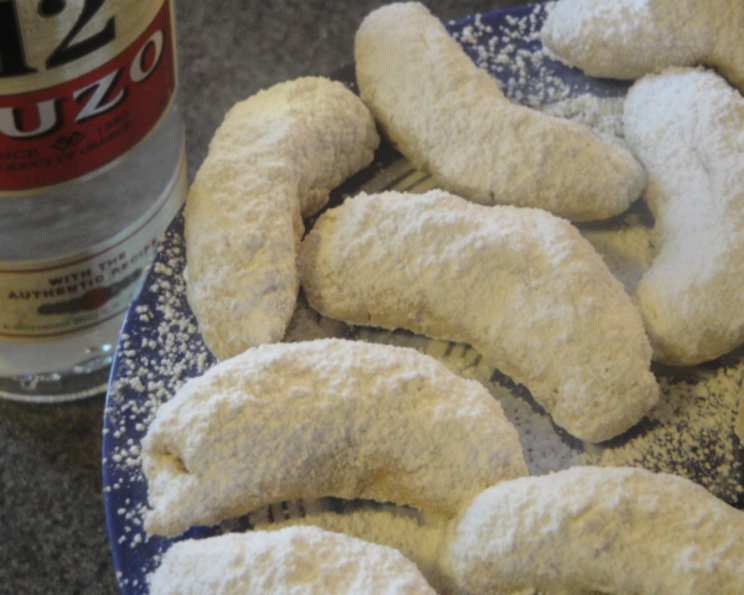
Kourambiethes: A Taste of Greek Holiday Tradition
The scent of Kourambiethes, those delicate almond shortbreads dusted with a snowy blanket of powdered sugar, instantly transports me back to my grandmother’s kitchen during the festive season. It wasn’t just the aroma of toasted almonds and sweet butter that filled the air, but the sheer joy and anticipation of the holidays themselves. She would meticulously shape each crescent, her hands moving with the practiced grace of someone who had been creating these treasures for decades. Every bite was a whisper of Christmas, a moment of pure, unadulterated comfort that has stayed with me through the years, a cherished memory baked into every crumb.
Recipe Overview
- Prep Time: 1 hour (includes refrigeration)
- Cook Time: 12 minutes
- Total Time: 1 hour 12 minutes + cooling time
- Servings: Approximately 22 shortbreads
- Yield: 22 shortbreads
- Dietary Type: Contains Nuts, Dairy, Gluten, Egg
Ingredients
- 8 ounces unsalted butter, softened
- 3 ½ ounces slivered almonds
- 2 cups all-purpose flour, sifted
- 1 teaspoon baking powder
- ¾ cup icing sugar (powdered sugar), sifted, plus extra for dusting
- 1 egg yolk
- 1 teaspoon vanilla extract
- 1 tablespoon ouzo (optional, but highly recommended for authentic flavor)
- 4 tablespoons almond meal
Equipment Needed
- Small, heavy-based saucepan
- Two baking trays
- Parchment paper
- Electric mixer (handheld or stand mixer)
- Mixing bowls
- Whisk or spatula
- Fine-mesh sieve (for dusting)
Instructions
The magic of Kourambiethes begins with the butter. In a small, heavy-based saucepan, gently melt the butter over low heat. It’s crucial to do this without stirring or shaking the pan. This gentle process allows the milk solids to separate. Once melted, carefully pour the clear, golden butter into a separate container, discarding the white sediment that remains in the pan. This clarified butter is key to the shortbread’s tender texture. Now, refrigerate this clarified butter for 1 hour until it’s firm but still pliable.
While the butter chills, preheat your oven to 325°F (160°C). Line two baking trays with parchment paper, ensuring even coverage.
Next, let’s prepare the almonds. Grind the slivered almonds in a food processor or blender until they form a medium-fine meal. Be careful not to over-process them into a paste; a slightly coarse texture is desirable.
In a medium mixing bowl, sift the all-purpose flour and baking powder together. Sifting ensures no lumps and aerates the dry ingredients, contributing to a lighter shortbread.
Now, return to your chilled butter. In a large mixing bowl, beat the chilled butter using an electric mixer until it is light and fluffy. Gradually add the ¾ cup of sifted icing sugar and continue to combine well, ensuring it’s fully incorporated into the butter.
Introduce the wet ingredients: add the egg yolk, vanilla extract, and ouzo (if using) to the butter mixture. Beat until just combined. Ouzo, a traditional Greek anise-flavored liqueur, lends a subtle yet distinctive aromatic note that is characteristic of authentic Kourambiethes.
It’s time to bring it all together. Gently fold in the sifted flour mixture, the ground almonds, and the almond meal into the butter mixture. Fold until just combined; do not overmix, as this can develop the gluten in the flour, resulting in tough shortbread. The dough should be soft and slightly crumbly, yet hold together when pressed.
Take heaped tablespoons of the mixture and shape them into classic crescent shapes. Alternatively, you can form them into small balls and then gently flatten them. Place the shaped Kourambiethes onto the prepared baking trays, leaving a little space between each one.
Bake for 12 minutes, or until the edges are lightly colored. They should not be deeply golden; a pale, delicate hue is what we’re aiming for.
Once baked, remove the trays from the oven. While the Kourambiethes are still warm, dust them liberally with icing sugar using a fine-mesh sieve. This allows the sugar to adhere to the warm surface. Leave them to cool on the trays for 10 minutes. This initial cooling period on the tray allows them to firm up slightly before being moved.
After 10 minutes, line a clean baking tray with fresh parchment paper and dust this paper generously with icing sugar. Carefully lift the warm biscuits onto this sugared paper. Dust them again with icing sugar while they are still warm. As the biscuits cool completely, they will absorb some of the sugar. Once the biscuits are entirely cool, dust them one final time with icing sugar. This triple dusting ensures that signature snowy appearance. Store the cooled Kourambiethes in an airtight container to maintain their delicate texture.
Expert Tips & Tricks
To achieve that quintessential melt-in-your-mouth texture, it’s vital to use high-quality unsalted butter and ensure it’s at the correct temperature—softened but not melted for creaming, and then properly chilled for the initial step. For the most authentic flavor, ouzo is highly recommended; a little goes a long way in imparting that unique Greek anise essence. If you don’t have ouzo, a tiny pinch of anise seed, ground finely and added with the dry ingredients, can offer a subtle alternative, though it won’t be the same. When grinding your almonds, remember to do so in short bursts to avoid creating almond butter.
Serving & Storage Suggestions
Kourambiethes are a perfect accompaniment to coffee or tea, offering a sweet, buttery indulgence. They are traditionally served during the Christmas holidays but are delightful any time of year. For an extra festive touch, you can arrange them on a platter and garnish with a few whole toasted almonds or a sprig of rosemary.
To keep your Kourambiethes wonderfully fresh, store them in an airtight container at room temperature. They will maintain their delightful texture for up to two weeks. Avoid refrigerating them, as this can make them hard and dry. If you find they have become slightly dry over time, you can place a small piece of bread in the container for a day to help reintroduce moisture, though this is rarely necessary if stored correctly.
Nutritional Information
| Nutrient | Amount per Serving | % Daily Value |
|---|---|---|
| Calories | 176.8 kcal | |
| Calories from Fat | ||
| Total Fat | 11.4 g | 17% |
| Saturated Fat | 5.6 g | 27% |
| Cholesterol | 29.7 mg | 9% |
| Sodium | 18.4 mg | 0% |
| Total Carbohydrate | 16.8 g | 5% |
| Dietary Fiber | 1 g | 3% |
| Sugars | 7 g | 27% |
| Protein | 2.6 g | 5% |
(Note: Nutritional information is an estimate and can vary based on specific ingredients and portion sizes.)
Variations & Substitutions
While the classic Kourambiethes recipe is beloved for its simplicity and traditional flavor, you can explore a few variations. For a slightly richer nut flavor, you could substitute some of the all-purpose flour with almond flour, ensuring you adjust the liquid content if the dough becomes too dry. Some bakers also experiment with adding a touch of orange zest to the dough for a subtle citrusy note. If ouzo isn’t to your taste or availability, a splash of vanilla extract can be increased slightly, or a very small amount of brandy could be used for a different aromatic complexity. However, for the most authentic experience, sticking to the core ingredients is highly recommended.
FAQs
Q: Why is it important to discard the white sediment from the melted butter?
A: The white sediment contains milk solids, which, if left in, can cause the shortbread to brown too quickly and affect its delicate texture. Discarding it results in clarified butter, leading to a more tender and stable bake.
Q: Can I use pre-ground almonds instead of slivered almonds?
A: Yes, you can, but ensure they are finely ground. The goal is a medium-fine meal for optimal texture within the shortbread.
Q: My dough seems too crumbly to shape. What should I do?
A: This is often normal for shortbread dough. Gently press it together in your hands to form the shapes. If it’s excessively dry, you can add a tiny bit more butter (melted and cooled) or a teaspoon of milk, but do so sparingly to avoid making the dough sticky.
Q: How can I ensure my Kourambiethes don’t spread too much during baking?
A: Using chilled butter and not overmixing the dough are the key factors. Ensure your oven is preheated to the correct temperature as well.
Q: How long will Kourambiethes keep?
A: Properly stored in an airtight container at room temperature, Kourambiethes can stay fresh and delicious for up to two weeks.
Final Thoughts
Crafting Kourambiethes is more than just a baking project; it’s an invitation to partake in a cherished tradition. The simple act of shaping, baking, and generously dusting these almond shortbreads with powdered sugar connects us to generations of festive celebrations. I encourage you to try this recipe, to fill your home with its comforting aroma, and to share these delightful treats with loved ones. They are particularly wonderful served alongside a strong Greek coffee or a festive glass of sweet wine. May your kitchens be filled with the joy of baking and the sweet taste of tradition.