
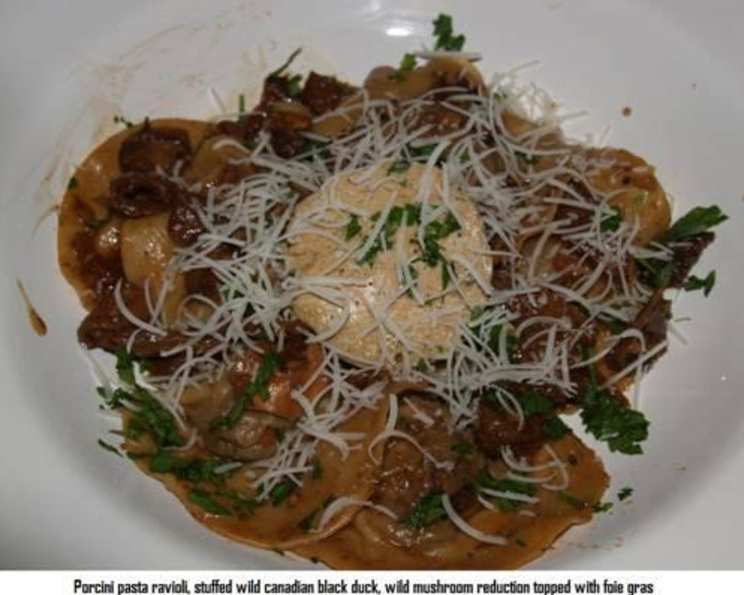
Wild Duck Porcini Ravioli: A Symphony of Earth and Sky
There’s a particular scent that wafts through my kitchen when I’m preparing this dish – a deep, earthy aroma of reconstituted porcini mushrooms mingling with the rich, almost gamey fragrance of roasted wild duck. It’s a scent that transports me back to crisp autumn mornings, the kind where mist clings to the trees and the air hums with anticipation. The first time I experienced ravioli stuffed with this potent combination, it was a revelation, a testament to how humble ingredients, when treated with respect, can create something truly extraordinary. This dish is more than just food; it’s an experience, a whispered secret from the forest floor and the wild skies, captured within delicate pasta parcels.
Recipe Overview
- Prep Time: 2 hours
- Cook Time: 1 hour 30 minutes
- Total Time: 3 hours 30 minutes
- Servings: 4
- Yield: Approximately 24-30 ravioli
- Dietary Type: Contains Duck, Egg, Gluten, Dairy (optional topping)
Ingredients
For the Pasta Dough:
- 1/4 cup dried porcini mushrooms, finely ground and sifted
- 3 cups flour, equal parts durum flour and unbleached all-purpose flour
- 3 large eggs
- 3 half eggshells water (approximately 1/4 cup)
- 1 dash salt
For the Filling:
- 1 1/2 – 2 lbs wild ducks, roasted (meat only)
- 1 medium carrot
- 1 small yellow onion
- 1 stalk celery
- 1 small orange
For the Mushroom Ragu:
- 1 cup assorted dried wild mushrooms
- 1/4 cup veal demi-glace
- 6 ounces duck foie gras with 2% truffles, sliced into 1/4 – 1/3 inch pieces
Equipment Needed
- Large stock pot
- Roasting pan and rack
- Sharp knife
- Cutting board
- Food processor or mortar and pestle (for grinding porcini)
- Fine-mesh sieve
- Large bowl
- Rolling pin or pasta machine
- 3-inch round biscuit cutter or small glass
- Fork
- Small bowl (for egg wash)
- Sauté pan or saucepan
- Heatproof container
- Slotted spoon
- Shallow, rimmed serving bowls
- Meat thermometer
Instructions
The journey to these exquisite ravioli begins with a thoughtful preparation of each component, ensuring that every flavor is coaxed out and harmonizes beautifully. Patience is key here; the rewards are well worth the effort.
Preparing the Duck Filling:
- Preheat the oven to 450°F (230°C). This initial high heat is crucial for achieving a beautifully rendered duck skin.
- Begin boiling a large stock pot of water. This will be used later for cooking the ravioli.
- Prepare the duck: Rinse the roasted wild ducks and pat them thoroughly dry with paper towels. Season the inside and outside generously with salt and pepper.
- Prepare the aromatics: Cut the carrot, yellow onion, and celery into rough wedges.
- Stuff the duck: Place the vegetable wedges inside the cavity of the duck. Squeeze the juice of the small orange into the cavity.
- Roast the duck: Place the prepared duck on a roasting rack in the preheated oven. Roast for 15 minutes at 450°F (230°C).
- Reduce heat and continue roasting: Reduce the oven temperature to 350°F (175°C) and continue to cook until a meat thermometer inserted into the thickest part of the thigh reads 160°F (71°C).
- Rest and debone: Once the duck reaches the desired temperature, remove it from the oven and let it rest. Reserve the duck bones to make a secondary stock, which can be used in place of or to deepen the mushroom stock for the ragu, adding a fantastic depth of flavor without overpowering the delicate ravioli. Carefully remove the meat from the bones.
- Prepare the filling: Shred or dice the duck meat very finely. If necessary, moisten the shredded duck meat with some of the juices from the roasting pan to ensure it remains tender and flavorful.
Crafting the Pasta Dough:
- Combine dry ingredients: In a large bowl, mix together the flour (equal parts durum and unbleached), the finely ground and sifted dried porcini mushrooms, and the dash of salt.
- Incorporate wet ingredients: Create a well in the center of the dry ingredients and crack in the 3 large eggs. Add the 3 half eggshells of water (approximately 1/4 cup).
- Knead the dough: Mix the ingredients until they begin to come together, then turn the dough out onto a lightly floured surface. Knead the dough until it is silky soft, which will take about 25 minutes by hand. This thorough kneading develops the gluten, essential for a tender yet resilient pasta.
- Roll out the dough: Once kneaded, wrap the dough in plastic wrap and let it rest for at least 30 minutes at room temperature. Then, roll out the dough on a floured surface to approximately 1/4 inch thickness. If the dough becomes sticky, dust it with more flour.
- Cut the dough circles: Using a 3-inch round biscuit cutter or a small glass, cut circles from the rolled-out dough.
Assembling the Ravioli:
- Fill the ravioli: Place a spoonful of the prepared duck filling in the center of each dough circle.
- Seal the ravioli: Take another dough circle and place it over the filling. Crimp the edges firmly with a fork, ensuring a complete seal to prevent any filling from escaping during cooking. If the edges are not sticking, lightly moisten the edge of the bottom circle with cold water before crimping the top circle over it.
- Remove air bubbles: As you seal each ravioli, gently press around the filling to remove any trapped air bubbles. This ensures an even cook and prevents them from bursting.
Creating the Mushroom Ragu:
- Rehydrate dried mushrooms: While the duck is roasting, place the 1 cup of assorted dried wild mushrooms in a heatproof container. Pour boiling water over them to cover. Let them stand until they are fully reconstituted, which should take about 1 hour.
- Prepare mushroom liquid and mushrooms: Drain the reconstituted mushrooms, reserving the flavorful soaking liquid. Strain this liquid through a fine-mesh sieve to remove any grit or sediment. Chop the rehydrated mushrooms into bite-sized pieces.
- Build the ragu: In a sauté pan, combine the 1/4 cup veal demi-glace and the strained reserved mushroom liquid.
- Reduce the sauce: Bring the mixture to a simmer and allow it to reduce slightly, creating a rich sauce. The consistency should not be too thin or too thick – it should coat the back of a spoon.
- Add mushrooms and season: Add the chopped reconstituted mushrooms to the sauce. Adjust seasonings as needed.
Cooking and Finishing the Ravioli:
- Cook the ravioli: Carefully drop the ravioli into the large pot of boiling water. Cook until al dente, which will take about 6 minutes.
- Drain and reserve pasta water: Drain the ravioli, but reserve some of the starchy pasta cooking liquid. This liquid is a valuable emulsifier for the sauce.
- Toss with ragu: Quickly add the drained ravioli directly to the pan with the mushroom ragu. Gently toss to coat each ravioli with the rich ragu. If the sauce seems too thick, add a little of the reserved pasta cooking liquid to achieve the desired consistency. You don’t want the dish to be too dry.
- Plate the ravioli: Dish the ravioli into pre-heated, large shallow rimmed bowls.
- Add the final touch: Gently place a 1/4 to 1/3 inch slice of duck foie gras with 2% truffles on top of each serving of ravioli. The residual heat from the ravioli and ragu will gently warm the foie gras, allowing its decadent richness to meld with the dish.
Expert Tips & Tricks
- Mushroom Grinding: For the most potent porcini flavor in your pasta dough, grind the dried mushrooms in a spice grinder or food processor until they are as fine as powder. Sifting them afterward ensures an even distribution and no gritty texture.
- Dough Consistency: Pasta dough can be finicky. If it’s too dry and crumbly, add water a teaspoon at a time. If it’s too sticky, add flour a tablespoon at a time. The goal is a dough that’s smooth, elastic, and pleasant to the touch.
- Sealing is Crucial: A well-sealed ravioli is paramount. Press firmly with your fingers or a fork to ensure no gaps, especially around the edges. A tiny bit of water or egg wash can help if the dough feels dry.
- Don’t Overcrowd the Pot: Cook the ravioli in batches if necessary to ensure they cook evenly and don’t stick together.
- The Magic of Pasta Water: Never underestimate the power of pasta cooking water. Its starch content is a chef’s secret weapon for creating silky, emulsified sauces that cling beautifully to pasta.
Serving & Storage Suggestions
These Wild Duck Porcini Ravioli are best served immediately to enjoy the perfect texture of the al dente pasta and the luxurious melt of the foie gras. Serve them in warm, shallow bowls. A light dusting of Parmesan cheese on the side is a delightful accompaniment, allowing diners to add their own touch of salty, nutty flavor.
Storage: Uncooked ravioli can be frozen. Place them on a parchment-lined baking sheet in a single layer until frozen solid, then transfer them to an airtight container or freezer bag for up to 1 month. Cook from frozen, adding a few extra minutes to the cooking time. Cooked ravioli are best enjoyed fresh, but leftovers can be stored in an airtight container in the refrigerator for up to 2 days. Reheat gently in a pan with a little extra ragu or pasta water to prevent them from drying out.
Nutritional Information
| Nutrient | Amount per Serving | % Daily Value |
|---|---|---|
| Calories | 620.1 kcal | 31% |
| Total Fat | 18.4 g | 24% |
| Saturated Fat | 5.8 g | 29% |
| Cholesterol | 230.3 mg | 77% |
| Sodium | 162.7 mg | 7% |
| Total Carbohydrate | 80.2 g | 29% |
| Dietary Fiber | 4.3 g | 15% |
| Sugars | 5.7 g | 11% |
| Protein | 30.8 g | 62% |
(Note: Nutritional information is an estimate and can vary based on specific ingredients and portion sizes.)
Variations & Substitutions
While this recipe is truly special, there’s always room for a personal touch:
- Mushroom Variety: Feel free to experiment with other dried mushrooms like shiitake, morels, or chanterelles for the ragu, each offering a unique flavor profile.
- Poultry Swap: If wild duck is unavailable, a rich, dark meat like goose or even a well-roasted guinea fowl could be used, though the flavor will be subtly different.
- Vegetarian Option: For a vegetarian version, omit the duck and foie gras. Create a robust filling with finely chopped, sautéed mixed mushrooms, shallots, and a touch of ricotta or a vegan alternative for creaminess. The mushroom ragu would remain the same, or you could enhance it with vegetable demi-glace.
- Gluten-Free Pasta: For a gluten-free variation, experiment with a high-quality gluten-free flour blend formulated for pasta making. The texture might differ slightly, but the flavor will still be exceptional.
FAQs
Q: Can I make the pasta dough and filling ahead of time?
A: Yes, the pasta dough can be made a day in advance and refrigerated, or frozen for longer storage. The duck filling can also be prepared a day ahead and kept chilled. Assembling the ravioli is best done closer to cooking.
Q: How do I know when the ravioli are cooked through?
A: Ravioli are cooked when they float to the surface and are tender but still have a slight bite (al dente). This typically takes about 6 minutes for fresh ravioli.
Q: Is the foie gras essential to this dish?
A: While the foie gras adds an unparalleled layer of luxury and decadent richness, the ravioli will still be delicious without it. You could top with a drizzle of truffle oil or a dollop of crème fraîche as an alternative.
Q: My ravioli are sticking together in the pot, what did I do wrong?
A: This can happen if the water isn’t boiling vigorously, if you overcrowd the pot, or if the ravioli aren’t sealed properly. Ensure the water is at a rolling boil, cook in batches, and double-check your seals.
Q: Can I make the mushroom ragu without veal demi-glace?
A: You can substitute a good quality beef demi-glace or even a rich mushroom stock, though the flavor profile will be slightly altered. For a vegetarian option, a robust vegetable demi-glace would work well.
Final Thoughts
This Wild Duck Porcini Ravioli is a dish that speaks of nature’s bounty and culinary artistry. It’s a celebration of deep, earthy flavors intertwined with the elegance of well-crafted pasta and the exquisite touch of foie gras. When you bring these beautiful parcels to the table, you’re not just serving a meal; you’re sharing a story, an experience, and a moment of pure indulgence. I encourage you to embrace the process, savor the aromas, and most importantly, enjoy every single bite. Perhaps pair this dish with a full-bodied Pinot Noir or a robust Nebbiolo, wines that can stand up to the richness of the duck and the earthiness of the mushrooms, creating a truly unforgettable dining experience.