
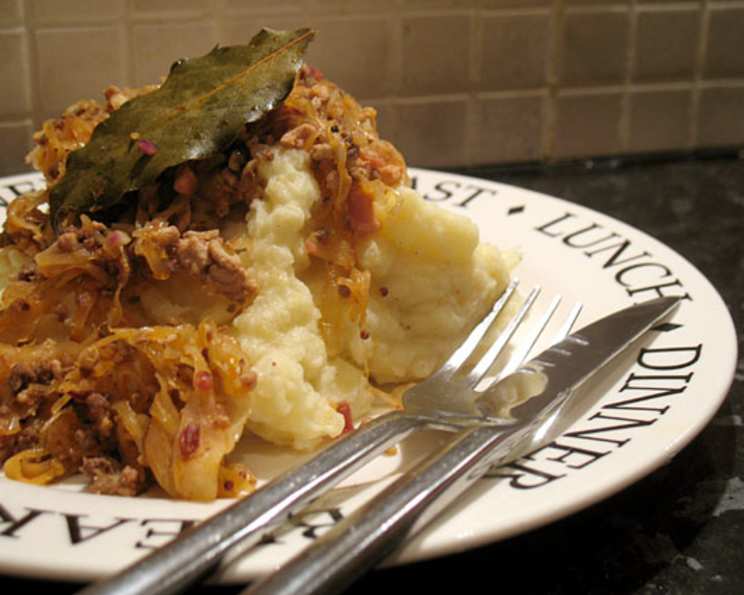
Willy’s Sauerkraut Skillet: A Hearty Homage to Homestyle Cooking
There are certain dishes that, with a single whiff, transport you back to a specific moment, a beloved place, or a cherished person. Willy’s Sauerkraut Skillet is one of those for me. It’s a dish that reminds me of brisk autumn evenings, the kind where the air is crisp and smells of woodsmoke, and the best remedy is a steaming, robust meal. This recipe, an adaptation from Gudrun Rutschitzka’s collection, evokes a sense of comforting tradition, a testament to how simple, honest ingredients can come together to create something truly magical. While it may not be the quickest weeknight meal, the aroma that fills the kitchen as it simmers is a reward in itself, promising a deeply satisfying experience that’s well worth the gentle dedication.
Recipe Overview
- Prep Time: 15 minutes
- Cook Time: 1 hour 8 minutes
- Total Time: 1 hour 23 minutes
- Servings: 4
- Yield: 1 hearty skillet meal
- Dietary Type: Hearty German-inspired Main
Ingredients
This dish celebrates the earthy, tangy flavors of sauerkraut, balanced by savory meats and aromatic spices.
- 2 ounces smoked bacon, cubed finely (approximately 50 grams)
- 2 onions, cubed finely
- 2 tablespoons pork drippings or 2 tablespoons lard
- 14 ounces sauerkraut, drained
- 1 lb mixed ground meat (pork and beef recommended for the best flavor and texture)
- 1 cup vegetable broth, good quality
- 3 garlic cloves, minced
- 2 bay leaves
- 6 juniper berries
- 1 teaspoon mustard seeds
- 1 clove
- 1/2 teaspoon cumin seed
- 1/2 teaspoon sugar
- 1 tablespoon tomato paste
- Pepper, to taste
- Salt, to taste
- Cayenne pepper, to taste
Equipment Needed
- A large, heavy-based frying pan or Dutch oven with a lid
Instructions
The beauty of Willy’s Sauerkraut Skillet lies in its layered approach, where each step builds upon the last to create a deep, complex flavor profile.
- Begin by heating the pork drippings or lard in a large, heavy-based frying pan or Dutch oven over medium heat. Once shimmering, add the finely cubed smoked bacon. Fry the bacon, stirring occasionally, until it is golden brown and has rendered its delicious fat. This initial step is crucial for infusing the dish with a foundational savory note.
- Next, add the ground meat to the pan. Break it up well with your spoon or spatula to ensure even browning. Cook the meat until it is no longer pink, allowing it to develop a nice sear.
- Once the meat is browned, add one of the finely cubed onions to the pan. Fry this onion with the meat and bacon for a further 6 to 8 minutes, stirring frequently. This allows the onion to soften and become fragrant, adding another layer of sweetness to the base.
- Pour in the vegetable broth and then mix in the drained sauerkraut. Stir everything together to combine.
- Now, introduce the aromatics and spices. Add the minced garlic cloves, along with all the spices: the bay leaves, juniper berries, mustard seeds, clove, cumin seeds, and the sugar. Stir in the tomato paste. Ensure all these ingredients are well incorporated into the mixture.
- Stir well to distribute the spices and tomato paste evenly throughout the skillet. Season generously with salt, pepper, and cayenne pepper to taste. Remember that sauerkraut can be quite salty, so it’s wise to season cautiously at this stage and adjust later if needed.
- Cover the pan tightly with a lid and allow the mixture to slowly simmer on a low heat for 50 minutes. During this simmering period, it’s important to stir once or twice to make sure that nothing sticks to the bottom of the pan and that the flavors meld beautifully.
- Once the 50 minutes of simmering are complete and the sauerkraut has softened and absorbed the rich flavors, add the second, remaining finely cubed onion. Allow this onion to stew with the rest of the mixture for a few minutes, just until it softens slightly but still retains a hint of its fresh crunch. This provides a welcome textural contrast to the tender sauerkraut and meat.
- Your Willy’s Sauerkraut Skillet is now ready to be served.
Expert Tips & Tricks
As a chef, I always look for ways to elevate a dish, even a comforting classic. Here are a few thoughts on making this skillet meal shine:
- Sauerkraut Quality Matters: The success of this dish hinges on good quality sauerkraut. Look for unpasteurized, naturally fermented sauerkraut from a reputable source. It will have a brighter, more complex flavor and better texture than heavily processed varieties. If your sauerkraut seems particularly acidic, a touch more sugar in step 5 can help balance it.
- Don’t Rush the Simmer: The 50-minute simmer is where the magic happens. This low and slow cooking allows the flavors to meld, the sauerkraut to become tender, and the spices to fully release their essence. Resist the urge to rush this process.
- Bacon Fat is Flavor: If you’re not a fan of pork drippings or lard, you can certainly use a neutral oil like canola or sunflower oil for frying the bacon. However, rendering the bacon until crisp and using its fat for the initial sautéing is a foundational step for authentic flavor.
- Adjusting Spice: The cayenne pepper adds a gentle warmth, but feel free to adjust it to your preference. A pinch of caraway seeds, which are classic companions to sauerkraut, could also be a delightful addition alongside the other spices if you have them on hand.
- The Second Onion: Adding the second onion raw at the end provides a delightful textural contrast and a fresher onion bite against the deeply cooked elements. If you prefer a more homogenous texture, you can sauté this onion along with the first one in step 3.
Serving & Storage Suggestions
This hearty skillet is best served piping hot. The traditional and perhaps most satisfying accompaniment is creamy mashed potatoes, which are perfect for soaking up all the rich, flavorful juices. A dollop of sour cream or a sprinkle of fresh chopped chives can add a delightful finishing touch.
Leftovers can be stored in an airtight container in the refrigerator for up to 3 days. Reheat gently on the stovetop over low heat, adding a splash of water or broth if it seems dry. This dish also freezes beautifully; cool completely before transferring to freezer-safe containers or bags. It will keep in the freezer for up to 3 months.
Nutritional Information
This is an approximation and can vary based on specific ingredients and portion sizes.
| Nutrient | Amount per Serving | % Daily Value |
|---|---|---|
| Calories | 153.7 kcal | |
| Calories from Fat | ||
| Total Fat | 6.9 g | 10% |
| Saturated Fat | 2.1 g | 10% |
| Cholesterol | 16.2 mg | 5% |
| Sodium | 1254 mg | 52% |
| Total Carbohydrate | 16 g | 5% |
| Dietary Fiber | 3.9 g | 15% |
| Sugars | 6.1 g | 24% |
| Protein | 8 g | 16% |
Note: The Daily Value percentages are based on a 2,000-calorie diet. Your daily values may be higher or lower depending on your calorie needs.
Variations & Substitutions
While the classic combination is superb, this skillet is wonderfully adaptable.
- Vegetarian/Vegan Option: For a meat-free version, omit the bacon and ground meat. Sauté the onions in a generous amount of vegetable oil or vegan butter. You could add hearty vegetables like diced potatoes, carrots, or mushrooms during the simmering stage for a more substantial vegetarian meal.
- Sausage Addition: For an extra layer of flavor and texture, consider adding some sliced kielbasa or other smoked sausage along with the ground meat in step 2.
- Apple Tang: Some recipes incorporate a grated apple with the sauerkraut. This adds a subtle sweetness and a different kind of tartness that complements the pork beautifully. Add it with the sauerkraut in step 4.
FAQs
Q: Can I use fresh sauerkraut instead of jarred or bagged?
A: Absolutely! Freshly made sauerkraut will often have a more vibrant flavor and slightly firmer texture, which can be delightful. Ensure it’s well-drained before adding it to the skillet.
Q: What kind of sauerkraut is best to use?
A: For this recipe, a good quality, naturally fermented sauerkraut is ideal. Avoid pre-sauced or overly processed versions, as they may lack the tangy depth needed to balance the richness of the meat.
Q: Is it possible to make this recipe ahead of time?
A: Yes, this dish is an excellent candidate for make-ahead preparation. The flavors often deepen and meld even further upon reheating, making it even more delicious the next day.
Q: How can I reduce the sodium content of this dish?
A: The primary source of sodium is the bacon and the sauerkraut itself. You can use lower-sodium bacon or omit it entirely, and rinse the sauerkraut thoroughly before draining to reduce its saltiness. Be mindful when adding your own salt.
Q: What are juniper berries and where can I find them?
A: Juniper berries are the fruit of the juniper tree and have a distinctive piney, peppery flavor. They are commonly found in the spice aisle of most supermarkets or in specialty food stores.
Final Thoughts
Willy’s Sauerkraut Skillet is more than just a recipe; it’s an invitation to slow down, to savor the process, and to appreciate the simple, profound pleasure of a well-made, comforting meal. It’s a dish that speaks of home, of tradition, and of the enduring power of good food to nourish both body and soul. I encourage you to gather your ingredients, put on some good music, and let the aromas fill your kitchen. Serve it with a side of creamy mashed potatoes, a dollop of sour cream, and perhaps a crisp lager or a robust red wine. Share it with loved ones, and as you enjoy each hearty bite, I hope you feel the same warmth and satisfaction that I do. Do let me know how your skillet turns out – your feedback is always a treasured part of my culinary journey.