
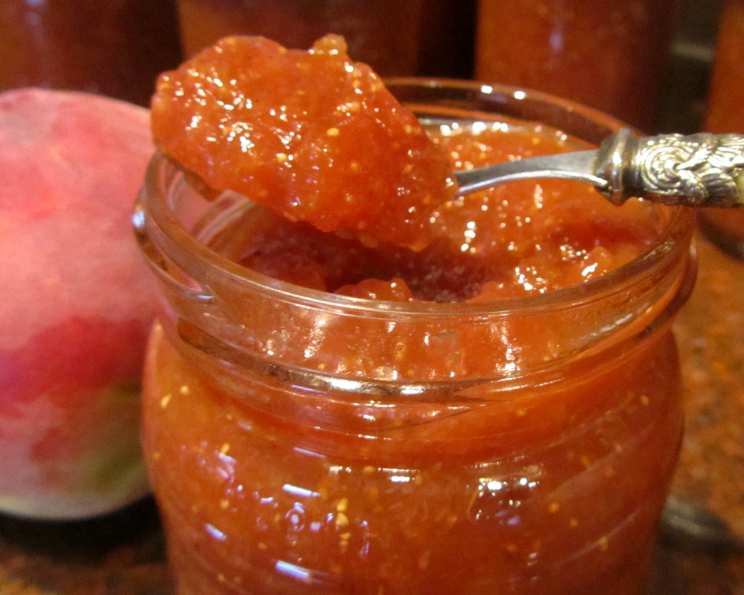
A Symphony of Summer: Fig and Peach Jam with a Hint of Grand Marnier
There’s a specific scent that hangs in the air in late summer, a heady, sweet perfume that speaks of sun-drenched orchards and the last days of abundance. For me, that scent is inextricably linked to the moment I first tasted a homemade fig and peach jam, a creation so divinely balanced it felt like capturing sunshine in a jar. The jam, kissed with Grand Marnier, warm cinnamon, a whisper of ginger, and the subtle elegance of vanilla, was a revelation. It wasn’t just fruit and sugar; it was a story told in flavors, a memory of warm afternoons and the generous spirit of a cook who understood how to elevate simple ingredients into something truly magical.
Recipe Overview
- Prep Time: 20 minutes
- Cook Time: 25 minutes
- Total Time: 45 minutes
- Yields: 9-10 1/2 pint jars
- Serves: 160
- Dietary Type: Dairy-Free
Ingredients
The magic of this jam lies in the quality of its fruits and the thoughtful selection of spices. Fresh, ripe ingredients are paramount for the best flavor.
- 2 cups brown sugar, packed
- 3 lbs figs, washed and quartered
- 3 large fresh peaches (pitted and chopped)
- 1⁄3 cup bottled lemon juice
- 1 3⁄4 ounces fruit pectin, no sugar needed
- 1-2 cinnamon stick(s)
- 1 teaspoon ground cardamom
- 1 teaspoon grated fresh ginger
- 1 vanilla bean, sliced in half lengthwise
- 2 cups white sugar
- 1⁄2 cup Grand Marnier
Ingredient Notes:
- Figs: Mission, Black Mission, or Brown Turkey figs will all work beautifully. Ensure they are ripe but still firm to the touch.
- Peaches: Choose freestone peaches if possible, as they are easier to pit and chop. The riper the peaches, the sweeter the jam, but avoid overripe or bruised fruit.
- Fruit Pectin: Using a “no sugar needed” pectin gives you more control over the sweetness of your jam.
- Vanilla Bean: The scraped seeds from the vanilla bean will infuse a deeper, more complex vanilla flavor than extract alone. You can also use a good quality vanilla extract if a vanilla bean is unavailable, adding it in the last few minutes of cooking.
- Grand Marnier: This orange liqueur adds a sophisticated depth and a subtle citrus note that complements the fruit wonderfully.
Equipment Needed
To embark on this jam-making adventure, you’ll want to have these tools at the ready:
- A large, heavy-bottomed saucepan (this is crucial for even heating and preventing scorching)
- A food processor
- Sterilized jars with lids and bands (for canning)
- A large pot or water bath canner for processing
- A ladle
- A jar lifter
- A kitchen towel
- A measuring cup
- A stirring spoon
Instructions
The process of making jam is a rewarding one, transforming humble fruits into a luscious preserve. Follow these steps carefully to achieve perfect results.
- Begin by preparing your fruit. In a food processor, pulse the figs and peaches together for about 8-10 times. The goal here is to break down the fruit, but to leave some delightful chunks for texture. You don’t want a smooth purée.
- In a large, heavy-bottomed saucepan, combine the brown sugar, pulsed figs and peaches, bottled lemon juice, fruit pectin, cinnamon stick(s), ground cardamom, grated fresh ginger, and the vanilla bean (halved lengthwise).
- Place the saucepan over high heat. Stir frequently to prevent the mixture from scorching. Continue to cook for approximately 10-15 minutes, or until the mixture reaches a full rolling boil. A full rolling boil is one that cannot be stirred down.
- Once a full rolling boil is achieved, stir in the white sugar.
- Return the mixture to a full rolling boil. Boil hard for 3 minutes, stirring constantly. This critical step ensures the pectin activates properly, setting the jam.
- Remove the saucepan from the heat. Carefully stir in the Grand Marnier.
- Using a spoon, remove and discard the cinnamon stick(s) and the vanilla bean pod(s).
- Skim off any foam that has accumulated on the surface of the jam. This will give your jam a clearer, more appealing appearance.
- While the jam is still hot, ladle it into hot, sterilized jars. Leave about 1/4 inch of headspace at the top of each jar.
- Wipe the rims of the jars clean with a damp kitchen towel. This is essential for a proper seal.
- Place the lids on the jars and screw the bands on fingertip tight.
- Place the filled jars into a hot water bath canner. Ensure the jars are covered by at least 1 inch of water.
- Process the jars in the boiling water bath for 10 minutes.
- After 10 minutes, shut off the heat but leave the jars in the hot water bath for an additional 5 minutes. This allows for a gradual cooling and helps ensure a good seal.
- Carefully remove the jars from the hot water bath using a jar lifter, without tilting them.
- Set the jars aside on a towel-lined counter to cool completely. You should hear a satisfying “ping” as each lid seals.
- Leave the jars undisturbed for 12 hours to allow them to cool and seal properly.
- After 12 hours, check the seals on the jars. Press the centers of the lids with your finger. If the lids do not spring back, they are vacuum-sealed, and the jam can be stored at room temperature.
- Another way to check for a seal is to remove the ring and try to gently lift the lid. If the lid lifts up, it was not sealed properly. If the lid flexes when pressed, there is no seal. Jars that have not sealed properly should be stored in the freezer or refrigerator.
Expert Tips & Tricks
Achieving jam-making perfection is an art, but a few well-placed tips can elevate your results from good to extraordinary.
- Sterilizing Jars: For best results, wash jars, lids, and bands in hot, soapy water. Rinse thoroughly. Place jars upright in the canner or a large pot, fill with water to cover, and bring to a simmer for 10 minutes before filling. Keep lids and bands in warm water until ready to use.
- Preventing Scorch: The heavy-bottomed saucepan is your best friend here. If you notice any signs of sticking or scorching, reduce the heat slightly and stir even more diligently.
- Achieving the Right Set: The 3-minute hard boil after adding white sugar is crucial for the jam to set properly. Don’t be tempted to reduce this time. The set can also be tested by placing a small amount of jam on a chilled plate; it should wrinkle when pushed.
- Foam Removal: While skimming off foam is primarily for aesthetics, it also contributes to a smoother texture. A small knob of butter or margarine added during the final minutes of cooking can help reduce foaming, though it’s not strictly necessary with this recipe.
- Adjusting Sweetness: While this recipe balances sweetness and fruit flavor, you can slightly adjust the white sugar if your peaches are exceptionally sweet or tart. However, remember that sugar plays a role in preservation and setting.
Serving & Storage Suggestions
This fig and peach jam is a versatile delight, perfect for a multitude of culinary applications.
- Serving: Spread generously on warm toast, flaky croissants, or buttery scones. It’s also divine swirled into yogurt or oatmeal, layered in a cheesecake, or used as a filling for tarts and pastries. For a truly decadent treat, serve it alongside a cheese board with aged cheddar or a creamy brie.
- Storage: Properly sealed jars can be stored at room temperature for up to a year. Once opened, refrigerate the jam and consume within 3-4 weeks. Unsealed jars should be stored in the refrigerator and will last for about 1 month, or in the freezer for up to 6 months.
Nutritional Information
This jam is a delicious indulgence, and like most preserves, it’s best enjoyed in moderation.
| Nutrient | Amount per Serving (approx. 1 tbsp) | % Daily Value |
|---|---|---|
| Calories | 50 | 2% |
| Total Fat | 0 g | 0% |
| Saturated Fat | 0 g | 0% |
| Cholesterol | 0 mg | 0% |
| Sodium | 0 mg | 0% |
| Total Carbohydrate | 13 g | 5% |
| Dietary Fiber | <1 g | 1% |
| Total Sugars | 12 g | 24% |
| Protein | <1 g | 0% |
Note: Nutritional values are estimates and can vary based on the specific fruits and brands used.
Variations & Substitutions
While this recipe is already a harmonious blend, feel free to experiment with these delightful variations:
- Boozy Variations: If Grand Marnier isn’t your preference, a good quality brandy or even a spiced rum could be a delicious substitute. For a non-alcoholic version, a splash of orange juice infused with orange zest can add a similar citrus note.
- Spice It Up: For a warmer, more autumnal twist, consider adding a pinch of nutmeg or a touch of cloves along with the cinnamon and cardamom.
- Berry Boost: While this recipe focuses on figs and peaches, you could introduce a small amount of raspberries or blackberries for added color and a tart counterpoint.
FAQs
Q: Why is it important to use a heavy-bottomed saucepan for making jam?
A: A heavy-bottomed pot distributes heat more evenly, preventing the jam from scorching and sticking to the bottom, which can impart an unpleasant flavor.
Q: How do I know if my jam has set properly?
A: The jam should reach a rolling boil that cannot be stirred down, and after the final 3-minute boil, it should wrinkle when a small amount is placed on a chilled plate and pushed with your finger.
Q: Can I use dried figs instead of fresh ones?
A: This recipe is specifically designed for fresh figs. Dried figs have a different moisture content and texture and would require significant adjustments to the recipe.
Q: What is the purpose of the lemon juice in this jam?
A: Lemon juice provides acidity, which brightens the fruit flavors and helps the pectin to set the jam properly.
Q: How long does homemade jam typically last after opening?
A: Once opened, homemade jam should be stored in the refrigerator and will typically last for 3-4 weeks.
Final Thoughts
This fig and peach jam is more than just a preserve; it’s a taste of sunshine captured. The rich sweetness of the figs, the delicate perfume of the peaches, and the sophisticated kiss of Grand Marnier create a flavor profile that is both comforting and utterly elegant. I encourage you to gather your ingredients, embrace the process, and fill your kitchen with the intoxicating aroma of this seasonal delight. Once you’ve tasted it, you’ll understand why capturing these fleeting flavors is such a cherished tradition. Enjoy it, share it, and savor the sweet rewards of your labor.