
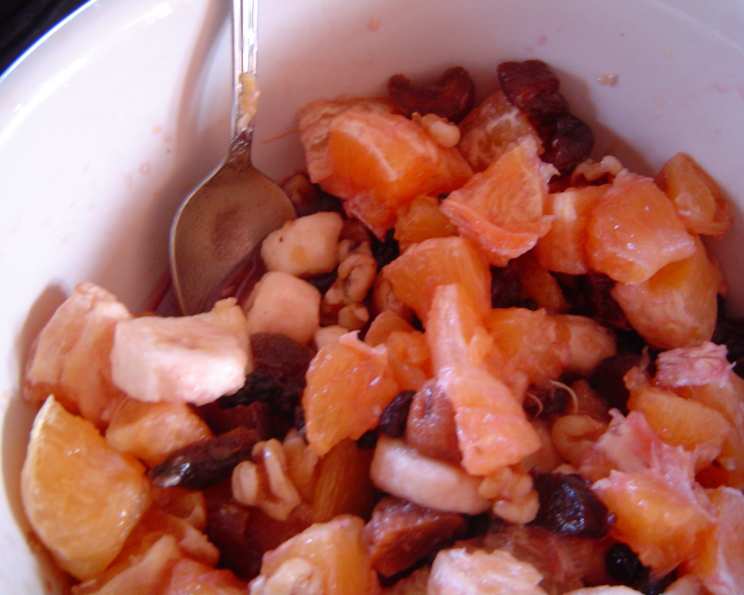
An Israeli Winter Fruit Cup: A Symphony of Sweetness
The scent of citrus, the burst of dried fruit, and the subtle warmth of red wine – this Israeli Winter Fruit Cup, born from the pages of The Jewish Vegetarian Year Cookbook, evokes a particular kind of winter comfort for me. It’s not just a fruit salad; it’s a dessert that whispers of ancient traditions and sun-drenched groves, even when the world outside is dusted with frost. I remember first encountering this recipe years ago, intrigued by the unusual combination of fresh citrus with sweet wine, a departure from the usual lemon-juice-and-honey dressings. It felt like a culinary bridge, connecting the familiar with the unexpected, and promising a delightful, easy-to-prepare treat perfect for those colder months when fresh fruit feels like a precious jewel. The simplicity belies a depth of flavor that truly shines, making it a go-to when I want something wholesome and satisfying without the fuss.
Recipe Overview
- Prep Time: 15 minutes
- Cook Time: 0 minutes
- Total Time: 15 minutes
- Servings: 10
- Yield: A generous fruit salad
- Dietary Type: Vegan, Dairy-Free, Gluten-Free
Ingredients
This recipe celebrates the natural sweetness of winter produce, enhanced by a touch of wine and the comforting chewiness of dried fruits.
- 8 large navel oranges
- 5 moist-dried figs
- 2 oranges, for juicing
- 4 large bananas
- 1 cup raisins
- 1/2 cup chopped walnuts
- 2/3 cup sweet red wine
- Sugar, to taste
Equipment Needed
The beauty of this Israeli Winter Fruit Cup lies in its minimal equipment needs, making it accessible for any home cook. You’ll primarily need:
- A sharp knife for peeling and chopping
- A cutting board
- A large mixing bowl
- A citrus juicer (or your hands will suffice!)
- A serving bowl or individual serving dishes
Instructions
The preparation for this delightful fruit cup is wonderfully straightforward, allowing the natural flavors of the ingredients to take center stage.
-
Begin by preparing the navel oranges. Peel them carefully, ensuring you remove all the white pith. Then, segment each orange, meticulously removing all membrane to ensure a smooth, pleasant texture. Once segmented, chop these prepared segments coarsely. Place these chopped oranges into a large mixing bowl.
-
Next, prepare the figs. If your dried figs are particularly firm, you can briefly soak them in warm water for a few minutes to soften them slightly, though the recipe calls for moist-dried, so this may not be necessary. Chop the figs and add them to the large mixing bowl with the chopped navel oranges.
-
Now, it’s time to add the bananas. Slice the large bananas into bite-sized pieces. Gently add the sliced bananas to the bowl containing the oranges and figs.
-
Prepare the fresh juice. Take the 2 oranges designated for juicing and squeeze their juice. Pour this freshly squeezed orange juice directly over the fruit in the large mixing bowl. This juice will help to meld the flavors and add a vibrant citrus note.
-
Incorporate the remaining dried ingredients and the wine. Stir in the raisins and the chopped walnuts. Finally, pour in the sweet red wine, which will add a unique depth and subtle sweetness to the fruit salad.
-
Taste the mixture. The sweetness will vary depending on the ripeness of the fruit and the sweetness of the wine. If you find it isn’t sweet enough for your preference, add sugar to taste, stirring until it is fully dissolved.
-
Gently toss all the ingredients together to ensure everything is well combined. Allow the fruit cup to sit for a few minutes for the flavors to meld before serving.
Expert Tips & Tricks
To elevate your Israeli Winter Fruit Cup from a simple mix to a truly memorable dessert, consider these professional insights:
- Orange Selection: For the best flavor and texture, use ripe, juicy navel oranges. Their natural sweetness is key to the dish. If the oranges you have are less sweet, you might need to be a touch more generous with the added sugar.
- Fig Texture: If your dried figs are on the drier side, a quick soak in a bit of warm water or even a tablespoon of the red wine for 10-15 minutes before chopping will rehydrate them beautifully, ensuring a pleasant chewiness.
- Wine Choice: The type of sweet red wine can subtly influence the final taste. A dessert wine like a Port or a rich, fruity Moscato d’Asti would work wonderfully. Avoid overly dry or bitter wines, as they can overpower the delicate fruit flavors.
- Walnut Toasting (Optional): For an added layer of flavor and a delightful crunch, lightly toast the chopped walnuts in a dry skillet over medium heat for 3-5 minutes, until fragrant. Let them cool completely before adding them to the fruit cup. This step is optional but highly recommended for a more complex nutty profile.
- Gentle Folding: When combining the ingredients, especially after adding the bananas, use a gentle folding motion rather than vigorous stirring. This preserves the shape of the fruit and prevents it from becoming mushy.
- Flavor Infusion: While this dish is ready to serve immediately, allowing it to sit for at least 30 minutes at room temperature (or chilled in the refrigerator if you prefer it cold) will give the flavors more time to meld and deepen, creating a more harmonious taste experience.
Serving & Storage Suggestions
This Israeli Winter Fruit Cup is incredibly versatile in how it can be enjoyed.
Serving:
Serve this fruit cup chilled or at room temperature. It makes a wonderful light dessert after a meal, a delightful brunch accompaniment, or even a sophisticated snack. For an elegant presentation, spoon the fruit mixture into individual glass bowls or glasses. You can garnish each serving with a small sprig of fresh mint, a sprinkle of toasted slivered almonds, or a dollop of dairy-free yogurt for added richness and visual appeal.
Storage:
Leftovers can be stored in an airtight container in the refrigerator for up to 2 days. The bananas may soften and brown slightly over time, but the flavor will remain enjoyable. It’s best to consume it within this timeframe for optimal freshness and texture. This fruit cup is not ideally suited for freezing, as the bananas and oranges can become watery and lose their appealing texture upon thawing.
Nutritional Information
Here is an estimated nutritional breakdown for a serving of this Israeli Winter Fruit Cup, based on 10 servings. Please note that these are approximate values and can vary based on the exact size and sweetness of the fruits used.
| Nutrient | Amount per Serving | % Daily Value |
|---|---|---|
| Calories | 225 kcal | 11% |
| Total Fat | 4.5 g | 6% |
| Saturated Fat | 0.5 g | 3% |
| Cholesterol | 0 mg | 0% |
| Sodium | 5 mg | 0% |
| Total Carbohydrate | 46 g | 17% |
| Dietary Fiber | 5.5 g | 20% |
| Sugars | 30 g | 60% |
| Protein | 3 g | 6% |
*Values are based on a 2,000 calorie diet.
Variations & Substitutions
While this recipe is wonderfully balanced as is, feel free to experiment with these ideas to make it your own:
- Citrus Swap: If navel oranges aren’t available or you fancy a change, grapefruits or even tangerines could be used. Adjust sweetness as needed, as grapefruits are more tart.
- Dried Fruit Medley: Feel free to mix up the dried fruits. Apricots, dates, or even a handful of cranberries (though they will add a tartness) could be incorporated.
- Nut Alternatives: If walnuts aren’t your preference, pecans or almonds would also be delicious. For a nut-free version, toasted sunflower seeds or pumpkin seeds can offer a pleasant crunch.
- Wine-Free Option: For those who prefer to omit the wine, simply increase the amount of orange juice by an additional 1/4 to 1/2 cup. You could also add a tablespoon or two of orange blossom water for an aromatic floral note.
- Spiced Variation: For a warmer, more autumnal flavor, consider adding a pinch of cinnamon or nutmeg to the fruit mixture. A touch of vanilla extract would also be lovely.
FAQs
Q: Can I make this fruit cup ahead of time?
A: Yes, you can prepare the fruit cup a few hours in advance. It’s best to add the bananas closer to serving time to prevent them from softening too much.
Q: What kind of sweet red wine is best?
A: A dessert wine like Port, a sweet Burgundy, or even a fortified muscat would work well. The key is a wine that is noticeably sweet.
Q: Is this recipe suitable for children?
A: Absolutely! It’s a healthy and delicious way for children to enjoy fruit. If you are concerned about the wine, you can easily substitute it with additional orange juice.
Q: How can I make this fruit cup more visually appealing?
A: Serve it in clear glasses to showcase the beautiful colors. Garnishes like fresh mint, a sprinkle of toasted coconut, or a drizzle of honey (if not strictly vegan) can add an extra touch of elegance.
Q: Can I use fresh figs if they are in season?
A: Fresh figs would be a wonderful addition! If using fresh figs, chop them and add them along with the navel oranges. You might find you need slightly less added sugar as fresh figs are naturally sweet.
A Taste of Winter Sunshine
This Israeli Winter Fruit Cup is more than just a collection of fruits; it’s a testament to the simple beauty of seasonal eating. It’s a dish that comforts, nourishes, and delights, proving that sometimes, the most exquisite flavors come from the most straightforward preparations. I encourage you to bring a little bit of this winter sunshine into your kitchen. It’s a recipe that celebrates the bounty of the season and the joy of sharing good food. Enjoy its sweet simplicity, and perhaps, like me, find your own special connection to this delightful creation.