
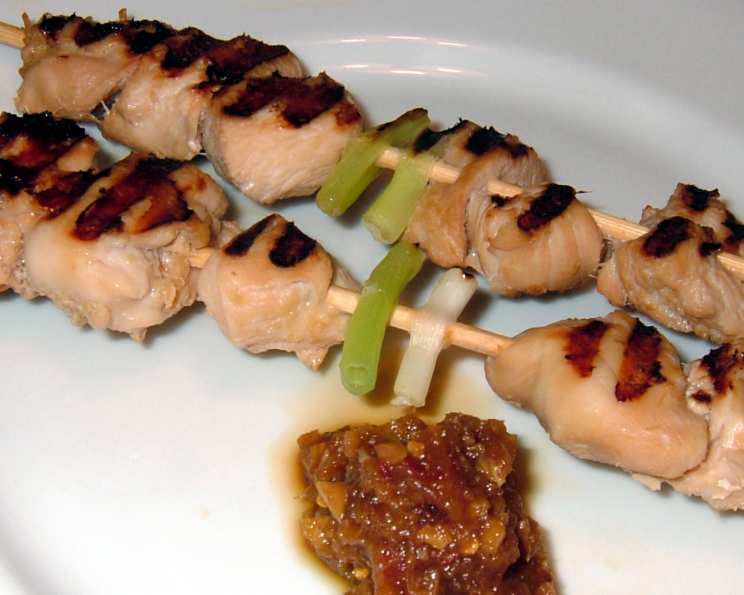
Yakitori Chicken: A Taste of Japanese Street Food Magic
There’s something profoundly comforting about the sizzle and aroma of yakitori grilling over charcoal. I vividly remember my first encounter with this Japanese street food staple during a trip to Tokyo. Wandering through a bustling night market, the air thick with the sweet and savory scent of grilling skewers, I was drawn to a small stall where a seasoned chef expertly flipped rows of glistening chicken. The simplicity of the ingredients, the precision of the cooking, and the sheer delight on people’s faces as they savored each bite left an indelible impression. It was more than just food; it was an experience – a testament to how humble ingredients, treated with care and tradition, can create something truly extraordinary.
Recipe Overview
- Prep Time: 15 minutes
- Cook Time: 10 minutes
- Total Time: 25 minutes
- Servings: 6
- Yield: Approximately 18-24 skewers
- Dietary Type: Dairy-Free
Ingredients
The beauty of yakitori lies in its elegant simplicity, allowing the quality of the chicken and the nuanced marinade to shine. For this classic preparation, you’ll need:
- 1/2 cup sake (Japanese rice wine)
- 1/2 cup soy sauce
- 1 tablespoon sugar
- 1 garlic clove, crushed
- 2 inches fresh gingerroot, grated
- 1 lb boneless, skinless chicken breast, cut into 1-inch cubes
- 3 leeks, white part only, cut into 1/2-inch pieces
Equipment Needed
To bring this delightful dish to life, you’ll find the following equipment helpful:
- Medium mixing bowl
- Whisk or fork
- Sharp knife
- Cutting board
- Baking sheet or broiling pan
- Metal skewers (if using wooden, soak them in water for at least 30 minutes prior to use to prevent burning)
- Basting brush
Instructions
Creating authentic yakitori at home is surprisingly straightforward, transforming simple ingredients into a sophisticated yet comforting meal. The key is in the marinade and the controlled, high-heat cooking.
- Prepare the Marinade: In a medium mixing bowl, combine the sake, soy sauce, sugar, crushed garlic clove, and grated gingerroot. Whisk these ingredients together until the sugar is completely dissolved, creating a fragrant and flavorful marinade.
- Marinate the Chicken: Add the cubed chicken breast to the marinade. Gently toss to ensure each piece is evenly coated. Allow the chicken to marinate for 15 minutes at room temperature. This brief marination period is sufficient to infuse the chicken with the delicious flavors without making it mushy.
- Preheat Your Broiler: Position an oven rack about 4 to 6 inches below the broiler element. Preheat your oven’s broiler to high heat. Ensure your broiler is hot before you begin cooking to achieve that signature char and caramelization.
- Assemble the Skewers: While the chicken marinates, prepare your skewers. If using metal skewers, lightly grease them to prevent sticking. Thread the skewers alternately with 3 pieces of marinated chicken and 2 pieces of leek. Aim for a consistent arrangement on each skewer, leaving a small space between pieces to allow for even cooking.
- Initial Broiling and Basting: Place the assembled skewers onto a baking sheet or broiling pan. Brush generously with the reserved marinade. Carefully place the pan under the preheated broiler. Broil for approximately 5 minutes.
- Second Basting and Finishing: After 5 minutes, baste the skewers again with the remaining marinade. Continue to broil for another 5 minutes, or until the chicken is cooked through and the leeks are tender-crisp with a slight char. The exact timing may vary depending on your broiler’s intensity and the thickness of your chicken pieces. Keep a close eye on them to prevent burning.
- Discard Remaining Marinade: Once cooked, remove the skewers from the broiler. It is crucial to discard any remaining marinade that was in the bowl or that has touched the raw chicken, as it is no longer safe to consume.
Expert Tips & Tricks
Elevating your yakitori experience is all about attention to detail. Here are a few insights from my years in the kitchen:
- Chicken Cut: While chicken breast is specified for its lean texture, you can also use chicken thighs for a richer, more succulent yakitori. If using thighs, trim any excess fat and adjust cooking time slightly as they can tolerate a bit more heat.
- Leek Preparation: Ensure you are using only the white and pale green parts of the leeks. The darker green tops can be tough and fibrous. Cut them into pieces that are roughly the same size as your chicken cubes for cohesive cooking and presentation.
- Skewering Technique: Don’t pack the ingredients too tightly onto the skewers. Allowing a little space between the chicken and leeks ensures that the heat can circulate freely, leading to more even cooking and a better sear.
- Broiler Watchfulness: Ovens and broilers can be notoriously finicky. The 5-minute intervals are a guideline. Your yakitori might be ready slightly sooner or take a minute longer. The key is to watch for that beautiful golden-brown color and the chicken to be opaque all the way through.
- Marinade Management: The marinade serves a dual purpose: flavoring the chicken and basting during cooking. Be mindful not to over-marinate the chicken for too long, especially with acidic ingredients, which can alter the texture. The 15-minute window is perfect for this recipe.
Serving & Storage Suggestions
Yakitori is best enjoyed immediately after cooking, when the chicken is tender and the leeks are perfectly charred. Serve these skewers hot off the grill or broiler. They are wonderful as a standalone appetizer or as part of a larger Japanese-inspired meal.
For an authentic experience, present them on a simple platter, perhaps garnished with a sprinkle of shichimi togarashi (Japanese seven-spice blend) for an extra kick, or some finely chopped scallions.
If you happen to have any leftovers (which is unlikely!), they can be stored in an airtight container in the refrigerator for up to 2 days. To reheat, gently warm them in a skillet over medium heat or in a toaster oven. Avoid microwaving, as it can make the chicken rubbery.
Nutritional Information
Here’s an estimated breakdown of the nutritional content per serving:
| Nutrient | Amount per Serving | % Daily Value |
|---|---|---|
| Calories | 160 kcal | 8% |
| Total Fat | 1.1 g | 1% |
| Saturated Fat | 0.3 g | 1% |
| Cholesterol | 44 mg | 14% |
| Sodium | 1399 mg | 58% |
| Total Carbohydrate | 11 g | 3% |
| Dietary Fiber | 1 g | 4% |
| Sugars | 4 g | 8% |
| Protein | 21 g | 42% |
Note: Nutritional values are estimates and can vary based on specific ingredients and portion sizes.
Variations & Substitutions
While this recipe is a classic for a reason, feel free to explore other delicious possibilities:
- Vegetable Swaps: If leeks aren’t your favorite, consider swapping them for bell pepper chunks, red onion wedges, or even shiitake mushroom caps. Ensure they are cut to a similar size for even cooking.
- Protein Alternatives: While chicken is traditional, other proteins work wonderfully. Pork tenderloin, shrimp, or even firm tofu can be marinated and skewered similarly. Adjust cooking times accordingly.
- Spicier Kick: For those who enjoy a little heat, add a pinch of red pepper flakes to the marinade or serve with a side of sriracha or a spicy dipping sauce.
- Gluten-Free Option: Ensure your soy sauce is gluten-free (tamari is a good alternative).
FAQs
Q: Can I make yakitori on a grill instead of under the broiler?
A: Absolutely! Grilling yakitori over direct heat will provide a wonderful smoky flavor and char. Preheat your grill to medium-high heat and cook the skewers, turning frequently, until the chicken is cooked through and nicely browned.
Q: How do I know when the chicken is cooked through?
A: The chicken should be opaque white throughout. You can check by cutting into a piece; there should be no pinkness. If using a thermometer, the internal temperature should reach 165°F (74°C).
Q: What kind of sake is best for this recipe?
A: Any good quality, dry sake will work well. You don’t need to use a premium, expensive sake; a standard cooking sake is perfectly fine.
Q: My skewers are burning on the grill/under the broiler. What can I do?
A: If using wooden skewers, make sure they have been soaked in water for at least 30 minutes beforehand. Also, ensure the heat isn’t too high, and keep a close eye on the skewers, turning them frequently. If parts are charring too quickly, you can move them to a cooler part of the grill or slightly higher in the oven.
Q: Can I prepare the chicken and marinade ahead of time?
A: You can prepare the marinade and cut the chicken a few hours in advance and keep them separate and refrigerated. Marinate the chicken just before you plan to cook for the best texture and flavor infusion.
Final Thoughts
Yakitori chicken is more than just a recipe; it’s a culinary invitation to experience the vibrant spirit of Japanese street food. It’s a dish that celebrates the joy of simple ingredients treated with respect and cooked with passion. Whether you’re looking for a quick and delicious appetizer for a gathering or a fun, interactive weeknight meal, this yakitori recipe delivers on all fronts. Give it a try, gather your friends and family, and savor the delightful dance of sweet, savory, and smoky flavors. I’d love to hear about your yakitori adventures!