
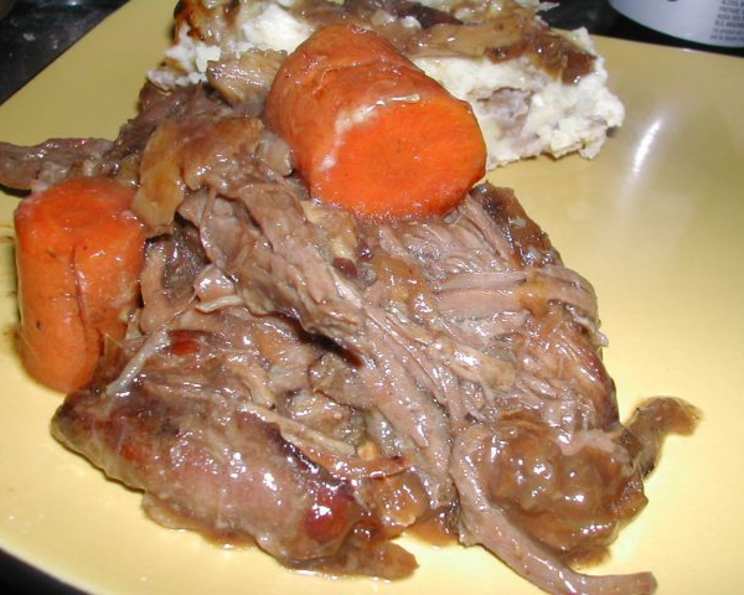
Forty Clove Dutch Oven Brisket: A Symphony of Garlic and Slow-Cooked Perfection
The aroma of slow-cooked meat, infused with the sweet, mellowed essence of garlic, has always been a siren song in my kitchen. I recall a particularly memorable winter evening, the kind where the wind howls outside and the world feels hushed. I had a beautiful (5-6 lb) beef brisket patiently waiting. The challenge was to transform it into something truly extraordinary, a dish that would warm us from the inside out. The inspiration struck: a classic brisket, elevated by an abundance of garlic, slow-braised until it surrendered its toughness and melted into pure, unadulterated flavor. This recipe, a testament to patience and the magic of low and slow cooking, became an instant family favorite, a comforting centerpiece for many gatherings to come.
Recipe Overview
- Prep Time: 15 minutes
- Cook Time: 2 hours 30 minutes to 3 hours
- Total Time: 2 hours 45 minutes to 3 hours 15 minutes
- Servings: 6-8
- Yield: 1 Brisket
- Dietary Type: Gluten-Free (ensure beef stock is gluten-free)
Ingredients
- 1 (5-6 lb) beef brisket, rinsed and patted dry
- Salt, to taste
- Fresh ground pepper, to taste
- 2 tablespoons olive oil
- 40 large garlic cloves, peeled
- 1 large sweet onion, thick-sliced and separated into rings
- 1⁄4 cup red wine
- 2 1⁄2 cups beef stock
- 1 tablespoon tomato paste
- 2 bay leaves
- 1-2 teaspoons dried basil
- 1⁄2 teaspoon oregano
Equipment Needed
- Large oven-safe skillet or a Dutch oven with a lid
- Sheet pan
- Food processor or immersion blender
- Foil
- Platter
Instructions
The journey to fork-tender brisket begins with a few crucial steps, each building upon the last to create a depth of flavor that is truly remarkable. Patience is your most valuable ingredient here.
- Preheat your oven to 325 degrees F (160 degrees C). This gentle, consistent heat is key to breaking down the connective tissues in the brisket, rendering it incredibly tender.
- Generously season the brisket on both sides with kosher salt and freshly-ground black pepper. Don’t be shy; a well-seasoned piece of meat is the foundation of a flavorful dish.
- Place your large oven-safe skillet or Dutch oven over medium-high heat on the stovetop. Add the olive oil and allow it to shimmer, coating the bottom of the pan.
- Carefully place the brisket into the hot skillet, fat-side down first. Sear it until a deep golden-brown crust forms, then flip and sear the other side until equally browned. This searing process creates delicious fond, those browned bits on the bottom of the pan, which will contribute immensely to the sauce later. Once seared, remove the brisket to a separate sheet pan and set it aside.
- Reduce the heat to medium. Add the garlic cloves and sweet onion rings to the same skillet, using the rendered fat and the remaining olive oil. Cook and stir them until the garlic begins to turn a lovely golden hue and the sweet onions become limp and lightly colored. This gentle sautéing sweetens the aromatics and lays the groundwork for the aromatic braising liquid.
- Pour in the red wine. As it heats, deglaze the pan by scraping up all those browned bits from the bottom. This is where a great deal of the brisket’s flavor resides. Let the wine simmer and reduce slightly for about a minute.
- Stir in the beef stock, tomato paste, bay leaves, dried basil, and oregano. Bring this mixture back to a gentle simmer.
- Once simmering, turn off the heat. Carefully move the garlic and onions to the sides of the skillet. Return the seared brisket to the skillet, nestling it into the aromatic liquid. Spoon the garlic and onions over the top of the brisket.
- Cover the skillet or Dutch oven tightly with its lid. Place the covered vessel into the preheated oven.
- Bake for 1 hour at 325 degrees F (160 degrees C).
- After the first hour, reduce the oven temperature to 300 degrees F (150 degrees C). Continue to bake for an additional 1 1/2 to 2 hours, or until the brisket is fork-tender. This means that when you insert a fork into the thickest part of the brisket, it should slide in and out with very little resistance.
- Once the brisket is perfectly tender, carefully remove it from the skillet and place it onto a platter. Cover it loosely with foil and allow it to rest for at least 10 minutes. This resting period is crucial for the juices to redistribute throughout the meat, ensuring a moist and tender final product.
- While the brisket rests, prepare the sauce. Remove about half of the garlic cloves and most of the onions from the skillet and place them into a small bowl. Skim off any excess oil from the pan gravy and discard it.
- Transfer the remaining pan gravy and the garlic and onions left in the skillet into a food processor (or use an immersion blender). Blend until smooth. If you desire a thicker gravy, you can prepare a cornstarch slurry by whisking together 1 tablespoon of cornstarch with 2 tablespoons of cold water. Bring the blended gravy back to a boil on the stovetop, then whisk in the cornstarch slurry until thickened.
- Return the reserved whole garlic cloves and onions to the thickened gravy. Stir to combine.
- Slice the brisket diagonally across the grain to ensure maximum tenderness. Serve the sliced brisket with the luscious pan gravy spooned generously over the top. Enjoy this deeply flavorful and comforting dish!
Expert Tips & Tricks
- Fat Cap is Your Friend: When selecting your brisket, look for one with a good, even fat cap. This fat will render down during the long braise, basting the meat and adding incredible moisture and flavor.
- Don’t Rush the Sear: A proper sear is essential for building flavor. Ensure your pan is hot enough before adding the brisket, and don’t overcrowd it. Cook in batches if necessary.
- Garlic Magic: The 40 cloves of garlic, when slow-cooked, transform from pungent to sweet and spreadable. Don’t be intimidated by the quantity; they become a delightful, almost buttery addition to the sauce.
- Checking for Tenderness: Brisket cooking times can vary based on the thickness and marbling of the meat. The best way to check for doneness is by feel. It should yield easily to gentle pressure. If it’s still firm, it needs more time.
- Making Ahead: This brisket is an excellent candidate for making ahead. You can braise it the day before, let it cool completely in its braising liquid, then refrigerate. The next day, skim off the solidified fat from the top (this is easier when cold) and gently reheat the brisket in its sauce. The flavors often deepen overnight.
Serving & Storage Suggestions
This Forty Clove Brisket is a showstopper on its own, but it pairs beautifully with a variety of classic comfort food sides. Consider serving it with creamy mashed potatoes to soak up that glorious gravy, a simple green salad for a touch of freshness, or roasted root vegetables for a hearty, seasonal accompaniment.
Leftovers can be stored in an airtight container in the refrigerator for 3-4 days. To reheat, gently warm the brisket and its sauce over low heat on the stovetop or in a covered dish in a low oven (around 275°F or 135°C) until heated through. Avoid microwaving, as it can sometimes dry out the meat. For longer storage, the cooled brisket and gravy can be frozen for up to 2-3 months. Thaw overnight in the refrigerator before reheating.
Nutritional Information
| Nutrient | Amount per Serving | % Daily Value |
|---|---|---|
| Calories | 962.5 kcal | |
| Calories from Fat | 710 kcal | |
| Total Fat | 78.9 g | 121% |
| Saturated Fat | 30.9 g | 154% |
| Cholesterol | 207 mg | 68% |
| Sodium | 445.8 mg | 18% |
| Total Carbohydrate | 8.5 g | 2% |
| Dietary Fiber | 0.8 g | 3% |
| Sugars | 1.3 g | 5% |
| Protein | 50.3 g | 100% |
Note: Nutritional information is an estimate and can vary based on specific ingredients and portion sizes.
Variations & Substitutions
While this recipe is magnificent as is, there’s always room for culinary exploration:
- Herbal Infusion: Experiment with other hearty herbs like rosemary or thyme during the braising process for a slightly different aromatic profile.
- Spicy Kick: Add a pinch of red pepper flakes to the sauce for a subtle warmth that complements the richness of the brisket.
- Vegetable Medley: Feel free to add other robust vegetables like carrots or celery to the braising liquid for added flavor and texture.
- Wine Swap: If red wine isn’t your preference, a dry sherry or even a splash of balsamic vinegar can offer a different but equally delicious deglazing element.
FAQs
Q: Why do I need so many garlic cloves?
A: The large quantity of garlic, when slow-cooked for an extended period, transforms from pungent to sweet and creamy, creating a rich, deeply flavored sauce.
Q: Can I use a different cut of beef?
A: This recipe is specifically designed for brisket due to its connective tissue, which breaks down during slow cooking to create tenderness. Other cuts may not yield the same result.
Q: My brisket isn’t tender after the suggested cooking time. What should I do?
A: Don’t worry! Brisket is forgiving. Simply continue cooking at the lower temperature until it reaches fork-tender. It’s better to cook it longer than to serve tough meat.
Q: How can I make the gravy smoother if my food processor isn’t powerful enough?
A: You can strain the solids from the liquid, then blend the liquid separately, or pass the entire mixture through a fine-mesh sieve for an ultra-smooth sauce.
Q: Can I prepare this in a slow cooker?
A: Yes, you can adapt this recipe for a slow cooker. Sear the brisket as instructed, sauté the aromatics, deglaze, and then combine all ingredients (except the cornstarch slurry, if using) in the slow cooker. Cook on low for 8-10 hours or on high for 4-5 hours, until tender. Thicken the sauce on the stovetop afterwards if desired.
This Forty Clove Dutch Oven Brisket is more than just a recipe; it’s an experience. It’s an invitation to slow down, to savor the process, and to revel in the deeply satisfying flavors that emerge from patience and a few humble, yet magical, ingredients. Gather your loved ones, set the table, and prepare to be enchanted.