Gado-Gado: A Symphony of Textures and Flavors in Indonesian Peanut Sauce
The first time I truly understood the magic of Gado-Gado was at a bustling night market in Yogyakarta. The air was thick with the aroma of spices, grilled meats, and the sweet, nutty fragrance of simmering peanut sauce. Watching the vendor artfully assemble bowls with an array of vibrant vegetables, fried tofu, and tempeh, all crowned with that luscious, golden sauce, was a culinary ballet. It wasn’t just food; it was an experience, a vibrant tapestry of Indonesian flavors that I’ve been chasing and recreating ever since. This dish, a beloved staple across Indonesia, is a testament to how simple, fresh ingredients, elevated by a stellar sauce, can create something truly extraordinary.
Recipe Overview
- Prep Time: 20 minutes
- Cook Time: 10 minutes (for boiling vegetables) + time for frying tofu/tempeh if not pre-fried
- Total Time: 30 minutes (assuming pre-fried tofu/tempeh)
- Servings: 5-6
- Yield: 5-6 plates
- Dietary Type: Vegetarian, Vegan (if no shrimp paste used in sauce)
Ingredients
This vibrant Indonesian salad is a celebration of fresh produce and the irresistible allure of peanut sauce. The beauty of Gado-Gado lies in its customizable nature, but here’s a classic rendition to get you started:
For the Salad Base:
- 100 g cucumbers, thinly sliced (optional, but adds a refreshing crunch)
- 100 g tofu, firm, fried until golden brown and sliced into bite-sized pieces (optional, but highly recommended for texture)
- 100 g tempeh, fermented soybean cake, fried until golden brown and sliced into bite-sized pieces
- 25 g lettuce, leaves separated and roughly torn or sliced
- 50 g cabbage, thinly sliced and boiled for 2 minutes in boiling water, then thoroughly drained to maintain crispness
For the Authentic Peanut Sauce:
- 250 g peanuts, raw or roasted, fried until deeply golden and fragrant (this step is crucial for flavor development)
- 250 ml coconut milk, full-fat for richness
- 3 garlic cloves, minced
- 1 red onion, small, roughly chopped (or 1 clove if using a larger red onion)
- 1 bay leaf
- 75 g lump sugar (also known as palm sugar or gula jawa), a deeply caramel-flavored sweetener
- Salt (optional, to taste)
- 500 ml water
Equipment Needed
While Gado-Gado doesn’t demand a specialized kitchen, a few tools will make the process smoother:
- A wok or deep frying pan for frying tofu and tempeh.
- A saucepan for boiling vegetables and simmering the peanut sauce.
- A blender or food processor for pulverizing the fried peanuts.
- A strainer for draining boiled vegetables.
- A knife and cutting board for preparing ingredients.
- A serving platter or individual plates.
Instructions
Creating Gado-Gado is an exercise in layering flavors and textures, culminating in that irresistible peanut sauce.
- Prepare the Peanut Sauce Base: Begin by frying the peanuts in a dry pan over medium heat until they are a rich golden brown and incredibly fragrant. Be careful not to burn them. Once fried, set them aside to cool slightly.
- Blend the Peanut Mixture: In a blender or food processor, combine the fried peanuts, minced garlic cloves, and roughly chopped red onion. Process until a coarse paste forms. You may need to scrape down the sides a few times.
- Simmer the Sauce: Transfer the peanut paste to a saucepan. Add the coconut milk, bay leaf, and lump sugar. Pour in the 500 ml of water. Stir everything together to combine.
- Cook the Sauce to Coagulate: Place the saucepan over medium heat. Bring the mixture to a boil, then immediately reduce the heat to low and let it simmer gently, stirring frequently. The sauce needs to cook until it coagulates, meaning it will thicken and become rich and glossy. This process can take about 10-15 minutes. If the sauce becomes too thick, you can add a little more water, a tablespoon at a time, to reach your desired consistency. Taste and add salt if desired. Remove the bay leaf before serving.
- Prepare the Salad Components: While the sauce simmers, prepare your salad ingredients. If your tofu and tempeh are not pre-fried, fry them in oil until golden brown and crispy, then drain on paper towels and slice. Boil the sliced cabbage in boiling water for precisely 2 minutes, then drain thoroughly. Slice the cucumbers (if using). Prepare the lettuce by washing and tearing or slicing it.
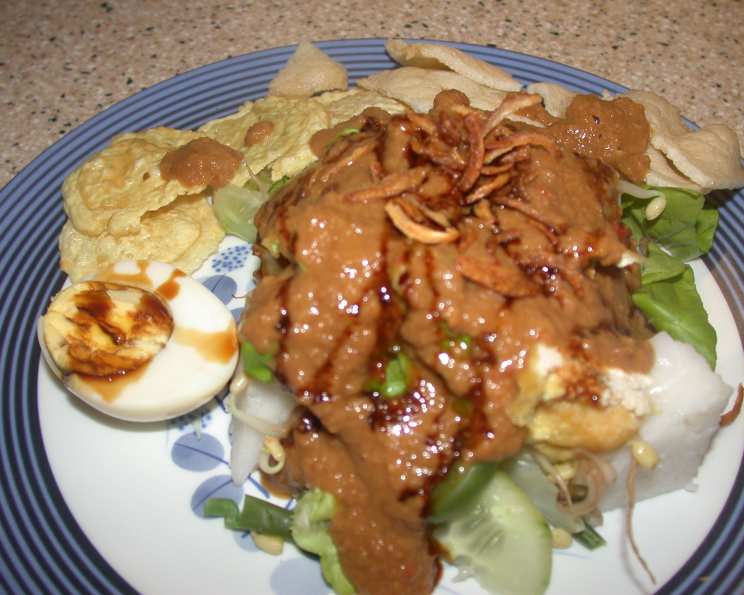
- Assemble Your Gado-Gado: To serve, artfully stack the prepared vegetables, including the boiled cabbage, lettuce, fried tofu, and tempeh, on a serving platter or individual plates.
- Drench and Serve: Generously drizzle the warm, coagulated peanut sauce over the stacked vegetables.
Expert Tips & Tricks
- Peanut Perfection: The key to a truly exceptional peanut sauce is the quality of your fried peanuts. Don’t rush this step. Fry them low and slow until they’re deeply golden and release their oils – this is where the rich flavor comes from.
- Lump Sugar’s Nuance: Lump sugar (palm sugar) provides a complex caramel sweetness that granulated sugar can’t replicate. If you can’t find it, use dark brown sugar as a substitute, but adjust sweetness to taste.
- Texture is King: Gado-Gado is all about contrasting textures. Ensure your vegetables are crisp and fresh, your tofu and tempeh are perfectly fried, and your sauce is rich and smooth.
- Sauce Consistency: The peanut sauce should be thick enough to coat the ingredients but not so thick that it’s clumpy. If it separates slightly upon standing, a gentle re-stir over low heat will bring it back together.
- Make-Ahead Magic: The peanut sauce can be made a day in advance and gently reheated. This is a great time-saver for busy weeknights. Just be sure to store it in an airtight container in the refrigerator.
Serving & Storage Suggestions
Gado-Gado is best served immediately after assembly while the peanut sauce is warm and the vegetables are crisp. It makes a fantastic light lunch, a vibrant appetizer, or a satisfying vegetarian main course.
Leftovers of the assembled salad are not ideal as the vegetables will wilt. However, the peanut sauce can be stored in an airtight container in the refrigerator for up to 3 days. Gently reheat it over low heat, adding a splash of water or coconut milk if it has thickened too much.
Nutritional Information
Here’s an approximate nutritional breakdown for a serving of Gado-Gado, recognizing that variations in ingredients and portion sizes will affect the final numbers.
| Nutrient | Amount per Serving | % Daily Value |
|---|---|---|
| Calories | 493.2 kcal | |
| Calories from Fat | 69% | |
| Total Fat | 37.6 g | 57% |
| Saturated Fat | 13.4 g | 67% |
| Cholesterol | 0 mg | 0% |
| Sodium | 40.6 mg | 1% |
| Total Carbohydrate | 29.3 g | 9% |
| Dietary Fiber | 5.3 g | 21% |
| Sugars | 17.8 g | 71% |
| Protein | 18.7 g | 37% |
Note: Nutritional values are estimates and can vary based on specific ingredients and quantities used.
Variations & Substitutions
- Add More Greens: Feel free to incorporate other blanched or raw leafy greens like spinach, bean sprouts (tauge), or water spinach (kangkung).
- Egg-cellent Addition: For a non-vegetarian version, add a hard-boiled egg, sliced, to the ensemble.
- Crunchy Bits: Top your Gado-Gado with a sprinkle of fried shallots or crushed roasted peanuts for an extra layer of crunch.
- Spice It Up: For those who love a kick, add a finely chopped chili pepper (like a bird’s eye chili) to the peanut sauce while it simmers.
- Tamarind Tang: A teaspoon of tamarind paste added to the peanut sauce can introduce a lovely sour note.
FAQs
Q: What is “lump sugar,” and why is it used in the peanut sauce?
A: Lump sugar, also known as palm sugar or gula jawa, is a natural sweetener derived from coconut or palm sap. It provides a richer, more complex caramel flavor and a deeper color compared to refined white sugar.
Q: Can I use pre-ground peanut butter for the sauce?
A: While you can, it’s highly recommended to use freshly fried peanuts. The frying process unlocks a depth of flavor and aroma that pre-made peanut butter won’t achieve.
Q: How do I know when the peanut sauce has “coagulated”?
A: Coagulation in this context refers to the sauce thickening and emulsifying. It will transform from a somewhat liquid mixture to a rich, glossy, and cohesive sauce that coats the back of a spoon beautifully.
Q: Is Gado-Gado considered a healthy dish?
A: Yes, Gado-Gado is generally considered a healthy dish. It’s rich in fiber from the vegetables and protein from the tofu and tempeh. The healthy fats come from the peanuts and coconut milk. Portion control of the peanut sauce is key for managing calorie intake.
Q: Can I make this dish completely vegan?
A: This recipe is naturally vegan if you omit any shrimp paste that might traditionally be found in some Indonesian peanut sauces. The ingredients listed here are all plant-based.
Final Thoughts
Gado-Gado is more than just a salad; it’s a culinary journey to the heart of Indonesian cuisine. Its beautiful simplicity lies in the marriage of fresh, crisp vegetables with the deeply savory and slightly sweet embrace of the peanut sauce. It’s a dish that proves that comfort food can also be incredibly wholesome and satisfying. So, gather your ingredients, embrace the vibrant colors, and let the intoxicating aroma of simmering peanut sauce transport you. I encourage you to try this recipe, play with the components, and discover your own perfect Gado-Gado. Share your creations and your experiences – I’d love to hear about your Gado-Gado adventures!