
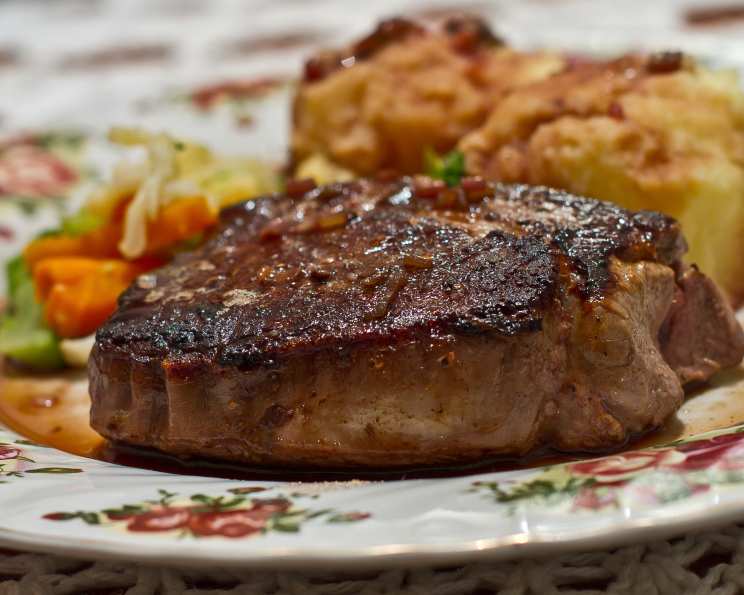
Filet Mignon with Port and Mustard Sauce: A Symphony of Elegance
There are certain dishes that, with just a single bite, transport you back to a specific moment, a cherished memory. For me, Filet Mignon with Port and Mustard Sauce is one such culinary cornerstone. I recall a crisp autumn evening years ago, dining at a small, unassuming bistro tucked away in a quiet European city. The aroma of roasted meats and simmering sauces filled the air, and when this dish arrived, it was nothing short of an edible masterpiece. The steak, a perfect ruby-red within, was draped in a velvety sauce that whispered of richness and depth. It was a revelation, a testament to how simple, high-quality ingredients, treated with respect and a touch of finesse, can create an experience far greater than the sum of their parts. This recipe, born from that memory and refined through countless kitchen experiments, aims to capture that very magic for your own table.
Recipe Overview
- Prep Time: 15 minutes
- Cook Time: 10 minutes
- Total Time: 25 minutes
- Servings: 4
- Yield: 4 servings
- Dietary Type: Not specified
Ingredients
- 16 ounces filet mignon steaks, trimmed
- ¼ teaspoon salt
- ¼ teaspoon black pepper
- ½ cup port wine (or other sweet red wine, such as a ruby port)
- 3 tablespoons shallots, finely chopped
- ½ cup fat-free low-sodium beef broth
- 1 tablespoon Dijon mustard
Equipment Needed
- Large nonstick skillet
- Tongs
- Measuring cups and spoons
- Small bowl (optional, for resting steak)
Instructions
- Begin by preparing your ingredients. Ensure your filet mignon steaks are at room temperature for more even cooking. Pat them thoroughly dry with paper towels; this is crucial for achieving a beautiful sear. Trim any excess fat or connective tissue if your butcher hasn’t already.
- Season both sides of the filet mignon steaks generously with salt and black pepper. Don’t be shy with the seasoning; it forms the foundation of flavor.
- Place a large nonstick skillet over medium-high heat. Allow the skillet to become quite hot. This initial heat is key to a perfect crust.
- Once the skillet is hot, lightly coat the pan with cooking spray. You want just enough to prevent sticking without overwhelming the natural flavor of the steak.
- Carefully add the seasoned filet mignon steaks to the hot skillet. Listen for that satisfying sizzle!
- Cook the steaks for approximately 3½ minutes on each side. This duration is a guideline for achieving a medium-rare to medium doneness, depending on the thickness of your steaks. For a more precise check, you can use a meat thermometer: 130-135°F (54-57°C) for medium-rare, 135-140°F (57-60°C) for medium.
- Once cooked to your desired degree of doneness, remove the filet mignon steaks from the skillet. Place them on a clean plate or cutting board, tent them loosely with foil, and allow them to rest for at least 5-10 minutes. This resting period is essential for the juices to redistribute throughout the steak, ensuring a tender and moist result.
- While the steaks are resting, return the same skillet to medium heat. Add the port wine and the chopped shallots.
- Cook this mixture, stirring gently, for about 1 minute. You are aiming for the port wine to almost completely evaporate. As it reduces, use a wooden spoon or spatula to scrape up any browned bits (fond) that have adhered to the bottom of the pan. These browned bits are packed with flavor and will form the base of your exquisite sauce.
- Pour in the fat-free low-sodium beef broth. Continue to cook this mixture, stirring occasionally, until it has reduced to about ⅓ cup. This process should take approximately another 1 minute. The sauce will begin to thicken slightly as it reduces.
- Remove the skillet from the heat. This is important to prevent the Dijon mustard from overheating, which can alter its flavor.
- Stir in the Dijon mustard until it is thoroughly combined with the sauce. The mustard will add a subtle tang and creamy emulsification to the port and broth reduction.
- To serve, spoon the warm Port and Mustard Sauce generously over the rested filet mignon steaks.
Expert Tips & Tricks
The quality of your filet mignon will inherently dictate the final outcome of this dish. Opt for well-marbled, center-cut steaks if possible for the most tender and flavorful experience. When searing, resist the urge to move the steaks around in the pan too much during the initial cooking time; let them develop that beautiful, caramelized crust undisturbed. If your skillet seems to be getting too hot during the sauce-making process, don’t hesitate to momentarily remove it from the heat. The residual heat will continue the cooking and reduction process. For an even smoother sauce, you can strain out the shallots after combining the mustard, though I personally enjoy the texture they provide.
Serving & Storage Suggestions
This Filet Mignon with Port and Mustard Sauce is best served immediately after plating. The richness of the steak and sauce pairs beautifully with a variety of classic sides. Consider creamy mashed potatoes, roasted asparagus, or a delicate gratin dauphinois. A crisp green salad with a light vinaigrette can also provide a refreshing counterpoint.
Leftovers can be stored in an airtight container in the refrigerator for up to 2 days. The sauce and steak can be reheated gently. For the steak, a brief warm-up in a skillet over low heat or in a moderate oven (around 300°F/150°C) is recommended to prevent overcooking. The sauce can be reheated in a small saucepan over low heat, adding a tablespoon of water or broth if it seems too thick. Avoid microwaving the steak, as it can lead to a rubbery texture.
Nutritional Information
| Nutrient | Amount per Serving | % Daily Value |
|---|---|---|
| Calories | 55.5 | – |
| Calories from Fat | 1 g | 3% |
| Total Fat | 0.2 g | 0% |
| Saturated Fat | 0 g | 0% |
| Cholesterol | 0 mg | 0% |
| Sodium | 191.5 mg | 7% |
| Total Carbohydrate | 5.6 g | 1% |
| Dietary Fiber | 0.2 g | 0% |
| Sugars | 2.3 g | 9% |
| Protein | 0.4 g | 0% |
Note: Nutritional information is an estimate and can vary based on specific ingredients and portion sizes used.
Variations & Substitutions
While the port wine offers a distinctively smooth sweetness that complements the richness of the filet, if it’s unavailable, a good quality sweet red wine like a Merlot or a Zinfandel can be an excellent substitute. The flavor profile will shift slightly but remain delicious. For those who prefer a less intense mustard flavor, a milder whole-grain mustard can be used in place of Dijon. If you find shallots too assertive, very finely minced red onion can be used, though the flavor will be less refined.
FAQs
Q: What is the best way to ensure a perfect sear on my filet mignon?
A: Ensure your skillet is very hot before adding the steaks, and that the steaks are thoroughly patted dry. Don’t overcrowd the pan, and resist the urge to move them around too much during cooking.
Q: How can I tell when my filet mignon is cooked to the correct doneness?
A: The most accurate method is to use an instant-read meat thermometer. For medium-rare, aim for 130-135°F (54-57°C), and for medium, 135-140°F (57-60°C).
Q: My sauce seems too thin. How can I thicken it?
A: You can allow it to simmer for an extra minute or two to reduce further. Alternatively, you can create a beurre manié (a paste of equal parts softened butter and flour) and whisk a small amount into the simmering sauce until thickened.
Q: Can I make the sauce ahead of time?
A: While it’s best made fresh, you can prepare the port and shallot reduction with the beef broth up to the point of adding the mustard. Reheat gently and then whisk in the mustard just before serving.
Q: What if I don’t have low-sodium beef broth?
A: Regular beef broth can be used, but you may need to adjust the salt seasoning at the end. Be mindful of its sodium content.
Final Thoughts
There’s a profound satisfaction in creating a dish that speaks of elegance and indulgence with such relative simplicity. This Filet Mignon with Port and Mustard Sauce is a testament to that principle. It’s a dish that feels special occasion-worthy yet is entirely achievable for the home cook looking to impress. I encourage you to embrace the process, savor the aromas as they fill your kitchen, and share this culinary creation with those you love. Serve it alongside a robust Cabernet Sauvignon or a velvety Pinot Noir for a truly memorable dining experience. May your forks be ever in your favor!