
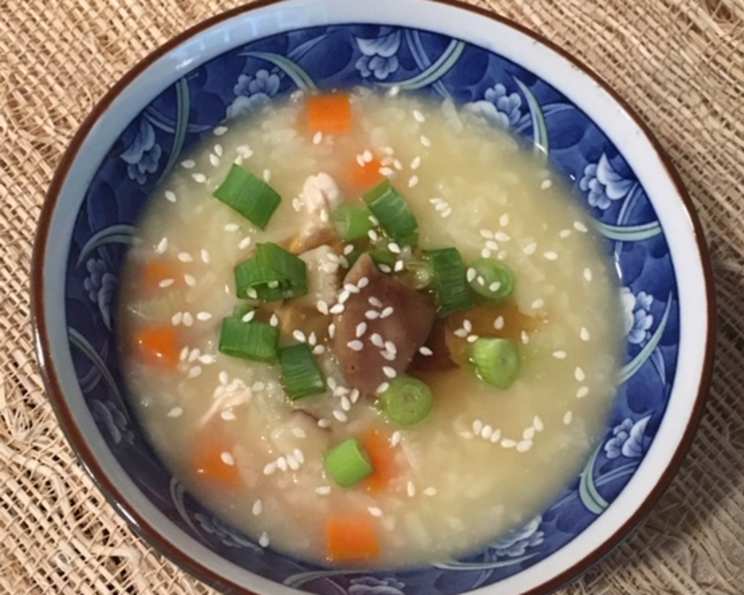
Korean Chicken Porridge (Dakjuk): A Comforting Bowl of Korean Soul Food
There are some dishes that transcend mere sustenance; they are edible memories, woven into the fabric of our lives with threads of warmth and comfort. For me, Dakjuk, Korean Chicken Porridge, is one of those dishes. I remember being a child, feverish and miserable, and my grandmother would quietly enter my room, a steaming bowl in hand. The aroma of the subtly seasoned chicken and soft, yielding rice was a balm to my aching throat, a promise of recovery. It wasn’t just food; it was a hug in a bowl, a testament to her love and the enduring power of simple, nourishing ingredients. Even now, the scent of simmering rice and chicken stock transports me back to those moments, a reminder that sometimes, the most profound comfort comes in the simplest of forms.
Recipe Overview
- Prep Time: 60 minutes (includes soaking time)
- Cook Time: 35 to 40 minutes
- Total Time: 1 hour 35 minutes to 1 hour 40 minutes
- Servings: 4
- Yield: Approximately 4 servings
- Dietary Type: Gluten-Free (if using gluten-free stock), Dairy-Free
Ingredients
The beauty of Dakjuk lies in its elegant simplicity, relying on a few high-quality ingredients to create a deeply satisfying meal.
- 1 cup short-grain rice (or sweet rice/glutinous rice)
- 6 cups chicken stock (opt for a good quality store-bought or homemade stock for the best flavor foundation)
- 1 ½ cups chicken, shredded and well seasoned (this is where you can leverage leftovers! Aim for chicken seasoned with salt, garlic, sesame oil, and pepper.)
- 1 medium carrot
- 1 stalk celery
- 3-4 shiitake mushroom caps
- 2 tablespoons sesame oil
- 2 scallions, finely chopped
- 1 teaspoon sesame seeds
Equipment Needed
For this comforting porridge, you won’t need a vast array of specialized tools.
- A medium to large heavy-bottomed pot or Dutch oven for even cooking and to prevent sticking.
- A knife and cutting board for preparing the vegetables.
- A fine-mesh sieve for draining the rice.
Instructions
Crafting a perfect bowl of Dakjuk is a straightforward process that rewards patience and gentle attention. The key is to allow the rice to break down and soften beautifully in the savory chicken stock.
-
Begin by preparing your rice. Rinse the short-grain rice under cold running water until the water runs clear. This removes excess starch, which helps prevent the porridge from becoming overly gummy. Once rinsed, place the rice in a bowl and soak it in cool water for at least one hour. This crucial step softens the rice grains, allowing them to cook more evenly and quickly, contributing to a creamier texture. After soaking, drain the rice thoroughly using a fine-mesh sieve.
-
Next, prepare your aromatics and vegetables. Finely chop the carrot and celery. For the shiitake mushrooms, remove any tough stems if present, and then finely chop the caps. Uniformly chopped vegetables ensure they cook at the same rate and distribute evenly throughout the porridge.
-
In your chosen heavy-bottomed pot, combine the drained rice and the chicken stock. Place the pot over medium-high heat and bring the mixture to a boil, stirring occasionally.
-
Once boiling, reduce the heat to medium-low. Continue to cook, stirring occasionally, for approximately 20 to 25 minutes. The goal here is for the rice to begin cooking and softening. As the stock visibly reduces, you will need to reduce the heat further to lower. It’s essential to stir more frequently as the stock reduces to prevent the rice from sticking to the bottom of the pot and potentially burning. You’ll notice the mixture starting to thicken and the rice grains beginning to break down.
-
After the initial cooking period, stir in the chopped carrot, celery, and shiitake mushrooms. Cover the pot and allow the porridge to simmer gently for an additional 10 to 15 minutes. This simmering time allows the vegetables to soften and meld their flavors into the porridge. At this stage, you can adjust the consistency of the porridge to your preference. If you prefer a thinner, soupier consistency, simply add more chicken stock or water until it reaches your desired thickness.
-
During the last few minutes of simmering, stir in the shredded, well-seasoned chicken. Gently incorporate it to ensure it heats through. If you’re planning to garnish with some of the chicken, reserve a portion of the shredded chicken before adding the rest to the pot.
-
Finally, taste and adjust the seasoning with salt and pepper as needed. Remember that your shredded chicken may already be seasoned, so season cautiously. Serve the Dakjuk hot, ladling it into individual bowls. Garnish generously with the finely chopped scallions and a sprinkle of sesame seeds for a burst of freshness and a nutty finish.
Expert Tips & Tricks
- The Foundation of Flavor: The quality of your chicken stock is paramount. A rich, homemade stock will elevate your Dakjuk to extraordinary heights. If using store-bought, opt for a low-sodium variety and taste before adding extra salt.
- Rice Choice: While short-grain rice is traditional, using a blend of short-grain rice and sweet rice (glutinous rice) can yield an even creamier, more luxurious texture. If using only sweet rice, you might need to adjust the cooking time slightly as it breaks down more readily.
- Seasoning the Chicken: Don’t underestimate the importance of pre-seasoning your shredded chicken. A simple combination of salt, minced garlic, sesame oil, and black pepper before adding it to the porridge makes a significant difference.
- Preventing Sticking: A heavy-bottomed pot is your best friend here. Regular stirring, especially as the porridge thickens, is crucial. If you find yourself particularly worried about sticking, you can even cook the porridge in a double boiler setup.
- Consistency Control: The beauty of Dakjuk is its adaptability. Don’t be afraid to play with the liquid-to-rice ratio. For a heartier meal, use less liquid; for a lighter, more soupy experience, add more.
Serving & Storage Suggestions
Dakjuk is best served piping hot, its comforting warmth a welcome sensation. Ladle generous portions into individual bowls and adorn with the vibrant green of finely chopped scallions and the earthy crunch of sesame seeds. It’s often enjoyed on its own, especially when served as a light meal or for someone feeling under the weather. However, it also pairs wonderfully with a side of kimchi, its fermented tang providing a delightful contrast to the mild porridge.
Leftovers can be stored in an airtight container in the refrigerator for up to 3 days. When ready to reheat, gently warm the porridge on the stovetop over low heat, adding a splash of chicken stock or water to loosen it to your desired consistency. Avoid microwaving if possible, as it can sometimes lead to uneven heating and a less desirable texture.
Nutritional Information
| Nutrient | Amount per Serving | % Daily Value |
|---|---|---|
| Calories | 386.2 kcal | |
| Calories from Fat | 106 kcal | |
| Total Fat | 11.9 g | 18% |
| Saturated Fat | 2.3 g | 11% |
| Cholesterol | 10.8 mg | 3% |
| Sodium | 535.8 mg | 22% |
| Total Carbohydrate | 55.2 g | 18% |
| Dietary Fiber | 2.4 g | 9% |
| Sugars | 7 g | 28% |
| Protein | 13.2 g | 26% |
Note: Nutritional values are estimates and can vary based on specific ingredients and brands used.
Variations & Substitutions
While the classic Dakjuk is wonderfully satisfying, there’s always room for personal touches.
- Vegetable Additions: Feel free to incorporate other finely chopped vegetables like zucchini, peeled daikon radish, or even a small amount of ginger for an extra layer of warmth and flavor.
- Mushroom Medley: Beyond shiitakes, consider adding other mushrooms like oyster mushrooms or enoki mushrooms for varied texture and earthy notes.
- Herbal Notes: A pinch of finely chopped fresh parsley or a whisper of dried thyme can introduce subtle herbal nuances.
- Spicy Kick: For those who enjoy a bit of heat, a tiny pinch of red pepper flakes stirred in during the last few minutes of cooking can add a gentle warmth.
FAQs
Q: Can I make Dakjuk with leftover cooked chicken breast or thigh?
A: Absolutely! Shredded cooked chicken, whether from a rotisserie chicken, boiled chicken, or roasted chicken, is ideal for Dakjuk. Ensure it’s well-seasoned before adding.
Q: How long does the rice need to soak?
A: Soaking the rice for at least one hour is recommended to soften the grains for a creamier porridge. If you’re pressed for time, a 30-minute soak will still provide benefits, but a longer soak yields better results.
Q: What is the best way to prevent the porridge from sticking?
A: Using a heavy-bottomed pot and stirring frequently, especially as the porridge thickens, are key. Lowering the heat appropriately as the liquid reduces also plays a crucial role.
Q: Can I make Dakjuk ahead of time?
A: Yes, Dakjuk reheats well. Prepare it as per the instructions and store it in an airtight container in the refrigerator. Reheat gently on the stovetop, adding liquid to adjust consistency.
Q: Is Dakjuk traditionally served with any specific condiments?
A: While Dakjuk is delicious on its own, it is often served with a side of kimchi or other Korean banchan (side dishes) to add complementary flavors and textures.
Final Thoughts
There’s a profound sense of accomplishment that comes with preparing a dish as comforting and nurturing as Dakjuk. It’s a recipe that speaks of care, tradition, and the simple joy of nourishing oneself and loved ones. As you stir the pot, allowing the flavors to meld and the rice to transform into a creamy embrace, take a moment to appreciate the journey of these humble ingredients. I encourage you to make this Dakjuk your own, perhaps by adding a touch of ginger for extra warmth or experimenting with different mushroom varieties. Share it with someone who needs a little comfort, or savor it yourself on a quiet evening. It’s more than just a meal; it’s a bowl brimming with Korean soul.