
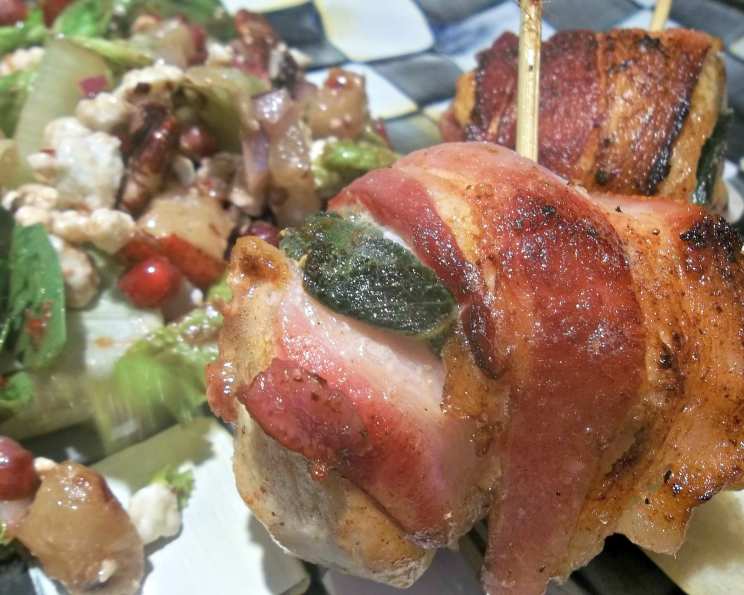
Involtini di Pollo alla Salvia: A Taste of Autumnal Elegance
The aroma of sage, that unmistakably earthy and slightly peppery perfume, always brings me back to a crisp autumn evening in Tuscany. I remember standing in a rustic kitchen, the air thick with the scent of woodsmoke and herbs, as Nonna Maria patiently rolled thin slices of chicken breast around fragrant sage leaves, then swaddled them in glistening strips of pancetta. It wasn’t just cooking; it was an act of love, a promise of warmth and deliciousness to come. That night, the simple elegance of Involtini di Pollo alla Salvia – chicken roulades with sage – captured my heart, a dish that perfectly embodies the comforting yet refined spirit of Italian home cooking. The way the sage infused the chicken, the savory crunch of the pancetta, all coming together in a symphony of flavors, it’s a memory I’ve cherished and recreated countless times, each iteration a faithful homage to that magical Tuscan evening.
Recipe Overview
Here’s a quick snapshot of what you’ll need to bring these delightful roulades to your table:
- Prep Time: 20 minutes
- Cook Time: 10-15 minutes
- Total Time: 30-35 minutes
- Servings: 4
- Yield: 8 roulades
- Dietary Type: Gluten-Free (ensure bacon is gluten-free)
Ingredients
The beauty of Involtini di Pollo alla Salvia lies in its simplicity, allowing a few high-quality ingredients to shine.
- 4 boneless, skinless chicken breasts: Aim for medium to large breasts so you can pound them thin enough to roll easily.
- Salt and freshly ground black pepper: To season the chicken perfectly.
- 8 medium-large fresh sage leaves: These are the heart of the flavor, so use fresh, vibrant leaves.
- 4 slices of thick-cut bacon, halved lengthwise: The bacon provides richness, a salty counterpoint, and a delightful crispness. Ensure it’s good quality, thick-cut bacon.
- 2 tablespoons extra virgin olive oil: For searing and bringing everything together.
Equipment Needed
While this dish is quite straightforward, a few key pieces of equipment will make the process smoother:
- Cutting board
- Sharp knife
- Meat mallet or rolling pin: For pounding the chicken breasts thin.
- Toothpicks: Essential for securing the roulades.
- Large, oven-safe skillet or frying pan: You’ll be searing these directly in the pan.
- Tongs: For turning the roulades during cooking.
Instructions
Follow these steps carefully, and you’ll be rewarded with perfectly cooked, flavorful chicken roulades.
- Prepare the Chicken: Begin by placing one chicken breast on a clean cutting board. Cover it with a piece of plastic wrap or a resealable plastic bag. Using the flat side of a meat mallet or a rolling pin, gently pound the chicken breast until it is about ¼-inch thick. Be patient and work from the center outwards to ensure an even thickness. Repeat this process with the remaining chicken breasts. Once you have thinly pounded out your chicken breasts, cut each breast into two strips. Aim for strips that are slightly wider than your halved bacon slices, ensuring the bacon will wrap around them snugly.
- Season and Fill: Season both sides of each chicken strip generously with salt and freshly ground black pepper. Lay 2 medium-large fresh sage leaves onto each strip of chicken, positioning them towards one end.
- Roll the Roulades: Carefully roll each chicken strip up, starting from the end with the sage leaves, to enclose them within the chicken.
- Wrap with Bacon: Take one of the halved slices of thick-cut bacon and roll it snugly around each chicken roll. The bacon should adhere to the chicken. If the bacon seems loose, you can use a toothpick to secure it in place. Insert the toothpick through the bacon and into the chicken to prevent the roulade from unrolling during cooking.
- Continue Assembling: Continue this process until all pieces are rolled and wrapped. You should have 8 delicious-looking roulades ready for the pan.
- Sear the Roulades: Into a large, oven-safe skillet or frying pan, add 2 tablespoons of extra virgin olive oil. Heat the oil over medium heat.
- Cook the Bacon: Once the oil is hot and shimmering slightly, carefully add the chicken roulades to the pan. Be sure not to overcrowd the pan; you may need to cook them in batches depending on the size of your skillet. Cook, turning frequently, using tongs, until the bacon has browned and crisped on all sides. This initial searing is crucial for developing flavor and texture.
- Finish Cooking the Chicken: After the bacon is nicely browned and crisp, reduce the heat to low. Continue cooking for approximately 10-15 minutes, turning occasionally, until the chicken has cooked through. The exact cooking time will depend on the thickness of your chicken strips. To check for doneness, you can insert a meat thermometer into the thickest part of a roulade; it should register 165°F (74°C). Alternatively, you can carefully remove a toothpick and check the internal color of the chicken, which should be opaque and no longer pink.
Expert Tips & Tricks
As a chef, I’ve found a few little secrets can elevate even the simplest of dishes. For these Involtini di Pollo alla Salvia, here’s what I recommend:
- Pounding Technique: When pounding your chicken, don’t go too thin, or it will be difficult to roll and could overcook quickly. Aim for an even ¼-inch thickness. A gentle, consistent pressure is key.
- Bacon Choice: Using thick-cut bacon is non-negotiable here. It has the structural integrity to wrap and hold, and it renders beautifully, providing a rich, crispy exterior. If your bacon is particularly fatty, you might not need to add any oil to the pan initially, letting the bacon fat do the work.
- Sage Placement: Placing the sage leaves towards one end of the chicken strip ensures they are fully encased when rolled, preventing them from burning too quickly on the pan.
- Toothpick Prudence: While toothpicks are essential for security, don’t be shy about using them. You want your roulades to hold their shape. Just remember to remove them before serving!
- Bacon Crispness: The original prompt mentioned being patient with crisping the bacon. This is vital. You want that satisfying crunch, so don’t rush the browning process, even if it means a slightly longer initial sear. The contrast between the tender chicken and crispy bacon is what makes this dish sing.
- Resting: Once cooked, allow the roulades to rest for a couple of minutes before serving. This allows the juices to redistribute, ensuring a more tender and moist chicken.
Serving & Storage Suggestions
These Involtini di Pollo alla Salvia are wonderfully versatile. They are excellent served warm, straight from the pan.
Serving:
For an elegant presentation, arrange 2 roulades per plate. They pair beautifully with a variety of side dishes. Consider a creamy polenta, a simple roasted root vegetable medley (like carrots and parsnips), or a fresh, crisp green salad with a light vinaigrette to balance the richness of the bacon. A drizzle of the pan juices over the roulades would also be a lovely touch.
Storage:
Leftovers can be stored in an airtight container in the refrigerator for 2-3 days. To reheat, gently warm them in a covered skillet over low heat with a splash of chicken broth or water to prevent drying out, or reheat them briefly in a moderate oven (around 300°F/150°C) until warmed through. Avoid microwaving if you want to preserve the crispy bacon texture.
Nutritional Information
Here’s an approximate breakdown of the nutritional content per serving (assuming 4 servings, 2 roulades each):
| Nutrient | Amount per Serving | % Daily Value |
|---|---|---|
| Calories | 230.8 kcal | |
| Calories from Fat | 120 kcal | |
| Total Fat | 13.4 g | 20% |
| Saturated Fat | 2.8 g | 13% |
| Cholesterol | 81 mg | 26% |
| Sodium | 203.7 mg | 8% |
| Total Carbohydrate | 0.1 g | 0% |
| Dietary Fiber | 0 g | 0% |
| Sugars | 0 g | 0% |
| Protein | 26 g | 51% |
Note: Nutritional values are estimates and can vary based on specific ingredient brands and quantities used.
Variations & Substitutions
While the classic combination is superb, here are a few ideas to adapt this recipe to your preferences:
- Herbal Swaps: If fresh sage isn’t available, you can try a few fresh rosemary sprigs or a combination of thyme and parsley. The flavor profile will change, but it will still be delicious.
- Prosciutto: For a slightly different salty note and a more delicate crispness, you could substitute prosciutto for the bacon. It won’t achieve the same deep crisp, but it offers a refined Italian flavor.
- Spicy Kick: For those who enjoy a little heat, a thin sliver of fresh chili pepper (like jalapeño or red chili) could be added along with the sage.
- Cheese Inclusion: A thin sliver of Provolone or Parmesan cheese could be added along with the sage for an extra layer of flavor. Just be mindful of how quickly cheese melts and potentially oozes.
FAQs (Frequently Asked Questions)
Q: Why do I need to pound the chicken breasts thin?
A: Pounding the chicken thin ensures even cooking and makes it easier to roll the roulades tightly, leading to a more uniform texture and preventing the outer layers from drying out before the chicken is cooked through.
Q: Can I make these ahead of time?
A: You can prepare the roulades (pound, season, fill, and wrap) a few hours in advance and store them, covered, in the refrigerator. Cook them just before serving to ensure the best texture.
Q: What if my bacon doesn’t get crispy?
A: Ensure your pan is adequately preheated, you’re using medium heat for the initial sear, and you’re turning the roulades frequently to allow all sides to crisp up evenly. If using very lean bacon, you might need a touch more olive oil.
Q: How can I tell if the chicken is fully cooked without a thermometer?
A: The chicken should be opaque throughout. You can carefully remove a toothpick and cut into the thickest part of one roulade. There should be no pinkness.
Q: Is it okay to use dried sage instead of fresh?
A: While fresh sage is highly recommended for its vibrant flavor, you can use dried sage in a pinch. Use about 1 teaspoon of dried sage per 2 teaspoons of fresh. Be aware that dried herbs are more potent, so adjust to your taste.
Final Thoughts
There’s a profound satisfaction in creating a dish that is both humble and sophisticated, and Involtini di Pollo alla Salvia perfectly embodies this. It’s a testament to the Italian philosophy of using simple, quality ingredients to create extraordinary flavors. Whether you’re serving this as a weeknight treat or for a special occasion, it’s sure to impress. Don’t hesitate to experiment with the serving suggestions – perhaps a simple risotto or a side of sautéed greens. I encourage you to try this recipe, savor the aroma as it fills your kitchen, and share the delicious results with those you love. Buon appetito!