
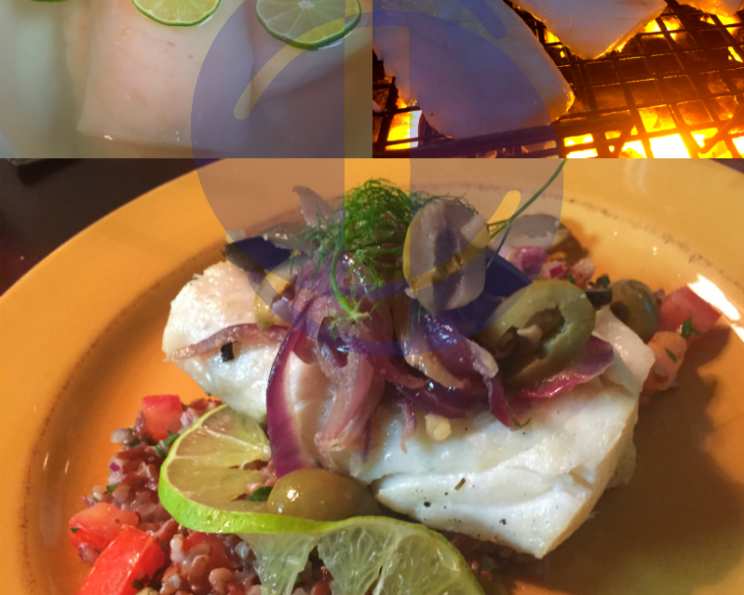
Faux Lobster: Grilled Halibut That Rivals the Sea’s Best
There are certain flavors that transport me back to specific moments in my life, and the first time I tasted this grilled halibut, it was like a revelation. I remember standing on a blustery Oregon coast, the air thick with the scent of salt and pine. My host, a seasoned angler with hands calloused from a lifetime of fishing, presented this humble halibut, grilled to perfection. He’d spoken of its delicate flavor and how it could stand toe-to-toe with any lobster. Skeptical but intrigued, I took a bite, and in that instant, the ocean’s brine, the smoky char of the grill, and the impossibly tender flesh of the fish converged into something truly extraordinary. It wasn’t just fish; it was an experience, a testament to the beauty of simplicity and the magic that happens when quality ingredients meet expert technique.
Recipe Overview
- Prep Time: 60 minutes (includes brining)
- Cook Time: 10-15 minutes
- Total Time: 1 hour 15 minutes
- Servings: 4
- Yield: 4 (8-ounce portions)
- Dietary Type: Pescatarian, Gluten-Free
Ingredients
This recipe centers around a simple yet transformative brine and the pure, unadulterated flavor of fresh halibut.
- 2 lbs Halibut: Ensure it’s skinless and at least 1 inch thick. We’ll divide this into four 8-ounce portions. The thickness is key for achieving that perfect interior texture.
- 3 cups Water: The base of our brining solution.
- 3/4 cup Sugar: This might seem like a lot, but it’s crucial for creating a slightly sweet, incredibly moist interior.
- 1/2 cup Salt: The workhorse of the brine, drawing out moisture initially but then allowing the fish to reabsorb it along with flavor.
- 2 cups Ice: To rapidly chill the brine, essential for safe and effective brining. We’ll also keep extra ice on hand.
- 1/2 cup Butter (Clarified): Clarifying butter removes milk solids, resulting in a pure fat that has a higher smoke point and won’t burn as easily on the grill. You can find simple instructions for clarifying butter on many culinary websites; it’s a surprisingly easy technique.
- 2 Lemons: We’ll use these in multiple ways – a squeeze into the clarified butter, for serving with the fish, and for garnish.
Equipment Needed
- 2-quart saucepan
- Large mixing bowl
- Whisk
- Grill (charcoal or gas)
- Tongs
- Plate or platter for serving
Instructions
The secret to this dish lies in the brine, which tenderizes and seasons the halibut before it even hits the grill.
- Prepare the Brine: In a 2-quart saucepan, combine the 3 cups of water, 3/4 cup of sugar, and 1/2 cup of salt. Place over medium heat and stir gently until the sugar and salt are completely dissolved. Once dissolved, remove the saucepan from the heat.
- Chill the Brine: Transfer the brine solution to a large mixing bowl. Add the 2 cups of ice and stir. Continue adding ice as needed until the brine is thoroughly chilled, reaching a temperature below 50°F. This rapid chilling is crucial for the brining process.
- Brine the Halibut: Gently add the halibut portions to the chilled brine, ensuring they are fully submerged. Cover the bowl and refrigerate for 1 hour. For a more intense flavor and texture, you can brine for up to 3 hours, but no longer, to avoid the fish becoming too salty.
- Clarify the Butter: While the halibut is brining, clarify the butter. Melt 1/2 cup of butter in a small saucepan over low heat. Skim off any foam that rises to the surface. You’ll see the milk solids settle at the bottom. Carefully pour off the clear, golden butterfat into a separate bowl, leaving the solids behind. For an extra touch of brightness, you can add a small squeeze of lemon juice to the clarified butter. (If you’re new to this, a quick search for “how to clarify butter” will yield excellent visual guides.)
- Preheat the Grill: Preheat your grill to medium-high heat. You want a good, hot surface for searing.
- Prepare the Halibut for Grilling: Remove the halibut from the brine. It’s essential to pat it thoroughly dry with paper towels. This step is vital for achieving a good sear and preventing sticking.
- Season and Grill: Brush the dried halibut portions lightly with the clarified butter. Place the fish on the preheated grill. For 1-inch thick fillets, you can start by grilling for about 5 minutes per side. During the first side’s cooking, you might want to rotate the fish halfway through at a 45-degree angle to create attractive grill marks. Then, carefully flip the halibut and grill for another 5 minutes. Grilling times can vary significantly based on your grill’s temperature and the exact thickness of your fish. The goal is for the fish to be opaque throughout and just beginning to flake when gently pressed with a fork.
- Serve Immediately: Once cooked to perfection, remove the halibut from the grill. Serve it immediately with your chosen accompaniments and garnishes. A squeeze of fresh lemon is a perfect finishing touch.
Expert Tips & Tricks
- Brine Temperature is Key: Always ensure your brine is well below 50°F before adding the fish. Too warm, and you risk cooking the fish unevenly or promoting bacterial growth.
- Don’t Skip the Pat-Dry: This is arguably the most critical step after brining. A wet surface will steam rather than sear, resulting in less flavor and a poor crust.
- Trust Your Eyes and Fingers: While the timing guidelines are helpful, the best way to tell if fish is done is by its appearance and texture. It should be opaque and flake easily. Overcooked halibut can be dry.
- Grill Marks for Flavor: Rotating the fish 45 degrees halfway through cooking on each side not only looks beautiful but also ensures even cooking and those sought-after smoky grill marks.
- Clarified Butter Advantage: If you don’t have clarified butter, you can use a high-smoke point oil like avocado or grapeseed oil, but the clarified butter adds a subtle richness that complements the halibut beautifully.
Serving & Storage Suggestions
This grilled halibut is best enjoyed the moment it comes off the grill, as its delicate texture is at its peak. Serve it with simple sides that won’t overpower the fish, such as a vibrant quinoa salad, roasted asparagus, or a light lemon-herb couscous. A crisp white wine, like a Sauvignon Blanc or Pinot Grigio, is an excellent pairing.
Leftovers can be stored in an airtight container in the refrigerator for up to 2 days. While reheating is possible, it can sometimes dry out the fish. If you must reheat, do so gently in a covered skillet over low heat with a splash of water or broth, or briefly in a moderate oven (around 300°F or 150°C). It’s also delicious served cold or at room temperature in a salad.
Nutritional Information
Please note that the nutritional values for brined foods can be difficult to represent accurately in standard calculations due to the process of water absorption. The sodium and sugar values below reflect the ingredients as listed, but a significant portion of the salt and sugar is not retained in the final cooked fish.
| Nutrient | Amount per Serving | % Daily Value |
|---|---|---|
| Calories | 563.5 kcal | |
| Calories from Fat | 235 g | |
| Total Fat | 26.1 g | 40% |
| Saturated Fat | 15.2 g | 76% |
| Cholesterol | 172.2 mg | 57% |
| Sodium | 14513.5 mg | 604% |
| Total Carbohydrate | 40.2 g | 13% |
| Dietary Fiber | 0.8 g | 3% |
| Sugars | 38.2 g | 152% |
| Protein | 42.7 g | 85% |
Variations & Substitutions
- Different Fish: While halibut is exceptional here, other firm white fish like cod, sea bass, or even mahi-mahi can be substituted. Adjust grilling times based on their thickness.
- Brine Adjustments: For a less sweet brine, you can slightly reduce the sugar. For a more herbaceous brine, consider adding a sprig of rosemary or thyme to the water while it heats.
- Grill Pan Option: If grilling outdoors isn’t an option, a well-seasoned cast-iron grill pan on the stovetop can achieve similar results. Ensure your pan is very hot.
FAQs
Q: Why is the sodium and sugar content so high in the nutritional information?
A: The brining process involves a high concentration of salt and sugar. While this is essential for flavor and texture, the fish absorbs water, and not all of the brine is retained in the final cooked product. Therefore, the initial ingredient list reflects these higher amounts.
Q: Can I use regular butter instead of clarified butter?
A: While clarified butter is preferred for its higher smoke point, regular butter can be used. Just be extra vigilant to prevent it from burning on the grill.
Q: How do I know when the halibut is perfectly grilled?
A: The fish should be opaque and flake easily when gently pressed with a fork. It should not be translucent in the center, nor should it be dry and chalky.
Q: Can I brine the fish overnight?
A: It’s not recommended to brine halibut for longer than 3 hours, as it can become too salty and the texture can be negatively affected.
Q: What are good side dishes for this grilled halibut?
A: Light and fresh accompaniments work best. Consider a cucumber and dill salad, steamed or grilled seasonal vegetables, or a simple rice pilaf.
Final Thoughts
This grilled halibut is more than just a recipe; it’s a philosophy in action. It demonstrates that with a little foresight and careful technique, you can elevate simple ingredients to extraordinary heights. The illusion of “faux lobster” isn’t about deception, but about achieving a richness, tenderness, and depth of flavor that rivals the most prized shellfish. I encourage you to try this method, feel the satisfying weight of the fish in your hands as you pat it dry, and savor that first smoky, succulent bite. It’s a dish that speaks of the sea, the fire, and the pure joy of good food shared.