
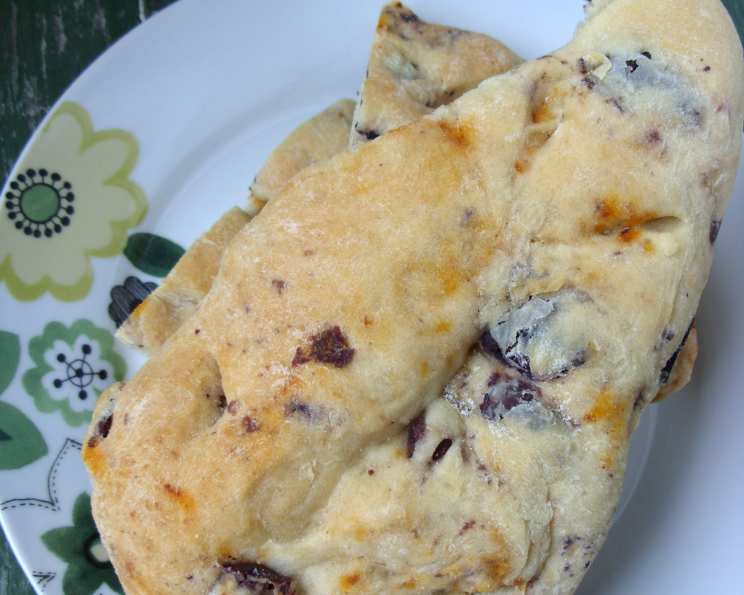
Fougasse: A Taste of Provence in Every Olive-Studded Bite
There are some breads that speak of sunshine, of lazy afternoons spent in rustic kitchens, and the very essence of Mediterranean life. Fougasse, with its delightfully irregular shape and generous pockets of briny olives, is one such bread. I remember the first time I encountered a true fougasse in a small boulangerie in Aix-en-Provence; the aroma of warm olive oil and yeasty dough, punctuated by the sharp tang of Kalamata olives, was intoxicating. It wasn’t just bread; it was a culinary embrace, a promise of simple, profound pleasure. This recipe, adapted from the brilliant minds behind “Artisan Bread in 5 Minutes a Day,” allows that same Provençal magic to unfold in your own home, no matter where you are.
Recipe Overview
- Prep Time: 2 hours 20 minutes (includes resting time)
- Cook Time: 20-25 minutes
- Total Time: 2 hours 45 minutes – 2 hours 50 minutes
- Servings: 2 (loaves)
- Yield: 2 one-lb loaves
- Dietary Type: Vegetarian
Ingredients
The beauty of fougasse lies in its simplicity, allowing the quality of each ingredient to shine through.
- 1 ½ cups warm water
- 1 (7 g) packet active dry yeast
- 2 ½ teaspoons kosher salt
- ½ tablespoon white sugar
- 2 tablespoons extra virgin olive oil
- 3 ½ cups all-purpose flour
- 1 cup pitted Kalamata olives, quartered if large, or 1 cup pitted Niçoise olives, cut in half (quarters if large)
- Olive oil, for greasing the baking sheet and brushing the loaf
Equipment Needed
- 3-quart or larger mixing bowl
- Wooden spoon or heavy-duty stand mixer with dough hook
- Baking sheet
- Oven
- Broiler tray or empty baking pan
- Wire cooling rack
Instructions
Crafting this beautiful bread is a rewarding process, and with a little patience, you’ll be rewarded with loaves that are both visually stunning and incredibly delicious.
- In a 3-quart (or larger) bowl, combine the warm water, yeast, kosher salt, white sugar, and extra virgin olive oil. Stir these ingredients together gently.
- Gradually stir in the all-purpose flour with a wooden spoon, or use the dough hook attachment on a heavy-duty stand mixer. Continue mixing just until all the flour is incorporated. It’s crucial not to knead this dough; we’re aiming for a shaggy, cohesive mass.
- Let the dough stand at room temperature for 2 hours, or until it has risen significantly and then begun to collapse. This resting period is key to developing flavor and texture.
- Preheat your oven to 400°F (200°C). While the oven heats, place an empty broiler tray or baking pan on a rack in the middle of the oven. This will create steam during baking, essential for a good crust.
- Divide the dough in half, and work with one piece at a time. This makes the dough more manageable.
- On a heavily-floured work surface, form the dough into a ball. Then, flatten it to about ½-inch thickness. It’s important to remember that this dough needs to be a bit drier than most bread doughs to hold the cut shapes effectively. Don’t be afraid to add a little extra bench flour if it feels too sticky.
- Sprinkle half of the olives evenly over the flattened dough.
- Roll the dough up jelly-roll-fashion to enclose the olives.
- Gently form the rolled dough into a ball, and then flatten it into an oval shape.
- Using a sharp knife, slice angled slits into the dough. These should be deliberate and spaced out to create the characteristic fougasse pattern.
- Gently pull the sliced portions open to accentuate the slits and create the classic leaf-like appearance.
- Transfer the shaped fougasse to a greased cookie sheet.
- Brush the top of the loaf with more olive oil.
- Let the shaped loaf rest at room temperature for 20 minutes. This second rest allows the dough to relax and puff up slightly before baking.
- Place the cookie sheet with the fougasse onto a rack in the middle of the oven.
- Carefully pour 1 cup of hot water into the empty broiler pan that is already in the oven. Quickly close the oven door to trap the steam.
- Bake for 20-25 minutes, or until the fougasse is puffy and golden brown. The crust will have a lovely texture, though it won’t be crackly hard due to the olive oil incorporated into the dough.
- Repeat steps 5 through 17 with the remaining dough and olives to bake the second loaf.
Expert Tips & Tricks
- Olive Choice: While Kalamata and Niçoise olives are traditional and delicious, feel free to experiment with other flavorful, pitted olives like oil-cured black olives or even a mix of green and black olives. Just ensure they are pitted and cut into manageable pieces.
- Dough Consistency: The “drier than most” dough is crucial. If your kitchen is particularly humid, you might find you need slightly more flour than specified. Conversely, in very dry conditions, you might need a touch less. The goal is a dough that is workable but not excessively sticky.
- The Steam Trick: The hot water in the broiler pan is your secret weapon for a superior crust. Don’t skip this step! The steam helps the bread rise beautifully and creates a lovely, tender interior.
- Shaping the Slits: Don’t be afraid to get creative with your cuts. You can make fewer, larger slits or more, smaller ones. The idea is to mimic the shape of a leaf or a simple flattened bread with openings.
Serving & Storage Suggestions
Fougasse is a versatile bread that shines in numerous settings.
- Serving: This bread is best served warm, straight from the oven, allowing its irresistible aromas to fill your kitchen. It’s wonderful on its own, as a rustic accompaniment to soups and salads, or as part of an antipasto platter alongside cheeses, cured meats, and roasted vegetables. Tear off pieces and enjoy the chewy interior and slightly crisp crust.
- Storage: Fougasse is at its absolute best on the day it’s baked. However, leftovers can be stored in an airtight container or bread bag at room temperature for up to 2 days. To refresh, lightly mist with water and rewarm in a 350°F (175°C) oven for 5-10 minutes until heated through and the crust is revived. It can also be frozen, well-wrapped, for up to 2 months. Thaw at room temperature and reheat as described.
Nutritional Information
| Nutrient | Amount per Serving (approximate, per loaf) | % Daily Value |
|---|---|---|
| Calories | 1016.4 kcal | N/A |
| Calories from Fat | N/A | N/A |
| Total Fat | 23.1 g | 35% |
| Saturated Fat | 3.2 g | 15% |
| Cholesterol | 0 mg | 0% |
| Sodium | 2685.8 mg | 111% |
| Total Carbohydrate | 175.7 g | 58% |
| Dietary Fiber | 9 g | 36% |
| Sugars | 3.7 g | 14% |
| Protein | 24.6 g | 49% |
Note: Nutritional values are estimates and can vary based on specific ingredients and quantities used.
Variations & Substitutions
While the classic olive fougasse is a triumph, don’t hesitate to explore other delicious possibilities:
- Herb Infused: Incorporate finely chopped fresh rosemary, thyme, or Herbes de Provence along with the olives for an aromatic twist.
- Garlic & Cheese: Mix in finely minced garlic and grated Parmesan cheese (or a dairy-free alternative) with the olives.
- Sun-Dried Tomatoes: Substitute some or all of the olives with oil-packed sun-dried tomatoes, chopped into bite-sized pieces.
- Spicy Kick: Add a pinch of red pepper flakes to the dough for a hint of heat.
FAQs (Frequently Asked Questions)
Q: Why does the recipe say not to knead the dough?
A: This no-knead method relies on time and hydration to develop gluten, resulting in a tender crumb and requiring less active preparation time.
Q: Can I use bread flour instead of all-purpose flour?
A: Yes, bread flour will create a chewier crust and a slightly more robust bread structure, which works wonderfully for fougasse.
Q: How do I know if the bread is baked through?
A: The fougasse should be puffy and have a deep golden-brown color. The bottom should also sound hollow when tapped.
Q: Can I make this recipe ahead of time?
A: The dough can be refrigerated for up to 5 days after its initial rise, making it a convenient “artisan bread in 5 minutes a day” option. Just bring it to room temperature before shaping and baking.
Q: My fougasse didn’t puff up as much as I expected. What went wrong?
A: This could be due to inactive yeast, not enough resting time, or the oven not reaching the correct temperature. Ensure your yeast is fresh and your oven is accurately calibrated.
Final Thoughts
Fougasse is more than just bread; it’s an invitation to slow down, to savor the simple act of sharing good food. Whether you’re making it for a casual weeknight meal or to impress guests at a gathering, its rustic charm and delightful flavor are sure to be a hit. Imagine serving it alongside a vibrant Mediterranean salad, a hearty lentil soup, or simply with a good glass of rosé. Bake it, share it, and let the spirit of Provence infuse your kitchen. I encourage you to try this recipe, and I’d love to hear about your own fougasse adventures!