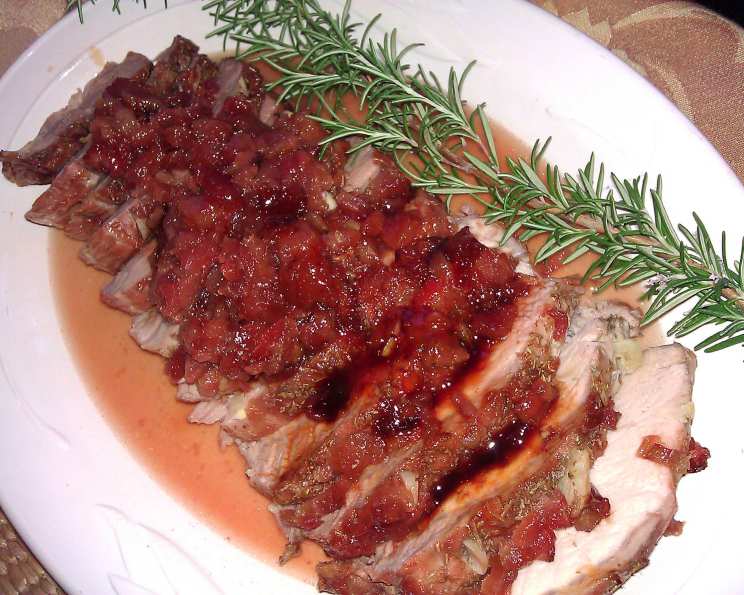
The Unexpected Harmony: Rhubarb Pork Loin
There’s a culinary magic that happens when sweet and savory dance together, and for me, no pairing embodies this more beautifully than the unlikely duo of pork and rhubarb. I remember the first time I encountered this dish, tucked away in a well-loved cookbook from the early nineties. The idea of tart, vibrant rhubarb cascading over a roasted pork loin seemed so unconventional, almost daring. Yet, the promise of that bright, tangy contrast cutting through the richness of the pork was utterly irresistible. It’s a recipe that proves culinary boundaries are meant to be explored, and sometimes, the most delightful discoveries lie just beyond the familiar.
Recipe Overview
- Prep Time: 20 minutes
- Cook Time: 1 hour 45 minutes
- Total Time: 2 hours 5 minutes
- Servings: 10
- Yield: 1 roast
- Dietary Type: Not specified
Ingredients
- 1 (3 lb) pork loin roast, boneless and rolled
- 1 garlic clove, cut into 8 to 10 slivers
- 1 teaspoon dried rosemary, crushed
- 4 stalks rhubarb, sliced (about 2 cups)
- 1/4 cup honey, plus 2 tablespoons honey
- 1/4 cup cider vinegar
- 6 whole cloves
- 1/2 teaspoon salt
- 1/2 teaspoon dry mustard
- 2-3 drops red food coloring (optional)
Equipment Needed
- Roasting pan
- Small, heavy saucepan
- Meat thermometer
- Sharp knife for carving
Instructions
- Begin by preheating your oven to 350°F (175°C). This crucial first step ensures even cooking from the moment the pork enters the oven.
- Carefully place the pork loin roast into your roasting pan. Ensure it’s positioned comfortably for even roasting.
- Using a sharp knife, cut 8 to 10 slits into the surface of the pork roast. These small incisions will be used to insert the garlic slivers, infusing the meat with aromatic flavor from within.
- Rub the entire surface of the roast generously with the crushed dried rosemary. This herbaceous coating will develop a lovely crust as it roasts.
- Roast the pork for 1 hour. This initial roasting period allows the meat to begin cooking through and develop its initial exterior.
- While the pork is roasting, prepare the rhubarb sauce. In a small, heavy saucepan, combine the sliced rhubarb, 1/4 cup honey, 2 tablespoons honey, cider vinegar, whole cloves, salt, and dry mustard. For a more vibrant visual appeal, you can also add the optional red food coloring at this stage.
- Bring the rhubarb mixture to a boil over high heat. Watch it closely as it bubbles.
- Once boiling, reduce the heat to low and let the sauce simmer for 10 minutes. This simmering allows the rhubarb to soften and meld with the other flavors, creating a luscious sauce.
- After the 10 minutes of simmering, remove and discard the whole cloves from the rhubarb sauce. These are for flavor infusion, not consumption.
- Now, it’s time to bring the two elements together. Pour the rhubarb sauce over the partially roasted pork loin in the roasting pan.
- Continue roasting the pork, basting it often with the rhubarb sauce. This basting is key to keeping the meat moist and ensuring the sauce’s flavors penetrate deeply. Continue this process for approximately 45 minutes, or until a meat thermometer registers an internal temperature of 155°F (68°C) in the thickest part of the roast.
- Once the pork reaches the desired internal temperature, remove the roast from the oven and let it stand for 10 minutes. This resting period is vital; it allows the juices to redistribute throughout the meat, ensuring a tender and moist final product, and will allow the internal temperature to rise to 160°F (71°C).
- After resting, carve the pork loin into thin slices.
- To finish, heat the rhubarb sauce remaining in the roasting pan. Serve this warm, vibrant sauce alongside the carved pork slices.
Expert Tips & Tricks
For an even deeper flavor infusion with the garlic, you can make the slits in the pork a bit deeper, allowing the garlic slivers to sit more snugly within. If you find your pork loin tends to dry out easily, consider tying it with kitchen twine before roasting to help it retain its shape and moisture. When selecting rhubarb, look for firm, bright stalks. Thicker stalks tend to be more fibrous, so if you have very thick stalks, you might want to peel them slightly before slicing. The optional red food coloring can make the sauce look exceptionally appealing, but it has no impact on flavor. Don’t be tempted to skip the resting period; it truly makes a difference in the final texture of the pork.
Serving & Storage Suggestions
This Rhubarb Pork Loin is a star on its own, but it pairs beautifully with creamy mashed potatoes or a simple green salad. The vibrant, tangy rhubarb sauce is the perfect counterpoint to the rich pork. Leftovers can be stored in an airtight container in the refrigerator for up to 3-4 days. Reheat gently in a covered dish in a low oven or in a skillet over low heat to maintain moisture.
Nutritional Information
| Nutrient | Amount per Serving | % Daily Value |
|---|---|---|
| Calories | 334.1 kcal | |
| Calories from Fat | ||
| Calories from Fat % DV | 36 % | |
| Total Fat | 13.5 g | 20 % |
| Saturated Fat | 4.9 g | 24 % |
| Cholesterol | 110.3 mg | 36 % |
| Sodium | 200.1 mg | 8 % |
| Total Carbohydrate | 12.4 g | 4 % |
| Dietary Fiber | 0.9 g | 3 % |
| Sugars | 10.7 g | 42 % |
| Protein | 39.3 g | 78 % |
Note: Nutritional information is an estimate and can vary based on specific ingredients and portion sizes.
Variations & Substitutions
While the classic combination is delightful, you can explore other flavor profiles. If rhubarb is out of season, consider using a tart berry like cranberries or even a plum sauce as a substitute for the rhubarb component. For a touch of warmth, add a pinch of ground ginger or cinnamon to the rhubarb sauce. If you’re not a fan of cider vinegar, red wine vinegar can also be used, offering a slightly different tang.
FAQs
Q: Can I use fresh rosemary instead of dried?
A: Absolutely! Use about 1 tablespoon of finely chopped fresh rosemary if fresh is available.
Q: My rhubarb is quite tart; should I add more honey?
A: You can adjust the honey in the sauce to your personal preference for sweetness, especially if your rhubarb is exceptionally tart.
Q: Is the red food coloring essential?
A: No, the red food coloring is entirely optional and purely for visual enhancement. The flavor of the sauce will be just as delicious without it.
Q: How do I know if the pork is cooked through but not overcooked?
A: Using a meat thermometer is the most accurate way. Aim for 155°F for cooking and allow it to reach 160°F after resting.
Q: Can I prepare the rhubarb sauce ahead of time?
A: Yes, you can make the rhubarb sauce a day in advance and store it in the refrigerator. Gently reheat it before pouring it over the pork.
Final Thoughts
This Rhubarb Pork Loin is a testament to the beauty of unexpected flavor pairings. It’s a dish that’s both elegant enough for a special occasion and surprisingly approachable for a weeknight meal. The sweet-tart glaze, infused with aromatic rosemary and garlic, creates a truly memorable experience. I encourage you to embrace this culinary adventure, to let the vibrant rhubarb cut through the richness of the pork, and to discover this delightful harmony for yourself. Don’t hesitate to share your creations and feedback – happy cooking!