
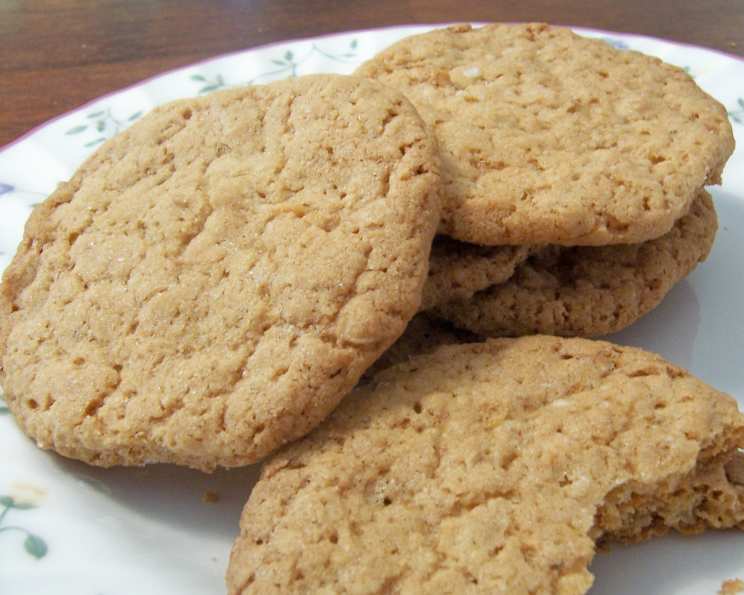
Rolled Oatmeal Cookies: A Hug in Every Bite
The scent of baking cookies is a universally comforting aroma, isn’t it? For me, it’s inextricably linked to crisp autumn afternoons spent in my grandmother’s kitchen, the air thick with the promise of sweetness. These rolled oatmeal cookies, in particular, hold a special place in my heart. They weren’t overly fussy or fancy, just pure, unadulterated comfort. The simple act of creaming butter and sugar, the wholesome texture of the oats, and that hint of vanilla – it was a sensory symphony that still transports me back to those cherished moments. Each cookie was a testament to simplicity and love, a perfect balance of chewy, slightly crisp edges, and a tender, satisfying center.
Recipe Overview
- Prep Time: 15 minutes
- Cook Time: 10 to 12 minutes per batch
- Total Time: Approximately 30 minutes (plus cooling time)
- Servings: 48 cookies
- Yield: 48 cookies
- Dietary Type: Vegetarian
Ingredients
Gathering your ingredients is the first step in any baking adventure, and for these delightful oatmeal cookies, the list is refreshingly straightforward:
- 1 ½ cups old-fashioned oats (also known as rolled oats)
- 1 ¾ cups all-purpose flour
- 1 teaspoon baking powder
- 1 teaspoon baking soda
- 1 cup butter, softened
- 1 cup granulated sugar
- ½ cup firmly packed brown sugar
- 1 egg, slightly beaten
- 1 teaspoon vanilla extract
- ½ cup flaked coconut
Ingredient Notes:
For the best texture, it’s important to use old-fashioned oats and not instant oats or steel-cut oats. Old-fashioned oats provide the characteristic chewiness and structure we’re looking for. If you prefer a less sweet cookie, you could slightly reduce the granulated sugar, but be mindful that sugar also contributes to texture and browning. Ensure your butter is truly softened but not melted – this is key for achieving that fluffy, creamed mixture.
Equipment Needed
To embark on this baking journey, you’ll want to have these essential tools ready:
- Mixing bowls (at least one medium and one large)
- Whisk or fork
- Electric mixer (handheld or stand mixer) or a sturdy wooden spoon and some elbow grease
- Measuring cups and spoons
- Baking sheets
- Parchment paper or silicone baking mats (optional, but recommended for easy cleanup)
- Wire cooling rack
- Fork (for flattening)
Instructions
Let’s bring these delicious cookies to life, step by step. Precision and attention to detail will ensure a perfect batch every time.
- Preheat your oven to 375°F (190°C). This is a crucial first step to ensure even baking and proper rise.
- Prepare the dry ingredients: In a medium bowl, combine the rolled oats, all-purpose flour, baking powder, and baking soda. Whisk them together until they are thoroughly mixed. This ensures the leavening agents are evenly distributed throughout the dry ingredients. Set this bowl aside.
- Cream the butter and sugars: In a large bowl, cream the softened butter and both the granulated sugar and firmly packed brown sugar together until the mixture is light and fluffy. This process incorporates air, which will contribute to the cookies’ tender texture. If using an electric mixer, this will take a few minutes on medium speed.
- Incorporate the egg and vanilla: Beat in the slightly beaten egg until it is fully blended into the creamed butter and sugar mixture. Then, add the vanilla extract and flaked coconut, and mix well until everything is incorporated. The vanilla adds a wonderful aroma and flavor depth, while the coconut adds a delightful subtle chew and tropical hint.
- Combine wet and dry ingredients: Add the dry ingredients (from step 2) to the wet ingredients (from step 4). Mix them together until just blended. It’s important not to overmix at this stage, as this can develop the gluten in the flour too much, leading to tough cookies. Stop mixing as soon as you no longer see streaks of dry flour.
- Shape the cookies: Shape the dough into 2-inch balls. You can use a cookie scoop for uniformity or just roll them between your palms.
- Arrange and flatten: Arrange the dough balls on a baking sheet that has been lined with parchment paper or a silicone mat. Make sure to leave about 2 inches apart to allow for spreading as they bake.
- Flatten the cookies: Using the back of a fork, gently flatten each ball of dough. You can do this in a crisscross pattern or a simple press. This not only gives the cookies their characteristic look but also helps them bake more evenly.
- Bake the cookies: Bake in the preheated oven for 10 to 12 minutes. Keep a close eye on them during the last few minutes. The cookies should be lightly golden around the edges and appear set in the center. They will continue to firm up as they cool.
- Cool the cookies: Once baked, remove the baking sheets from the oven and let the cookies cool on the baking sheet for a few minutes before transferring them to a wire cooling rack to cool completely. This prevents them from breaking and ensures they achieve the desired texture.
Expert Tips & Tricks
To elevate your rolled oatmeal cookie game from good to absolutely exceptional, consider these insider tips:
- Room Temperature is Key: Ensure your butter and egg are at room temperature. This allows them to emulsify properly with the sugars, creating a smoother dough and a lighter cookie. If you forget to take your butter out, you can soften it slightly by cutting it into small cubes and letting it sit for about 10-15 minutes, or by gently microwaving it in very short bursts (5-second intervals), being careful not to melt it.
- Don’t Overmix: As mentioned in the instructions, overmixing the dough after adding the dry ingredients is a common pitfall. Mix only until the ingredients are just combined to avoid tough cookies.
- Uniformity for Even Baking: Using a cookie scoop of a consistent size (like a 1.5 to 2-tablespoon scoop) will help ensure all your cookies bake at the same rate.
- The Fork Flattening Technique: Don’t press too hard with the fork. A gentle press is all that’s needed to slightly flatten the cookies and create that iconic crisscross pattern. Over-flattening can lead to dry, crispy cookies.
- Watch the Edges: The baking time of 10-12 minutes is a guideline. Ovens can vary. Look for edges that are just beginning to turn golden brown. The centers might still look a little soft, but they will continue to cook on the hot baking sheet.
- Cooling is Crucial: Resist the urge to move the cookies immediately. Letting them sit on the baking sheet for a few minutes allows them to set up properly. Then, transferring them to a wire rack ensures air circulates around them, preventing a soggy bottom.
Serving & Storage Suggestions
These rolled oatmeal cookies are a delight served slightly warm with a glass of cold milk, or at room temperature with a cup of coffee or tea. They are perfect for an afternoon snack, a lunchbox treat, or as a comforting dessert after any meal.
Storage:
- Room Temperature: Once completely cooled, store the cookies in an airtight container at room temperature for up to 3-4 days. Placing a piece of wax paper or parchment paper between layers can help prevent sticking.
- Refrigerator: For longer storage, you can refrigerate the cookies in an airtight container for up to a week. They may become slightly firmer when chilled.
- Freezer: These cookies freeze beautifully! Place them in a single layer on a baking sheet and freeze until solid, then transfer them to a freezer-safe bag or container. They will keep for up to 3 months. Thaw them at room temperature or gently reheat them in a low oven (around 250°F/120°C) for a few minutes to recapture their freshly baked aroma and texture.
Nutritional Information
(Please note: Nutritional information is an estimate and can vary based on specific ingredients and portion sizes.)
| Nutrient | Amount per Serving (approx.) | % Daily Value |
|---|---|---|
| Calories | 90.5 kcal | |
| Calories from Fat | ||
| Total Fat | 4.4 g | 6% |
| Saturated Fat | 2.7 g | 13% |
| Cholesterol | 14.6 mg | 4% |
| Sodium | 65.5 mg | 2% |
| Total Carbohydrate | 12 g | 3% |
| Dietary Fiber | 0.4 g | 1% |
| Sugars | 6.8 g | 27% |
| Protein | 1.1 g | 2% |
- Estimated based on a recipe yielding 48 cookies and a standard serving size of one cookie.
Variations & Substitutions
While these cookies are wonderfully classic as is, there’s always room for a touch of creativity:
- Nutty Addition: For an extra layer of flavor and crunch, stir in ½ cup of chopped walnuts or pecans along with the coconut.
- Chocolate Chip Twist: Introduce a handful (about ½ cup) of chocolate chips – semi-sweet, milk, or dark – for a classic cookie mashup.
- Spice it Up: A pinch of cinnamon (¼ to ½ teaspoon) or nutmeg added to the dry ingredients can bring a warm, spicy note.
- Citrus Zest: The zest of one lemon or orange, added with the vanilla, can provide a bright, fresh counterpoint to the sweetness.
- Gluten-Free Adaptation: While not tested with this specific recipe, you could experiment with a high-quality gluten-free all-purpose flour blend in place of the all-purpose flour. You might need to adjust the liquid content or baking time slightly, as gluten-free flours can behave differently.
FAQs
Q: Why are my oatmeal cookies spreading too much?
A: This can happen if your butter was too soft or melted, if you overmixed the dough, or if your oven temperature was too low. Ensure your butter is just softened, mix the dough until just combined, and verify your oven temperature with an oven thermometer.
Q: Can I use quick oats instead of old-fashioned oats?
A: While you can, using quick oats will result in a different texture. They tend to break down more during baking, leading to a softer, more cake-like cookie rather than the chewy texture characteristic of this recipe.
Q: How do I get my cookies to be chewy in the center and slightly crisp on the edges?
A: This is achieved through a balance of ingredients and proper baking. The brown sugar contributes to chewiness and moisture, while the old-fashioned oats provide structure. Baking until the edges are golden brown and the centers appear set but not fully cooked is key, as they will continue to firm up as they cool on the baking sheet.
Q: My cookies taste a bit bland. What can I add?
A: A good quality vanilla extract is essential. You can also increase the amount of brown sugar slightly for a richer flavor, or add a pinch of salt (about ¼ teaspoon) to the dry ingredients to enhance all the flavors.
Q: Can I make the dough ahead of time?
A: Yes, the cookie dough can be refrigerated for up to 2-3 days. It may become quite firm, so let it sit at room temperature for about 15-30 minutes before shaping and baking, or bake directly from chilled, adding a minute or two to the baking time.
Final Thoughts
These rolled oatmeal cookies are more than just a recipe; they are an invitation to slow down, embrace the simple joys of baking, and create something truly delicious and comforting. The aroma that fills your home as they bake is a reward in itself, a promise of the wholesome goodness to come. Whether you’re sharing them with loved ones, enjoying a quiet moment with a cup of tea, or packing them for a midday treat, I hope they bring you as much warmth and happiness as they do to me. Gather your ingredients, put on your favorite apron, and let the magic unfold in your kitchen. I’d love to hear about your baking adventures with these timeless cookies!