
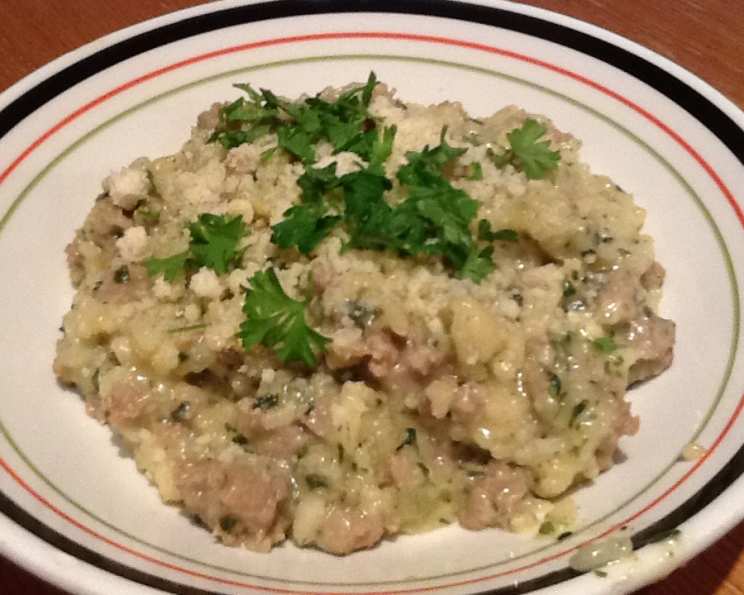
The Hearty Embrace of Risotto with Italian Sausage
There are certain dishes that, for me, encapsulate the very essence of comfort. Risotto with Italian Sausage is one such dish. I remember, vividly, a blustery autumn evening years ago, the kind where the wind howls outside and the air bites with a chill that seeps into your bones. I’d been wrestling with a particularly demanding week in the kitchen, and the thought of a complex, multi-component meal felt utterly exhausting. Then, the image of a bubbling pot of creamy risotto, studded with savory crumbles of Italian sausage, sprang to mind. It was the culinary equivalent of a warm, wool blanket – simple, satisfying, and deeply comforting. The beauty of this dish lies in its unpretentiousness; it’s a testament to how a few high-quality ingredients, treated with a little care, can create something truly magical.
Risotto With Italian Sausage: Quick Facts
- Prep Time: 15 minutes
- Cook Time: 30 minutes
- Total Time: 45 minutes
- Servings: 4-6
- Yield: N/A (A main course dish)
- Dietary Type: Adaptable (Can be made dairy-free by omitting cheese, though traditionally contains dairy)
Ingredients for a Rich and Satisfying Meal
The magic of this risotto, as with many Italian classics, lies in the quality of its components. With just a handful of ingredients, each one needs to shine. We’re aiming for a dish that’s both elegant in its simplicity and robust in flavor, perfect for a chilly evening or a celebratory family meal.
- 1 lb Italian sausage, casings removed
- 1 1/2 cups onions, finely chopped
- 2 large garlic cloves, minced
- 1 1/4 cups medium-grain rice (Arborio rice is the gold standard for risotto, its high starch content yielding that signature creamy texture)
- 4-5 cups canned reduced-sodium chicken broth, kept warm
- 1 1/4 cups grated Parmesan cheese, the good stuff, please – no shaker containers here!
- 1/2 cup fresh Italian parsley, finely chopped
Essential Equipment
While this is a one-pot wonder, having the right tools makes all the difference.
- A large, heavy-bottomed pot or Dutch oven is ideal for even heating and consistent cooking.
- A sturdy wooden spoon or heatproof spatula for stirring.
- A ladle for adding the broth.
- A small saucepan to keep the broth warm.
Crafting the Perfect Risotto with Italian Sausage: Step-by-Step
This is where the alchemy happens. Risotto requires attention, but the process itself is meditative, a reward for your patience.
- Begin by sauteing the Italian sausage, onions, and garlic in your pot over medium-high heat. As the sausage begins to brown, use your spoon to break it up into lovely crumbles. Continue cooking until the onions are tender and translucent, releasing their sweet aroma. This initial step builds a foundation of deep flavor.
- Add the medium-grain rice to the pot. Stir it constantly for about 1 minute. This toasting process is crucial; it coats each grain of rice with the rendered fat from the sausage and aromatics, helping it to cook evenly and absorb the broth beautifully without becoming mushy.
- Pour in 4 cups of the warm chicken broth. Reduce the heat to medium-low, allowing the risotto to simmer gently. This is where the magic of risotto truly begins. Stir frequently, ensuring that the rice doesn’t stick to the bottom of the pot. The broth will gradually be absorbed by the rice, releasing its starches and creating that signature creamy consistency.
- Continue to simmer until the rice is just tender, but still has a slight bite – al dente, as the Italians say. This will take approximately 10 minutes longer than the initial broth absorption. As it cooks, you’ll notice the risotto becoming thicker and more luxurious. If it seems too dry before the rice is cooked, add the remaining broth, 1/4 cup at a time, stirring frequently and allowing each addition to be absorbed before adding more. Patience here is key to achieving the perfect texture.
- Once the rice has reached that ideal tender state, remove the pot from the heat. Mix in 1/4 cup of the grated Parmesan cheese and 1/4 cup of the chopped fresh Italian parsley. Stir until the cheese is melted and melded into the creamy rice, and the parsley has distributed its vibrant green flecks throughout. Season with salt and freshly ground black pepper to taste. Remember that the sausage and Parmesan are already salty, so taste before adding too much.
- To serve, transfer the risotto to a large, warm serving bowl. Garnish the top with the remaining chopped fresh Italian parsley and pass the remaining grated Parmesan cheese at the table. This allows everyone to add a little extra cheesy goodness to their individual bowls.
Chef’s Insights: Elevating Your Risotto Game
The beauty of a dish like this is its inherent deliciousness, but a few pro tips can truly elevate it from good to unforgettable.
- Warm Broth is Non-Negotiable: Always keep your chicken broth warm in a separate saucepan. Adding cold broth to the hot rice will shock the grains and slow down the cooking process, hindering the release of starches needed for creaminess.
- The Stirring Ritual: Risotto demands your attention, and the frequent stirring is not just about preventing sticking. It’s about coaxing those starches out of the Arborio rice, creating the signature creamy texture without the need for heavy cream. Don’t be afraid to get in there and stir!
- Quality Ingredients Speak Volumes: As noted, using good quality Italian sausage and real Parmigiano-Reggiano makes a significant difference. The savory depth of the sausage and the nutty, salty tang of the Parmesan are the backbone of this dish.
- Don’t Overcook: The ideal risotto should be creamy but the rice grains should retain a slight al dente bite. Mushy risotto is a culinary sin! Taste as you go, especially in the final stages.
Serving and Storing Your Culinary Masterpiece
This risotto is best enjoyed immediately after it’s made, when its creamy texture is at its peak.
- Serving: Present the risotto in a beautiful, wide serving bowl. Garnish with fresh parsley and offer extra Parmesan cheese at the table. A simple side salad with a bright vinaigrette or some crusty bread to mop up any lingering deliciousness makes a perfect accompaniment.
- Storage: Risotto is notoriously best when fresh. However, if you have leftovers, allow them to cool completely before transferring them to an airtight container. Store in the refrigerator for up to 2 days. Reheating can be a bit tricky; the texture won’t be quite as creamy as when freshly made. Gently reheat in a saucepan over low heat, adding a splash more warm broth or water to loosen it up and restore some of its creaminess. Avoid microwaving if possible, as it can sometimes make the rice tough.
Estimated Nutritional Information
Please note that these are approximate values and can vary based on specific ingredients and portion sizes.
| Nutrient | Amount per Serving | % Daily Value |
|---|---|---|
| Calories | 812.3 kcal | N/A |
| Calories from Fat | 376 kcal | N/A |
| Total Fat | 41.9 g | 64% |
| Saturated Fat | 16.9 g | 84% |
| Cholesterol | 92.2 mg | 30% |
| Sodium | 1927.3 mg | 80% |
| Total Carbohydrate | 64 g | 21% |
| Dietary Fiber | 2.3 g | 9% |
| Sugars | 4.2 g | 16% |
| Protein | 43.5 g | 87% |
Variations and Substitutions: Making it Your Own
While this recipe is a classic for a reason, feel free to adapt it to your preferences:
- Spicy Sausage: If you prefer a little heat, opt for hot Italian sausage instead of sweet.
- Vegetarian Delight: Omit the Italian sausage and sauté your onions and garlic in olive oil. Add a medley of sautéed mushrooms, roasted bell peppers, or wilted spinach for a hearty vegetarian risotto. You may need to adjust the saltiness by relying more on the Parmesan or a pinch of salt.
- A Touch of Luxury: For an even richer flavor, consider adding a splash of dry white wine after toasting the rice and before adding the broth. Let it bubble and evaporate completely before proceeding with the broth.
- Herbal Infusion: While parsley is traditional, a mix of fresh herbs like chives or a sprinkle of fresh thyme could also be delicious.
Frequently Asked Questions
Q: Can I use a different type of rice for this risotto?
A: While Arborio rice is highly recommended for its starch content, Carnaroli or Vialone Nano rice are also excellent choices for risotto, offering similar creamy results. Avoid long-grain rice, as it will not produce the desired texture.
Q: My risotto seems a bit dry. What can I do?
A: If your risotto is too dry, simply add more warm broth or even a splash of hot water, 1/4 cup at a time, stirring constantly until you reach your desired consistency.
Q: Can I make this risotto ahead of time?
A: Risotto is best enjoyed fresh, as its texture can degrade upon reheating. However, you can cook the rice and sausage mixture and store it separately in the refrigerator. Reheat the sausage mixture in a pan, then proceed with adding the broth and finishing the risotto just before serving.
Q: What kind of chicken broth is best for risotto?
A: Reduced-sodium chicken broth is ideal, as it allows you to control the saltiness of the final dish. Homemade chicken broth will also yield excellent results.
Q: How can I make this risotto creamy without dairy?
A: While traditional risotto relies on Parmesan for creaminess, you can achieve a dairy-free version by omitting the cheese. Ensure you’re using a good quality Arborio rice and stirring well to release its starches. A small amount of nutritional yeast can add a cheesy flavor if desired.
A Warm Invitation to Savor
This Risotto with Italian Sausage is more than just a recipe; it’s an invitation to slow down, to engage with your food, and to savor the simple pleasures. It’s the kind of dish that fills not only your stomach but also your soul. So, the next time the air grows crisp or you simply crave a meal that wraps you in a warm embrace, turn to this comforting classic. I encourage you to give it a try, experiment with the variations, and most importantly, share the delicious results with those you love. Buon appetito!