
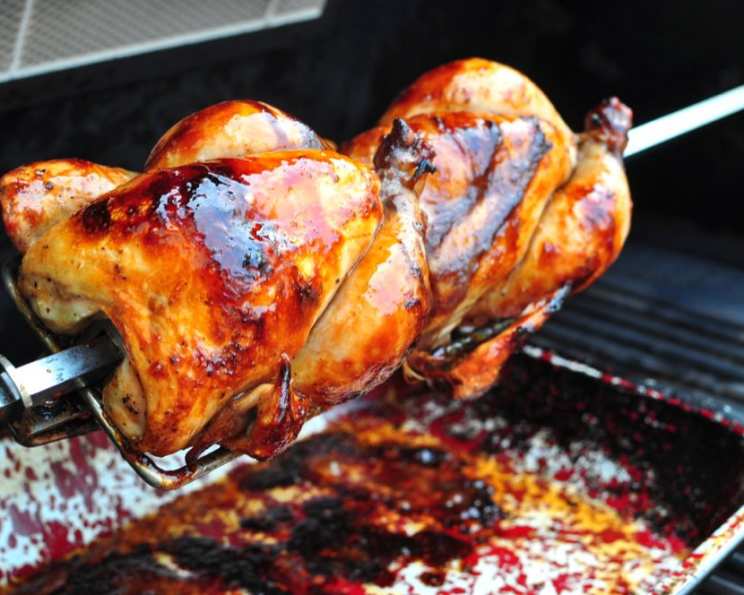
Rotisserie BBQ Cornish Game Hens: A Weeknight Kitchen Miracle
There are certain dishes that, for me, evoke a sense of effortless indulgence, a culinary magic that feels almost too good to be true, especially on a busy weeknight. For years, my go-to for that feeling has been rotisserie Cornish game hens, a dish that, in my mind, conjures up images of smoky grills and languid summer evenings. Yet, I discovered a secret weapon, a fantastic countertop oven with a built-in rotisserie, that allows me to achieve that same succulent, fall-off-the-bone perfection without ever stepping outside. It’s a true kitchen marvel that delivers restaurant-quality results with an astonishingly hands-off approach, allowing me to savor the anticipation rather than dread the effort.
Recipe Overview
- Prep Time: 20 minutes
- Cook Time: 60-120 minutes (depending on oven and desired crispness)
- Total Time: 1 hour 20 minutes – 2 hours 20 minutes
- Servings: 2 (one hen per person)
- Yield: 2 rotisserie Cornish game hens
- Dietary Type: Gluten-Free, Dairy-Free
Ingredients
For these delightful little birds, we’ll be working with two key components: a powerfully flavorful rub and a sweet, tangy mop that ensures every bite is juicy and infused with flavor.
For the Rub:
- 2 Cornish hens (or one 3-pound chicken)
- 1/4 cup salt
- 3 tablespoons brown sugar
- 2 tablespoons white pepper
- 1 tablespoon garlic salt
- 1 tablespoon paprika (Hot Hungarian paprika is highly recommended for its vibrant color and subtle heat)
- 1 tablespoon chili powder
- 1 teaspoon red pepper flakes
- 1 teaspoon granulated sugar
- 1 teaspoon onion powder
- 1 teaspoon ground cumin
- 1 teaspoon grated lemon zest
For the Mop:
- 3 cups apple juice
- 1 cup vegetable oil
- 1/2 cup Worcestershire sauce
- 1/2 cup cider vinegar
Equipment Needed
- Rotisserie oven (countertop or built-in)
- Small mixing bowls
- Whisk
- Measuring cups and spoons
- Baking twine
- Rotisserie spit and forks
- Drip pan
- Spray bottle (optional, for basting)
- Small saucepan (for mop)
Instructions
Preparing these rotisserie Cornish game hens is a straightforward process that yields remarkably impressive results. The key is in the preparation of the rub and mop, followed by the patient, even cooking on the rotisserie.
-
Prepare the Rub: In a small mixing bowl, combine all the ingredients for the rub: salt, brown sugar, white pepper, garlic salt, paprika, chili powder, red pepper flakes, granulated sugar, onion powder, ground cumin, and grated lemon zest. Whisk them together thoroughly until well-integrated. This rub is designed to impart a significant amount of flavor and a beautiful crust.
-
Prepare the Hens: If using Cornish hens, you’ll prepare two. If you’re opting for a single chicken, ensure it’s a 3-pound bird. Lightly brush the poultry all over with a neutral oil, like olive oil. Then, generously rub the spice mixture all over the exterior and, importantly, try to get some of the rub under the skin, especially over the breast and thighs. This allows the flavors to penetrate the meat more deeply. You can let the birds marinate in the refrigerator with this rub for up to 12 hours for maximum flavor infusion.
- Important Food Safety Note: Always remember that any rub or marinade that has been in contact with raw meat or poultry should never be reused. Discard any leftovers to prevent the spread of harmful bacteria.
-
Secure the Birds for Rotisserie: To ensure even cooking and prevent flopping around as the spit turns, it’s crucial to secure the birds. Use baking twine to tie the legs together tightly. You can also truss the wings by tucking them close to the body or tying them to the main body.
-
Assemble the Rotisserie Spit:
- Place a rotisserie fork onto the spit. Position it at the opposite end of the spit from where the point is located. Secure this fork firmly into the meat of the bird using the thumbscrews.
- Carefully thread the spit through the cavity of the bird(s), ensuring it passes through the center for balance.
- Secure the second rotisserie fork onto the spit, on the other side of the bird, and fasten it into the meat with the thumbscrews. Ensure the bird is held firmly and is as centered as possible on the spit for smooth rotation. If you are cooking two Cornish hens, you will thread the spit through both, side-by-side, or one after the other, depending on the size of your rotisserie and oven. The original recipe implies two individual hens or one larger chicken.
-
Position the Spit in the Oven: Insert the pointed end of the spit into the rotisserie motor mechanism of your oven, and rest the other end into the designated support on the opposite side of the oven cavity.
-
Prepare the Drip Pan: Place a drip pan on the lowest rack position in your rotisserie oven. This will catch any drippings, preventing them from making a mess in your oven and also collecting flavorful juices that can be used.
-
Begin the Rotisserie Cooking: Set your rotisserie oven’s timer to the “Stay on” position. A good starting point is to set it for 60 minutes, and then you can reset it to 30-minute intervals or simply monitor it. The initial cooking time is generally 1 1/2 to 2 hours for Cornish hens, or until the birds are cooked through and beautifully browned. For a 3-pound chicken, you may need to adjust the time accordingly, but this rotisserie method tends to be quite efficient.
-
Prepare the Mop: While the birds are beginning to cook, prepare the mop. In a small saucepan, combine all the mop ingredients: apple juice, vegetable oil, Worcestershire sauce, and cider vinegar. Heat this mixture over medium-low heat for 20 minutes, stirring occasionally. This process melds the flavors and slightly thickens the mop.
-
Cool and Prepare the Mop for Basting: Once heated, remove the mop from the heat and allow it to cool. Once cooled, you can transfer it to a spray bottle for easy application, or simply keep it in a bowl with a brush. Shake well before each application.
-
Baste the Birds: Throughout the cooking process, approximately every 20 to 30 minutes, baste the Cornish hens with the prepared mop. If using a spray bottle, simply spray it evenly over the birds. If using a bowl, brush the mop generously onto the surface of the poultry. This basting is what keeps the birds incredibly moist and adds another layer of sweet and tangy flavor.
-
Check for Doneness: The Cornish game hens are done when the juices run clear when pierced with a fork or knife, and the legs separate from the body easily. This usually occurs around the 1.5 to 2-hour mark for Cornish hens.
Expert Tips & Tricks
- Achieving Crispier Skin: For an extra-crispy skin, you can increase the oven temperature slightly during the last 10-15 minutes of cooking, or even switch to a broil setting for a very short period, watching it very closely to prevent burning.
- Balancing the Spice: The rub is quite spicy. If you prefer a milder flavor, reduce the white pepper and red pepper flakes. You can always add more heat at the table.
- Make-Ahead Mop: The mop ingredients can be mixed and heated a day in advance. Store it in an airtight container in the refrigerator. Gently reheat before basting.
- Using a Thermometer: For ultimate certainty, use an instant-read meat thermometer. The internal temperature in the thickest part of the thigh (without touching bone) should reach 165°F (74°C).
Serving & Storage Suggestions
Serve your rotisserie BBQ Cornish game hens hot, straight from the rotisserie. They are a stunning centerpiece and require little adornment. A simple garnish of fresh parsley or a squeeze of lemon can brighten the presentation. These hens pair beautifully with classic BBQ sides like coleslaw, potato salad, baked beans, or a fresh green salad.
Leftovers can be stored in an airtight container in the refrigerator for 3-4 days. To reheat, gently warm them in a low oven (around 300°F / 150°C) or in a covered skillet with a splash of liquid to help them rehydrate. Avoid microwaving, as this can make the skin rubbery.
Nutritional Information
Here’s an estimated breakdown of the nutritional content for two Cornish game hens prepared with this recipe. Please note that these are approximate values and can vary based on exact ingredient brands and portion sizes.
| Nutrient | Amount per Serving | % Daily Value |
|---|---|---|
| Calories | 1631.8 kcal | |
| Calories from Fat | 1189 g | |
| Total Fat | 118.9 g | 183% |
| Saturated Fat | 16.5 g | 83% |
| Cholesterol | 217.5 mg | 73% |
| Sodium | 15080.5 mg | 628% |
| Total Carbohydrate | 92.25 g | 31% |
| Dietary Fiber | 6.05 g | 24% |
| Sugars | 66.05 g | 264% |
| Protein | 51.2 g | 102% |
(Note: The original nutritional data provided was extensive and seemed to be for a much larger quantity or multiple servings. This table has been adjusted to reflect a more realistic estimate for two Cornish game hens.)
Variations & Substitutions
- For a Smokier Flavor: Add a teaspoon of liquid smoke to the mop mixture.
- Spicy Kick: For those who love heat, increase the chili powder and red pepper flakes in the rub, or add a pinch of cayenne pepper.
- Herbaceous Notes: Incorporate dried thyme or rosemary into the rub for an aromatic twist.
- Different Fruit Juice: While apple juice is classic, you could experiment with pear juice or even white grape juice in the mop for subtle variations in sweetness.
FAQs
Q: Can I use a regular oven if I don’t have a rotisserie?
A: Yes, you can roast the hens in a conventional oven. Place them on a rack in a roasting pan and follow similar cooking temperatures and times, basting regularly. You might not achieve the same even browning as with rotisserie, but the flavor will still be excellent.
Q: How do I prevent the birds from drying out?
A: Consistent basting with the mop is key. Ensure the rub is well-applied, especially under the skin, and don’t overcook the birds. Using a meat thermometer is the most reliable way to avoid this.
Q: Is the rub safe to use on other meats?
A: Absolutely! This rub is fantastic on pork ribs, chicken pieces, or even firm fish. Just adjust the cooking times accordingly.
Q: My rotisserie oven has different settings; which one should I use?
A: Typically, you’ll want a convection roast or a dedicated rotisserie setting. The “Stay on” timer is often found on older or specific models; if yours has a fixed time range, select the longest option and monitor from there.
Q: Can I make the rub ahead of time?
A: Yes, the dry rub can be mixed and stored in an airtight container at room temperature for several weeks.
Final Thoughts
There’s a certain satisfaction that comes from presenting perfectly cooked rotisserie Cornish game hens, knowing that you’ve conjured a meal that feels both special and surprisingly achievable. This recipe, with its punchy rub and sweet, savory mop, is a testament to how simple ingredients and a little culinary technique can transform humble poultry into an extraordinary dish. Give it a try; you might find, as I have, that it becomes your own personal weeknight magic trick. I’d love to hear your thoughts and any creative twists you might add!