
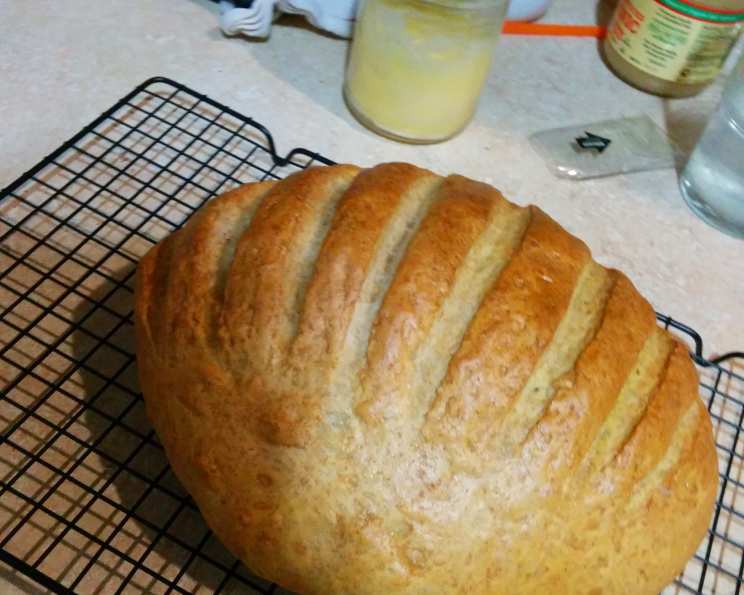
Rustic Country Loaf: A Taste of Heritage
There’s a particular aroma that, for me, signifies comfort, tradition, and the enduring heart of home. It’s the scent of freshly baked bread, specifically a hearty, rustic loaf that speaks of simpler times and generations of bakers who understood the magic of flour, water, yeast, and salt. My connection to this loaf isn’t born from a single moment, but rather a tapestry woven from childhood memories of my grandmother’s kitchen, the faint dusting of flour on her apron, and the triumphant sound of the oven timer signaling that a golden-crusted masterpiece was ready for its cooling rack. This Rustic Country Loaf captures that essence, a testament to honest ingredients and time-honored techniques that result in a truly soul-satisfying bread.
Recipe Overview
- Prep Time: 15 minutes
- Cook Time: 25 to 30 minutes
- Total Time: Approximately 3 hours (including rising times)
- Servings: 1 loaf
- Yield: 1 plump loaf
- Dietary Type: Vegetarian
Ingredients
This recipe calls for simple, wholesome ingredients that are the foundation of any great bread.
- 3 cups bread flour, plus more for dusting
- 1 cup whole wheat flour
- 2 ½ teaspoons active dry yeast
- 1 ¼ teaspoons sea salt
- 1 pinch sugar
- 1 ⅓ cups water, warm (about 120-130 degrees Fahrenheit)
Equipment Needed
- Large mixing bowl
- Wooden spoon
- Heavy sheet pan
- Parchment paper
- Kitchen towel
- Wire cooling rack
Instructions
Crafting this rustic loaf is a rewarding process, a dance between patience and intuition.
- Begin by preparing your workspace. Line one heavy sheet pan with parchment paper and generously dust it with cornmeal. This step is crucial for preventing sticking and achieving that perfect crust.
- In a small bowl, dissolve the active dry yeast in 1/3 cup of warm water (aim for a temperature between 100-110 degrees Fahrenheit) along with the pinch of sugar. Allow this mixture to sit for 10 minutes. You should see it become foamy and active, indicating the yeast is alive and ready to work its magic.
- In a large mixing bowl, combine the bread flour, whole wheat flour, and sea salt. Stir these dry ingredients together with a wooden spoon until they are well blended. Create a well in the center of the dry ingredients.
- Slowly pour the remaining warm water and the yeast mixture into the well. Using your heavy wooden spoon, stir the mixture from the center outwards until it forms a sticky dough that clings to the spoon.
- With clean, floured hands, remove the dough from the spoon and the bowl. Place it onto a lightly floured work surface. Knead the dough with both hands until it becomes slightly smooth. If the dough still feels excessively sticky, you can add a little flour, a tablespoon at a time, and mix it in until the dough is manageable.
- Form the dough into a ball and return it to the mixing bowl. Cover the bowl with a kitchen towel and let it rise in a warm place for about one hour, or until the dough doubles in size. A slightly warm oven (turned off) or a spot near a gentle heat source works well.
- Once the dough has doubled in size, punch it down firmly to release the trapped air. Return the dough to the bowl and allow it to rise for an additional half hour.
- After this second rise, remove the dough from the bowl and punch it down again. Knead it slightly and form it back into a ball, tucking the ends underneath to create a taut surface.
- Place the dough onto your prepared parchment-lined sheet pan. Cover it with the kitchen towel and let it rise again for 30 to 40 minutes, or until it has almost doubled in size.
- While the dough is on its final rise, preheat your oven to 425 degrees Fahrenheit.
- When the dough has reached its final rise, lightly dust the top of the loaf with a little flour. Carefully place the sheet pan with the dough onto the middle rack in the hot oven.
- Bake for 25 to 30 minutes, or until the bread is a deep golden brown. To test for doneness, you can tap the bottom of the loaf; it should sound hollow.
- Once baked, remove the loaf from the oven and place it on a wire rack to cool completely. This cooling period is essential for the bread’s texture and flavor to fully develop.
Expert Tips & Tricks
To elevate your Rustic Country Loaf from good to truly exceptional, consider these seasoned insights:
- Yeast Activation: Don’t be tempted to use water that’s too hot; it can kill the yeast. Conversely, water that’s too cool won’t activate it properly. The 100-110°F range is your sweet spot.
- Dough Consistency: Doughs will vary slightly based on humidity and flour type. The goal is a slightly sticky dough that you can handle. If it’s too wet, add flour sparingly. If it’s too dry, a tiny splash of water can help.
- Rising Environment: A truly warm environment for rising is key. If your kitchen is cool, you can lightly grease the bowl, cover it with plastic wrap, and place it in a turned-off oven with just the oven light on.
- Scoring the Loaf: While not explicitly in the instructions, before baking, you can lightly score the top of the loaf with a sharp knife or lame. This allows for controlled expansion as the bread bakes and adds a beautiful rustic touch.
- Oven Steam: For an even crispier crust, you can create steam in your oven during the first 10-15 minutes of baking. Place a shallow metal pan on the bottom rack of your oven while it preheats, and carefully pour about a cup of hot water into the pan just as you place the bread in. Be cautious of the steam.
Serving & Storage Suggestions
This Rustic Country Loaf is a chameleon, fitting into any meal. Slice it thick and serve it warm with a generous smear of good quality butter, or alongside your favorite soup or stew. It’s also delightful as a base for bruschetta or simply enjoyed on its own with a drizzle of olive oil.
Once completely cooled, store any leftovers in a paper bag at room temperature for 2-3 days. This allows the crust to retain some of its crispness. For longer storage, you can wrap the cooled loaf tightly in plastic wrap and then in aluminum foil, and freeze it for up to 3 months. To reheat, simply thaw at room temperature and briefly toast in a moderate oven (around 350°F) for about 10 minutes to revive its crust.
Nutritional Information
This information is an estimation for the entire loaf.
| Nutrient | Amount per Serving (approx. 1/12th of loaf) | % Daily Value |
|---|---|---|
| Calories | 180 | 9% |
| Total Fat | 0.6 g | 1% |
| Saturated Fat | 0.1 g | 1% |
| Cholesterol | 0 mg | 0% |
| Sodium | 237 mg | 10% |
| Total Carbohydrate | 31.4 g | 11% |
| Dietary Fiber | 2.1 g | 8% |
| Sugars | 0.1 g | 0% |
| Protein | 4.9 g | 10% |
(Nutritional values are estimates and can vary based on specific ingredients used.)
Variations & Substitutions
While this recipe is beautifully straightforward, you can certainly play with it.
- Seed the Crust: For added texture and flavor, before the final rise, you can brush the loaf with a little water and press a mixture of sesame seeds, poppy seeds, or sunflower seeds onto the top.
- Herbal Infusion: Incorporate finely chopped fresh or dried herbs like rosemary, thyme, or dill into the dough during the initial mixing phase for a fragrant twist.
- Rye Flour Addition: For a deeper, earthier flavor, you could substitute about 1/4 cup of the bread flour with rye flour.
FAQs
Q: Why is my bread dough so sticky?
A: Dough stickiness can vary. A slightly sticky dough is often desirable for a tender crumb. Add flour only a tablespoon at a time if it becomes unmanageable.
Q: What’s the best way to ensure my bread doubles in size?
A: Find a consistently warm spot for rising. Avoid drafts and ensure your yeast is fresh and properly activated.
Q: My bread didn’t get very brown, what could have gone wrong?
A: Ensure your oven temperature is accurate. Using an oven thermometer can help. Also, ensure you’re baking for the full recommended time, or until the crust achieves a deep golden hue.
Q: Can I use instant yeast instead of active dry yeast?
A: Yes, you can substitute instant yeast for active dry yeast. You can typically use about 25% less instant yeast and often skip the initial proofing step (dissolving in water).
Q: How can I get a crispier crust?
A: Ensure your oven is thoroughly preheated. Baking on a lower rack can sometimes help, and creating steam as mentioned in the tips can also contribute to a fantastic crust.
Final Thoughts
There is a profound satisfaction in pulling a perfectly baked, rustic loaf from your oven. It’s more than just sustenance; it’s a tangible connection to culinary tradition and a testament to the simple alchemy of baking. I encourage you to embrace the process, to feel the dough in your hands, and to savor the aroma that will fill your home. This Rustic Country Loaf is a joy to make and even more of a joy to share – perhaps with a hearty lentil soup or a rich vegetable stew. Let me know how your baking adventures turn out; I always love hearing about it.