
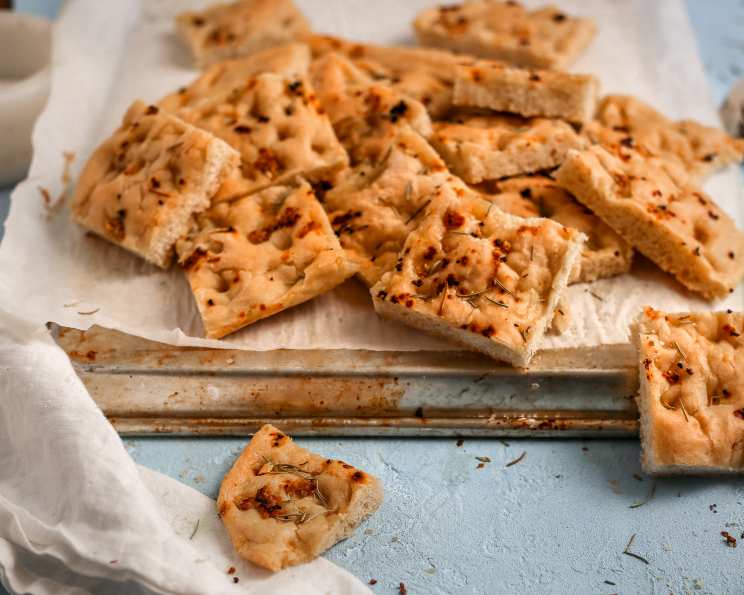
Rosemary-Garlic Focaccia: A Taste of Home, Every Time
My Uncle Pat’s kitchen was a sensory wonderland, a place where flour dusted every surface and the air hummed with the promise of deliciousness. Growing up, his rosemary-garlic focaccia was a constant presence, a warm, fragrant hug that sustained me through my teenage years. It wasn’t just bread; it was comfort, it was family, and it was a culinary revelation that I swear fortified me more than any textbook ever could. The simple combination of fragrant rosemary, pungent garlic, and pillowy dough, kissed by olive oil and baked to a perfect golden hue, is something I could, and still do, eat every single day without complaint.
Recipe Overview
- Prep Time: 1 hour 25 minutes (includes rising time)
- Cook Time: 35-40 minutes
- Total Time: 2 hours 5 minutes
- Servings: 8-10
- Yield: 1 jelly-roll pan (approx. 15 ½ x 10 ½ inches)
- Dietary Type: Vegetarian
Ingredients
This focaccia relies on simple, high-quality ingredients to shine. The magic lies in their perfect harmony.
-
For the Dough:
- Active dry yeast: 1/4 ounce (which is typically one standard envelope)
- Sugar: 1 1/2 teaspoons
- All-purpose flour: 4 to 4 1/2 cups (you might not need all of it)
- Salt: 1/2 teaspoon (for the dough itself)
- Olive oil: 3 tablespoons (for the dough)
-
For the Topping:
- Dried rosemary, crumbled: 1 1/2 tablespoons
- Garlic cloves: 3 to 5, minced very fine (adjust to your garlic preference; I always go for the full 5!)
- Sea salt or kosher salt: 1 1/2 teaspoons
- Olive oil: 2 tablespoons (for drizzling over the dough)
Equipment Needed
- Large mixing bowl
- Measuring cups and spoons
- Whisk or fork
- Clean kitchen towel or plastic wrap
- 15 ½ x 10 ½ inch jelly-roll pan (or a similar sized rimmed baking sheet)
- Oven
- Wire cooling rack
Instructions
Crafting this focaccia is a rewarding process, a dance of patience and simple techniques. Follow these steps, and you’ll be rewarded with a truly exceptional bread.
- Activate the Yeast: In a generous mixing bowl, combine the active dry yeast, sugar, and 1 ¾ cups of lukewarm water. Give it a gentle stir and let it sit for 10 to 15 minutes. You’re looking for it to become foamy and bubbly – a sign that your yeast is alive and ready to work its magic. If it doesn’t foam, your yeast might be past its prime, and it’s best to start with a fresh packet.
- Form the Dough: To the foamy yeast mixture, add 1 cup of the all-purpose flour, 1 tablespoon of the olive oil, and the 1/2 teaspoon of salt. Stir until just combined. Now, begin adding the remaining all-purpose flour, about 1/2 cup at a time, mixing after each addition. You want to end up with a soft, slightly sticky dough. You might not need to use all 4 1/2 cups of flour; the exact amount can vary depending on humidity and the flour itself. The dough should be pliable but still have a bit of a tackiness to it.
- First Rise: Lightly oil a clean bowl. Transfer the dough to this prepared bowl, turning it to coat all sides with the oil. Cover the bowl snugly with a kitchen towel or plastic wrap. Find a warm, draft-free spot in your kitchen and let the dough rise for 1 hour, or until it has doubled in size. This is where patience pays off, developing flavor and structure.
- Prepare for the Second Rise: Once the dough has doubled, gently punch it down to release the air. Lightly oil your 15 ½ x 10 ½ inch jelly-roll pan. Turn the dough out onto the oiled pan and, using your lightly oiled hands, press and spread the dough evenly to fill the pan. It might resist at first, but coax it gently. Loosely cover the pan with plastic wrap or a clean kitchen towel and let it rise again for 30 minutes.
- Preheat the Oven: While the dough is undergoing its second rise, preheat your oven to 375 degrees Fahrenheit (175 degrees Celsius). Position an oven rack in the center of the oven.
- Add the Flavor: After the second rise, the dough should look puffy and airy. Using your fingertips (lightly oiled if you prefer), gently press into the dough, creating dimples all over the surface. This is a signature focaccia technique that allows the toppings to pool and bake into the bread. Drizzle the 2 tablespoons of olive oil evenly over the dimpled dough, then spread it around to coat the surface. Finally, generously sprinkle the crumbled dried rosemary, minced garlic, and 1 ½ teaspoons of sea salt (or kosher salt) over the entire surface of the dough. Ensure an even distribution for maximum flavor in every bite.
- Bake to Perfection: Place the prepared jelly-roll pan into the preheated oven. Bake for 35 to 40 minutes, or until the focaccia is a beautiful pale golden color and the edges are lightly crisped. The aroma that fills your kitchen during this time is simply divine!
- Cool and Serve: Once baked, carefully remove the focaccia from the oven. Let it cool in the pan for 10 minutes on a wire rack. This brief resting period allows the bread to set up. After 10 minutes, you can transfer it to the wire rack to cool further, or slice and serve it warm.
Expert Tips & Tricks
- Make-Ahead Topping: For an even quicker assembly on baking day, you can prepare the rosemary, garlic, and olive oil mixture a day or two in advance. Simply combine them in a small bowl, cover, and refrigerate. Just let it come to room temperature slightly before spreading it over the dough.
- Garlic Intensity: Don’t be shy with the garlic if you’re a true garlic lover! Mincing it very fine ensures it disperses evenly and infuses the oil beautifully without overwhelming any single bite with raw pungency.
- Herb Variations: While rosemary is classic, don’t hesitate to experiment. Dried oregano is a fantastic addition, or you could even try a pinch of dried thyme.
- Flour Measurement: When measuring flour, spoon it into your dry measuring cup and level it off with a straight edge rather than scooping directly from the bag. This prevents over-measuring, which can lead to a tough dough.
- Oven Quirks: Ovens can vary. Keep an eye on your focaccia during the last 10-15 minutes of baking. If it’s browning too quickly on top, you can loosely tent it with foil.
Serving & Storage Suggestions
This Rosemary-Garlic Focaccia is incredibly versatile. Serve it warm, straight from the oven, as a delightful appetizer or side dish. It’s perfect alongside a hearty soup, a fresh salad, or as the base for a simple bruschetta. It also makes a fantastic sandwich bread.
For storage, let the focaccia cool completely before storing. It’s best enjoyed within 2 days when kept at room temperature, stored in an airtight container or tightly wrapped in plastic wrap. If you have more than you can eat in a couple of days, it freezes beautifully. Wrap individual portions tightly in plastic wrap and then in foil, and freeze for up to 3 months. To reheat, you can gently warm slices in a toaster oven or a low oven (around 300°F/150°C) until warmed through.
Nutritional Information
While this focaccia is a celebration of flavor, here’s an estimated nutritional breakdown. Please note that actual values can vary based on specific ingredients and portion sizes.
| Nutrient | Amount per Serving (approx.) | % Daily Value (approx.) |
|---|---|---|
| Calories | 281.9 kcal | 14% |
| Total Fat | 5.8 g | 8% |
| Saturated Fat | 0.8 g | 4% |
| Cholesterol | 0 mg | 0% |
| Sodium | 583.7 mg | 24% |
| Total Carbohydrate | 49.6 g | 16% |
| Dietary Fiber | 2.2 g | 8% |
| Sugars | 1 g | 3% |
| Protein | 6.9 g | 13% |
(Nutritional values are approximate and will vary based on specific ingredients and portion sizes.)
Variations & Substitutions
While this recipe is wonderful as is, feel free to get creative!
- Cheese Lover’s Dream: Sprinkle some grated Parmesan or crumbled feta cheese over the dough along with the rosemary and garlic before baking.
- Spicy Kick: Add a pinch of red pepper flakes to the topping for a subtle heat.
- Olives and Sun-Dried Tomatoes: Incorporate some chopped Kalamata olives or sun-dried tomatoes (oil-packed, drained) into the topping mixture for a Mediterranean twist.
- Gluten-Free Adaptation: For a gluten-free version, you would need to experiment with a good quality gluten-free all-purpose flour blend that is designed for yeast baking. The hydration and kneading might need to be adjusted.
FAQs
Q: My dough isn’t rising. What could be wrong?
A: The most common culprits are inactive yeast, water that was too hot (killing the yeast) or too cold (not activating it), or a drafty proofing location. Ensure your yeast is fresh and the water is lukewarm (around 105-115°F / 40-46°C).
Q: Can I use fresh rosemary instead of dried?
A: Absolutely! If using fresh rosemary, you’ll want to use about three times the amount of dried, so approximately 4 1/2 tablespoons of finely chopped fresh rosemary. Rub it between your fingers before sprinkling to release its oils.
Q: How do I get crispy edges on my focaccia?
A: Ensure your jelly-roll pan is well-oiled, as this helps conduct heat to the bottom and edges of the dough. Baking on a lower oven rack can also sometimes help crisp up the bottom.
Q: My focaccia came out too dry. What did I do wrong?
A: This could be due to adding too much flour, or over-baking. Aim for a dough that is soft and slightly sticky, and watch the baking time closely – remove it when it reaches that pale golden hue, not deep brown.
Q: Can I make this in a different pan size?
A: Yes, but you’ll need to adjust the thickness of the dough. If you use a smaller pan, the focaccia will be thicker and may require a slightly longer baking time. A larger pan will result in a thinner focaccia that bakes faster.
Final Thoughts
This Rosemary-Garlic Focaccia is more than just a recipe; it’s an experience. It’s the scent that fills your home, the warmth that emanates from the oven, and the joy of sharing something truly delicious with loved ones. It’s a testament to the power of simple ingredients transformed through care and a little bit of patience. Bake it for a casual weeknight dinner, a weekend gathering, or simply when you need a little bit of edible sunshine. I encourage you to try it, savor it, and perhaps even create your own treasured memories around this fragrant, flavorful bread. Serve it with a drizzle of your favorite extra virgin olive oil and a glass of crisp white wine – pure bliss.