
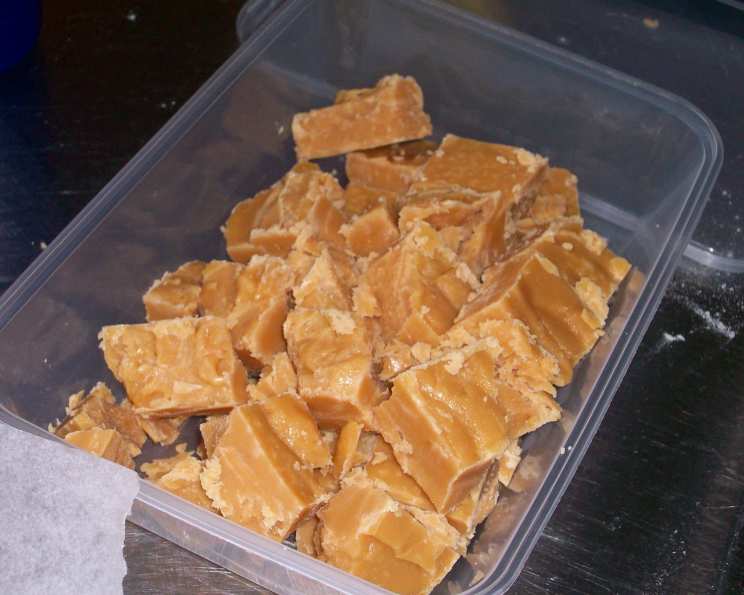
Russian Fudge: A Sweet Taste of Nostalgia
Growing up, the holidays weren’t just about the glittering tree and the carols; they were defined by the aromas that wafted from my grandmother’s kitchen. Among the gingerbread houses and intricate pastries, there was one treat that held a special kind of magic: Russian Fudge. Its intensely sweet, almost caramel-like flavor, paired with a surprisingly yielding yet firm texture, was unlike anything else. I can still picture her carefully stirring the bubbling mixture on the stove, the steam carrying promises of sugary delight, and the anticipation as we waited for it to cool just enough to mark into perfect squares. This fudge wasn’t just a dessert; it was a tangible piece of childhood joy, a sweet memory I still savor with every bite.
Recipe Overview
- Prep Time: 10 minutes
- Cook Time: 20 minutes
- Total Time: 30 minutes (plus cooling time)
- Servings: 24
- Yield: Approximately 1 pound
- Dietary Type: Vegetarian
Ingredients
Crafting this beloved Russian Fudge requires just a handful of pantry staples. The simplicity of the ingredients belies the richness of the final product.
- 3 cups sugar
- ½ cup milk
- ½ cup sweetened condensed milk
- 125 g butter
- ⅛ teaspoon salt
- 1 tablespoon golden syrup
Equipment Needed
While the ingredient list is short, a few key pieces of equipment will ensure your fudge-making success.
- A medium to large saucepan (heavy-bottomed is ideal to prevent scorching)
- A wooden spoon or heatproof spatula for stirring
- A candy thermometer (optional, but highly recommended for accuracy)
- A small bowl of cold water for testing doneness
- An 8-inch square baking tin or similar shallow dish
- Butter or parchment paper for lining the tin
- A sharp knife for cutting
Instructions
The process of making Russian Fudge is a dance between heat, sugar, and a bit of patience. Follow these steps carefully, and you’ll be rewarded with a truly exceptional confection.
- Begin by combining the 3 cups of sugar and the ½ cup of milk in your saucepan. Place the pan over gentle heat. Stir the mixture constantly until the sugar has completely dissolved. It’s crucial that no sugar crystals remain on the bottom of the pan, as this can lead to crystallization in your fudge.
- Once the sugar is dissolved, add the ½ cup of sweetened condensed milk, the 125 g of butter, the ⅛ teaspoon of salt, and the 1 tablespoon of golden syrup. Continue to stir the mixture, ensuring the butter melts fully and all ingredients are well incorporated.
- Now, bring the mixture to a boil. This is where the magic of caramelization begins. You will need to continue boiling the mixture, stirring occasionally to prevent any burning on the bottom of the pan. The goal is to reach the “soft ball stage.”
- Checking for the Soft Ball Stage: This is a critical step. To test if your fudge is ready, carefully drop a small amount of the boiling mixture into a cup of cold water. If the mixture forms a slight ball that is soft and malleable when you pick it up, then it has reached the soft ball stage. If it dissolves or remains liquid, continue boiling and test again. If it becomes too firm, your fudge might be too hard. A candy thermometer will read between 235°F and 240°F (113°C and 115°C) for the soft ball stage.
- Once the fudge has reached the soft ball stage, remove the saucepan from the heat. Allow the mixture to cool slightly. This is important; working with it too hot can make it difficult to handle and prone to burning.
- Now comes the most active part of the process: beat the fudge until it thickens. This is typically done with a sturdy spoon or even an electric mixer on a low setting. As you beat it, you’ll notice the color changing, becoming paler, and the texture shifting from liquid to a thick, paste-like consistency. This beating helps to break down sugar crystals, resulting in a smoother fudge.
- While the fudge is still warm but no longer scalding, pour it into your prepared baking tin. If you haven’t already, butter the tin or line it with parchment paper, ensuring it’s smooth and covers the base and sides.
- Mark the fudge into squares while it’s still in the tin. You can use the back of a knife or a pizza cutter for this. Don’t cut all the way through; just create indentations. This will make cutting much easier once it’s fully set.
- Allow the fudge to cool completely in the tin. This can take a couple of hours at room temperature, or you can speed it up slightly by placing it in the refrigerator for about an hour. Once it’s completely cold and firm, cut along the marked lines to separate the squares.
Expert Tips & Tricks
- The Importance of the Pan: Using a heavy-bottomed saucepan is your best defense against scorched sugar. If your pan is thin, the heat will transfer too quickly, increasing the risk of burning the fudge.
- Constant Vigilance: While stirring occasionally is stated, during the boiling phase, don’t wander too far. Sugar can turn from perfectly cooked to burnt in a matter of seconds.
- The Beat Down: The beating stage is crucial for texture. Don’t skimp on this! The more you beat it as it cools, the smoother and less grainy your fudge will be. You’re looking for a noticeable thickening and a change in sheen.
- Humidity Woes: Fudge making can be affected by humidity. On very humid days, it can be harder for fudge to set properly. If you live in a humid climate, you might need to boil it a little longer or allow extra cooling time.
- The Soft Ball Test Mastery: Practice the soft ball test a few times if you’re unsure. Understanding the feel and consistency of the forming ball is key to perfect fudge every time.
Serving & Storage Suggestions
Russian Fudge is a delightful treat to be enjoyed any time. Serve individual squares as a sweet ending to a meal, alongside a cup of coffee or tea, or as part of a larger dessert spread. Its rich sweetness makes a little go a long way.
For storage, ensure the fudge is completely cooled. Layer the cut squares between sheets of parchment paper and place them in an airtight container.
- Room Temperature: Properly stored Russian Fudge can last for up to 2 weeks at room temperature.
- Refrigeration: For longer storage or in warmer climates, you can refrigerate the fudge. It will keep for up to 4 weeks. The texture might become slightly firmer when chilled.
- Freezing: Russian Fudge freezes remarkably well. Wrap individual pieces or blocks tightly in plastic wrap and then in foil, or place in a freezer-safe container. It can be stored in the freezer for up to 3 months. Thaw at room temperature before serving.
Nutritional Information
Here’s an approximate nutritional breakdown for a single serving of Russian Fudge (assuming 24 servings per batch):
| Nutrient | Amount per Serving | % Daily Value |
|---|---|---|
| Calories | 160 kcal | 8% |
| Total Fat | 5 g | 6% |
| Saturated Fat | 3 g | 15% |
| Cholesterol | 14 mg | 5% |
| Sodium | 60 mg | 3% |
| Total Carbohydrate | 29 g | 11% |
| Dietary Fiber | 0 g | 0% |
| Total Sugars | 28 g | 56% |
| Protein | 1 g | 2% |
Note: These values are estimates and can vary based on the specific ingredients and brands used.
Variations & Substitutions
While the classic Russian Fudge is hard to beat, here are a few ideas to playfully tweak this recipe:
- Nutty Addition: For added texture and flavor, stir in ½ cup of chopped walnuts or pecans during the beating stage, just before pouring into the tin.
- Extract Infusion: A ½ teaspoon of vanilla extract or almond extract can be added along with the butter for a subtle aromatic twist.
- Chocolate Lover’s Dream: Melt 2 ounces of unsweetened chocolate and stir it into the mixture just before pouring into the tin for a chocolate-fudge hybrid.
- Spice It Up: A pinch of cinnamon or a dash of nutmeg can add a hint of warmth, especially lovely during the cooler months.
FAQs
Q: Why is my Russian Fudge grainy instead of smooth?
A: Graininess usually occurs when the sugar doesn’t fully dissolve at the beginning, or if the fudge is stirred too vigorously during the cooling process after it has started to set. Ensure the sugar is completely dissolved before bringing it to a boil, and be gentle when beating.
Q: My fudge didn’t set properly. What went wrong?
A: The most common reason for fudge not setting is not boiling it to the correct temperature (the soft ball stage). It may need to be boiled for a few more minutes. Humidity can also play a role, making it harder for the fudge to firm up.
Q: Can I use a different type of milk?
A: While whole milk is traditional and provides a good fat content, you can experiment with other milk types. However, be aware that non-dairy milks may alter the texture and setting properties of the fudge.
Q: How do I know when to stop beating the fudge?
A: You’ve reached the right point when the fudge visibly thickens, loses its glossy sheen, and starts to become stiff and difficult to stir. It should be thick enough to hold its shape when spooned into the tin.
Q: Can I make this fudge without golden syrup?
A: Golden syrup helps with texture and flavor. If you cannot find it, you can substitute with an equal amount of light corn syrup or maple syrup, though this may slightly alter the final taste and color.
Final Thoughts
There’s an undeniable charm in creating something so utterly delightful from such simple ingredients. Russian Fudge is more than just a sweet treat; it’s a testament to the enduring power of comfort food and cherished memories. I encourage you to gather your ingredients, embrace the warmth of your kitchen, and whip up a batch of this nostalgic delight. Share it with loved ones, tuck it into lunchboxes, or simply enjoy a piece with a steaming mug of tea – it’s a little square of happiness, crafted by your own hands. I’d love to hear about your own fudge-making adventures!