
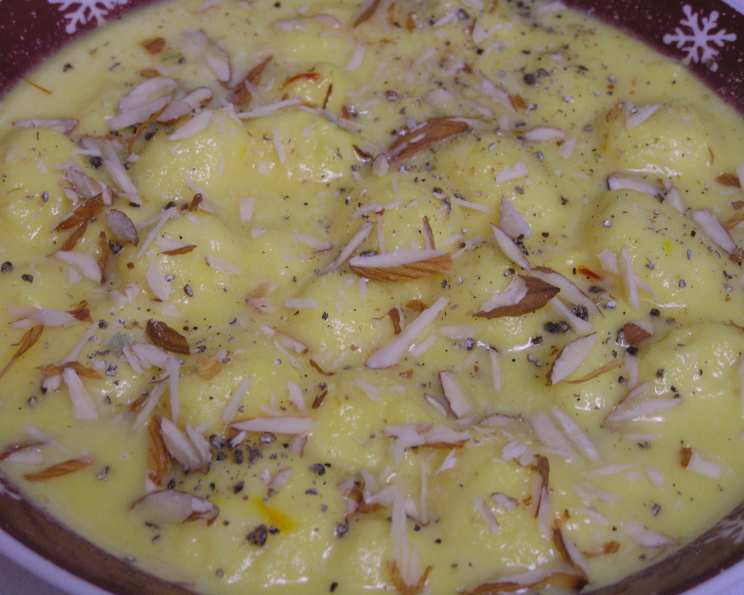
Rasmalai: A Symphony of Creamy Delights and Soft Sponges
The scent of simmering milk, laced with cardamom and saffron, instantly transports me back to my grandmother’s kitchen in Kolkata. Rasmalai, to me, is more than just a dessert; it’s a fragrant memory, a comforting embrace, and a testament to the magic that simple ingredients can create. I recall painstakingly curdling milk with lemon, then gently pressing the resulting chenna, my small hands covered in milky curds, to form the delicate, dime-sized balls. The anticipation of the milk thickening, infused with the golden hue of saffron, was a lesson in patience and the sweet reward that awaited. Making this classic Indian sweet, especially when fresh cow’s milk is scarce, has always been a joyful challenge, yielding that same heartwarming, melt-in-your-mouth experience every single time.
Recipe Overview
- Prep Time: 15 minutes
- Cook Time: 30 minutes (for boiling syrup) + 20 minutes (for thickening milk) + 15 minutes (for simmering chenna balls in milk)
- Total Time: 1 hour 5 minutes (plus time for curdling milk and pressing chenna)
- Servings: 7-8
- Yields: 20 rasmalai
- Dietary Type: Vegetarian, Gluten-Free
Ingredients
For the Chenna (Spongy Milk Balls):
- 1 liter whole milk (for curdling)
- Lemon juice (to curdle the milk, approximately 2-3 tablespoons, or as needed)
For the Flavored Milk and Rasmalai Assembly:
- 1 cup heavy whipping cream
- 2 cups whole milk
- 1 cup sugar (for the sugar syrup)
- 5 tablespoons sugar (for the flavored milk)
- 3 cups drinking water
- 1 tablespoon cardamom powder
- 5-6 almonds, diced very thinly
- 6-7 saffron strands
Equipment Needed
- Large heavy-bottomed saucepan
- Fine-mesh sieve
- Cheesecloth or a thin, clean kitchen towel
- A heavy weight (e.g., a mortar and pestle, a heavy book, or a pot filled with water)
- A large bowl or plate
- A medium saucepan (for sugar syrup)
- Another medium saucepan (for the flavored milk)
- A serving bowl
Instructions
-
Curdle the Milk: Begin by gently heating the 1 liter of whole milk in a large, heavy-bottomed saucepan over medium heat. Stir occasionally to prevent scorching. Once the milk comes to a rolling boil, reduce the heat to low and let it simmer for a minute or two. Then, gradually add lemon juice, a tablespoon at a time, stirring gently. You’ll see the milk start to curdle, separating into solid curds and liquid whey. Continue adding lemon juice until no more milk solids form.
-
Strain and Press the Chenna: Immediately strain the curdled milk through a fine-mesh sieve lined with cheesecloth or a thin, clean kitchen towel. Discard all the water (whey). Gather the edges of the cheesecloth to form a pouch, and place a heavy weight on top of the chenna solids within the pouch. Let it sit for at least 30 minutes to press out any remaining liquid. This step is crucial for achieving the right texture in your rasmalai.
-
Knead the Chenna: After pressing, carefully remove the weight and take the chenna out of the cheesecloth onto a clean plate or a flat surface. Knead the chenna very properly with your hands. This process should take about 5-7 minutes. The goal is to make the chenna smooth and pliable, almost like a soft dough. If it feels too dry, you can add a tiny bit of milk, but be careful not to make it too wet.
-
Shape the Rasmalai Balls: Divide the kneaded chenna into 20 equal portions. Gently roll each portion between your palms to form small, smooth balls, approximately the size of a dime. Ensure there are no cracks on the surface, as this can cause them to break apart during cooking.
-
Prepare the Sugar Syrup: In a medium saucepan, combine 3 cups of drinking water and 1 cup of sugar. Bring this mixture to a boil over medium-high heat, stirring until the sugar dissolves completely.
-
Cook the Chenna Balls in Syrup: Once the sugar syrup starts to boil, carefully drop the prepared chenna balls into it. Do not overcrowd the saucepan; cook in batches if necessary. Cover the pan and let the chenna balls simmer on medium heat for 30 minutes. If you have an Indian-style pressure cooker, you can adapt this step: close the lid with the whistle on and cook for 15 minutes on a VERY LOW HEAT (this is extremely important to prevent them from overcooking). After the simmering time, switch off the heat. Frequently stir the syrup around the chenna balls so they don’t stick to each other.
-
Prepare the Flavored Milk: While the chenna balls are simmering, start preparing the flavored milk. In another medium saucepan, combine 1 cup of heavy whipping cream, 2 cups of whole milk, and the saffron strands. Add the remaining 5 tablespoons of sugar.
-
Thicken the Flavored Milk: Bring this milk mixture to a boil over medium heat, then reduce the heat to low and let it simmer gently for 20 minutes, stirring frequently. The milk should thicken to a custard-like consistency. Be very careful to prevent scorching the bottom of the pan. The saffron will impart a beautiful golden hue.
-
Combine and Simmer: Once the chenna balls have finished their initial simmer in the sugar syrup, carefully remove them using a slotted spoon. Gently squeeze out any excess syrup. While the whipping cream and whole milk mixture is still simmering, drop the chenna balls into it.
-
Final Simmer: Allow the chenna balls to simmer in the flavored milk for another 15 minutes on low heat. This allows the chenna balls to absorb the rich, creamy flavor of the milk.
-
Cool and Garnish: After the final simmer, switch off the heat. Transfer the rasmalai and its milky syrup to a serving bowl. Sprinkle generously with cardamom powder and the thinly diced almond flakes.
-
Refrigerate and Serve: Cover the bowl and refrigerate the rasmalai for at least 2-3 hours, or preferably overnight, to allow the flavors to meld and the dessert to chill thoroughly.
-
Serve Cold: Serve the chilled rasmalai in small bowls, ensuring each serving gets plenty of the luscious, flavored milk and a good sprinkle of the garnishes.
Expert Tips & Tricks
- Don’t Over-Knead: While proper kneading is essential, over-kneading the chenna can lead to tough rasmalai. Knead until smooth and pliable, but stop as soon as you achieve that consistency.
- Gentle Simmer: The key to perfectly cooked rasmalai is a gentle simmer. High heat can cause them to break apart in the syrup and later in the milk.
- Pressure Cooker Caution: If using a pressure cooker, ensure the heat is extremely low for the 15-minute cooking time. This is a delicate sweet, and too much heat can ruin the texture.
- Flavor Infusion: For an even more intense flavor, you can add a few crushed green cardamom pods to the milk while it’s simmering. Remove them before adding the chenna balls.
- Saffron Power: For the best saffron color and flavor, soak the saffron strands in a tablespoon of warm milk for about 10-15 minutes before adding them to the main milk mixture.
Serving & Storage Suggestions
Rasmalai is best served thoroughly chilled. The cool, creamy milk and the soft, spongy chenna balls create a refreshing contrast, especially in warmer weather. Garnish with slivered pistachios or edible rose petals for an extra touch of elegance. Leftovers can be stored in an airtight container in the refrigerator for 2-3 days. Due to the dairy content, it’s not recommended to freeze rasmalai as the texture of the chenna balls may change upon thawing.
Nutritional Information
| Nutrient | Amount per Serving | % Daily Value |
|---|---|---|
| Calories | 401.8 kcal | – |
| Calories from Fat | – | 45 % |
| Total Fat | 20.2 g | 31 % |
| Saturated Fat | 11.9 g | 59 % |
| Cholesterol | 68.3 mg | 22 % |
| Sodium | 105.5 mg | 4 % |
| Total Carbohydrate | 49.1 g | 16 % |
| Dietary Fiber | 0.3 g | 1 % |
| Sugars | 49.1 g | 196 % |
| Protein | 8 g | 16 % |
(Note: Nutritional values are approximate and can vary based on specific ingredients used.)
Variations & Substitutions
- Nut-Free: Omit the almonds and saffron. You can substitute with a pinch of nutmeg or a few drops of rose water for a different aromatic twist.
- Sugar-Free (for the milk): While the chenna balls themselves are naturally free of added sugar, you can use a sugar substitute in the flavored milk to reduce the overall sugar content. Ensure the substitute is suitable for simmering.
- Cardamom Intensity: Adjust the amount of cardamom powder to your preference. Some enjoy a subtle hint, while others love a more pronounced flavor.
FAQs
Q: Why did my chenna balls break apart in the syrup?
A: This usually happens if the chenna was not kneaded enough, making it too crumbly, or if it was overcooked in the syrup. Ensure a smooth, pliable dough and a gentle simmer.
Q: Can I use store-bought paneer instead of making chenna from scratch?
A: While technically possible, store-bought paneer is often firmer and may not yield the same delicate, spongy texture as freshly made chenna. For the best rasmalai, it’s recommended to make your own chenna.
Q: My flavored milk didn’t thicken properly. What went wrong?
A: Ensure you are using full-fat milk and cream for richness, and that you’re simmering it long enough on low heat. Stirring frequently also helps in even thickening and prevents scorching.
Q: How can I ensure my rasmalai is soft and spongy?
A: The key is proper kneading of the chenna and a gentle, consistent simmer in both the sugar syrup and the flavored milk. Avoid high heat at all stages of cooking the chenna.
Q: Can I make the chenna and flavored milk ahead of time?
A: You can prepare the chenna balls and store them in the refrigerator for a day. The flavored milk can also be made ahead and refrigerated. However, it’s best to combine and simmer the chenna balls in the milk just before serving or a few hours prior to allow optimal flavor absorption.
Final Thoughts
Rasmalai is a testament to the art of transforming simple milk into an ethereal dessert. The journey from curdling milk to the final, chilled delight is a labor of love, rewarded with every melt-in-your-mouth bite. Don’t be intimidated by the steps; each one is designed to bring out the best in this beloved sweet. Serve it as a grand finale to an Indian feast, a comforting treat on a special occasion, or simply as a way to bring a touch of joy and tradition into your day. I encourage you to try this recipe, to experience its magic, and to perhaps even create your own cherished memories around this beautiful sweet.