
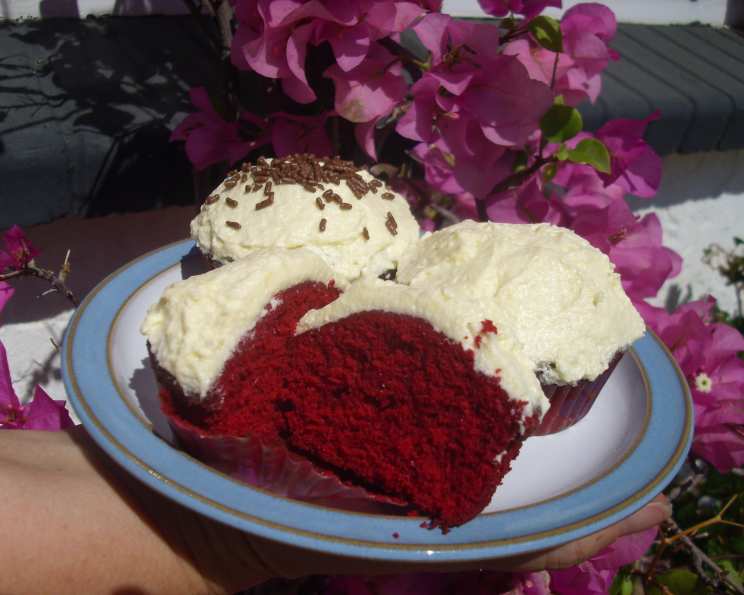
Southern Buttermilk Red Velvet Cake: A Taste of Nostalgia and Velvety Indulgence
There’s something deeply comforting about a Red Velvet cake, a confection that whispers tales of Southern kitchens and festive gatherings. I remember the first time I truly appreciated its magic. It wasn’t just the striking crimson hue that captured my attention, but the subtle, almost shy, chocolate undertones that played hide-and-seek with the tangy buttermilk. It was a cake that felt both celebratory and intimate, perfect for sharing with loved ones or savoring in a quiet moment with a cup of coffee. This particular rendition, an adaptation I hold dear, strikes that exquisite balance, offering a tender crumb and a frosting that’s gloriously creamy without being overwhelmingly sweet – a true testament to classic baking done right.
Recipe Overview
- Prep Time: ~30 minutes
- Cook Time: ~35 minutes per cake layer
- Total Time: ~1 hour 15 minutes (plus cooling time)
- Servings: 12
- Yield: 1 3-layer, 8-inch cake
- Dietary Type: Traditional
Ingredients
For the Red Velvet Cake:
- 1 cup butter, softened
- 1 ½ cups sugar
- 2 large eggs
- ¼ cup red food coloring
- 2 tablespoons unsweetened cocoa powder
- 2 ½ cups cake flour
- 1 teaspoon salt
- 1 teaspoon baking soda
- 1 cup buttermilk
- 1 teaspoon vanilla extract
- 1 tablespoon white wine vinegar
For the Velvety Icing:
- 1 cup milk
- 2 tablespoons all-purpose flour
- 1 cup unsalted butter, softened
- 1 cup confectioners’ sugar
- 1 teaspoon vanilla extract
Equipment Needed
- Three 8-inch round cake pans
- Electric mixer (stand or hand-held)
- Mixing bowls (various sizes)
- Whisk
- Sifter or fine-mesh sieve
- Small saucepan
- Wire cooling racks
- Offset spatula or knife for frosting
Instructions
The journey to a perfect Southern Buttermilk Red Velvet Cake begins with careful preparation and a gentle touch. Preheat your oven to 350 degrees Fahrenheit (175 degrees Celsius). Next, prepare your cake pans by greasing and flouring them thoroughly. This is a crucial step to ensure your beautiful layers release flawlessly.
In a large mixing bowl, cream together the softened butter and sugar with your electric mixer. Beat them until the mixture is light, fluffy, and pale yellow – this process incorporates air, which is key to a tender cake. Next, add the eggs, one at a time, ensuring each egg is fully incorporated before adding the next and beating well after each addition.
Now for the signature color and depth of flavor. In a separate small bowl, make a paste with the red food coloring and the unsweetened cocoa powder. This step takes a little patience; you’ll need to stir them together for a few minutes to allow the chocolate to fully absorb the liquid from the food coloring. Don’t be discouraged if it takes a bit; this is essential for achieving that deep, rich hue and the characteristic hint of chocolate. Once you have a smooth paste, add this to the butter and sugar mixture and beat until well combined.
In another medium bowl, sift together the cake flour, salt, and baking soda. Sifting helps to aerate the dry ingredients and remove any lumps, leading to a finer crumb.
Now, you will add the sifted dry ingredients to the sugar and butter mixture alternately with the buttermilk. Begin by adding about a third of the dry ingredients and mix until just combined, then add half of the buttermilk and mix. Continue this process, alternating between dry and wet ingredients, beginning and ending with the dry ingredients. This methodical approach helps to create a smooth, emulsified batter without overmixing.
Once the last of the flour mixture has been added and just incorporated, stir in the vanilla extract and the white wine vinegar. The vinegar, in combination with the buttermilk and baking soda, acts as a leavening agent, contributing to the cake’s light texture and also helps to enhance the red color. Beat the batter for another minute to ensure everything is perfectly blended.
Divide the batter evenly into the three prepared cake pans. Smooth the tops gently with your spatula. Place the pans in the preheated oven and bake for about 35 minutes, or until a wooden skewer or toothpick inserted into the center of the cakes comes out clean. Baking times can vary slightly depending on your oven, so keep an eye on them.
Once baked, remove the cakes from the oven and let them cool in their pans for 10 minutes. This allows them to set slightly before you attempt to remove them. After 10 minutes, carefully invert the cakes onto wire racks to cool completely. It is imperative that the cakes are fully cooled before you begin frosting, otherwise, your delicious icing will melt into a sticky mess.
While the cake layers are cooling, let’s prepare the luscious icing. In a small saucepan, whisk together the milk and the all-purpose flour until smooth. Cook this mixture over low heat, stirring often. As it thickens, you’ll need to stir more constantly, especially near the end. This process will take about 10 minutes, resulting in a thick, pudding-like consistency. Remove from heat and allow this flour mixture to cool completely. Patience here is key; a warm mixture will melt your butter.
In a separate large bowl, cream together the softened unsalted butter, confectioners’ sugar, and vanilla extract. Beat this with your electric mixer until it is very light and fluffy, which can take up to 10 minutes. This extended creaming time is what gives the frosting its characteristic airy and smooth texture.
Once the milk and flour mixture has cooled completely, add it to the creamed butter mixture. Beat until just mixed. Be careful not to overbeat at this stage, as it can cause the frosting to become too thin or greasy. The result should be a smooth, pipeable, and utterly delicious icing.
Now, the moment of truth: assemble the cake. Place one cooled cake layer on your serving plate or cake stand. Spread a thin layer of icing over the top. Place the second cake layer on top, followed by another thin layer of icing. Finally, place the third cake layer on top. Cover the top and sides of the entire cake with the remaining icing, smoothing it to create a beautiful, finished look.
Expert Tips & Tricks
- Room Temperature is Key: Ensure your butter, eggs, and buttermilk are all at room temperature before you begin. This allows them to emulsify properly, creating a smoother batter and a more tender cake.
- Don’t Overmix: Once you add the flour, mix only until just combined. Overmixing develops the gluten in the flour, which can lead to a tough cake.
- Vinegar Power: Don’t skip the white wine vinegar! It’s a crucial ingredient that reacts with the baking soda to help the cake rise and also brightens the red color.
- Cooling is Crucial: Resist the urge to frost warm cakes. They need to be completely cool to prevent the frosting from melting.
- Icing Consistency: If your icing seems too stiff, you can add a tiny splash more milk (1 teaspoon at a time). If it’s too thin, you can try chilling it for a bit, or very carefully adding a tablespoon more of confectioners’ sugar.
Serving & Storage Suggestions
This Southern Buttermilk Red Velvet Cake is a showstopper on its own, but it pairs wonderfully with a glass of cold milk, a cup of freshly brewed coffee, or even a delicate rosé. For a truly festive touch, consider garnishing with fresh berries or a dusting of cocoa powder.
Leftover cake can be stored in an airtight container at room temperature for up to 2 days. For longer storage, refrigerate the cake for up to 5 days. When ready to serve refrigerated cake, allow it to come to room temperature for about 30 minutes to an hour for optimal texture and flavor. The cake can also be frozen, well-wrapped, for up to 2 months. Thaw overnight in the refrigerator before bringing to room temperature.
Nutritional Information
| Nutrient | Amount per Serving | % Daily Value |
|---|---|---|
| Calories | 553.4 kcal | N/A |
| Total Fat | 32.7 g | 50% |
| Saturated Fat | 20.3 g | 101% |
| Cholesterol | 116 mg | 38% |
| Sodium | 480.2 mg | 20% |
| Total Carbohydrate | 60.8 g | 20% |
| Dietary Fiber | 0.7 g | 2% |
| Sugars | 35.9 g | 143% |
| Protein | 5.3 g | 10% |
| Calories from Fat | 294 kcal | N/A |
Note: Nutritional values are estimates and can vary based on specific ingredients and portion sizes.
Variations & Substitutions
While this recipe is a classic for a reason, feel free to explore! For a gluten-free version, you can substitute a good quality gluten-free all-purpose flour blend for the cake flour. Keep in mind that the texture might be slightly different. If you don’t have buttermilk, you can make a quick substitute by adding 1 tablespoon of white vinegar or lemon juice to 1 cup of milk and letting it sit for 5-10 minutes. Some bakers also prefer a cream cheese frosting for red velvet; if you’d like to try that, look for a recipe that balances the tang of cream cheese with sweetness.
FAQs
Q: Why is my red velvet cake not red enough?
A: Ensure you are using a good quality, concentrated red food coloring and that you have made a proper paste with the cocoa powder. Stirring the cocoa and coloring thoroughly helps distribute the pigment.
Q: Can I make this cake ahead of time?
A: Yes, the cake layers can be baked a day in advance, wrapped tightly, and stored at room temperature. The frosting can also be made ahead and stored in the refrigerator. Re-whip the frosting if it seems a bit firm before assembling.
Q: What makes red velvet cake taste slightly different from a regular chocolate cake?
A: The subtle chocolate flavor comes from the small amount of cocoa powder, but the unique tang from the buttermilk and vinegar, combined with the red food coloring, gives red velvet its distinctive character.
Q: My frosting looks greasy, what went wrong?
A: This can happen if the butter was too warm, or if it was overmixed after the cooled milk/flour mixture was added. Try chilling the frosting for about 30 minutes and then re-whipping gently.
Q: Can I make red velvet cupcakes instead?
A: Absolutely! The batter can be divided into cupcake liners and baked for approximately 18-22 minutes at 350°F (175°C), or until a toothpick comes out clean. Adjust frosting quantity as needed.
Final Thoughts
Baking this Southern Buttermilk Red Velvet Cake is more than just following a recipe; it’s an invitation to create a moment of joy. The vibrant color, the tender crumb, and that perfectly balanced frosting come together to form a dessert that’s both classic and deeply satisfying. Whether you’re celebrating a special occasion or simply craving a slice of comfort, this cake is sure to be a beloved addition to your baking repertoire. Share it, savor it, and let its velvety embrace bring a little extra sweetness to your day.