
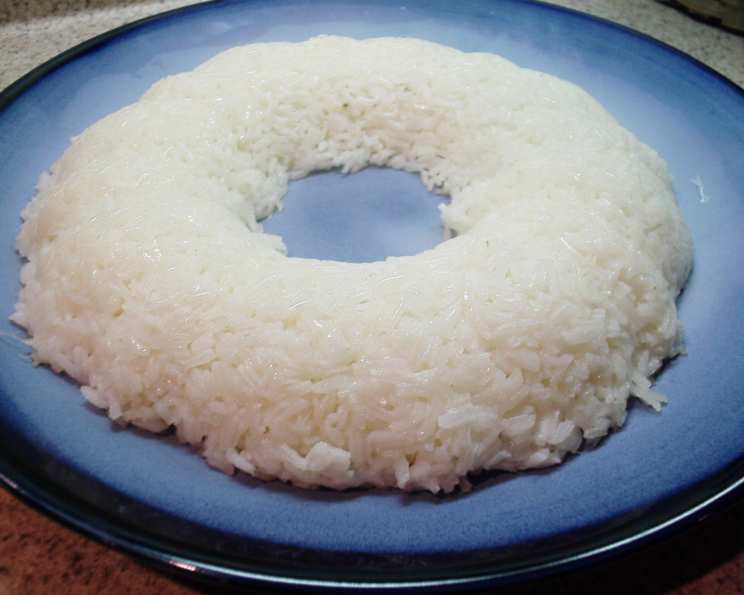
The Perfect Rice Ring: A Classic Accompaniment
There are certain dishes that, while seemingly simple, hold a special place in the culinary repertoire, acting as the unsung heroes to more flamboyant main courses. The Rice Ring is one such gem. I remember a particular holiday gathering, a bustling family affair where my grandmother, with her practiced hands, presented a glistening, perfectly formed Rice Ring. It sat proudly at the center of the table, a delicate halo waiting to be adorned with her legendary Shrimp Creole. The aroma of the buttered rice, subtly fragrant and warm, was the promise of comfort and tradition, a scent that instantly transports me back to those cherished moments. It’s this humble elegance, this capacity to elevate a saucy dish with both form and function, that makes the Rice Ring an indispensable part of my cooking.
Recipe Overview
- Prep Time: 1 minute
- Cook Time: 2 minutes
- Total Time: 3 minutes
- Servings: 4-6
- Yield: 1 Rice Ring
- Dietary Type: Adaptable (typically vegetarian)
Ingredients
The beauty of this Rice Ring lies in its incredible simplicity. It requires very few, yet essential, ingredients:
- Butter, for generously coating the mold
- 1 ½ cups cooked, steamed, dry rice, buttered
Equipment Needed
For this straightforward preparation, you’ll need:
- A 1 ½ quart ring mold (a Bundt pan or a similarly shaped mold will work beautifully)
- A foil for covering
- A heated platter for inverting
Instructions
Crafting a perfect Rice Ring is a testament to the elegance of simplicity. The key lies in careful preparation and a touch of heat.
- Begin by buttering your 1 ½ quart ring mold very generously. This is crucial for ensuring the rice releases cleanly, leaving you with that beautiful, defined shape. Don’t be shy with the butter!
- Next, pack the hot, cooked rice firmly into the prepared mold. Ensure there are no air pockets; pressing it down evenly will give you a solid, well-formed ring. If your rice isn’t quite ready, you can prepare it up to an hour ahead. To keep it warm and prevent it from drying out, cover it tightly with foil and place it in a 250°F (120°C) oven until you’re ready to assemble.
- Once the rice is packed and ready, cover the mold tightly with foil. This step helps to steam the rice further, ensuring it holds its shape when inverted.
- Finally, invert the mold onto a heated platter. The warmth of the platter, combined with the buttered mold and steamed rice, will allow the ring to slide out with grace, revealing its perfect form.
Expert Tips & Tricks
While the instructions are quite direct, a few professional insights can elevate your Rice Ring experience.
- The Rice is Key: For the best results, use a dry, fluffy rice. Long-grain white rice, like Basmati or Jasmine, cooked and then steamed until dry, is ideal. Avoid sticky or overcooked rice, as it won’t hold its shape. If you’re steaming it yourself, ensure you’ve achieved a light, separate grain.
- Butter is Your Friend: I cannot stress this enough – butter the mold generously. A well-buttered mold is the secret to a clean release. If you’re concerned about the butter flavor, use a good quality unsalted butter.
- Warmth Matters: Serving the rice hot is important for two reasons: it packs better and it helps it to release from the mold. If you’ve prepped ahead, the 250°F oven is the perfect temperature to keep it warm without overcooking.
- The Heated Platter: Don’t underestimate the power of a warm serving platter. It creates a gentle heat that aids in releasing the rice ring. You can warm your platter in a low oven or even by filling it with hot water and then carefully drying it just before inverting the rice.
Serving & Storage Suggestions
The Rice Ring is a versatile canvas, designed to be the perfect partner to a variety of dishes. It’s traditionally served alongside saucy creations, like Shrimp Creole, stews, curries, or any dish where the rice can beautifully soak up the delicious gravies and sauces.
For serving, once the rice ring has been inverted onto a warm platter, you can gently lift the mold. If it seems reluctant, give the bottom a little tap. A spoonful of the saucy main dish placed in the center of the ring, with the rest spooned around the base, creates a stunning presentation.
Leftover rice rings can be covered tightly and refrigerated for up to 2 days. While it’s best enjoyed fresh, it can be reheated gently. You can do this by covering individual portions with foil and warming them in a 300°F (150°C) oven until heated through, or by carefully steaming it. Avoid microwaving, as it can make the rice mushy.
Nutritional Information
While the primary purpose of this dish is to complement other flavors, here’s an estimated nutritional breakdown per serving, assuming 6 servings.
| Nutrient | Amount per Serving | % Daily Value |
|---|---|---|
| Calories | 263.2 kcal | |
| Calories from Fat | 3 g | 1% |
| Total Fat | 0.4 g | 0% |
| Saturated Fat | 0.1 g | 0% |
| Cholesterol | 0 mg | 0% |
| Sodium | 0.7 mg | 0% |
| Total Carbohydrate | 58 g | 19% |
| Dietary Fiber | 1 g | 4% |
| Sugars | 0 g | 0% |
| Protein | 4.8 g | 9% |
(Note: Nutritional values are estimates and can vary based on the type of rice and butter used.)
Variations & Substitutions
While the classic buttered white rice is a time-honored standard, feel free to explore its potential for adaptation:
- Brown Rice Ring: For a nuttier flavor and added fiber, use cooked and cooled brown rice. Ensure it’s cooked until tender but still has separate grains. You might need to add a touch more butter to the mold to ensure it releases.
- Herbed Rice Ring: Stir in finely chopped fresh herbs like parsley, chives, or cilantro into the hot rice before packing it into the mold. This adds a subtle freshness and visual appeal.
- Vegetable Rice Ring: For a more colorful and nutritious option, you can incorporate finely diced and sautéed vegetables such as peas, carrots, or corn into the rice. Ensure they are cooked through and not too wet.
- Savory Spice Infusion: A pinch of garlic powder, onion powder, or a touch of curry powder can be mixed into the hot rice for a deeper flavor profile, perfect for pairing with specific curries or stews.
FAQs
Q: Why is it important to pack the rice firmly into the mold?
A: Packing the rice firmly eliminates air pockets, ensuring that the rice ring holds its shape beautifully when inverted and doesn’t crumble.
Q: What kind of rice is best for a Rice Ring?
A: A dry, fluffy, long-grain white rice like Basmati or Jasmine works best. It cooks up with separate grains that hold together well when packed.
Q: Can I prepare the rice ring ahead of time?
A: Yes, you can prepare the rice up to an hour in advance. Pack it into the buttered mold, cover tightly with foil, and keep it warm in a 250°F (120°C) oven until you’re ready to invert it.
Q: My rice ring is sticking to the mold. What went wrong?
A: The most common reason for sticking is insufficient buttering of the mold. Ensure you are very generous with the butter, coating every crevice. Also, make sure the rice is still warm when you pack it.
Q: How can I get a cleaner release from the mold?
A: Besides generous buttering, a slightly longer resting time in the warm mold on the heated platter can sometimes help. Gentle tapping on the bottom of the mold can also signal if it’s ready to release.
Final Thoughts
The Rice Ring is a quiet champion in the kitchen, a dish that embodies the idea that sometimes, the simplest presentations offer the most profound satisfaction. It’s a testament to how a humble grain, treated with care and a touch of butter, can become an elegant centerpiece. I encourage you to try this simple yet effective technique, particularly when you’re serving a rich, flavorful stew or a vibrant curry. The contrast of textures and the beautiful way the rice absorbs the surrounding flavors is truly something special. It’s a dish that speaks of comfort, tradition, and the joy of good food shared. Let this Rice Ring be your invitation to elevate your next saucy creation.