
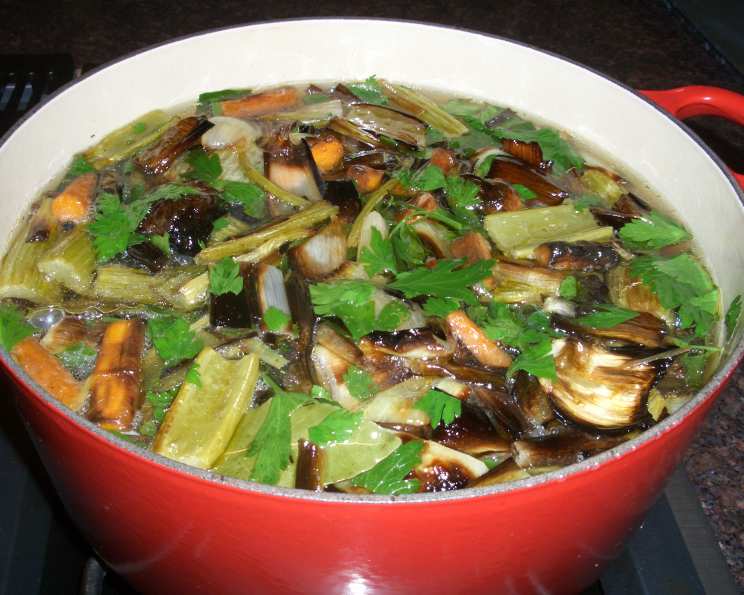
The Soul of Your Savory Creations: A Deep Dive into Roasted Vegetable Stock
There’s a certain alchemy that happens when humble vegetables are transformed by heat and time into something profoundly flavorful. I remember, early in my career, feeling the pressure of creating complex sauces and broths for demanding patrons. My mentor, a chef with forearms like oak branches and a smile that could melt butter, would often point me towards the simmering pots in the back. He taught me that the true magic, the foundational depth that elevates good food to greatness, often lay in the simplest of ingredients, prepared with intention. Roasting the vegetables before simmering them for stock? It was a revelation. The caramelization that occurs in the oven imbues the stock with a richness and complexity that cannot be achieved through mere boiling. It’s a technique that respects the ingredients, coaxing out their very essence to create a liquid gold that forms the soul of countless savory dishes.
Recipe Overview
- Prep Time: 20 minutes
- Cook Time: 3 hours 30 minutes (includes roasting and simmering)
- Total Time: 3 hours 50 minutes
- Servings: 6-8
- Yield: 6-8 cups
- Dietary Type: Vegan, Gluten-Free, Dairy-Free
Ingredients
To build this magnificent foundation, you’ll need a selection of aromatic vegetables and essential pantry staples. The beauty of this stock is its flexibility; feel free to adjust the herbs to your preference.
- 2 large garlic cloves, peeled (or more if you like it robust)
- 1 large onion, peeled and quartered
- 3 medium carrots, peeled and cut into 1-inch chunks
- 3 leeks, white and light green parts, cut into 1-inch pieces
- 3 stalks celery, cut into 1-inch chunks
- 2 tablespoons olive oil
- A generous handful of fresh parsley stems and leaves
- 2 fresh bay leaves
- 6-8 peppercorns
Equipment Needed
While this recipe doesn’t demand highly specialized tools, a few essentials will make the process smoother.
- Large roasting pan or a foil-lined baking sheet
- Large stockpot or Dutch oven
- Fine-mesh sieve or colander lined with cheesecloth
- Saucepan for reduction
Instructions
The process is straightforward, but it requires patience to allow the flavors to develop fully. This is where the magic truly happens.
-
Preheat the Oven: Begin by heating your oven to a robust 450°F (230°C). This high heat is crucial for achieving a deep caramelization on the vegetables.
-
Toss with Olive Oil: In a large bowl, combine the onion, carrots, leeks, and celery. Drizzle with the olive oil, tossing gently until all the vegetable pieces are lightly coated. Ensure even distribution for consistent roasting.
-
Roast the Vegetables: Spread the oiled vegetables in a single layer in your roasting pan or on the foil-lined baking sheet. Place them in the preheated oven and roast for approximately 30 minutes. Keep an eye on them; they should become nicely browned and release a wonderfully aromatic fragrance. You can turn them occasionally halfway through to ensure even browning.
-
Transfer to Stockpot: Once roasted to perfection, carefully transfer all the roasted vegetables into your large stockpot or Dutch oven. Don’t forget to scrape in all the delicious browned bits and caramelized juices from the roasting pan – this is where a significant portion of the flavor resides! Add the peeled garlic cloves, fresh parsley, bay leaves, and peppercorns to the pot.
-
Add Water and Bring to a Boil: Fill the pot with enough water to generously cover all the vegetables and aromatics. Place the pot on the stovetop over medium-high heat and bring the mixture to a rolling boil.
-
Simmer Gently: Once boiling, reduce the heat to low, so the stock is simmering gently. Cover the pot loosely and let it simmer for 2 to 3 hours. It’s important to monitor the water level; if it boils down too much, add more hot water to keep the ingredients submerged. A gentle simmer allows the flavors to meld and extract without becoming cloudy.
-
Strain the Stock: After the simmering time, carefully strain the liquid through a fine-mesh sieve or a colander lined with cheesecloth into a clean bowl or another pot. Press down gently on the solids with the back of a spoon to extract as much liquid as possible. Discard the cooked solids.
-
Reduce for Intensity: Pour the strained liquid into a saucepan. Bring it to a simmer over medium heat and reduce the liquid by three-quarters. This process concentrates the flavors and deepens the color of the stock. This reduction can take approximately 1 hour, depending on the heat and surface area of your saucepan.
-
Final Yield: You should end up with about one and a half to two quarts (approximately 6-8 cups) of rich, intensely flavored roasted vegetable stock.
Expert Tips & Tricks
As a chef, I’ve learned that a few small tweaks can elevate even the most basic techniques. Here are some insights to help you master your roasted vegetable stock:
- Don’t Fear the Brown Bits: Those dark, caramelized pieces stuck to the roasting pan are flavor bombs! Make sure to scrape them all into the stockpot. They are essential for a deep, savory profile.
- Quality Vegetables Matter: While this stock is a fantastic way to use up vegetable scraps, using fresh, quality ingredients will yield the best results. Avoid watery or wilted produce if possible.
- Herb Variations: The recipe calls for parsley and bay leaves, but don’t hesitate to experiment. A sprig of thyme or rosemary can add lovely herbaceous notes. If you enjoy a subtle anise flavor, a small piece of fennel bulb can be a wonderful addition.
- Leek Prep is Key: When preparing leeks, be sure to wash them thoroughly to remove any grit that might be trapped between the layers. Slicing them into 1-inch pieces after washing ensures they are well-rinsed.
- The Power of Peppercorns: Using whole peppercorns allows their flavor to infuse gradually without releasing an overwhelming pepperiness. This ensures a balanced background note.
- Cooling Quickly: For optimal storage and to prevent bacterial growth, it’s best to cool the stock as quickly as possible after it’s reduced. You can do this by placing the pot in an ice bath or transferring the stock to smaller, shallow containers.
Serving & Storage Suggestions
This roasted vegetable stock is incredibly versatile, serving as the foundation for a myriad of dishes.
- Serving: Use it as the liquid base for soups, stews, risottos, and sauces. It’s also excellent for braising vegetables or cooking grains like rice and quinoa, infusing them with a subtle, savory depth.
- Storage:
- Refrigerator: Once completely cooled, store the stock in airtight containers in the refrigerator for up to 4-5 days.
- Freezer: For longer storage, freeze the stock in portion-sized containers, ice cube trays (for small amounts), or freezer bags. It will keep well in the freezer for up to 6 months. Thaw frozen stock in the refrigerator overnight or gently reheat on the stovetop.
Nutritional Information
This stock, rich in flavor and nutrients derived from the roasted vegetables, is a wholesome addition to any diet. The values below are approximate and will vary based on the exact size and type of vegetables used.
| Nutrient | Amount per 1 Cup (approx.) | % Daily Value |
|---|---|---|
| Calories | 95 kcal | 5% |
| Total Fat | 4.8 g | 6% |
| Saturated Fat | 0.7 g | 3% |
| Cholesterol | 0 mg | 0% |
| Sodium | 47 mg | 2% |
| Total Carbohydrate | 12.6 g | 5% |
| Dietary Fiber | 2.5 g | 9% |
| Sugars | 4.6 g | 5% |
| Protein | 1.4 g | 3% |
| Vitamin A | (Varies) | (Varies) |
| Vitamin C | (Varies) | (Varies) |
| Potassium | (Varies) | (Varies) |
| Calcium | (Varies) | (Varies) |
Note: Daily Values are based on a 2,000-calorie diet. Individual results may vary.
Variations & Substitutions
The beauty of this roasted vegetable stock lies in its adaptability. Feel free to tailor it to your palate and what you have on hand.
- Root Vegetable Boost: Add parsnips or sweet potatoes along with the carrots for a touch of sweetness and earthy flavor.
- Aromatic Additions: A small piece of ginger or a few sprigs of fresh thyme can introduce different aromatic dimensions.
- Mushroom Magic: If you enjoy a deeper, more umami-rich flavor, consider adding some mushroom stems or whole cremini mushrooms to the roasting pan.
- Onion Alternatives: Shallots can be used in place of some or all of the onion for a slightly milder, sweeter flavor profile.
FAQs (Frequently Asked Questions)
Q: Why roast the vegetables instead of just boiling them for stock?
A: Roasting caramelizes the natural sugars in the vegetables, developing a richer, more complex, and deeply savory flavor profile that boiling alone cannot achieve.
Q: How long can I store this roasted vegetable stock?
A: Stored in an airtight container in the refrigerator, the stock will last for 4-5 days. For longer storage, it can be frozen for up to 6 months.
Q: Can I use vegetable scraps for this stock?
A: Absolutely! This recipe is an excellent way to use clean vegetable trimmings like carrot peels, onion skins (for color), and celery ends. Just ensure they are free from dirt and any spoilage.
Q: What if my stock doesn’t seem flavorful enough after simmering?
A: Ensure you roasted the vegetables sufficiently to develop good browning. Also, reducing the stock as instructed in step 8 will concentrate the existing flavors, making it more intense.
Q: Can I add other herbs or spices to this stock?
A: Yes, feel free to experiment! Rosemary, thyme, or a pinch of star anise can add interesting nuances to your stock, depending on the intended use of the final dish.
Final Thoughts
This roasted vegetable stock is more than just an ingredient; it’s an investment in flavor, a cornerstone upon which countless culinary masterpieces can be built. It’s a testament to the power of simple ingredients and patient preparation. I encourage you to make a batch the next time you have a bit of time to spare. The aroma that will fill your kitchen is just the beginning of the culinary journey it will unlock. Enjoy this liquid gold, and let it elevate your next soup, stew, or sauce to extraordinary heights.