
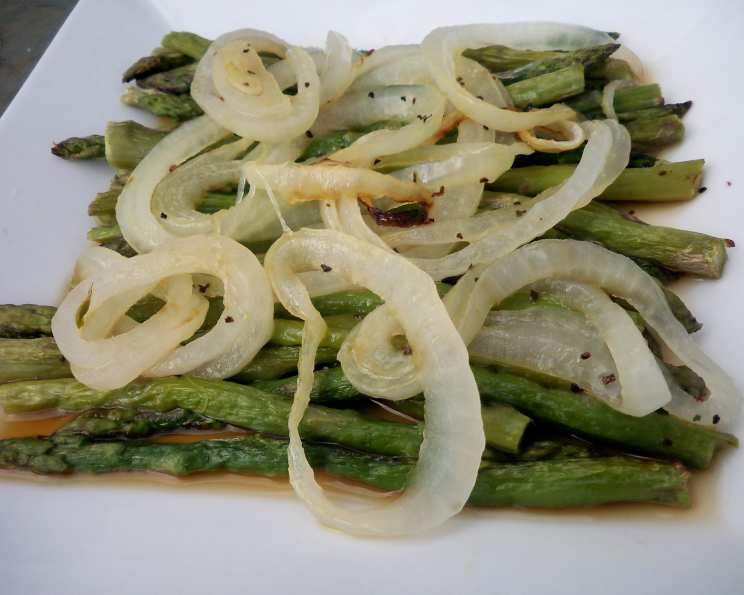
Roasted Asparagus with Onions: A Simple Symphony of Spring Flavors
There are some dishes that, despite their humble ingredients and straightforward preparation, possess an almost magical ability to transport you. For me, roasted asparagus with onions is one of those culinary anchors. I remember the first time I truly tasted it, not just as a side dish, but as a star in its own right. It was a brisk spring evening, the kind where the air still holds a hint of winter’s chill but the promise of warmer days is palpable. My grandmother, a woman whose kitchen was a testament to the beauty of simplicity, had prepared it. The asparagus, vibrant green and tender-crisp, mingled with the sweet, caramelized edges of the purple onion, all kissed by a bright, tangy balsamic glaze. It was a revelation – a dish so pure, so utterly delicious, that it’s been a cherished memory and a go-to recipe ever since.
Recipe Overview
- Prep Time: 15 minutes
- Cook Time: 15-18 minutes (for onions) / 12-15 minutes (for asparagus)
- Total Time: 27-33 minutes
- Servings: 6
- Yield: Serves 6 as a side dish
- Dietary Type: Vegan, Dairy-Free, Gluten-Free
Ingredients
Here’s what you’ll need to create this delightful dish:
- 1 pound fresh asparagus spears, trimmed
- 1 large purple onion, thinly sliced
- Vegetable oil cooking spray
- 2 tablespoons balsamic vinegar
- 1 ½ teaspoons orange rind, grated
- 2 tablespoons fresh orange juice
- 1 teaspoon dark sesame oil
- ½ teaspoon salt
- ½ teaspoon pepper
- ¼ teaspoon sugar
Equipment Needed
- Two baking sheets
- A small jar with a tight-fitting lid
- A platter for serving
Instructions
Let’s bring these beautiful spring ingredients together.
- Prepare the Vegetables for Roasting: Preheat your oven to 400 degrees F (200 degrees C). Take your two baking sheets and coat them generously with vegetable oil cooking spray. This is crucial for preventing sticking and ensuring a beautiful, even browning.
- Arrange the Asparagus: Trim the woody ends from your fresh asparagus spears. You can do this by holding a spear in each hand and gently bending it; it will naturally snap at the point where the woody part begins. Arrange the trimmed asparagus in a single layer on one of the prepared baking sheets. Try to avoid overcrowding, as this can lead to steaming rather than roasting.
- Arrange the Onions: Thinly slice your purple onion. Spread the sliced onion in a single layer on the second prepared baking sheet. Similar to the asparagus, an even layer is key for optimal roasting.
- Roast the Asparagus and Onions: Place both baking sheets into the preheated oven. Roast the asparagus for 12 to 15 minutes. Roast the onions for 15 to 18 minutes. During the roasting process, you’ll want to stir each vegetable twice. This ensures that all sides get exposed to the heat and develop that lovely caramelized sweetness. You are looking for the asparagus to be lightly browned and tender-crisp, and the onions to be lightly browned and softened. Keep an eye on them, as oven temperatures can vary.
- Prepare the Dressing: While the vegetables are roasting, it’s time to prepare the vibrant dressing. In a small jar with a tight-fitting lid, combine the balsamic vinegar, grated orange rind, fresh orange juice, dark sesame oil, salt, pepper, and sugar.
- Emulsify the Dressing: Secure the lid on the jar and shake vigorously. This action will emulsify the ingredients, creating a cohesive and beautifully flavored dressing. The sugar will help to balance the acidity of the vinegar and the brightness of the orange.
- Assemble the Dish: Once the asparagus and onions are perfectly roasted, carefully remove the baking sheets from the oven. Arrange the roasted asparagus and onions together on a serving platter. Aim for an attractive presentation, allowing the colors and textures to shine.
- Dress and Serve: Pour the prepared mixture from the jar directly over the arranged asparagus and onions on the platter.
- Serve: This dish is best served at room temperature, allowing all the flavors to meld beautifully.
Expert Tips & Tricks
- Asparagus Selection: When choosing asparagus, look for spears that are firm, with tightly closed tips. Thicker spears will take a little longer to roast than thinner ones, so adjust your cooking time accordingly if you have a mix.
- Onion Slicing: For the purple onion, a mandoline can be a fantastic tool for achieving perfectly uniform, thin slices, ensuring they cook evenly. If you don’t have one, a sharp knife and a steady hand will do the trick.
- Roasting Evenness: If you find one side of your baking sheet tends to cook hotter than the other, don’t hesitate to rotate the sheets halfway through the roasting time, in addition to stirring the vegetables.
- Doneness Test: For the asparagus, you can gently pierce a spear with a fork. It should be tender but still have a slight resistance – not mushy. For the onions, they should be softened and developing golden-brown edges.
- Dressing Adjustment: Taste the dressing before pouring it over the vegetables. If you prefer a sweeter dressing, add a pinch more sugar. If you want more tang, a tiny splash more balsamic vinegar can be added.
Serving & Storage Suggestions
This Roasted Asparagus With Onions is incredibly versatile. It makes a stunning side dish for grilled chicken, fish, or a hearty steak. It’s also a welcome addition to a vegetarian or vegan meal, pairing wonderfully with roasted tofu or a grain pilaf.
Storage: Leftovers can be stored in an airtight container in the refrigerator for up to 2 days. The flavors will continue to meld, making it just as delicious the next day.
Reheating: While this dish is best served at room temperature, you can gently reheat it if desired. Place the leftovers in a covered skillet over low heat with a tablespoon of water, or spread them on a baking sheet and warm them in a 300 degree F (150 degree C) oven for about 5-7 minutes, just until warmed through. Be careful not to overcook, as the asparagus can become mushy.
Nutritional Information
| Nutrient | Amount per Serving | % Daily Value |
|---|---|---|
| Calories | 37.2 kcal | |
| Calories from Fat | 0.9 kcal | |
| Total Fat | 0.1 g | 1% |
| Saturated Fat | 0 g | 0% |
| Cholesterol | 0 mg | 0% |
| Sodium | 205.2 mg | 8% |
| Total Carbohydrate | 6.5 g | 2% |
| Dietary Fiber | 1.9 g | 7% |
| Sugars | 2.6 g | 10% |
| Protein | 2.1 g | 4% |
(Note: Nutritional information is an estimate and can vary based on specific ingredients and quantities used.)
Variations & Substitutions
- Herbacious Twist: Add a tablespoon of finely chopped fresh parsley or chives to the dressing for an extra layer of fresh flavor.
- Spicy Kick: For those who enjoy a little heat, a pinch of red pepper flakes can be added to the dressing mixture.
- Citrus Swap: If you don’t have oranges, fresh lemon juice and zest can be used as a substitute, offering a brighter, more tart flavor profile.
- Sweet Onion Alternative: While purple onions offer a beautiful color and sweet flavor, yellow or red onions can also be used.
FAQs
Q: Can I use frozen asparagus for this recipe?
A: It’s best to use fresh asparagus for this recipe. Frozen asparagus can become watery and mushy when roasted, which won’t yield the desired tender-crisp texture.
Q: How can I tell if the asparagus is done roasting?
A: The asparagus spears should be bright green, tender when pierced with a fork, and have slightly browned tips. Avoid overcooking, which will make them limp.
Q: Is it important to roast the asparagus and onions separately?
A: Yes, roasting them separately allows for optimal cooking times. Onions, especially when thinly sliced, may take a few minutes longer to caramelize than asparagus.
Q: Can I make the dressing ahead of time?
A: Absolutely! The dressing can be prepared up to a day in advance and stored in an airtight container in the refrigerator. Give it a good shake before serving.
Q: What makes the dressing emulsify?
A: The vigorous shaking combines the oil and vinegar. The orange juice and sesame oil also act as emulsifiers, helping to create a stable, well-blended dressing.
Final Thoughts
This Roasted Asparagus With Onions is more than just a recipe; it’s an invitation to savor the simple beauty of seasonal produce. It’s a dish that proves that elegance doesn’t require complexity. The interplay of the sweet, tender asparagus and the caramelized, slightly pungent onions, all brought together by the bright, zesty balsamic glaze, is simply divine. I encourage you to try it, to let it grace your table, and to create your own delicious memories with it. Perhaps pair it with a crisp white wine, or enjoy it as a light yet satisfying accompaniment to your favorite main course. Happy cooking!