
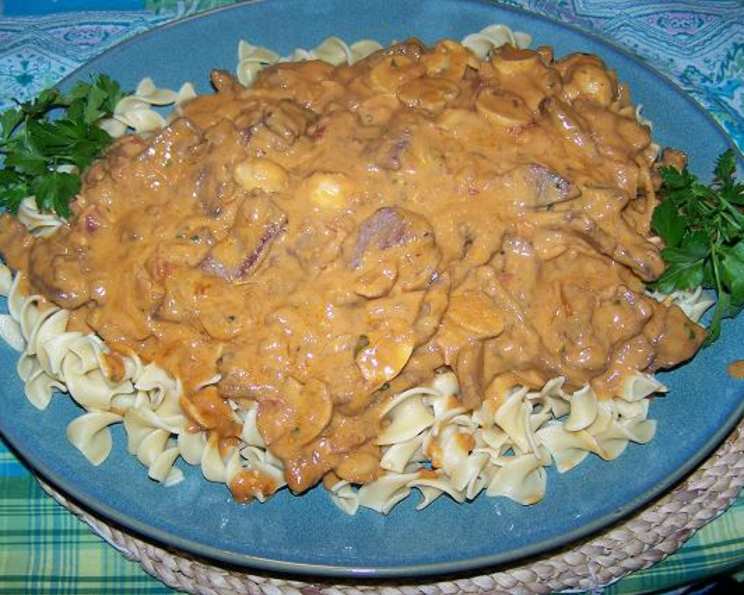
The Soul-Warming Embrace of Real Russian Stroganoff
Growing up, the scent of my grandmother’s kitchen was an olfactory hug, a symphony of simmering broths and baking bread. But on a crisp autumn evening, when the wind whispered through the eaves and a chill settled deep in our bones, she would pull out the big cast-iron skillet, and the unmistakable aroma of Stroganoff would begin to fill the air. It wasn’t just a meal; it was an event. The rich, earthy mushrooms, the tender ribbons of beef, all cloaked in that impossibly creamy, tangy sauce – it was the epitome of Russian comfort food, a culinary translation of a warm embrace. This dish, a true classic, has been a cornerstone of family gatherings and a source of immense culinary inspiration for me, a testament to the enduring power of simple, honest ingredients transformed into something truly magical.
Recipe Overview
- Prep Time: 20 minutes
- Cook Time: 30 minutes
- Total Time: 50 minutes
- Servings: 4-6
- Yield: Generous portions
- Dietary Type: Traditional
Ingredients
The magic of Stroganoff lies in its elegant simplicity, relying on quality ingredients to shine.
- 4 slices bacon
- 2 tablespoons unsalted butter
- 6-8 mushrooms, sliced (cremini or button are excellent choices)
- 1 medium yellow onion, sliced thinly
- 1 (12 ounce) sirloin steak, cut into strips (about ¼-inch thick)
- All-purpose flour, for dredging
- 2 tablespoons beef bouillon
- 3⁄4 cup dry white wine (a crisp Sauvignon Blanc or unoaked Chardonnay works beautifully)
- 1 cup sour cream (full-fat is recommended for the best texture)
- 1⁄2 tablespoon Worcestershire sauce
- Salt, to taste
- Freshly ground black pepper, to taste
- Cooked egg noodles, for serving
- Fresh parsley, chopped, for garnish
Equipment Needed
This recipe doesn’t require any specialized equipment, just your trusty kitchen staples:
- A large, heavy-bottomed skillet (cast iron is ideal for its even heating and ability to retain heat)
- A slotted spoon or tongs
- Paper towels
- A whisk (optional, for ensuring a smooth sauce)
Instructions
Crafting a truly authentic Stroganoff is an art form, but one that is remarkably achievable for the home cook. Follow these steps carefully, and you’ll be rewarded with a dish that sings with flavor.
- Begin by placing the bacon slices in your cold, heavy skillet. Turn the heat to medium and cook the bacon until it’s wonderfully crisp. This slow rendering will give you plenty of flavorful fat to work with.
- Once the bacon is crisp, use a slotted spoon to carefully remove it from the skillet and place it on a plate lined with paper towels. Allow it to drain and cool.
- While the bacon is draining, prepare your beef. Lightly dredge the sirloin steak strips in flour. This will help them brown beautifully and slightly thicken the sauce later.
- Add your sirloin steak strips to the hot skillet with the rendered bacon drippings. Brown the beef in batches, if necessary, to avoid crowding the pan. Overcrowding will steam the meat instead of browning it, and we want that delicious sear. Once browned, remove the beef from the skillet and set it aside with the bacon.
- Carefully drain all but approximately 1 tablespoon of the drippings from the skillet. If there isn’t enough drippings, add the 2 tablespoons of unsalted butter to the skillet.
- Add the thinly sliced yellow onion and the sliced mushrooms to the skillet. Sauté them over medium heat until they are beautifully softened and the onions are translucent. This step is crucial for developing their sweet, earthy flavors.
- As the onions and mushrooms soften, deglaze the pan by pouring in the 3⁄4 cup of white wine. Use your spoon to scrape up any browned bits clinging to the bottom of the skillet – this is where a lot of the flavor resides! Allow the wine to simmer and reduce slightly for a minute or two.
- Return the browned sirloin steak strips to the skillet with the softened onions and mushrooms.
- Stir in the 2 tablespoons of beef bouillon, along with a generous pinch of salt and freshly ground black pepper, and the 1⁄2 tablespoon of Worcestershire sauce. Add the remaining white wine.
- Cover the skillet and simmer gently for 25 minutes. This allows the flavors to meld beautifully and the beef to become tender. Resist the urge to stir too often during this simmering period.
- Just before serving, it’s time to introduce the creamy element. Stir in the 1 cup of sour cream. Stir continuously to combine it smoothly into the sauce.
- During this final warming stage, you might notice the sour cream appear to separate, and some butterfat may become visible on the surface. This is a perfectly normal occurrence with sour cream when heated. Simply stir gently and continuously until everything is beautifully combined and the sauce is luxuriously smooth and creamy.
- Crumble the reserved bacon over the Stroganoff.
- Serve the rich, aromatic Stroganoff immediately over a bed of perfectly cooked egg noodles.
- Garnish generously with freshly chopped parsley for a vibrant touch of color and freshness.
Expert Tips & Tricks
To elevate your Stroganoff from good to exceptional, consider these professional insights:
- Beef Selection: While sirloin is traditional and excellent, tender cuts like filet mignon or ribeye can be used for an even more luxurious experience. Ensure they are cut against the grain for maximum tenderness.
- Mushroom Variety: Don’t be afraid to experiment with different mushroom varieties. A mix of cremini, shiitake, and even a few wild mushrooms will add incredible depth and complexity to the flavor profile.
- The Flour Dredge: A light dusting of flour on the beef isn’t just for browning; it also acts as a slight thickener for the final sauce, contributing to that desirable, velvety texture.
- Sour Cream Tempering: To prevent the sour cream from curdling too aggressively, you can temper it before adding it to the hot skillet. Whisk a spoonful of the hot sauce into the sour cream first, then slowly whisk the tempered sour cream back into the skillet. This gradual introduction of heat helps stabilize the dairy.
- Deglazing is Key: Those browned bits in the pan are flavor gold. Don’t skip the deglazing step; it’s essential for building a rich, complex sauce.
Serving & Storage Suggestions
Stroganoff is a dish best enjoyed fresh, but leftovers can be a delightful treat.
Serving: Serve piping hot over a generous portion of tender egg noodles. For an elegant presentation, you can also serve it with a side of mashed potatoes, rice, or even crusty bread for soaking up every last drop of that glorious sauce. A sprinkle of fresh parsley adds a bright, herbaceous finish.
Storage: Stroganoff is best enjoyed the day it is made. However, any leftovers can be stored in an airtight container in the refrigerator for up to 2-3 days. When reheating, gently warm the Stroganoff over low heat, stirring frequently. Avoid boiling as this can cause the sour cream to separate. You may need to add a splash of water or milk to loosen the sauce if it has thickened too much. Freezing is not recommended, as the texture of the sour cream may not hold up well.
Nutritional Information
| Nutrient | Amount per Serving | % Daily Value |
|---|---|---|
| Calories | 560.1 kcal | 28% |
| Total Fat | 41.8 g | 54% |
| Saturated Fat | 18.5 g | 92% |
| Cholesterol | 124 mg | 41% |
| Sodium | 345.6 mg | 15% |
| Total Carbohydrate | 7.9 g | 3% |
| Dietary Fiber | 0.7 g | 2% |
| Sugars | 2.4 g | 5% |
| Protein | 29.5 g | 59% |
Note: Nutritional information is an estimate and can vary based on specific ingredients and portion sizes used.
Variations & Substitutions
While the classic recipe is perfection, feel free to explore these delightful variations:
- Mushroom Mania: For an even deeper mushroom flavor, use a blend of cremini, shiitake, and oyster mushrooms.
- Beef Alternatives: If sirloin isn’t readily available, tender cuts like beef tenderloin or even thinly sliced pork tenderloin can be used. For a vegetarian option, hearty portobello mushrooms can be substituted for the beef, though the cooking time will need adjustment.
- Herbal Infusions: Consider adding a sprig of fresh thyme or a bay leaf during the simmering stage for an extra layer of aromatic complexity. Remove before serving.
- A Touch of Brandy: For an extra layer of richness and a slightly more sophisticated flavor, you can substitute a portion of the white wine with a good quality brandy.
FAQs
Q: Why does my sour cream separate when I add it to the Stroganoff?
A: This is a common occurrence when adding dairy to hot liquids. The fat in the sour cream can separate when exposed to high heat. Gently stirring and avoiding a rolling boil will help. You can also temper the sour cream by whisking a little hot sauce into it before adding it to the pan.
Q: Can I make Stroganoff ahead of time?
A: While it’s best served fresh, you can prepare the sauce and meat mixture (steps 1-10) ahead of time. Store them separately in the refrigerator. Gently reheat the meat mixture, then stir in the sour cream and bacon just before serving.
Q: What kind of wine should I use for Stroganoff?
A: A dry white wine is traditional. Opt for something crisp and unoaked, like a Sauvignon Blanc, Pinot Grigio, or a dry Vermouth. Avoid sweet wines, as they can throw off the balance of the sauce.
Q: Is it okay to use less bacon or no bacon at all?
A: Absolutely. While bacon adds a wonderful depth of flavor and fat for sautéing, you can reduce the amount or omit it entirely and increase the unsalted butter if you prefer. You’ll still achieve a delicious Stroganoff.
Q: My beef seems tough. What did I do wrong?
A: Tough beef can be due to several factors: the cut of meat, slicing with the grain, or overcooking. Ensure you are using a tender cut like sirloin, slicing it thinly against the grain, and not overcooking it during the initial browning. The 25-minute simmer should tenderize it beautifully.
Final Thoughts
There’s a profound satisfaction that comes from recreating a dish with such a rich history and comforting legacy. Real Russian Stroganoff isn’t just a recipe; it’s an invitation to gather around the table, to share stories, and to savor the simple yet profound pleasure of a meal made with care. Whether you’re a seasoned cook or just starting your culinary journey, I encourage you to try this recipe. Let the aroma fill your home, and share its warmth with your loved ones. Serve it with a side of good conversation and perhaps a glass of that crisp white wine you used in the sauce – a pairing that’s as delightful as the dish itself. I’d love to hear about your experiences and any personal touches you add to make this classic your own. Enjoy!