
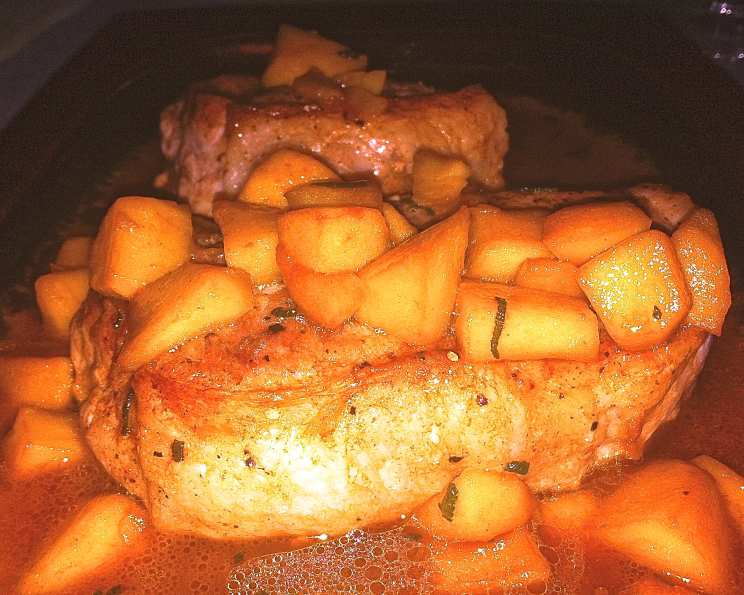
Roasted Heritage Berkshire Pork Chops with Apple Pan Sauce
There are certain dishes that, with just one taste, etch themselves into your culinary memory. For me, the Roasted Heritage Berkshire Pork Chops with Apple Pan Sauce is one of those revelatory moments. I remember the first time I encountered Berkshire pork – its deep, rich flavor and luscious marbling promised something extraordinary, a far cry from the often bland, dry pork chops of my youth. This dish, with its perfectly cooked, juicy chops bathed in a bright, slightly sweet apple-infused pan sauce, was that promise fulfilled. It’s a symphony of textures and flavors that celebrates the noble heritage of this exceptional cut of meat, turning a simple meal into a truly memorable experience.
Recipe Overview
- Prep Time: 15 minutes
- Cook Time: 30 minutes
- Total Time: 45 minutes
- Servings: 2
- Yield: 2 pork chops with pan sauce
- Dietary Type: Not specified (Contains pork and butter)
Ingredients
- 2 Berkshire pork chops, 1 inch thick (boneless or bone-in)
- 1 apple, peeled, cored, and chopped
- 1/4 cup Calvados (apple brandy)
- 1/2 cup demi-glace (or More Than Gourmet Classic French Veal Stock mixed with water to equal 1/2 cup)
- 1 teaspoon fresh sage, chopped
- 2 tablespoons butter, divided
- 1 tablespoon olive oil
- Salt, to taste
- Pepper, to taste
Equipment Needed
- Ovenproof skillet (cast iron or stainless steel recommended)
- Tongs
- Meat thermometer (instant-read)
- Small bowl
Instructions
- Begin by preheating your oven to 350ºF (175ºC). This ensures a consistent, gentle heat for roasting the pork chops.
- Prepare the pork chops by patting them thoroughly dry with paper towels. This is a crucial step for achieving a beautiful, crisp sear. Once dry, generously season both sides with salt and pepper.
- Place your ovenproof skillet over high heat on the stovetop. Add 1 tablespoon of butter and the olive oil. Once the butter has melted and the oil is shimmering, carefully place the seasoned pork chops in the hot pan. Sear the chops for 2 minutes on each side, until they develop a rich, golden-brown crust.
- Carefully spoon out most of the rendered fat from the skillet, leaving just a tablespoon or two behind. This prevents the sauce from becoming overly greasy.
- Transfer the ovenproof skillet containing the seared pork chops directly into the preheated 350ºF (175ºC) oven.
- Roast the pork chops for 10 minutes, or until an instant-read thermometer inserted into the thickest part of the chop registers an internal temperature of 140ºF (60ºC). It’s important to note that Berkshire pork, with its rich marbling, is exceptionally delicious and tender when cooked to this medium-rare temperature. While the USDA now recommends 145ºF (63ºC) for pork, many chefs and discerning eaters prefer the juicier, more flavorful results of cooking Berkshire pork to 140ºF. If you are concerned about the lower temperature, you can certainly cook them to 160ºF (71ºC), but be aware that they may be less juicy. Cooking time can vary significantly depending on the thickness of your chops, so always rely on a meat thermometer for accuracy.
- A couple of minutes before you anticipate the pork chops reaching their target temperature, you can prepare the apple component. Peel, core, and chop your apple into small, bite-sized pieces.
- Once the pork chops have reached 140ºF (60ºC), carefully remove the skillet from the oven. Using tongs, transfer the cooked pork chops to a clean plate or a small bowl. Tent them loosely with foil to keep them warm while you prepare the pan sauce. Reserve any juices that accumulate on the plate or in the bowl – these are packed with flavor.
- Place the now-empty skillet (still containing the drippings and any remaining fat) back on the stovetop over medium-high heat. Add the remaining 1 tablespoon of butter and the chopped apples. Sauté the apples for 1 to 2 minutes, allowing them to begin to caramelize and soften.
- Carefully add the Calvados to the skillet. Let it bubble and reduce by about half. This process burns off the alcohol while infusing the apples and pan with its distinct fruity essence. Be cautious as the alcohol may momentarily flare up.
- Pour in the demi-glace, along with any reserved juices from the plate where you rested the pork chops. Stir to combine, scraping up any browned bits from the bottom of the pan. Continue to simmer and reduce the sauce for another minute or two until it has thickened to a glossy, luxurious consistency. Season the sauce with additional salt and pepper to your liking.
- To serve, spoon the luscious apple pan sauce and caramelized apples generously over the rested roasted heritage Berkshire pork chops.
Expert Tips & Tricks
- The Importance of Drying: Don’t underestimate the power of thoroughly drying your pork chops. A moist surface will steam rather than sear, preventing that beautiful, flavorful crust from forming.
- Resting is Key: Allowing the pork chops to rest for a few minutes after cooking is crucial. This allows the juices to redistribute throughout the meat, resulting in a more tender and moist chop.
- Demi-Glace Shortcut: If you don’t have demi-glace on hand, a good quality veal or beef stock, reduced by half, can be a good substitute. For an even richer flavor, consider adding a teaspoon of Worcestershire sauce.
- Apple Choice: While any firm apple will work, varieties like Honeycrisp, Fuji, or Gala offer a good balance of sweetness and tartness that complements the pork beautifully.
Serving & Storage Suggestions
These Roasted Heritage Berkshire Pork Chops are best served immediately while hot. The apple pan sauce is the perfect accompaniment, so ensure you spoon plenty over each chop. For a complete and satisfying meal, I highly recommend serving them with simple, classic sides such as boiled carrots and potatoes (as suggested by the original recipe), or perhaps some creamy mashed potatoes or a simple green salad.
Leftovers can be stored in an airtight container in the refrigerator for up to 2 days. The pork chops and sauce can be gently reheated in a skillet over low heat, or in a low oven, being careful not to overcook the pork.
Nutritional Information
| Nutrient | Amount per Serving | % Daily Value |
|---|---|---|
| Calories | 548.2 kcal | – |
| Total Fat | 36.4 g | 56% |
| Saturated Fat | 14.2 g | 71% |
| Cholesterol | 167.8 mg | 55% |
| Sodium | 211.9 mg | 8% |
| Total Carbohydrate | 12.8 g | 4% |
| Dietary Fiber | 2.3 g | 9% |
| Sugars | 9.5 g | 37% |
| Protein | 41.6 g | 83% |
Note: Nutritional information is an estimate and may vary based on specific ingredients and preparation methods.
Variations & Substitutions
- Whiskey or Bourbon: If Calvados is unavailable, a good quality whiskey or bourbon can be used in its place to deglaze the pan, offering a different yet equally delightful flavor profile.
- Herbs: Thyme or rosemary can be substituted for sage, or a combination of herbs can be used to add complexity to the sauce.
- Sweetness Adjustment: For a sweeter sauce, a touch of brown sugar or maple syrup can be added along with the demi-glace.
- Creamy Finish: For a richer, creamier sauce, stir in a tablespoon of heavy cream or crème fraîche at the very end of cooking, just before serving.
FAQs
Q: What makes Berkshire pork different from regular pork?
A: Berkshire pork, also known as Kurobuta in Japan, originates from England and is renowned for its rich marbling, resulting in a more tender, juicy, and flavorful meat compared to conventional pork.
Q: Why is the recommended cooking temperature for Berkshire pork lower than the USDA standard?
A: Berkshire pork’s superior marbling and quality allow it to be safely and deliciously enjoyed at a lower internal temperature (around 140°F or medium-rare), which preserves its natural juiciness and succulence.
Q: Can I use apple cider instead of Calvados?
A: While apple cider won’t have the same alcoholic potency or depth of flavor as Calvados, you can use it to deglaze the pan for a non-alcoholic version. You may want to reduce it slightly longer to concentrate the apple flavor.
Q: My demi-glace is too thin. How can I thicken it?
A: If your demi-glace hasn’t reduced enough, you can create a slurry by whisking 1 teaspoon of cornstarch with 1 tablespoon of cold water, then stirring it into the simmering sauce until thickened. Alternatively, continue simmering uncovered to allow more liquid to evaporate.
Q: Can I make the apple pan sauce ahead of time?
A: You can prepare the apple component and the base of the sauce ahead of time, but it’s best to finish reducing and seasoning it just before serving to ensure the optimal consistency and flavor.
This dish is a testament to the beauty of quality ingredients and thoughtful preparation. It’s a recipe that I return to often, not just for its incredible taste, but for the culinary confidence it instills. The tender, perfectly cooked pork, kissed by the sweet and savory apple pan sauce, is a simple yet elegant expression of what great pork can be. Enjoy every delicious bite!