
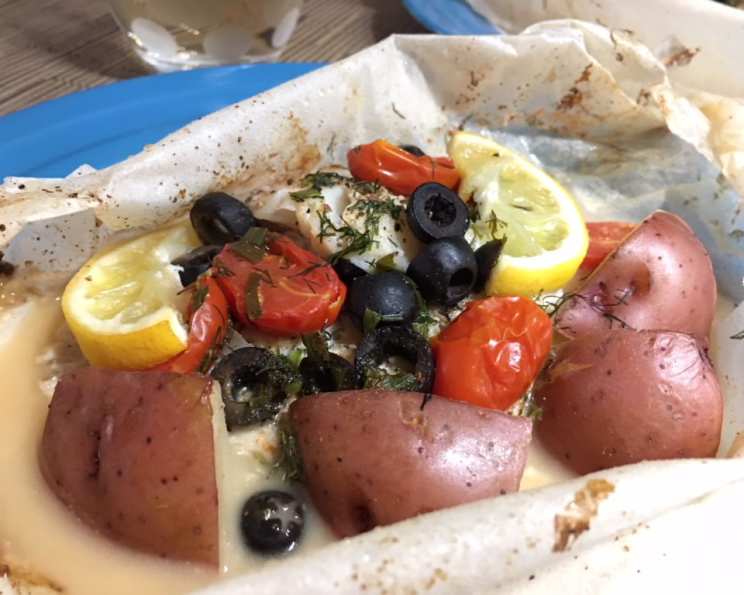
Red Snapper en Papillote: A Symphony of Flavor Sealed with Love
There’s a particular magic that happens when food is cooked in a sealed pouch. I remember my first encounter with en papillote, a classic French technique that transforms simple ingredients into something truly extraordinary. It was a chilly evening, and the aroma wafting from the oven was intoxicating – a delicate perfume of lemon, herbs, and perfectly steamed fish. That night, the en papillote method revealed its secret: a sealed parchment package that traps all the luscious juices and aromatic essences, concentrating flavors in a way that feels both elegant and deeply comforting. It’s a method that respects the ingredient, allowing its natural goodness to shine through without any fuss.
Recipe Overview
- Prep Time: 15 minutes
- Cook Time: 15 minutes
- Total Time: 30 minutes
- Servings: 1
- Yield: 1 fish fillet
- Dietary Type: Gluten-Free, Dairy-Free
Ingredients
Here’s what you’ll need to create this exquisite Red Snapper en Papillote:
- 1 tablespoon olive oil (or more, as needed)
- 1 fish fillet (specifically, Red Snapper is called for here, but you can adapt with other firm white fish)
Equipment Needed
- Parchment paper
- Oven
- Baking sheet
Instructions
This method is wonderfully straightforward, allowing the oven to do most of the work.
- Preheat your oven to 425ºF (220ºC). This high heat is crucial for quickly steaming the fish and vegetables within the parchment.
- Prepare your parchment paper. For each fish fillet, you will need one sheet of parchment paper. Cut the parchment into 24-inch long pieces. Fold each sheet in half and crease firmly to create a well-defined fold line.
- Shape the parchment. From the creased edge, cut into a heart-shaped pattern, finishing with a pointy end. This distinctive shape not only looks charming but also helps create a good seal. Oil both sides of the prepared parchment papers generously. This prevents sticking and adds a subtle richness.
- Assemble the packets. Place the fish fillets on one side of the center crease of each parchment heart.
- Add your chosen aromatics and vegetables. This is where you can get creative! While the original recipe mentions vegetables of your choice, it wisely cautions about cooking times. If you’re using vegetables that require longer than 15 minutes to cook, such as potatoes, you will need to precook or blanch them beforehand to ensure they are tender by the time the fish is done. Season your fish and vegetables with your preferred seasonings.
- Incorporate liquid. Add about 1 tablespoon of white wine to each packet. The wine will add a lovely depth of flavor and help create steam.
- Seal the packets. Fold the plain side of the parchment over the fish and vegetables. Starting from the rounded edge of the heart, crimp the paper tightly, folding it over itself in small, overlapping sections about ½ to 1-inch long. Continue crimping all the way around until you reach the pointy end. Fold the pointy end underneath to create a secure seal.
- Bake. Place the sealed pouches on a baking sheet. Transfer the baking sheet to the preheated oven. Bake for 15 minutes. The exact cooking time can vary slightly depending on the thickness of your fish fillet.
- Serve immediately. Carefully transfer the hot parchment pouches to individual plates. Instruct your guests to open the packets themselves, releasing the fragrant steam and revealing the beautifully cooked fish and vegetables.
Expert Tips & Tricks
The en papillote technique is inherently forgiving, but a few nuances can elevate your dish from good to exceptional.
- Fish Thickness: The 15-minute bake time is a general guideline for fillets that are about ¾ to 1 inch thick. If your fillets are significantly thicker, you might need to add a few extra minutes to the baking time. You can also slightly precook thicker fillets in a pan for a minute or two before placing them in the parchment.
- Vegetable Harmony: When selecting vegetables, consider their cooking times. Delicate greens like spinach or asparagus will cook perfectly alongside the fish. Heartier root vegetables, as mentioned, need a head start. Thinly slicing firmer vegetables can also help them cook faster.
- Herbaceous Notes: Fresh herbs are your best friend here. Tuck sprigs of thyme, rosemary, dill, or parsley into the packet with the fish. The steam will infuse their aroma beautifully. A thin slice of lemon or lime on top of the fish before sealing is also a classic and delicious addition.
- The Seal is Key: Ensure your crimping is tight. Any leaks will allow precious steam and flavor to escape, diminishing the intended effect. Think of it like making a tiny, edible envelope for your ingredients.
- Doneness Test: While the visual cue of the fully cooked fish is the best indicator, you can gently press the fish through the parchment. It should flake easily.
Serving & Storage Suggestions
- Serving: The beauty of en papillote is its individual presentation. Serve each parchment packet directly on a plate. Provide guests with a knife and fork to carefully open their packet at the table, allowing them to experience the aromatic steam release. This dish is wonderful on its own or served with a light side salad or crusty bread to sop up any delicious juices.
- Storage: This dish is best enjoyed fresh. If you have any leftovers, allow the parchment packet to cool completely. You can then store the entire packet in an airtight container in the refrigerator for 1-2 days. Reheating is best done gently in a low oven (around 300ºF/150ºC) for about 5-10 minutes, or until the fish is warmed through. Be cautious not to overcook it during reheating.
Nutritional Information
Here’s an estimated nutritional breakdown for a single serving of Red Snapper en Papillote, assuming a standard fillet size and basic accompaniments like white wine and a light seasoning:
| Nutrient | Amount per Serving | % Daily Value |
|---|---|---|
| Calories | 308.3 kcal | |
| Calories from Fat | N/A | |
| Total Fat | 15.1 g | 23% |
| Saturated Fat | 2.2 g | 10% |
| Cholesterol | 99 mg | 33% |
| Sodium | 140.7 mg | 5% |
| Total Carbohydrate | 0 g | 0% |
| Dietary Fiber | 0 g | 0% |
| Sugars | 0 g | 0% |
| Protein | 41.1 g | 82% |
Note: Nutritional values are estimates and can vary based on specific ingredients and portion sizes.
Variations & Substitutions
The en papillote method is incredibly versatile, making it a canvas for countless culinary explorations.
- Fish Variations: While Red Snapper is specifically mentioned, this technique works beautifully with other firm white fish like cod, halibut, sea bass, or even salmon. Adjust cooking times slightly based on the thickness and oil content of your chosen fish.
- Vegetable Medley: Beyond the root vegetables and greens, consider thinly sliced bell peppers, zucchini, cherry tomatoes, or even mushrooms. A scattering of capers or olives can add a briny punch.
- Aromatic Infusions: Instead of white wine, try a splash of vegetable broth, chicken broth, or even a bit of citrus juice (lemon, lime, or orange). For an Asian-inspired twist, a tablespoon of soy sauce or tamari, a sliver of ginger, and a few drops of sesame oil can be delicious.
- Herb Power: Experiment with different herb combinations. Tarragon pairs wonderfully with fish, as does chives. For a Mediterranean flair, oregano and basil are excellent choices.
FAQs
Q: Why is the parchment paper folded and creased before placing the fish?
A: The crease provides a guide for folding and helps create a more robust seal, ensuring all the flavorful steam is trapped inside.
Q: What kind of vegetables are best for cooking en papillote?
A: Delicate vegetables like asparagus, spinach, cherry tomatoes, and thinly sliced bell peppers are ideal as they cook quickly. Heartier vegetables like potatoes or carrots need to be precooked or thinly sliced.
Q: Can I use aluminum foil instead of parchment paper?
A: While aluminum foil can also be used for this technique, parchment paper is generally preferred as it is less likely to react with acidic ingredients and can achieve a more reliable seal.
Q: How do I know when the fish is cooked?
A: The fish is cooked when it is opaque and flakes easily when gently pressed with a fork through the parchment. The internal temperature should reach 145°F (63°C).
Q: Is this recipe suitable for meal prepping?
A: While the packets are best enjoyed fresh, you can prepare the ingredients (chop vegetables, measure liquids) ahead of time and assemble the packets just before baking to save time.
Final Thoughts
There’s an inherent elegance in the simplicity of en papillote. It’s a technique that celebrates the natural qualities of the ingredients, requiring minimal intervention while delivering maximum flavor. This Red Snapper dish, sealed with care and baked to perfection, is a testament to that philosophy. The tender, flaky fish infused with the delicate aromas of wine and herbs, all contained within its own personal parchment parcel, is a culinary delight that’s both impressive and wonderfully approachable. Give it a try, and prepare to be enchanted by the magic that unfolds when you unwrap your delicious creation. It’s a dish that truly speaks for itself, a comforting and sophisticated meal that is sure to become a favorite.