
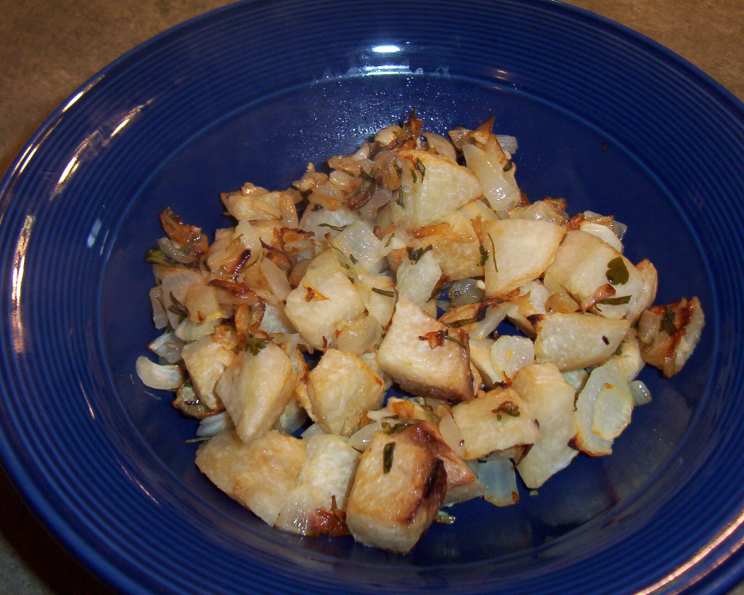
Roasted Jicama: A Culinary Revelation Beyond the Ordinary
There are those ingredients that, upon first encounter, make you pause and reconsider everything you thought you knew. For me, that ingredient was jicama. I stumbled upon it at a bustling farmers market years ago, a pale, unassuming root vegetable that promised a crisp, refreshing bite. But it was a conversation with a seasoned chef, who spoke of its humble transformation under heat, that truly piqued my interest. He described a jicama that shed its raw crispness for a tender, caramelized sweetness, a revelation that sounded so unlike its familiar crunchy persona. That evening, I set out to prove him right, and the resulting roasted jicama, with its subtly sweet and earthy notes, was nothing short of magical.
Recipe Overview
- Prep Time: 15 minutes
- Cook Time: 1 hour
- Total Time: 1 hour 15 minutes
- Servings: 4
- Yield: As prepared
- Dietary Type: Vegan, Gluten-Free, Dairy-Free
Ingredients
- 2 cups jicama, peeled and cut into 1-inch cubes
- 1 small onion, chopped
- 1 tablespoon olive oil
- 2 cloves garlic, pressed or minced finely
- 1 teaspoon rosemary, dried or fresh
- 1 teaspoon parsley, dried or fresh
Equipment Needed
- Baking pan (such as a baking sheet or a 9×13 inch baking dish)
- Large mixing bowl
- Spatula or spoon for stirring
Instructions
Embarking on the journey of roasting jicama is a simple yet profoundly rewarding culinary endeavor. The process is designed to coax out a delightful transformation from this often-underappreciated root.
- Begin by preheating your oven to a robust 400 degrees Fahrenheit (200 degrees Celsius). This initial heat is crucial for achieving a good sear and tender interior.
- In a large mixing bowl, combine the jicama cubes, chopped onion, olive oil, minced garlic, rosemary, and parsley.
- Toss all these ingredients together thoroughly, ensuring that each piece of jicama and onion is evenly coated with the olive oil and seasonings. This step is key for uniform flavor distribution and preventing sticking.
- Once everything is well-mixed, spread the seasoned jicama and onion mixture in a single layer in your chosen baking pan. Avoid overcrowding the pan; if necessary, use two pans to ensure the vegetables roast rather than steam.
- Place the baking pan into the preheated oven.
- Roast for a total of 1 hour.
- During this hour of roasting, it is essential to stir the jicama and onions every 15 minutes. This regular stirring promotes even cooking, encourages caramelization on all sides, and prevents any one side from burning. You will notice the jicama softening and developing a beautiful golden-brown hue. The onion will also become tender and sweet.
- Once the roasting time is complete, the jicama should be tender when pierced with a fork and have a slightly caramelized appearance. The edges might be nicely browned, and the aroma will be wonderfully savory and aromatic.
Expert Tips & Tricks
Transforming jicama through roasting is more than just a simple cooking method; it’s about unlocking its hidden potential. A few seasoned insights can elevate this dish from good to truly exceptional.
When selecting your jicama, opt for firm, smooth-skinned specimens. A heavy feel for its size is also a good indicator of freshness and hydration. Once peeled, be sure to cut the jicama into uniform 1-inch cubes. This consistency in size ensures that all the pieces cook evenly, preventing some from becoming mushy while others remain too firm.
The choice of onion also plays a role. While any onion will work, a sweet onion or a yellow onion will lend a more pronounced sweetness to the roasted dish, complementing the jicama beautifully. If you’re a fan of a little heat, a finely diced red onion can add a pleasant counterpoint.
Don’t be shy with the herbs. While rosemary and parsley are classic choices, feel free to experiment. Thyme, oregano, or even a pinch of sage can offer different aromatic profiles. If using fresh herbs, a teaspoon of chopped fresh rosemary and a tablespoon of chopped fresh parsley will provide a more vibrant flavor.
For an extra layer of complexity and richness, consider adding a splash of balsamic vinegar or a squeeze of lemon juice in the last 10-15 minutes of roasting. This can enhance the caramelization and add a delightful tangy note. A sprinkle of red pepper flakes before roasting can also introduce a subtle warmth.
If you find your jicama isn’t browning as much as you’d like, you can finish it under the broiler for a minute or two, keeping a very close eye on it to prevent burning. Conversely, if it’s browning too quickly, you can loosely tent it with foil.
Serving & Storage Suggestions
Roasted jicama is a versatile side dish that can grace any table, from casual weeknight dinners to more formal gatherings. It shines as a warm accompaniment to grilled meats, poultry, or fish, offering a delightful contrast in texture and flavor. Its subtle sweetness also makes it a surprising and welcome addition to vegetarian or vegan mains, perhaps alongside roasted tofu or a hearty lentil shepherd’s pie.
For a beautiful presentation, serve the roasted jicama directly from the baking pan or transfer it to a shallow serving dish. A final garnish of fresh chopped parsley or chives can add a pop of color and freshness.
Leftovers can be stored in an airtight container in the refrigerator for 3 to 4 days. The texture may soften slightly upon refrigeration, but the flavor will remain excellent.
To reheat, you can gently warm the roasted jicama in a skillet over medium-low heat, perhaps with a tiny splash of water or olive oil to prevent sticking. Alternatively, it can be reheated in a preheated oven at 300°F (150°C) for about 10-15 minutes, or until warmed through. It can also be enjoyed cold, adding a unique texture and flavor to salads or grain bowls. While freezing roasted vegetables can sometimes alter their texture, if you must freeze it, allow it to cool completely, then transfer to a freezer-safe container or bag, and it should last for about 1 to 2 months. Thaw in the refrigerator before reheating.
Nutritional Information
Below is an estimated nutritional breakdown for roasted jicama, based on the provided recipe.
| Nutrient | Amount per Serving (approx.) | % Daily Value (approx.) |
|---|---|---|
| Calories | 64.5 kcal | – |
| Total Fat | 3.5 g | 5% |
| Saturated Fat | 0.5 g | 2% |
| Cholesterol | 0 mg | 0% |
| Sodium | 3.7 mg | 0% |
| Total Carbohydrate | 8.1 g | 2% |
| Dietary Fiber | 3.5 g | 14% |
| Sugars | 1.9 g | 7% |
| Protein | 0.7 g | 1% |
| Calories from Fat | – | – |
Note: Daily Values are based on a 2,000 calorie diet. Your daily values may be higher or lower depending on your calorie needs. Percentages are calculated based on a serving size of approximately 1/4 of the recipe.
Variations & Substitutions
The beauty of roasting jicama lies in its adaptability. This foundational recipe can be easily tweaked to suit your palate and pantry.
For a spicier kick, add a pinch of cayenne pepper or a finely minced jalapeño pepper along with the other vegetables. The heat will beautifully balance the sweetness.
If you enjoy a more Mediterranean flair, consider adding chopped red bell pepper and a sprinkle of dried oregano or thyme. A drizzle of lemon juice before serving would also be delightful.
For an Asian-inspired twist, toss the jicama and onion with a tablespoon of sesame oil, a teaspoon of soy sauce (or tamari for gluten-free), and a pinch of ginger powder. You could even add some thinly sliced scallions in the last 15 minutes of roasting.
If you’re not a fan of rosemary, or simply want to switch things up, fresh thyme or sage are excellent alternatives. Dried herbs will also work, but be sure to use about one-third the amount of fresh herbs.
FAQs (Frequently Asked Questions)
Q: Can I use fresh rosemary and parsley instead of dried?
A: Absolutely! If using fresh herbs, you’ll want to increase the quantity. Try about 1 tablespoon of chopped fresh rosemary and 1 tablespoon of chopped fresh parsley for a more vibrant flavor.
Q: My jicama is not getting tender. What could be wrong?
A: Ensure your oven is accurately preheated to 400°F. Also, make sure the jicama cubes are not too large; 1-inch cubes are ideal. Overcrowding the pan can also lead to steaming rather than roasting, so use two pans if necessary.
Q: Can I roast jicama with other root vegetables?
A: Yes, roasted jicama pairs wonderfully with other root vegetables like carrots, sweet potatoes, or parsnips. Adjust cooking times as needed, as denser vegetables may require a bit longer to become tender.
Q: How do I know when the jicama is perfectly roasted?
A: The jicama should be tender when pierced with a fork and have developed some lovely caramelized edges. It should be softened but still hold its shape, not mushy.
Q: Is roasted jicama a good substitute for potatoes?
A: Yes, in many applications, it can be. It offers a distinct flavor and texture profile, with a slightly sweeter and milder taste than potatoes, and a satisfying tenderness when roasted.
Roasted jicama is a testament to the magic that can happen when simple ingredients are treated with care and coaxed by the gentle, persistent heat of the oven. It’s a dish that surprises, delights, and consistently reminds me that culinary innovation often lies in reimagining the familiar. This preparation transforms jicama from a crunchy novelty into a tender, subtly sweet, and incredibly satisfying side. I encourage you to give it a try, especially if you’ve only ever encountered jicama in its raw form. Serve it alongside your favorite grilled chicken, a robust pork loin, or as a vibrant component in a grain bowl. I’d love to hear about your roasted jicama adventures and any creative twists you bring to the table!