
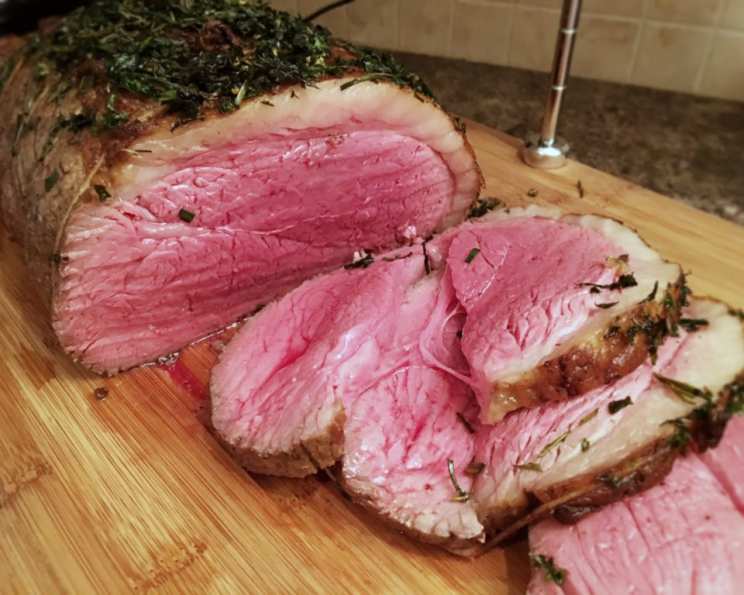
The Aromatic Allure of Roast Beef with Fresh Herbs
There are certain aromas that, when they waft from the kitchen, transport me instantly. The earthy, comforting scent of a roasting beef, intertwined with the bright, verdant notes of fresh herbs, is one such olfactory journey. I recall a particularly blustery autumn evening years ago, when I was tasked with impressing a table of discerning guests. I decided on this roast beef, and as it slowly transformed in the oven, filling the house with its rich perfume, I felt a palpable sense of anticipation. The crackling of the herb crust, the sizzle as it hit the carving board, and finally, the tender, succulent slices – it was a symphony of flavor and texture that has since become a cherished staple in my repertoire for special occasions.
Recipe Overview
- Prep Time: 15 minutes
- Cook Time: Approximately 20 minutes initially, then 1-2 hours depending on desired doneness
- Total Time: 1 hour 25 minutes to 2 hours 45 minutes (including resting)
- Servings: 6
- Yield: 1 roast beef
- Dietary Type: Gluten-Free, Dairy-Free
Ingredients
- 3 lbs boneless top sirloin roast
- 1⁄2 teaspoon sea salt
- 1 teaspoon black pepper
- 1 teaspoon dry mustard (or to taste)
- 3 tablespoons extra virgin olive oil (or to taste)
- 1⁄4 cup rosemary, chopped
- 1⁄4 cup mint, chopped
- 1⁄4 cup basil, chopped
- 1⁄4 cup chives, chopped
- 1⁄4 cup parsley, chopped
- 2 garlic cloves, pressed
- 1 tablespoon grapeseed oil (or as needed)
Equipment Needed
- Oven-proof roasting pan
- Tongs
- Paper towels
- Meat probe thermometer (highly recommended for accuracy)
- Cutting board
- Aluminum foil
- Small bowl
Instructions
- Begin by preheating your oven to 425ºF (220°C). This initial high heat is crucial for creating a beautiful, seared crust.
- Allow your boneless top sirloin roast to come to room temperature for about 30 minutes to an hour before cooking. This helps ensure more even cooking. Once at room temperature, pat the roast thoroughly dry with paper towels. This is a key step for achieving a good sear.
- Next, season the roast generously on all sides with sea salt, black pepper, and the dry mustard. Ensure the seasonings adhere well to the meat.
- In your oven-proof pan, heat the extra virgin olive oil over medium-high heat. You want the oil to be shimmering but not smoking.
- Carefully sear the seasoned roast on all sides and ends in the hot oil. This process, known as searing, locks in juices and builds a flavorful crust. Work quickly, turning the roast with tongs to ensure each surface is browned.
- Once seared, place the roast on a rack inside the roasting pan, fat side up if your cut has a distinct fat cap.
- If you have a meat probe thermometer, insert it into the thickest part of the roast, avoiding any bones if present.
- Transfer the pan to the preheated oven. Let it cook for 20 minutes at 425ºF (220°C).
- After the initial 20 minutes, reduce the oven temperature to 325ºF (160°C). Continue cooking until the internal temperature of the roast registers 140ºF (60°C) for medium-rare. For medium, aim for 150-155ºF (65-68°C), and for well-done, 160°F (71°C) or higher. Remember that the temperature will rise several degrees as it rests.
- While the roast is cooking, prepare the herb mixture. In a medium bowl, combine the chopped rosemary, mint, basil, chives, and parsley. Add the pressed garlic cloves.
- Pour in the grapeseed oil, stirring until the herb mixture is nicely moistened. You want it to be a cohesive, fragrant paste.
- When the roast’s internal temperature reaches 115°F (46°C), carefully remove it from the oven. This is the point where we’ll apply the herb crust.
- Quickly and evenly spread the herb mixture on top of the roast, pressing down lightly to help it adhere.
- Return the roast to the oven to finish cooking to your desired internal temperature.
- Once the roast has reached its target internal temperature, remove it from the oven and place it on a clean carving board.
- Tent the roast loosely with aluminum foil. This is a critical resting period that allows the juices to redistribute throughout the meat, ensuring a tender and succulent result. Let it rest for 20 to 30 minutes before slicing.
- If you find the roast is too rare for some of your diners, you can quickly sauté both sides in a hot pan with a little gravy for up to 2 minutes per side to bring it up to their preferred doneness.
Note on Cooking Times: Bone-in prime rib will take more time to cook in the oven due to the bone insulaing the meat. Always rely on a meat thermometer for accurate doneness.
Expert Tips & Tricks
- The Importance of Patting Dry: Don’t underestimate the power of a thoroughly dried roast. Moisture on the surface will steam rather than sear, preventing that coveted golden-brown crust from forming.
- Herb Selection: While this recipe calls for specific herbs, feel free to experiment. Thyme, oregano, or even a hint of sage can be wonderful additions. The key is fresh, finely chopped herbs for maximum flavor release.
- Garlic Intensity: If you’re a garlic lover, feel free to add an extra clove or two to the herb mixture. For a milder garlic flavor, you can roast the garlic cloves whole before pressing them into the paste.
- Resting is Paramount: Resist the urge to slice into the roast immediately after removing it from the oven. The resting period is where the magic happens, ensuring every bite is as tender and juicy as the last.
Serving & Storage Suggestions
This magnificent roast beef is best served hot, sliced against the grain. It pairs beautifully with classic accompaniments like roasted potatoes, a rich gravy (perhaps made from the pan drippings), and a medley of seasonal vegetables such as roasted asparagus or creamed spinach. For a more formal presentation, a dollop of horseradish cream or a red wine reduction sauce is always a welcome addition.
Leftovers can be stored in an airtight container in the refrigerator for up to 3 to 4 days. To reheat, gently warm slices in a covered baking dish with a splash of beef broth or water in a 300°F (150°C) oven, or quickly pan-sear them. Avoid microwaving, as it can toughen the meat.
Nutritional Information
(Please note: Nutritional values are estimates and can vary based on exact ingredients and portion sizes.)
| Nutrient | Amount per Serving (approx.) | % Daily Value |
|---|---|---|
| Calories | 350 – 450 kcal | 18-23% |
| Total Fat | 20 – 30 g | 26-38% |
| Saturated Fat | 7 – 10 g | 35-50% |
| Cholesterol | 90 – 110 mg | 30-37% |
| Sodium | 200 – 300 mg | 9-13% |
| Total Carbohydrate | 1 – 2 g | 0-1% |
| Dietary Fiber | 0.5 – 1 g | 2-4% |
| Sugars | < 1 g | < 1% |
| Protein | 40 – 50 g | 80-100% |
Variations & Substitutions
- Herb Variations: If mint isn’t to your liking, or if you have a different herb garden bounty, consider substituting with thyme, marjoram, or a touch of savory. The key is a balanced blend of fresh, aromatic notes.
- Mustard Options: Dijon mustard can be used in place of dry mustard for a slightly different, more pungent flavor.
- Oil Choices: While grapeseed oil is neutral, a high-quality extra virgin olive oil can also be used for the herb paste.
- Spice It Up: For a touch of heat, a pinch of red pepper flakes can be added to the herb mixture.
FAQs
Q: How can I ensure my roast beef is perfectly medium-rare?
A: Using a reliable meat thermometer is the most accurate way. Aim for an internal temperature of 130-135°F (54-57°C) before resting, as it will rise to 140°F (60°C) during the resting period.
Q: Can I prepare the herb mixture ahead of time?
A: Yes, you can prepare the herb mixture up to a day in advance. Store it in an airtight container in the refrigerator. You may need to add a touch more oil before applying if it has dried out.
Q: My roast is larger or smaller than 3 lbs. How do I adjust the cooking time?
A: Cooking time is primarily determined by the internal temperature, not just the weight. Use a meat thermometer and cook until the desired temperature is reached, adjusting the time based on your oven and the size of the roast. A general guideline for roasting is approximately 12-15 minutes per pound at 325°F (160°C) for medium-rare, after the initial sear and high-heat period.
Q: What if I don’t have an oven-proof pan with a rack?
A: You can use a standard roasting pan and place the roast directly in it, or use a separate baking dish and place a metal rack inside it to elevate the roast.
Q: How can I tell if my roast is properly rested?
A: The juices should no longer be pooling on the cutting board. When you slice, the meat should be moist and tender, not dry.
Final Thoughts
This roast beef with fresh herbs is more than just a recipe; it’s an experience. It’s about the anticipation as the aroma fills your home, the satisfaction of presenting a beautifully cooked centerpiece, and the joy of sharing a delicious meal with loved ones. Don’t shy away from the fresh herbs – they truly elevate this dish to something special. Serve it with a robust red wine, perhaps a Cabernet Sauvignon or a Merlot, and savor every exquisite bite. I’d be delighted to hear about your culinary adventures with this classic.