
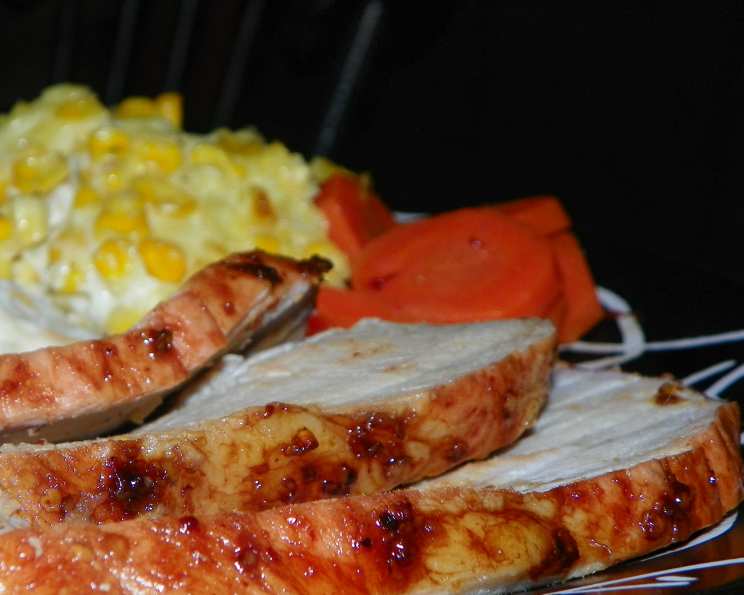
The Sweet & Savory Symphony: Roast Pork with Maple and Mustard Glaze
There’s a particular scent that heralds autumn in my kitchen, a warm, inviting aroma that wraps around you like a cozy blanket. It’s the smell of roasting pork, but not just any roast. This is the one, the Roast Pork with Maple and Mustard Glaze. I remember the first time I conjured this dish, the air thick with anticipation and the gentle sizzle from the oven. The sweet, sticky maple, the sharp tang of Dijon, the subtle umami of soy – it all coalesced into a glaze that caramelized to a perfect mahogany, blanketing a tender pork loin. It was a revelation, a simple yet sophisticated centerpiece that spoke of comfort and celebration, and it’s been a beloved staple in my repertoire ever since.
Recipe Overview
- Prep Time: 15 minutes
- Cook Time: 1 hour
- Total Time: 1 hour 10 minutes
- Servings: 8
- Yield: 1 roast pork loin
- Dietary Type: Adaptable (Naturally Gluten-Free if using Tamari instead of Soy Sauce)
Ingredients
This recipe calls for a few key players that come together to create a truly memorable meal.
- 2 ½ pounds boneless pork loin roast: Look for a well-marbled cut for the best flavor and moisture.
- 1 cup real maple syrup: The quality of your maple syrup truly matters here; opt for Grade A Dark Robust or Grade A Amber Rich for the best flavor profile.
- 4 tablespoons Dijon-style mustard: This provides a lovely tang that cuts through the richness of the pork and complements the sweetness of the maple.
- 2 ½ tablespoons cider vinegar: A touch of acidity to balance the sweetness and enhance the glaze’s depth.
- 2 ½ tablespoons soy sauce: For that essential umami kick. If you need a gluten-free option, tamari is an excellent substitute.
- Salt: To taste, for seasoning the pork and adjusting the glaze.
- Ground black pepper: Freshly ground pepper will always offer a superior flavor.
Equipment Needed
You won’t need a whole arsenal of gadgets for this recipe, just a few essentials:
- A shallow roasting pan: This allows for even heat circulation around the roast.
- A small bowl: For whisking together the glaze ingredients.
- A whisk: To ensure your glaze ingredients are thoroughly combined.
- A meat thermometer: Crucial for achieving perfectly cooked pork.
- A cutting board and a sharp carving knife: For slicing the finished roast.
Instructions
Crafting this succulent roast is a straightforward affair, allowing the ingredients to shine.
- Begin by preheating your oven to 350 degrees F (175 degrees C). This moderate, consistent heat is perfect for slowly rendering the fat and cooking the pork to tender perfection.
- In your small bowl, stir together the real maple syrup, Dijon-style mustard, cider vinegar, soy sauce, salt, and ground black pepper. Whisk these ingredients until they are well combined and form a smooth, uniform glaze. You’ll notice the rich aroma beginning to develop even at this stage.
- Place the pork roast in a shallow roasting pan. Ensure it’s centered and has a bit of space around it for even cooking.
- Spread the prepared glaze evenly over the entire surface of the pork roast. Don’t be shy; you want every inch to be coated in this delectable mixture. The glaze will not only add flavor but also create a beautiful caramelized crust as it cooks.
- Roast the pork in the preheated oven uncovered. Allow it to cook until an internal temperature, measured with a meat thermometer inserted into the thickest part of the roast, reaches 145 degrees F (57 degrees C). This will take approximately 1 hour. Keep an eye on the glaze; if it starts to brown too quickly, you can loosely tent the roast with foil.
- Once the pork reaches the desired internal temperature, remove it from the oven. Transfer the roast to a clean cutting board and let it rest for about 10 minutes before slicing to serve. This resting period is absolutely vital. It allows the juices to redistribute throughout the meat, ensuring a moist and tender result. If you slice too soon, all those delicious juices will run out onto the board, leaving you with a drier roast.
Expert Tips & Tricks
Elevating this dish from good to extraordinary is all about a few chef-grade insights.
- Achieving the Perfect Crust: For an extra-caramelized exterior, you can briefly increase the oven temperature to 400°F (200°C) for the last 5-10 minutes of cooking, keeping a very close eye to prevent burning.
- Glaze for Your Sides: Don’t let any of that glorious glaze go to waste! You can easily double the glaze recipe and toss it with vegetables like potatoes, carrots, and onions before roasting them alongside the pork (ensure they are added to the pan with enough cooking time). This infuses your vegetables with the same wonderful sweet and savory flavors.
- Meat Thermometer is Your Best Friend: I cannot stress this enough. A reliable meat thermometer is the single most important tool for perfectly cooked pork. Overcooked pork can be tough and dry, while undercooked pork is a food safety concern. Aim for that 145°F (57°C), and trust the thermometer.
- Pat it Dry: Before applying the glaze, a quick pat down of the pork loin with paper towels can help the glaze adhere better and promote a more even browning.
Serving & Storage Suggestions
This Roast Pork with Maple and Mustard Glaze is a versatile dish that pairs beautifully with a variety of accompaniments.
Serve slices of the warm roast with any pan juices that have collected during resting. It’s absolutely divine with roasted root vegetables (as mentioned in the tips!), creamy mashed potatoes, or a simple green salad. A dollop of applesauce can also be a delightful counterpoint to the rich pork and sweet glaze.
Leftovers can be stored in an airtight container in the refrigerator for up to 3-4 days. Reheat gently in a covered dish in a low oven (around 300°F/150°C) or in a skillet over medium-low heat to preserve moisture. The flavor often intensifies overnight, making leftovers just as enjoyable as the first serving.
Nutritional Information
Here’s an estimated breakdown of the nutritional content per serving, assuming 8 servings from the roast. Please note that this is an approximation and can vary based on the specific cut of pork and exact ingredient measurements.
| Nutrient | Amount per Serving | % Daily Value |
|---|---|---|
| Calories | 342 kcal | 17% |
| Total Fat | 11.8 g | 15% |
| Saturated Fat | 2.3 g | 12% |
| Cholesterol | 90.7 mg | 30% |
| Sodium | 385.8 mg | 17% |
| Total Carbohydrate | 26.8 g | 10% |
| Dietary Fiber | 0 g | 0% |
| Sugars | 23.9 g | 48% |
| Protein | 30.9 g | 62% |
Note: Percent Daily Values are based on a 2,000-calorie diet.
Variations & Substitutions
While this recipe is fantastic as is, don’t hesitate to play with its components to suit your palate or pantry.
- Spicy Kick: For those who enjoy a bit of heat, add a pinch of red pepper flakes or a teaspoon of sriracha to the glaze mixture.
- Herbal Infusion: Fresh herbs like rosemary or thyme can be finely chopped and added to the glaze, or a sprig of rosemary can be placed under the roast during cooking for a subtle aromatic infusion.
- Different Mustard: While Dijon is classic, you could experiment with whole grain mustard for a bit more texture, or even a honey mustard for an extra layer of sweetness, though you might want to reduce the maple syrup slightly if using a very sweet mustard.
- Balsamic Glaze: Swap the cider vinegar for balsamic vinegar for a richer, deeper flavor profile in the glaze.
FAQs
Q: Can I use a different cut of pork?
A: While pork loin is ideal for its leanness and tenderness, a boneless pork shoulder or tenderloin could be used, though cooking times and temperatures might need adjustment to ensure optimal tenderness and avoid drying out.
Q: How do I know if the pork is cooked through without a thermometer?
A: While a thermometer is highly recommended, you can check for doneness by piercing the thickest part of the roast with a fork. The juices should run clear, with no pinkish color. However, this method is less precise than using a thermometer.
Q: My glaze is too thick/thin, what can I do?
A: If the glaze is too thick, you can thin it slightly with a tablespoon or two of water or extra cider vinegar. If it’s too thin, you can simmer it gently on the stovetop for a few minutes until it reduces to your desired consistency.
Q: Can I make the glaze ahead of time?
A: Absolutely! The glaze can be prepared a day or two in advance and stored in an airtight container in the refrigerator. Simply bring it to room temperature or warm it slightly before brushing it onto the pork.
Q: Is this recipe suitable for holidays?
A: This dish is perfect for any occasion, from a casual weeknight dinner to a festive holiday meal. Its elegant presentation and irresistible flavor make it a crowd-pleaser.
Final Thoughts
This Roast Pork with Maple and Mustard Glaze is more than just a recipe; it’s an invitation to create a memorable meal. The interplay of sweet maple, tangy mustard, and savory soy creates a flavor profile that is both comforting and sophisticated, a true testament to how simple ingredients can come together to create something extraordinary. So, gather your ingredients, embrace the process, and let the aroma fill your home. Serve it with your favorite sides, share it with loved ones, and savor every bite. I’d be delighted to hear how your experience with this dish turns out!