
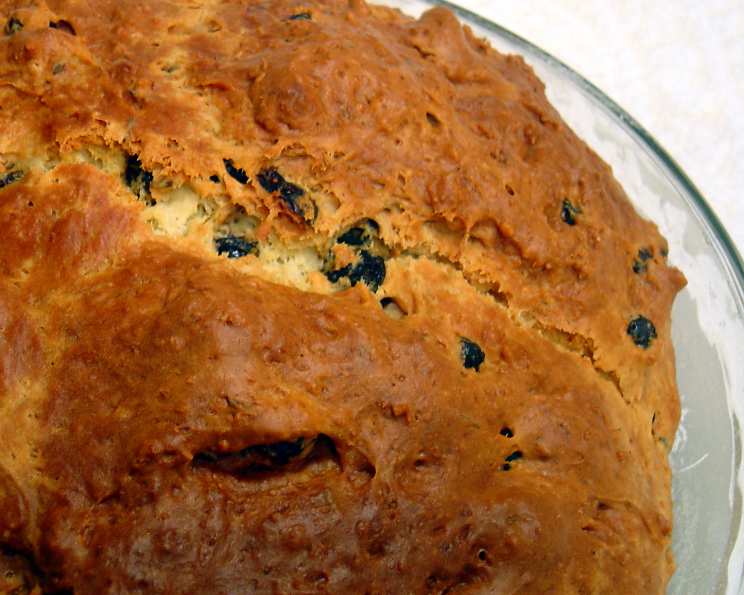
Real Irish Soda Bread: A Taste of True Irish Hearth and Home
The scent of baking bread is one of life’s simplest, yet most profound, pleasures. For me, that aroma instantly transports me back to my grandmother’s tiny cottage kitchen in County Clare. The air would be thick with the comforting perfume of yeast and something subtly sweet, and I’d watch, mesmerized, as her practiced hands worked magic with flour and buttermilk. But it was on St. Patrick’s Day, more than any other time, that her soda bread took center stage. It wasn’t a delicate, airy loaf, but a robust, honest bread, often studded with plump, jewel-like currants and fragrant caraway seeds, its crust a deep, inviting golden brown, marked with that traditional cross. This recipe, passed down through generations, captures that very essence – the heart and soul of true Irish baking.
Recipe Overview
- Prep Time: 15 minutes
- Cook Time: 50 minutes
- Total Time: 1 hour 5 minutes
- Servings: 16
- Yield: 1 tasty loaf
- Dietary Type: Vegetarian
Ingredients
For this authentic loaf, the ingredients are wonderfully straightforward, a testament to the resourcefulness of traditional Irish baking:
- 3 cups all-purpose flour
- 2 teaspoons baking soda
- 1 teaspoon baking powder
- 3 tablespoons granulated sugar
- 1 pinch cream of tartar
- 2 tablespoons unsalted butter, melted
- 2 large eggs
- 1 cup sour cream OR 1 cup plain yogurt
- ½ cup buttermilk
- 1 tablespoon caraway seeds (optional, but highly recommended for that classic flavor)
- ½ to ¾ cup currants OR ½ to ¾ cup raisins (your preference!)
- 1 tablespoon uncooked rolled oats
Equipment Needed
- Large mixing bowl
- Whisk or fork
- Measuring cups and spoons
- Pie plate or round cake pan (9-inch diameter is ideal)
- Pastry brush (optional, for egg wash)
- Wire cooling rack
Instructions
The beauty of Irish soda bread lies in its simplicity and speed. There’s no long proving or kneading required, making it an ideal bread for any occasion, from a quick breakfast to a generous accompaniment to a hearty stew.
- Preheat your oven to 350 degrees Fahrenheit (175 degrees Celsius). It’s crucial to have your oven at the correct temperature before the bread goes in for optimal rising.
- Prepare your baking vessel. Lightly butter and flour a pie plate or a round cake pan. This ensures your bread won’t stick and will release easily once baked.
- Add a base layer of oats. Sprinkle the uncooked rolled oats onto the bottom of the prepared pan. This not only adds a subtle texture but also a delightful nutty aroma as it bakes.
- Combine the dry ingredients. In a large mixing bowl, whisk together the all-purpose flour, baking soda, baking powder, granulated sugar, and cream of tartar. If you are using caraway seeds and/or currants or raisins, add them now to the dry ingredients and toss to coat them lightly with the flour. This helps prevent them from sinking to the bottom of the loaf during baking.
- Mix the wet ingredients. In a separate, smaller bowl, whisk together the melted butter and the eggs until well combined. Then, stir in the sour cream (or plain yogurt) and the buttermilk. Ensure this mixture is smooth and homogenous.
- Gently incorporate the wet ingredients into the dry ingredients. Pour the wet mixture into the bowl with the dry ingredients. Using a large spoon or a spatula, stir just until combined. This is the most critical step: do not overmix! Overmixing will develop the gluten too much, resulting in a tough, dense loaf. A few streaks of flour are perfectly acceptable.
- Shape the dough. Spoon the dough into the prepared pie pan or cake pan. The dough will be quite soft and sticky. Shape it into a mound with a rounded top. It doesn’t need to be perfectly smooth; rustic charm is part of its appeal.
- Score the top. Using a sharp knife, cut a deep X into the top of the loaf. This traditional marking isn’t just for aesthetics; it helps the bread bake evenly all the way through.
- Bake for 50 minutes. Keep an eye on the bread as it bakes. The loaf should be a deep golden brown on top and sound hollow when tapped on the bottom. If the top starts to brown too quickly, you can loosely tent it with aluminum foil for the last 10-15 minutes of baking.
- Cool the bread. Once baked, carefully remove the bread from the oven and turn it out onto a wire cooling rack. Allow it to cool completely before slicing. While the temptation to slice into a warm loaf is immense, letting it cool properly will improve its texture.
Expert Tips & Tricks
- The Sour Cream/Yogurt Choice: Both sour cream and plain yogurt provide the necessary acidity to react with the baking soda, creating that characteristic lift. Sour cream will yield a richer, more tender crumb, while yogurt offers a slightly tangier flavor. Use whichever you have on hand!
- Buttermilk Shortcut: If you don’t have buttermilk, you can make your own by measuring 1 cup of milk and stirring in 1 tablespoon of lemon juice or white vinegar. Let it sit for 5-10 minutes until it thickens slightly.
- Fruit Selection: The currants provide a lovely, slightly tart burst, while raisins offer a sweeter chew. Feel free to use a mix of both or experiment with dried cranberries for a festive touch.
- Caraway’s Charm: Don’t shy away from the caraway seeds! They add a wonderfully aromatic and slightly anise-like flavor that complements the bread beautifully. If you’ve never tried them, start with the smaller amount suggested.
- Oatmeal Addition: The uncooked rolled oats in the pan are a traditional touch. You can also mix a tablespoon or two of rolled oats into the dry ingredients for added texture within the loaf itself.
Serving & Storage Suggestions
Irish Soda Bread is wonderfully versatile. It’s absolutely divine served warm, just as it is, with a generous slathering of good Irish butter. It also makes a superb accompaniment to a hearty Irish stew, a warming bowl of soup, or a simple cheese and charcuterie board.
For leftovers, wrap the cooled bread tightly in plastic wrap or store it in an airtight container at room temperature. It will stay fresh for 2 to 3 days. Soda bread tends to dry out as it ages, but it can be revived by lightly toasting slices. While it freezes reasonably well, it’s best enjoyed fresh.
Nutritional Information
| Nutrient | Amount per Serving | % Daily Value |
|---|---|---|
| Calories | 161 kcal | |
| Calories from Fat | ||
| Total Fat | 5.2 g | 8% |
| Saturated Fat | 2.8 g | 14% |
| Cholesterol | 34.9 mg | 11% |
| Sodium | 222 mg | 9% |
| Total Carbohydrate | 24.7 g | 8% |
| Dietary Fiber | 1 g | 3% |
| Sugars | 6.3 g | 25% |
| Protein | 4 g | 8% |
Note: Nutritional values are estimates and can vary based on specific ingredients used.
Variations & Substitutions
While this recipe aims for authenticity, a few delightful variations can be explored:
- Whole Wheat Swap: Replace up to 1 cup of the all-purpose flour with whole wheat flour for a nuttier, denser loaf.
- Seeded Delight: Add a tablespoon of poppy seeds or sesame seeds to the dry ingredients for extra flavor and texture.
- Sweetened Version: If you prefer a sweeter bread, you can increase the sugar to 4-5 tablespoons, or even add a touch of honey or maple syrup to the wet ingredients.
FAQs
Q: Why is it called “soda bread”?
A: It gets its name from the primary leavening agent used: baking soda (sodium bicarbonate), which reacts with acidic ingredients to create carbon dioxide gas, causing the bread to rise.
Q: Can I make this recipe gluten-free?
A: This particular recipe relies on the gluten in wheat flour for structure, so a direct gluten-free substitution might not yield the same results. Special gluten-free flour blends designed for baking bread would be necessary.
Q: What’s the significance of the ‘X’ on top?
A: The cross is a traditional marking on soda bread. It is said to allow the fairies to escape from the dough or, more practically, to help the bread bake evenly.
Q: My soda bread is dense. What went wrong?
A: The most common culprit is overmixing the dough. Work the ingredients together only until just combined. Overworking the gluten will result in a tough, dense loaf.
Q: Can I use self-rising flour instead of all-purpose flour, baking soda, and baking powder?
A: Self-rising flour already contains leavening agents. Using it in this recipe, which calls for specific amounts of baking soda and baking powder, would alter the leavening and likely result in an undesirable texture. It’s best to stick to the specified ingredients.
Final Thoughts
There’s a profound satisfaction that comes from baking a loaf of authentic Irish Soda Bread. It’s a connection to history, to tradition, and to the simple, honest flavors of the land. Whether you’re enjoying it slathered with butter at breakfast, as a humble companion to a warming stew, or simply savored with a cup of tea, this bread offers a taste of true Irish hospitality. I encourage you to give this recipe a try, embrace its rustic charm, and share its deliciousness with those you love. And do let me know how it turns out – your feedback is always a welcome ingredient!