
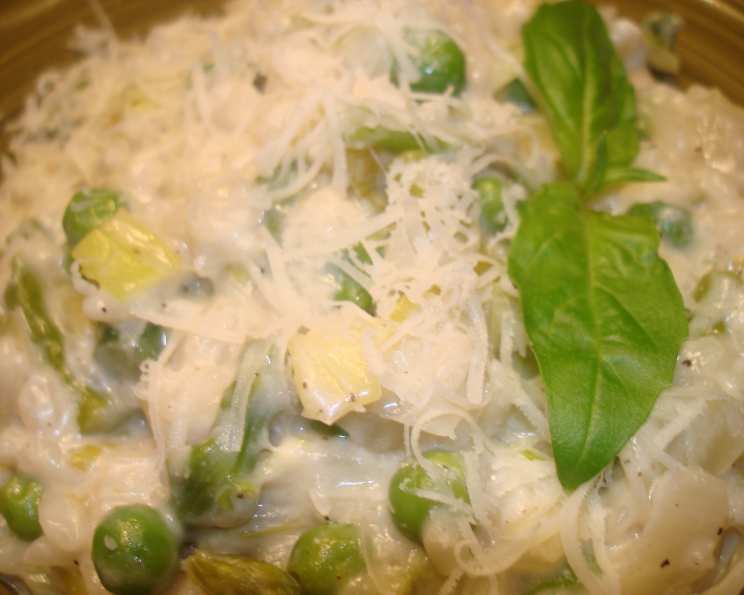
Risotto Primavera: A Celebration of Spring’s Bounty
There’s a certain magic that happens when spring graces the kitchen. The crisp chill of winter yields to a gentle warmth, and the produce aisle transforms into a vibrant canvas of green. My earliest memories of Risotto Primavera involve my grandmother, her apron dusted with flour, a wide smile as she’d pull plump asparagus spears and bright green peas from her garden. She’d hum a little tune as she meticulously chopped, the aroma of sautéing leeks and fennel filling our small kitchen, a promise of the creamy, comforting dish to come. It wasn’t just a meal; it was a culinary embrace, a tangible representation of renewal and the simple joy of fresh ingredients.
Recipe Overview
- Prep Time: 20 minutes
- Cook Time: 30-35 minutes
- Total Time: 50-55 minutes
- Servings: 4-6
- Yield: Serves 4-6
- Dietary Type: Vegetarian (Can be made vegan by substituting vegetable stock and omitting cheese/mascarpone, or using vegan alternatives)
Ingredients
- 1 ½ tablespoons olive oil
- 1 ½ tablespoons unsalted butter
- 3 cups leeks, white and light green parts, chopped (approximately 2 leeks)
- 1 cup fennel, chopped
- 1 ½ cups Arborio rice
- ⅔ cup dry white wine (such as Sauvignon Blanc or Pinot Grigio)
- 4-5 cups chicken stock, simmering and preferably homemade (or vegetable stock for a vegetarian/vegan option)
- 1 lb frozen asparagus, thawed
- 10 ounces frozen peas, thawed
- 1 tablespoon freshly grated lemon zest (from approximately 2 lemons)
- Kosher salt and freshly ground black pepper, to taste
- 2 tablespoons fresh lemon juice
- ⅓ cup mascarpone cheese, preferably Italian
- ½ cup freshly grated Parmesan cheese, plus extra for serving
- 3 tablespoons minced fresh chives, plus extra for serving
Equipment Needed
- Medium saucepan
- Large, heavy-bottomed saucepan or Dutch oven
- Ladle
- Small bowl
- Whisk
Instructions
- Sauté the Aromatics: In a medium saucepan, heat the olive oil and butter over medium heat. Add the chopped leeks and fennel. Sauté for 5 to 7 minutes, stirring occasionally, until the vegetables are tender but not browned.
- Toast the Rice: Add the Arborio rice to the saucepan with the sautéed vegetables. Stir continuously for about 1 minute, ensuring that each grain of rice is coated with the oil, butter, and vegetables. This toasting step helps the rice absorb liquid evenly and develop a slightly nutty flavor.
- Deglaze with Wine: Pour in the dry white wine. Simmer over low heat, stirring constantly, until most of the wine has been absorbed by the rice.
- Begin Adding Stock: Now, begin the patient process of adding the simmering chicken stock (or vegetable stock). Add the stock 2 ladles at a time, stirring almost constantly. Wait until the liquid is nearly fully absorbed by the rice before adding the next two ladles. This gradual addition and constant stirring are crucial for releasing the starch from the Arborio rice, which creates the signature creamy texture of risotto.
- Prepare the Vegetables: While the risotto is cooking, prepare the asparagus. Cut the asparagus diagonally into 1 ½-inch lengths, discarding the tough woody ends.
- Incorporate Spring Vegetables: Continue adding stock and stirring. When the risotto has been cooking for approximately 15 minutes, add the prepared asparagus to the risotto, along with the peas, lemon zest, 2 teaspoons of kosher salt, and 1 teaspoon of freshly ground black pepper.
- Continue Cooking: Continue the process of adding stock and stirring. The entire risotto cooking process, from the first addition of stock to the rice being perfectly tender, should take about 25 to 30 minutes. Taste the rice periodically to ensure it is tender but still has a slight bite (al dente).
- Finish the Risotto: Once the rice is cooked to your liking and the risotto has a luscious, creamy consistency, turn off the heat. In a small bowl, whisk together the fresh lemon juice and mascarpone cheese until smooth. Stir this mascarpone mixture into the risotto, along with the Parmesan cheese and minced fresh chives.
- Rest and Serve: Set the risotto aside, off the heat, for a few minutes to allow the flavors to meld and the textures to further develop. Before serving, sprinkle with additional kosher salt and freshly ground black pepper to taste. Serve hot, generously garnished with extra chives and Parmesan cheese.
Expert Tips & Tricks
- Simmering Stock is Key: Always keep your stock at a gentle simmer in a separate pot. Adding cold stock will shock the rice and halt the cooking process, negatively impacting the creamy texture.
- Stir, Stir, Stir: While “constant” stirring might sound daunting, the goal is “almost constant.” You want to agitate the rice enough to release its starches without breaking the grains. If you need a moment to rest your arm, give it a good stir before stepping away.
- Leek Prep: When cleaning leeks, they can trap dirt between their layers. Make sure to slice them lengthwise, then chop, and then rinse thoroughly under cold water, fanning out the layers to ensure all grit is removed.
- Don’t Rush the Wine: Allowing the wine to evaporate completely before adding stock helps to develop a deeper flavor profile and removes any harsh alcoholic notes.
- The Magic of Mascarpone: The mascarpone cheese is the secret weapon for that extra silken finish. It melts beautifully into the hot risotto, creating an unparalleled creaminess without making it heavy.
- Vegetable Stock for Vegetarian/Vegan: If making this dish vegetarian or vegan, opt for a high-quality vegetable stock. For a vegan version, you can omit the butter and mascarpone, or use a good vegan butter and a dairy-free cream cheese alternative. Ensure your Parmesan is also omitted or replaced with a vegan version.
Serving & Storage Suggestions
Risotto Primavera is best served immediately, when its creamy texture is at its peak. Ladle it into warm shallow bowls and artfully sprinkle with fresh chives and a generous dusting of grated Parmesan cheese. The vibrant colors of the spring vegetables make for a beautiful presentation.
Leftovers can be stored in an airtight container in the refrigerator for up to 2 days. However, it’s important to note that risotto does tend to thicken and firm up considerably as it cools. To reheat, gently warm it in a saucepan over low heat, adding a splash of stock or water to loosen it and restore its creamy consistency. Be patient; over-vigorous heating can make the rice mushy. Freezing risotto is generally not recommended as the texture can suffer significantly upon thawing.
Nutritional Information
| Nutrient | Amount per Serving (approx.) | % Daily Value |
|---|---|---|
| Calories | 657 kcal | 33% |
| Total Fat | 17 g | 26% |
| Saturated Fat | 6.6 g | 33% |
| Cholesterol | 30 mg | 10% |
| Sodium | 651 mg | 28% |
| Total Carbohydrate | 96 g | 35% |
| Dietary Fiber | 9 g | 36% |
| Total Sugars | 11 g | 22% |
| Protein | 25 g | 50% |
Note: Nutritional values are estimates and can vary based on specific ingredients used.
Variations & Substitutions
- Seasonal Vegetables: While this recipe celebrates spring, feel free to adapt it with your favorite seasonal vegetables. In summer, consider adding fresh peas, zucchini, or corn. In autumn, roasted butternut squash or mushrooms would be delicious.
- Herbal Infusions: Experiment with different fresh herbs beyond chives. Parsley, basil, or even a touch of tarragon can add unique aromatic dimensions.
- Citrus Twist: For an even brighter flavor, add a touch of orange zest along with the lemon zest.
- Protein Boost: While Primavera means “spring” and traditionally focuses on vegetables, you could lightly sautéed shrimp or chicken breast to serve alongside or stirred in at the end for a more substantial meal.
FAQs
Q: My risotto seems a bit too thick. What can I do?
A: If your risotto is too thick when you’re finished cooking, you can stir in a little more warm stock or a splash of hot water until it reaches your desired creamy consistency.
Q: Can I use a different type of rice?
A: Arborio rice is specifically recommended for its high starch content, which creates the signature creaminess. While other short-grain rice varieties like Carnaroli or Vialone Nano can be used, they may yield slightly different textures. Long-grain rice is not suitable for risotto.
Q: How important is stirring for risotto?
A: Stirring is essential for developing the creamy texture of risotto. It releases the starch from the Arborio rice grains, creating a luscious sauce that coats each grain.
Q: Can I make this ahead of time?
A: Risotto is best enjoyed fresh. While leftovers can be stored and reheated, the texture will change. For events, it’s better to prepare the components (chopped vegetables, simmering stock) and cook the risotto just before serving.
Q: What kind of white wine should I use?
A: A dry, crisp white wine is ideal. Think Sauvignon Blanc, Pinot Grigio, or an unoaked Chardonnay. Avoid sweet wines or anything too oaky, as they can overpower the delicate flavors of the dish.
Final Thoughts
Risotto Primavera is more than just a recipe; it’s an experience. It’s a testament to the beauty of simplicity and the rewards of patient cooking. It’s the perfect dish for a leisurely spring evening, a delightful centerpiece for a gathering, or a comforting indulgence for yourself. So, gather your ingredients, embrace the gentle rhythm of stirring, and let the vibrant flavors of spring unfold in your kitchen. I hope this dish brings you as much joy and deliciousness as it has brought to me over the years. Happy cooking!