
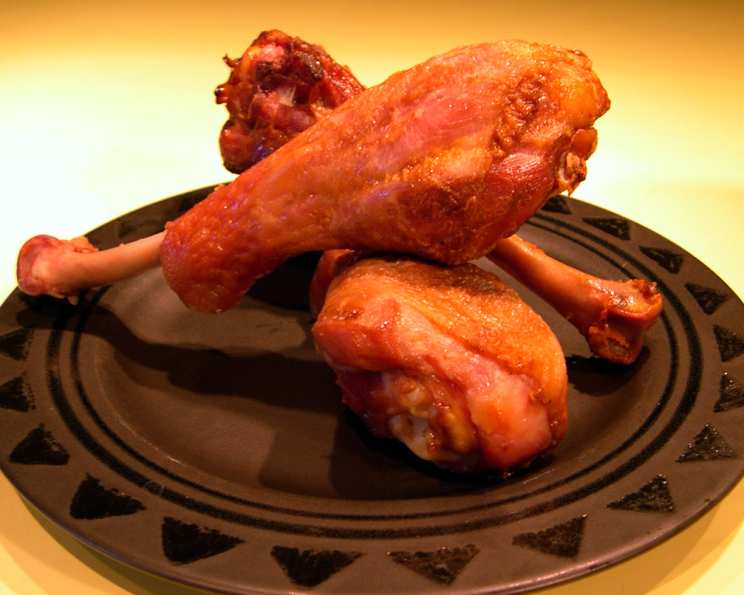
Roasting a Legacy: Smoky Turkey Legs, No Smoker Required
The scent of theme park food is a powerful nostalgia trigger for many, and for me, nothing evokes that carefree feeling quite like the colossal, smoky turkey legs you find at certain iconic destinations. My husband and I have a running tradition of seeking these out, the sheer size and savory aroma a siren call that’s impossible to resist. This recipe is born from that love, a meticulous recreation designed to capture that signature smokiness and tender, fall-off-the-bone meat, all achievable right in your home kitchen, without a smoker in sight. It’s a culinary tribute that holds a very special place in our hearts, a taste of adventure we can bring to our own table.
Recipe Overview
- Prep Time: 20 minutes (plus 24-72 hours brining time)
- Cook Time: Approximately 45 minutes to 1 hour
- Total Time: 24 hours 45 minutes – 73 hours
- Servings: 10
- Yield: 10 Roasted Smoky Turkey Legs
- Dietary Type: Gluten-Free, Dairy-Free
Ingredients
The magic of these turkey legs lies in a simple yet effective brining solution that infuses them with flavor and moisture.
- 1 cup Morton Tender Quick salt
- 1/2 cup brown sugar
- 2 tablespoons liquid smoke
- 1/2 gallon water (or enough water to fully cover the turkey legs)
- 10 turkey legs (or turkey wings, a whole turkey, or a whole chicken can be used as substitutes)
Equipment Needed
- Large non-reactive container or large zip-top bags for brining
- Roasting pan or baking sheet
- Paper towels
- Oven
Instructions
The journey to perfectly roasted smoky turkey legs is a two-stage process: a crucial brining period followed by a dual-temperature roasting method that ensures both tenderness and a beautifully caramelized, mahogany-hued skin.
- Prepare the Brine: In a large bowl or container, combine the Morton Tender Quick salt, brown sugar, and liquid smoke. Pour in the water and stir vigorously until all the salt and sugar have completely dissolved. This forms your flavorful briny mixture.
- Brine the Turkey Legs: Carefully place the turkey legs (or your chosen poultry pieces) into the brining solution. Ensure the legs are fully submerged. If your container isn’t quite large enough, you may need to use large, heavy-duty zip-top bags, distributing the brine and legs between them. Cover the container tightly or seal the bags.
- Refrigerate and Brine: Store the brined turkey legs in the refrigerator for a minimum of 24 hours and up to 72 hours. The longer the brining time, the deeper the flavor penetration and the more tender the meat will become.
- Rinse and Dry: Once the brining period is complete, remove the turkey legs from the brine. Rinse each leg thoroughly under cool running water to remove any excess salt and sugar from the surface. Pat the turkey legs completely dry with paper towels. This step is critical for achieving crispy skin during roasting.
- Initial Roast: Preheat your oven to 350°F (175°C). Place the dried turkey legs in a roasting pan or on a baking sheet. Roast for approximately 45 minutes. At this point, the turkey will be nearly cooked through, but the skin will likely still be pale and unappealingly so.
- Develop the Color: Now comes the crucial step for achieving that signature deep, rich color. Crank your oven up to 500°F (260°C). Place the turkey legs back into the hot oven and roast for an additional period until they achieve a rich mahogany color. This high heat will rapidly caramelize the sugars on the surface, creating that desirable dark, slightly crispy skin.
- Flip and Finish: Once one side of the turkey legs has reached the perfect mahogany hue, flip them over to expose the other side. Continue to roast at 500°F (260°C) until this second side is also a deep brown. Keep a close eye on them during this stage to prevent burning, as the high temperature works quickly.
Expert Tips & Tricks
- Brine Consistency is Key: Ensure the Morton Tender Quick salt and brown sugar are fully dissolved before adding the turkey. Undissolved grains can lead to uneven salting.
- Don’t Skip the Rinse and Dry: A thorough rinse removes residual brine, and thoroughly patting dry the turkey legs is paramount for achieving a beautifully browned and slightly crisp skin. Moisture is the enemy of crispiness!
- Oven Temperature Fluctuations: Ovens can vary significantly. If your oven tends to run hot or cold, use an oven thermometer to ensure accurate temperatures, especially during the high-heat finishing stage.
- Visual Cues are Your Guide: The visual cue of a “rich mahogany color” is more important than a specific time for the high-heat portion. Watch for the deep brown hue you desire.
- Larger Poultry Considerations: If you’re using a whole chicken or turkey, the brining time will remain similar, but the roasting times will need to be significantly adjusted based on the size and weight of the bird. Ensure the internal temperature reaches a safe 165°F (74°C).
Serving & Storage Suggestions
These roasted smoky turkey legs are a showstopper on their own. Serve them hot, straight from the oven, allowing guests to marvel at their impressive size and deep color. They pair wonderfully with classic barbecue sides like coleslaw, potato salad, mac and cheese, or a fresh green salad.
Leftovers can be stored in an airtight container in the refrigerator for up to 3–4 days. To reheat, gently warm them in a low oven (around 300°F or 150°C) or in a skillet over medium-low heat, adding a splash of broth or water to help retain moisture, until heated through. They can also be enjoyed cold, perhaps shredded into sandwiches or salads.
Nutritional Information
(Please note: Nutritional information can vary greatly depending on the size of the turkey legs and specific ingredient brands used.)
| Nutrient | Amount per Serving | % Daily Value |
|---|---|---|
| Calories | 1216.8 kcal | – |
| Total Fat | 54.8 g | 84% |
| Saturated Fat | 16.8 g | 84% |
| Cholesterol | 579.4 mg | 193% |
| Sodium | 612.6 mg | 25% |
| Total Carbohydrate | 10.8 g | 3% |
| Dietary Fiber | 0 g | 0% |
| Sugars | 10.7 g | 42% |
| Protein | 159.5 g | 318% |
Variations & Substitutions
While Morton Tender Quick salt is specifically formulated for curing and is recommended here for its reliability, you can explore other curing salts if you’re experienced with their use and understand their specific ratios and safety guidelines. However, for simplicity and consistent results, Tender Quick is the way to go. If you’re not a fan of liquid smoke, you could experiment with a smoked paprika in the brine for a more subtle smoky note, but it won’t replicate the intensity of liquid smoke.
FAQs
Q: Can I use regular salt instead of Morton Tender Quick salt?
A: No, it is not recommended to substitute regular salt for Morton Tender Quick salt in this recipe. Tender Quick is a curing salt that contains both sodium nitrite and sodium chloride, which are essential for food safety and achieving the desired cured texture and flavor. Regular salt will not provide these benefits.
Q: How do I know when the turkey legs are fully cooked?
A: The turkey legs are fully cooked when they have achieved a deep mahogany color on both sides and the meat is tender and cooked through. You can also use a meat thermometer; the internal temperature should register 165°F (74°C) in the thickest part of the thigh.
Q: Is it safe to eat the skin if it’s very dark brown?
A: As long as the skin hasn’t actually burned to a black, bitter crisp, the dark mahogany color is desirable and safe to eat. It’s a sign of delicious caramelization. If any small areas appear to be burning, you can carefully trim them before serving.
Q: Can I brine for less than 24 hours?
A: While you could brine for a shorter period, 24 hours is the minimum recommended time to allow the flavors and tenderizing agents to penetrate the meat sufficiently. For optimal results, aiming for the longer end of the 24-72 hour window is ideal.
Q: My oven doesn’t get up to 500°F. What should I do?
A: If your oven’s maximum temperature is lower, try setting it to its highest possible setting and increasing the duration at that temperature, watching carefully to achieve the desired deep brown color without burning. You may also consider using your oven’s broiler function for the final few minutes, watching extremely closely to avoid burning.
A Taste of Tradition, Reimagined
Bringing the vibrant flavors of a cherished treat into your own kitchen is incredibly rewarding, and these roasted smoky turkey legs are a testament to that. This recipe is more than just a set of instructions; it’s an invitation to recreate a beloved experience, a delicious adventure that’s surprisingly accessible. So gather your ingredients, embrace the brining process, and get ready to savor a taste of smoky, tender perfection. I can’t wait to hear about your success and the joy these legs bring to your table!