
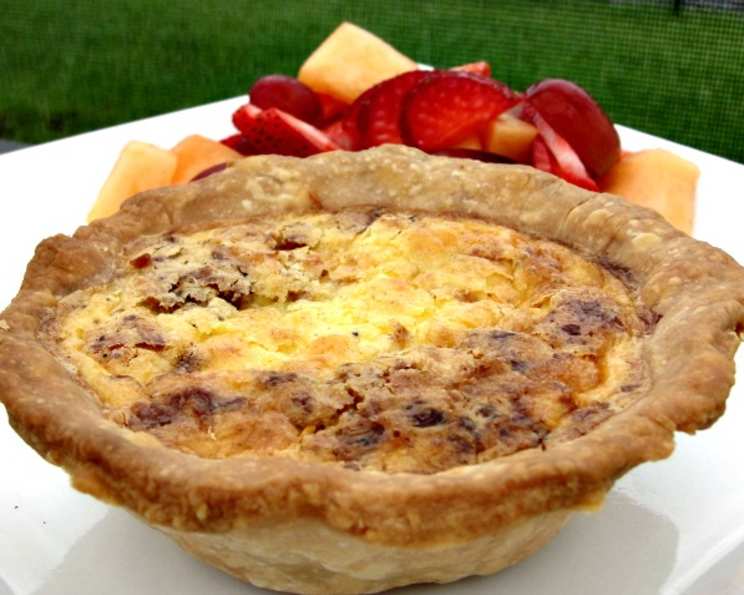
Quiche Lorraine: A Symphony of Savory Comfort
There are certain dishes that, for me, evoke a very specific time and place, a sensory snapshot of comfort and joy. Quiche Lorraine is one of those. I remember my grandmother, a formidable woman with the gentlest hands when it came to pastry, pulling a golden-crusted quiche from her oven. The aroma, a rich, smoky perfume of bacon and Gruyère, would fill her small kitchen, signaling that brunch was about to become an event. It wasn’t just food; it was an act of love, a fragrant promise of relaxed Sunday mornings shared with family. Today, when I recreate this classic, I’m not just following a recipe; I’m channeling that warmth and tradition, infusing each bite with a touch of that cherished memory.
Recipe Overview
- Prep Time: 15 minutes
- Cook Time: 52-57 minutes
- Total Time: 1 hour 7 minutes – 1 hour 12 minutes
- Servings: 6-8
- Yield: 1 pie
- Dietary Type: Vegetarian (with bacon)
Ingredients
For that quintessential Quiche Lorraine, the quality of your ingredients truly shines. Here’s what you’ll need to assemble this timeless masterpiece:
For the Crust:
- 1 (9-inch) pie crust (homemade or store-bought, your preference!)
For the Filling:
- 1 cup 1% low-fat milk
- 1 cup whipping cream
- 4 large eggs
- 1/4 teaspoon cayenne pepper
- Sea salt, to taste
- Cracked pepper, to taste
- 1/3 cup diced onion
- 10 slices bacon, cooked until crisp and crumbled
- 4 1/2 ounces grated Gruyère cheese (or Swiss cheese, if Gruyère is unavailable)
Equipment Needed
To bring your Quiche Lorraine to life, a few key tools will be your best friends:
- A standard 9-inch pie dish
- A wire rack
- A cookie sheet (to catch any drips during the initial bacon baking)
- A medium bowl for mixing the custard
- A whisk
- A knife for dicing and testing for doneness
- An oven preheated to the correct temperature, of course!
- A cooling rack for allowing the quiche to set
Instructions
Creating a Quiche Lorraine is a straightforward, rewarding process. The key is in the layering and the gentle bake, ensuring a creamy, rich filling encased in a flaky crust.
-
Begin by preparing your pie crust. Line your pie plate with the pastry dough and then refrigerate the crust while you attend to the bacon. This chilling step helps prevent shrinkage during baking, ensuring a beautiful, well-formed edge.
-
Next, we turn our attention to the star of the savory show: the bacon. Preheat your oven to 400 degrees F (200 degrees C). Arrange the bacon slices on a wire rack set over a cookie sheet. This allows the fat to drip away, resulting in wonderfully crisp bacon. Bake for 17 minutes, or until the bacon is perfectly crisp.
-
Once baked, carefully remove the bacon from the oven and let it cool until it’s manageable enough to handle. While the bacon cools, a few other preparations are in order.
-
Dice the onion finely. Grate the Gruyère cheese if you haven’t already.
-
Now, assemble the base of your quiche within the chilled pie shell. Start by arranging the crumbled bacon evenly across the bottom. Then, scatter the diced onion over the bacon. Finally, sprinkle the grated Gruyère cheese on top of the onions.
-
In a separate medium bowl, whisk together the 1 cup of 1% low-fat milk, 1 cup of whipping cream, 4 large eggs, 1/4 teaspoon of cayenne pepper, and a generous pinch of sea salt and cracked pepper to your taste. Whisk until well combined and slightly frothy.
-
Carefully pour the custard mixture over the bacon, onion, and cheese in the pie shell. To avoid any spills, it’s a good practice to place the pie shell directly into the oven at this stage before adding the liquid filling.
-
Place the quiche into the preheated oven. Bake at 425 degrees F (220 degrees C) for 15 minutes.
-
After those initial 15 minutes, reduce the oven temperature to 350 degrees F (175 degrees C). Continue to bake for an additional 30 to 35 minutes. The quiche is done when a knife test comes out almost clean. A slight wobble in the very center is acceptable, as the eggs will continue to cook from residual heat after you remove it from the oven, preventing overbaking.
-
Once baked to perfection, remove the Quiche Lorraine from the oven. Allow it to sit for 15 to 30 minutes before slicing and serving. This resting period is crucial for the filling to set properly, making it easier to cut neat slices and ensuring the best texture.
Chef’s Note on Crust: While many recipes call for blind-baking the crust and sautéing the onions for a softer texture, I personally find that the initial high heat of 425 degrees F does a wonderful job of cooking both the crust and the onions to perfection without these extra steps. However, if you prefer a more deeply golden and crisp crust, or softer onions, feel free to blind bake your crust and briefly sauté your diced onions before adding them to the filling. It’s all about what makes you happiest in the kitchen!
Expert Tips & Tricks
To elevate your Quiche Lorraine from good to absolutely unforgettable, consider these insider tips:
- Bacon Brilliance: For maximum flavor and crispness, choose a good quality, thick-cut bacon. Cooking it on a wire rack over a baking sheet is non-negotiable for achieving that perfect snap.
- Cheese Choice: While Gruyère is classic and offers a wonderful nutty depth, a good quality Swiss cheese is a perfectly acceptable substitute. For an even richer flavor, you could even incorporate a small amount of grated Parmesan.
- Custard Consistency: The ratio of milk to cream is key to a tender, custardy filling. The recipe’s balance of 1% milk and whipping cream results in a rich yet not overly heavy texture, reminiscent of the classic 18% butterfat found in traditional French quiches.
- Preventing a Soggy Bottom: While this recipe doesn’t strictly require blind-baking, ensuring your crust is chilled before filling and baking at the initial high temperature of 425°F helps to set the bottom crust quickly, minimizing the risk of sogginess.
Serving & Storage Suggestions
Quiche Lorraine is wonderfully versatile, making it perfect for a leisurely brunch, a light lunch, or even a sophisticated dinner.
- Serving: Serve warm or at room temperature. A simple green salad with a light vinaigrette makes an ideal accompaniment. For brunch, consider pairing it with fresh fruit or a side of roasted potatoes.
- Storage: Leftover Quiche Lorraine can be stored, covered tightly with plastic wrap or foil, in the refrigerator for 2 to 3 days. It can also be frozen for up to 1 month; ensure it’s well-wrapped to prevent freezer burn.
- Reheating: To reheat, place a slice on a baking sheet and warm in a 350 degrees F (175 degrees C) oven for about 10-15 minutes, or until heated through. Microwaving is an option, but it may result in a slightly less crisp crust.
Nutritional Information
This is an estimate, as actual values can vary based on specific ingredients used.
| Nutrient | Amount per Serving (approx.) | % Daily Value |
|---|---|---|
| Calories | 506 kcal | |
| Total Fat | 41.1 g | 63% |
| Saturated Fat | 18.9 g | 94% |
| Cholesterol | 212.9 mg | 70% |
| Sodium | 419.2 mg | 17% |
| Total Carbohydrate | 18.1 g | 6% |
| Dietary Fiber | 1.3 g | 5% |
| Sugars | 2.8 g | 11% |
| Protein | 16.2 g | 32% |
Note: The “Calories from Fat” and associated percentage are not directly provided in the source data in a calculable format, but the Total Fat content is substantial, contributing significantly to the calorie count.
Variations & Substitutions
While the classic Quiche Lorraine is a masterpiece in its own right, don’t hesitate to play with it!
- Vegetarian Twist: Omit the bacon and add sautéed mushrooms, leeks, or spinach for a delicious vegetarian alternative.
- Crustless Quiche: For a lighter option or to make it gluten-free, simply omit the pie crust and bake the filling in a greased pie dish or ramekins.
- Herbaceous Notes: Incorporate fresh herbs like chives, parsley, or tarragon into the custard mixture for an extra layer of flavor.
- Spicy Kick: If you enjoy a bit more heat, increase the cayenne pepper or add a pinch of red pepper flakes to the custard.
FAQs (Frequently Asked Questions)
Q: Can I use a different type of milk?
A: While the recipe specifies 1% low-fat milk and whipping cream for a specific richness, you can substitute whole milk for the low-fat milk. However, using non-dairy milks may significantly alter the texture and richness of the custard.
Q: Why is my quiche not setting in the center?
A: This usually happens if the oven temperature was too low, or if it was removed too early. The residual heat will continue to cook the center after removal, so a slight wobble is often fine, but if it’s very liquid, it needs more time.
Q: How can I prevent the bacon from making the crust soggy?
A: Cooking the bacon until very crisp and letting it cool is key. Also, ensure the crust is well-chilled before filling and baked at the initial high temperature to help set the bottom.
Q: Can I make Quiche Lorraine ahead of time?
A: You can prepare the filling ingredients (cook bacon, dice onion, grate cheese) a day in advance. The quiche itself is best baked fresh, but leftovers store well and can be reheated.
Q: What’s the difference between Gruyère and Swiss cheese in quiche?
A: Gruyère has a richer, nuttier, and slightly sweeter flavor profile than standard Swiss cheese, which is often milder. Both work, but Gruyère offers a more traditional and pronounced flavor.
Final Thoughts
Quiche Lorraine is more than just a recipe; it’s an invitation to savor the simple pleasures of well-made food. Its comforting blend of flaky pastry, smoky bacon, savory cheese, and creamy custard is a testament to classic French cuisine. Whether you’re hosting a brunch, planning a cozy dinner, or simply treating yourself to a moment of culinary indulgence, this Quiche Lorraine is sure to be a crowd-pleaser. So, gather your ingredients, embrace the process, and enjoy the delightful aroma and even more delightful taste of this enduring favorite. It’s a dish that truly deserves a place in every home cook’s repertoire.