
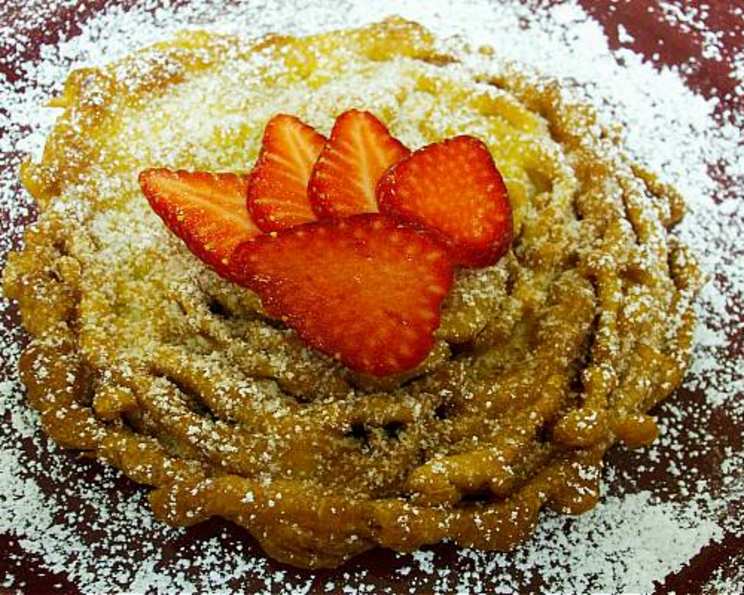
The Irresistible Charm of Homemade Funnel Cakes
The scent of frying batter, the ethereal dusting of powdered sugar, the sheer, unadulterated joy of biting into a crispy, golden swirl – funnel cakes are pure, unadulterated happiness in edible form. For me, they evoke the memory of sun-drenched summer afternoons at the county fair, the air thick with the mingled aromas of popcorn, grilled onions, and something wonderfully sweet. Even now, the simple act of preparing them brings back that childlike excitement, a reminder that the most magical treats often come from the simplest ingredients and a little bit of culinary theater. While I adore them in their classic, unadorned state, sometimes a cascade of fresh strawberries is the perfect complement. This recipe, a cherished hand-me-down from Southern Living magazine from years gone by, has been my go-to for capturing that fairground magic right in my own kitchen.
Recipe Overview
- Prep Time: 15 minutes
- Cook Time: 30 minutes
- Total Time: 45 minutes
- Servings: 8
- Yield: 8 individual funnel cakes
- Dietary Type: Vegetarian
Ingredients
The beauty of funnel cakes lies in their humble beginnings. A few pantry staples come together to create something truly spectacular.
- 1 ¼ cups all-purpose flour
- 1 teaspoon baking soda
- ¾ teaspoon baking powder
- ¼ teaspoon salt
- 2 tablespoons granulated sugar
- 1 large egg, beaten
- ¾ cup milk (whole milk or 2% works best for richness)
- Vegetable oil, for frying (you’ll need enough to fill your skillet to about ¼ inch depth)
- Powdered sugar, for dusting (be generous!)
Equipment Needed
While the ingredient list is simple, a few key tools will ensure your funnel cake success.
- A medium-sized mixing bowl
- A whisk
- A measuring cup and measuring spoons
- A skillet or heavy-bottomed frying pan (cast iron works wonderfully)
- A funnel (a standard kitchen funnel is perfect)
- A thermometer (clip-on candy or deep-fry thermometer is ideal)
- A slotted spoon or spider strainer
- An absorbent paper towel-lined plate or baking sheet for draining
Instructions
The magic happens in the frying, where the batter transforms into delicate, lacy webs of deliciousness. Follow these steps carefully, and you’ll be rewarded with perfect funnel cakes every time.
- Combine the Dry Ingredients: In your medium mixing bowl, whisk together the all-purpose flour, baking soda, baking powder, salt, and granulated sugar. Ensure everything is well combined to distribute the leavening agents evenly.
- Add the Wet Ingredients: Create a well in the center of the dry ingredients. Add the beaten egg and the milk to the well.
- Whisk to Smoothness: Whisk the wet ingredients into the dry ingredients until you have a smooth, lump-free batter. It should have the consistency of a thick pancake batter. Don’t overmix; just whisk until combined.
- Heat the Oil: Pour enough vegetable oil into your skillet or frying pan to reach a depth of about ¼ inch. Place the skillet over medium-high heat and allow the oil to heat up. You’re looking for a temperature of 375°F (190°C). Using a thermometer is crucial here; too cool, and the cakes will be greasy, too hot, and they’ll burn before they cook through.
- Prepare for Funneling: While the oil heats, take your funnel. Place your finger over the bottom opening to cover it.
- Pour the Batter: Once the oil has reached 375°F (190°C), carefully pour about ¼ cup of the batter into the prepared funnel.
- Create the Swirl: Hold the funnel directly over the hot oil. Remove your finger from the bottom opening of the funnel to allow the batter to flow into the hot oil. As the batter flows, move the funnel in a slow, circular motion to create a lacy, spiral shape. You want to form a single layer, not an overly thick cake, so don’t go back and forth too many times in one spot.
- Fry to Golden Brown: Fry each funnel cake for approximately 1 minute, or until the edges begin to turn a golden brown. The exact time will depend on the thickness of your swirl and the heat of your oil. Keep an eye on them!
- Drain Excess Oil: Using a slotted spoon or spider strainer, carefully lift the funnel cake from the oil. Let any excess oil drip back into the pan for a moment.
- Blot and Repeat: Transfer the cooked funnel cake to your prepared plate lined with absorbent paper towel. This step is vital for removing any excess grease and ensuring a crisp texture. Repeat steps 6 through 10 with the remaining batter, being sure to allow the oil to return to 375°F (190°C) between batches if necessary.
- Dust and Serve: Once all your funnel cakes are fried and drained, sprinkle them generously with powdered sugar. For the best experience, serve warm immediately.
Expert Tips & Tricks
Crafting the perfect funnel cake is all about understanding the nuances of frying. Here are a few pointers from my years in the kitchen:
- Batter Consistency is Key: If your batter seems too thick, add milk a tablespoon at a time until it reaches the desired pouring consistency. If it seems too thin, you might have added too much liquid; in a pinch, you can whisk in another tablespoon of flour, but be careful not to overwork it.
- Don’t Crowd the Pan: Fry only one or two funnel cakes at a time, depending on the size of your skillet. Overcrowding will lower the oil temperature, leading to greasy, soggy cakes.
- The Funnel Trick: If you don’t have a funnel with a wide enough opening, you can improvise. A large plastic bag with a corner snipped off can work in a pinch, though a funnel offers more control.
- Temperature Control: Maintaining the oil temperature at 375°F (190°C) is the single most important factor for success. If the temperature drops significantly, the batter will absorb too much oil. If it gets too high, the outside will burn before the inside is cooked.
- Crispiness Factor: For an extra-crispy funnel cake, you can briefly return them to the hot oil for an additional 15-30 seconds after the initial fry, just before dusting with sugar. Watch them closely to prevent burning.
Serving & Storage Suggestions
Funnel cakes are at their absolute peak of deliciousness when served fresh and warm. The delicate crispness of the fried batter and the melt-in-your-mouth sugar are an experience best enjoyed immediately. However, if you happen to have any (which is rare in my house!), they can be stored.
For best results, enjoy your funnel cakes within a few hours of making them. If you must store them, allow them to cool completely. You can store them in an airtight container at room temperature for up to a day. They will lose some of their crispness, becoming softer. To reheat, you can briefly warm them in a toaster oven or a dry skillet over low heat to regain a little of their original texture. Avoid microwaving, as this will make them chewy and unappealing.
Nutritional Information
Here’s an approximate breakdown of the nutritional content for a single funnel cake, based on the ingredients and quantities in this recipe. Please note that these values are estimates and can vary based on specific ingredient brands and portion sizes.
| Nutrient | Amount per Serving | % Daily Value |
|---|---|---|
| Calories | 107.3 kcal | |
| Calories from Fat | ||
| Total Fat | 1.6 g | 2 % |
| Saturated Fat | 0.8 g | 3 % |
| Cholesterol | 29.6 mg | 9 % |
| Sodium | 284.4 mg | 11 % |
| Total Carbohydrate | 19.3 g | 6 % |
| Dietary Fiber | 0.5 g | 2 % |
| Sugars | 3.2 g | 13 % |
| Protein | 3.5 g | 7 % |
Note: The “% Daily Value” is based on a 2,000-calorie diet. Your daily values may be higher or lower depending on your calorie needs.
Variations & Substitutions
While the classic funnel cake is undeniably perfect, don’t be afraid to get creative!
- Fruity Fun: As I mentioned, a topping of fresh, sliced strawberries is a delightful addition. You could also try blueberries, raspberries, or a mixed berry compote.
- Chocolate Lover’s Dream: Drizzle your funnel cake with melted chocolate or chocolate syrup. A sprinkle of mini chocolate chips added to the batter before frying could also be fun, though they might melt and make the batter harder to work with.
- Cinnamon Sugar Swirl: Mix a tablespoon of cinnamon with the powdered sugar for a warm, spiced dusting.
- Savory Twist: For a truly adventurous take, you could omit the sugar from the batter and sprinkle with grated Parmesan cheese and herbs after frying, serving alongside a savory dip.
FAQs
Q: Why are my funnel cakes greasy?
A: This is usually due to the oil temperature being too low. Make sure your oil reaches and maintains 375°F (190°C) before frying. Also, ensure you drain them well on paper towels immediately after frying.
Q: How do I get the lacy, swirled pattern?
A: The key is to move the funnel in a continuous, slow, circular motion while the batter is flowing into the hot oil. Avoid stopping or going over the same spot too many times.
Q: Can I make the batter ahead of time?
A: It’s best to make the batter just before you plan to fry. The leavening agents will start to lose their potency over time, which can affect the texture and rise of your funnel cakes.
Q: What kind of oil is best for frying funnel cakes?
A: A neutral-flavored oil with a high smoke point is ideal. Vegetable oil, canola oil, or peanut oil are excellent choices.
Q: My funnel cakes are burning on the outside but still doughy inside. What did I do wrong?
A: Your oil is likely too hot. Reduce the heat slightly and ensure it stays closer to 375°F (190°C). The frying time of about 1 minute per side is a guideline; adjust as needed based on your oil temperature.
Final Thoughts
There’s a certain rustic elegance to a homemade funnel cake. It’s a testament to how simple ingredients and a touch of culinary technique can create something truly memorable and universally loved. Whether you’re recreating fairground memories or forging new traditions, this recipe is your gateway to golden, crispy delight. Don’t be shy with the powdered sugar – it’s the signature flourish that truly makes it a funnel cake. So gather your ingredients, heat up that oil, and prepare for a cascade of deliciousness. I’d love to hear about your funnel cake adventures – what toppings did you try? How did they turn out? Happy frying!