 critical cactus
Senville Hybrid Heat Pump Water Heater is our top choice for the Best Hot Water Cylinders with Built-in Heat Pumps, offering a significant reduction in electricity usage by extracting heat from the surrounding air.
These systems represent a shift toward more sustainable residential water heating. By integrating heat pump technology directly into the storage tank, they provide a more efficient alternative to traditional electric resistance heaters, which often consume more power to achieve the same output.
When selecting a unit, homeowners should prioritize the Uniform Energy Factor (UEF) and the First Hour Rating. These metrics indicate how effectively the system converts energy into hot water and how much volume it can deliver during peak demand periods, ensuring your household needs are met consistently.
If you are currently evaluating your plumbing infrastructure, our guide on Best Hot Water Cylinders for Heat Pumps provides additional context on selecting compatible storage solutions.
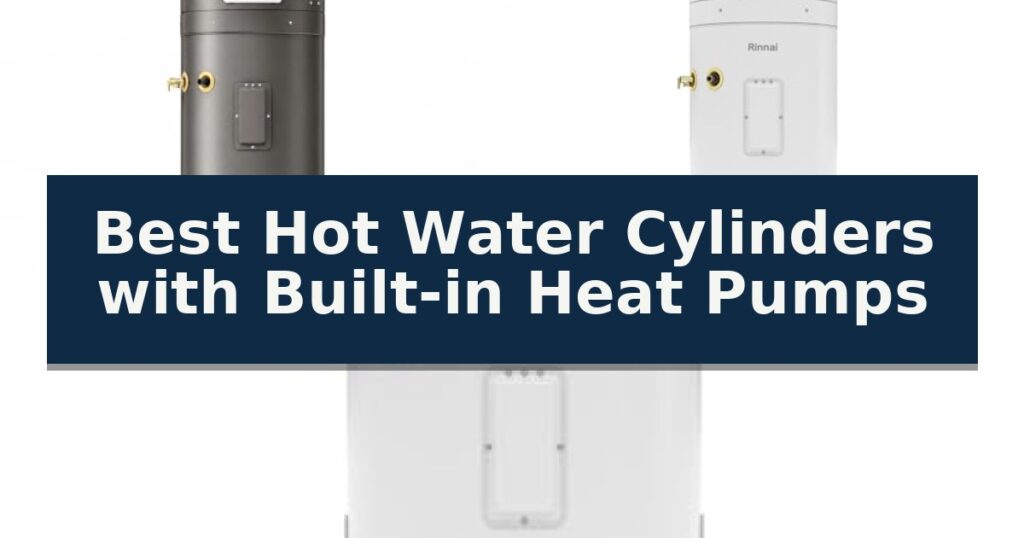
3 Best Hot Water Cylinders with Built-in Heat Pumps in 2026 Reviews
Quick Comparison
| Product | Best For | Key Strength | Score |
|---|---|---|---|
| Senville Hybrid Heat Pump Water Heater | Best Overall | Up to 70% reduction in electricity usage compared to standard electric heaters. | 4.9 |
| Rinnai REHP50 Heat Pump Water Heater | Reliable Choice for Standard Households | High energy efficiency with a 3.75 UEF rating. | 4.5 |
| Rinnai REHP80 Heat Pump Water Heater | High-Capacity for Large Families | High first-hour delivery of 91 gallons supports large household demands. | 4.5 |
How We Chose
Selecting the right integrated heat pump water heater requires balancing energy efficiency with the specific hot water demands of your household. We evaluate these units by analyzing their UEF ratings and recovery capabilities, ensuring that the chosen hardware provides both long-term cost savings and reliable, consistent performance for daily residential use.
- Uniform Energy Factor (UEF) ratings for overall efficiency.
- First Hour Rating (FHR) to determine peak demand capacity.
- Tank capacity suitability for household size.
- Warranty terms for both the tank and the compressor.
- Certification standards including ENERGY STAR and AHRI compliance.
1 Senville Hybrid Heat Pump Water Heater — Best for Energy-Efficient Savings
Modernizing household water heating often involves shifting away from standard electric resistance models toward more efficient alternatives. The Senville Hybrid Heat Pump Electric Water Heater utilizes advanced heat pump technology to extract warmth from the surrounding air, which can reduce electricity consumption by up to 70% compared to traditional electric units. By leveraging this ambient heat, the system operates with significantly higher efficiency, translating into lower monthly utility costs for the average household.
Designed with a 50-gallon capacity, this system provides a consistent supply of hot water suitable for medium to large households. It is engineered for high-efficiency performance, featuring a 3.75 UEF rating and a 69-gallon First Hour Rating (FHR), ensuring that demand for laundry, dishes, and showers is met without frequent recovery delays. These specifications indicate that the unit is well-equipped to handle high-demand periods, providing a reliable flow of hot water even when multiple appliances are in use.
The unit is built for long-term reliability, backed by a 7-year parts warranty and a 10-year compressor warranty. It carries UL and AHRI certification and is ENERGY STAR rated, confirming that it meets rigorous industry standards for safety and operational efficiency. These certifications provide assurance that the unit is constructed to perform safely and effectively over its intended lifespan.
With a physical height of 66.5 inches and a weight of 218 pounds, it integrates into standard utility spaces while providing a durable, energy-saving solution for residential water heating. Buyers should note the trade-off between the unit's high-efficiency heat pump components and its physical footprint; the added height and weight compared to standard tanks require careful planning for installation locations with limited vertical clearance or floor load constraints.
Best for: Medium to large households looking to significantly reduce electricity consumption through high-efficiency heat pump technology.
Skip if: Those with limited vertical clearance or very small utility spaces where a 66.5-inch tall unit cannot be accommodated.
- Up to 70% reduction in electricity usage compared to standard electric heaters.
- High-efficiency performance with a 3.75 UEF rating.
- Long-term peace of mind provided by a 10-year compressor warranty.
- Certified reliability through UL, AHRI, and ENERGY STAR ratings.
- Significant physical footprint requiring 66.5 inches of vertical clearance.
- Heavy unit weight of 218 pounds may complicate installation.
2 Rinnai REHP50 Heat Pump Water Heater — Reliable Choice for Standard Households
Efficient water heating requires balancing household demand with energy consumption, and the Rinnai REHP50 Heat Pump Water Heater addresses this by utilizing ambient air to heat water. This 50-gallon unit is designed for households of 3-4 people, providing a 73-gallon first-hour delivery to ensure consistent supply during peak usage periods.
Engineered for modern efficiency, this model achieves a 3.75 Uniform Energy Factor (UEF) and is Energy Star Certified. It is Demand-Response Enabled, allowing it to communicate with local utility providers to optimize energy usage during high-demand hours, which can contribute to lower operational costs.
The construction features a glass-lined steel tank that is both UL and NSF certified, ensuring durability for residential applications. It operates on a standard 240V / 30A electrical connection and utilizes R134a refrigerant for heat transfer. The design is notably installation-friendly, requiring zero clearance on the top, back, and sides.
Maintenance and longevity are supported by a comprehensive 10-year residential warranty covering both the tank and parts, with a 1-year warranty on labor. This combination of high-capacity performance and energy-conscious engineering makes it a practical choice for those seeking to upgrade their home water heating system.
Best for: Households of 3-4 people looking for an energy-efficient, high-capacity water heating solution that integrates with smart utility demand-response programs.
Skip if: Users who do not have access to a 240V / 30A electrical circuit or those requiring a capacity significantly larger than 50 gallons for high-demand commercial environments.
- High energy efficiency with a 3.75 UEF rating.
- Demand-Response Enabled for potential utility cost savings.
- Zero clearance design simplifies installation in tight spaces.
- 10-year residential warranty on both tank and parts.
- Requires 240V / 30A electrical service, which may necessitate professional electrical upgrades.
- Limited to 50-gallon capacity, which may not suffice for very large households.
3 Rinnai REHP80 Heat Pump Water Heater — High-Capacity for Large Families
The Rinnai REHP80 Heat Pump Water Heater is engineered for high-demand households, capable of delivering up to 91 gallons of hot water in the first hour to support families of five or more. By extracting heat from ambient air, this unit achieves a high Uniform Energy Factor (UEF) of 3.90, providing an energy-efficient alternative to traditional electric water heaters.
Designed for seamless integration into residential settings, the Rinnai REHP80 Heat Pump Water Heater operates on a standard 240V/30A connection. Its installation is simplified by the inclusion of standard 3/4" MNPT inlet and outlet connections, and the unit requires zero clearance on the top, back, and sides, allowing for flexible placement in utility rooms or garages.
This model features Demand-Response Enabled technology, which allows the system to communicate with local utilities to manage energy consumption during peak demand periods. The construction utilizes a durable glass-lined steel tank, ensuring long-term reliability backed by a 10-year residential warranty on both the tank and parts.
Safety and efficiency are prioritized through the use of R134a refrigerant for heat transfer and adherence to UL and NSF certification standards. The Rinnai REHP80 Heat Pump Water Heater functions with zero emissions, aligning with modern requirements for energy-efficient home infrastructure.
Best for: Large households of five or more people seeking an energy-efficient, high-capacity hot water solution with demand-response capabilities.
Skip if: You have limited space or lack a 240V/30A electrical connection, as this unit requires specific voltage and space for its 80-gallon tank footprint.
- High first-hour delivery of 91 gallons supports large household demands.
- Energy Star Certified with a 3.90 UEF for reduced operational costs.
- Demand-Response Enabled for intelligent energy management.
- 10-year residential warranty on tank and parts provides long-term coverage.
- Large 80-gallon capacity requires significant floor space for installation.
- Requires 240V/30A electrical service, which may necessitate an upgrade in some homes.
Best Hot Water Cylinders with Built-in Heat Pumps Buying Guide
Understanding Energy Efficiency
The primary advantage of these units is their ability to move heat rather than generate it through resistance. This process, measured by the Uniform Energy Factor, allows the system to operate at a fraction of the cost of a standard electric tank.
Buyers should look for high UEF ratings, as these indicate a more efficient heat transfer process. Even minor differences in these ratings can lead to substantial savings on annual utility bills over the life of the product.
Assessing Hot Water Demand
The First Hour Rating is a critical specification that defines how much hot water the unit can deliver in one hour starting with a full tank. This ensures that even during high-usage mornings, your household does not run out of hot water.
Larger families should prioritize units with higher FHRs to prevent the system from struggling during back-to-back showers. Matching this rating to your specific usage patterns is essential for maintaining comfort.
Installation and Space Requirements
Because these units use a heat pump on top of the tank, they are generally taller than standard electric water heaters. It is important to measure your available vertical space, including any clearance needed for air intake and exhaust.
Proper airflow is vital for the heat pump to function correctly. Ensure the installation area is well-ventilated and not confined to a small, airtight closet, as the system needs ambient air to extract heat effectively.
Durability and Warranty Coverage
A water heater is a long-term investment, making the warranty a key indicator of build quality. Look for separate coverage periods for the tank and the compressor, as the latter is the most complex component of the system.
Glass-lined steel tanks are common and provide good corrosion resistance. Checking for UL or NSF certifications can also provide peace of mind regarding the safety and construction standards of the unit.
Maintenance and Operational Costs
While these systems are highly efficient, they do require occasional maintenance, such as cleaning the air filter to ensure the heat pump can breathe. Neglecting this can lead to decreased efficiency and increased strain on the compressor.
Many modern units are demand-response enabled, allowing them to communicate with local utilities. This feature can further reduce costs by shifting energy consumption to off-peak hours when electricity rates are lower.
Frequently Asked Questions
How much electricity do these systems save compared to standard heaters?
By utilizing heat pump technology to extract heat from the air, these units can reduce electricity consumption by up to 70% compared to traditional electric resistance water heaters.
Do I need special electrical wiring for a hybrid water heater?
Most hybrid heat pump water heaters are designed to operate on standard 240V/30A circuits, making them compatible with the electrical setup of most existing electric water heaters.
Can these units be installed in a garage or basement?
Yes, they are suitable for garages or basements, provided there is sufficient air circulation. The heat pump requires ambient air to function, so very cold or poorly ventilated spaces may impact efficiency.
What is the typical lifespan of a heat pump water heater?
With proper maintenance, such as regular filter cleaning and anode rod inspection, these units are built for long-term durability, often supported by 10-year warranties on the tank and compressor.
Is the heat pump noisy during operation?
These units operate similarly to a dehumidifier or a small air conditioner. While they do produce some sound when the compressor is running, it is generally quiet enough for installation in most utility areas.
Conclusion: Our Top Pick
Our top pick is Senville Hybrid Heat Pump Water Heater. Choosing the right integrated heat pump water heater depends on your household size and the specific energy-saving goals you have for your home. By focusing on high UEF ratings and sufficient first-hour delivery, you can ensure a reliable supply of hot water while minimizing long-term operational costs.
Investing in a certified model with a strong warranty provides the best balance of performance and peace of mind. Ensure your installation space allows for adequate airflow to maximize the efficiency of the heat pump technology.