 critical cactus
Google Nest Learning Thermostat 4th Gen is our top choice for the Best Hub for Nest Thermostat thanks to its advanced adaptive climate learning and seamless integration with the Google Home ecosystem. For those seeking a more budget-conscious entry point, the Google Nest Thermostat offers essential remote control capabilities, while the Google Nest Hub Max provides a larger visual command center for users who prefer a dedicated smart display interface.
Selecting the right hub for your climate control system requires balancing your need for automated energy management against your preference for manual or voice-based interaction. While some users prioritize the sophisticated learning algorithms found in flagship models, others may find that a simpler, app-controlled device provides sufficient functionality for their specific home heating and cooling requirements.
Understanding the compatibility between your existing HVAC system and your chosen control device is essential for a successful installation. Whether you are looking to manage multiple temperature sensors across different rooms or simply want a reliable way to adjust your home environment from your phone, focusing on the specific connectivity and integration features of each model ensures you select the most effective solution for your living space.
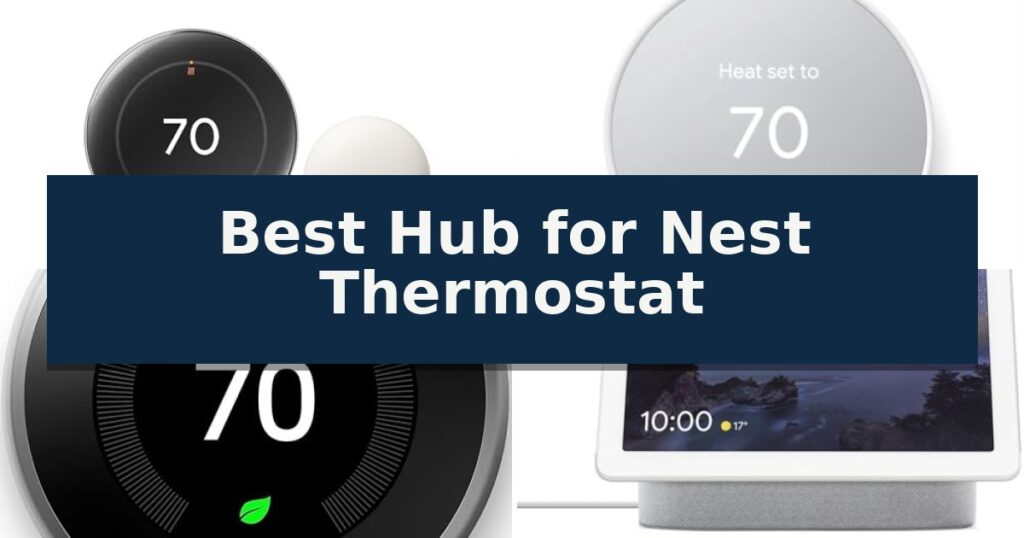
6 Best Hub for Nest Thermostat in 2026 Reviews
Quick Comparison
| Product | Best For | Key Strength | Score |
|---|---|---|---|
| Google Nest Learning Thermostat 4th Gen | Best Overall | No C wire required for most installations. | 4.9 |
| Google Nest Thermostat | Essential smart home climate hub | Remote control via smartphone or tablet | 4.5 |
| Google Nest Learning Thermostat 3rd Gen | Classic learning climate hub | Auto-schedule capability that learns and programs itself based on user preferences. | 4.9 |
| Google Nest Hub Max | Visual command center for home | Global language support including English, Spanish, French, and Japanese. | 4.4 |
| Google Nest Hub 1st Gen | Compact smart display controller | Compact 7-inch display ideal for limited counter or desk space | 4.5 |
| Google Nest Hub Max Charcoal | Large screen smart home hub | Global language support including English, Spanish, French, and Japanese. | 4.8 |
How We Chose
Evaluating the best hub for Nest Thermostat systems involves assessing how each device manages complex HVAC interactions and user-defined schedules. An experienced reviewer prioritizes compatibility with diverse heating and cooling systems, the reliability of app-based remote adjustments, and the effectiveness of automated energy-saving features to distinguish premium control hubs from basic programmable models.
- HVAC System Compatibility and Wiring Requirements
- Smart Home Ecosystem Integration and Matter Support
- Learning Algorithms and Energy-Saving Automation
- Interface Design and User Accessibility
- Remote Control and Multi-Room Sensor Support
1 Google Nest Learning Thermostat 4th Gen — Advanced climate control hub
Managing home climate systems requires a reliable interface that balances energy efficiency with intuitive control. The Google Nest Learning Thermostat (4th gen) serves as a sophisticated hub for your heating and cooling, featuring a 60% larger display and Dynamic Farsight technology that allows you to monitor system status from across the room.
This unit prioritizes energy savings through Adaptive Eco and natural heating and cooling algorithms, which learn how external weather conditions impact your indoor environment. By analyzing outside temperatures, the system can pause operations to minimize waste, potentially helping to reduce heating and cooling bills by up to 31%.
Installation is designed for broad compatibility with most 24V systems, including gas, electric, oil, forced air, heat pump, and radiant setups. Notably, it functions without requiring a C wire in most homes, simplifying the setup process. The device is also Matter compatible, ensuring straightforward integration into your broader smart home ecosystem.
The included Nest Temperature Sensor (2nd gen) provides granular control over specific rooms, allowing you to address hot or cold spots by setting target temperatures for different times of day. All adjustments are managed through the Google Home app or via voice commands using Alexa, Siri, or Google Assistant, providing a centralized point of control for your home's thermal comfort.
Best for: Homeowners seeking an energy-efficient, Matter-compatible climate control hub that supports multi-room temperature sensing without requiring a C wire.
Skip if: Users who prefer a basic, non-connected manual thermostat or those whose HVAC systems fall outside the supported 24V compatibility range.
- No C wire required for most installations.
- Includes a Nest Temperature Sensor (2nd gen) for multi-room management.
- Matter compatible for seamless smart home integration.
- Energy-saving features like Adaptive Eco and natural heating/cooling learning.
- Requires Google Home app for full feature access and scheduling.
- Compatibility depends on specific 24V system configurations.
2 Google Nest Thermostat — Essential smart home climate hub
The Google Nest Thermostat serves as a central climate management hub, utilizing Wi-Fi connectivity to provide remote control over home heating and cooling systems through the Google Home app. This device is designed to optimize energy usage by automatically adjusting temperatures when the home is unoccupied, offering a streamlined approach to residential climate control.
Engineered for broad compatibility, the unit functions in most homes, though specific system configurations such as heating-only, cooling-only, or heat pump setups may require a C-wire or a compatible power accessory. Users can verify their system requirements using the online Nest Compatibility Checker provided by the manufacturer.
Beyond basic scheduling, the system includes HVAC monitoring capabilities that track system performance and provide maintenance alerts. It integrates with various smart home ecosystems, supporting voice control through Google Assistant and Alexa, as well as compatibility with Matter-certified voice assistants.
The device also features the Savings Finder tool, which analyzes usage patterns to suggest schedule adjustments for improved efficiency. Additionally, the Nest Renew service allows users to prioritize energy usage during times when power is cleaner or less expensive, further integrating the thermostat into a broader smart home energy strategy.
Best for: Homeowners seeking a programmable, app-controlled climate hub with integrated HVAC monitoring and smart home ecosystem compatibility.
Skip if: Users with complex HVAC systems that lack a C-wire and require a specific power accessory, or those who prefer a thermostat with a physical locking mechanism.
- Remote control via smartphone or tablet
- Energy-efficient scheduling and automated away-mode adjustments
- HVAC system monitoring with proactive maintenance alerts
- Broad smart home integration including Google Assistant and Alexa
- Requires C-wire or power accessory for certain HVAC system types
- No physical lock feature for temperature control
3 Google Nest Learning Thermostat 3rd Gen — Classic learning climate hub
The Google Nest Learning Thermostat 3rd Gen distinguishes itself through an integrated auto-schedule feature that observes your temperature preferences and daily routines to build a custom heating and cooling program. This smart hub acts as the central command for your home climate, designed to reduce energy consumption by automatically adjusting to an Eco Temperature when it detects the home is empty.
Beyond basic scheduling, the device provides detailed Energy History insights accessible via your phone or the unit's Quick View display. This interface allows you to monitor usage patterns and understand the impact of your settings. The inclusion of the Nest Leaf icon serves as a visual indicator when you select a temperature that aligns with energy-saving goals, encouraging efficient operation.
Maintenance and system health are prioritized through built-in HVAC monitoring. The thermostat proactively scans your heating and cooling systems, sending alerts if it detects irregular performance or providing timely reminders for routine maintenance. For users seeking precise climate control across different areas, it is compatible with the Nest Temperature Sensor, which can be placed in specific rooms to ensure consistent comfort.
Installation and connectivity are streamlined for modern home setups, offering remote control capabilities from smartphones, tablets, or laptops. The Stainless Steel finish provides a durable, classic aesthetic that integrates into various home interiors while maintaining a focus on functional, automated climate management.
Best for: Homeowners seeking an automated, learning-based climate control system that provides energy usage insights and proactive HVAC maintenance alerts.
Skip if: Users who prefer a simple, non-connected manual thermostat or those who do not require remote access and automated scheduling features.
- Auto-schedule capability that learns and programs itself based on user preferences.
- Home/Away Assist to automatically switch to energy-saving modes when the house is empty.
- Proactive HVAC monitoring with system health alerts and maintenance reminders.
- Remote accessibility via mobile devices for temperature adjustments from any location.
- Requires separate purchase of Nest Temperature Sensors for multi-room climate balancing.
- Advanced features rely on consistent Wi-Fi connectivity to function as intended.
4 Google Nest Hub Max — Visual command center for home
The Google Nest Hub Max serves as a versatile visual command center, featuring a 10-inch display designed to integrate seamlessly into various home environments, from kitchen countertops to nightstands. This specific model, the H2A GA00426-JP, offers broad international utility through its multi-language support, including English, Spanish, French, and Japanese, ensuring it remains functional regardless of your location.
Engineered for global connectivity, the device includes a universal power adapter that operates across diverse electrical outlets. Its interface is designed for immediate usability, automatically defaulting to English upon initial setup, while allowing users to toggle between supported languages at any time to suit travel or international living requirements.
Beyond its interface capabilities, the hardware is built to be a compact yet powerful audio-visual tool. It delivers bright, clear sound quality and is constructed to blend into home decor, whether placed on a shelf or mounted on a wall. The package includes a quick start guide and an international manual to assist with global configuration.
This unit provides a centralized point for managing smart home devices, including compatibility with thermostats. By acting as a hub, it allows for streamlined control of connected home systems through its intuitive touchscreen interface, making it a practical choice for users seeking a consolidated management solution for their smart home ecosystem.
Best for: Users seeking a versatile, multi-language smart home display that functions globally with universal power compatibility.
Skip if: Users who require a dedicated, non-display smart home bridge or those who do not need the integrated 10-inch screen for their home automation setup.
- Global language support including English, Spanish, French, and Japanese.
- Universal power adapter included for international outlet compatibility.
- Compact, versatile design suitable for countertops, shelves, or wall mounting.
- Integrated 10-inch display for intuitive smart home device management.
- Requires wall power which may limit placement options near outlets.
- Larger footprint compared to non-display smart home hubs.
5 Google Nest Hub 1st Gen — Compact smart display controller
Managing your home climate requires a reliable interface that centralizes control, and the Google Nest Hub 1st Gen offers a dedicated 7-inch touchscreen designed to streamline your smart home ecosystem. By integrating directly with your existing setup, this device acts as a command center for your connected thermostats, lighting, and security cameras through the Google Home app.
The Google Nest Hub 1st Gen features a compact 7-inch display that fits easily on nightstands, kitchen counters, or office desks. It provides hands-free help via Google Assistant, allowing you to adjust temperatures or check status updates using simple voice commands. This model also supports entertainment functions, including streaming music, watching videos, and displaying photos, making it a versatile addition to any room.
Designed for broad compatibility, this unit serves as a central hub for various smart home devices. While this specific unit is the Korean Spec Model, it supports full English language configuration after the initial setup process. Its modern, low-profile aesthetic ensures it integrates into your home decor without occupying significant space, while the touchscreen interface provides an intuitive alternative to voice-only control.
Best for: Users seeking a compact, centralized touchscreen interface to manage their smart thermostat and other connected home devices.
Skip if: Users who require a larger display for media consumption or those who prefer a strictly voice-only smart speaker without a visual interface.
- Compact 7-inch display ideal for limited counter or desk space
- Centralized smart home control for thermostats and other compatible devices
- Hands-free Google Assistant integration for voice-activated adjustments
- Korean Spec Model requires initial language settings adjustment
- Fixed 7-inch screen size may be small for some users
6 Google Nest Hub Max Charcoal — Large screen smart home hub
The Google Nest Hub Max Charcoal functions as a central command interface for your smart home, anchored by a 10-inch display that provides a clear visual dashboard for connected devices like thermostats. Its design allows for flexible placement, whether you prefer it on a kitchen countertop, a nightstand, or mounted on a wall, making it a practical choice for centralizing home controls.
Engineered for global utility, this model includes a universal power adapter that supports international voltage standards, ensuring reliable operation across different regions without the need for external converters. The device is designed to initialize in English upon its first connection, offering a straightforward setup process for users regardless of their location.
The system supports multiple languages, including English, Spanish, French, and Japanese, allowing users to toggle settings to suit their preferences or international household needs. This language flexibility, combined with its bright sound output, ensures that media playback and system alerts remain audible and clear even in active living environments.
While the unit offers significant visual and audio utility, its larger footprint compared to standard smart speakers is an important trade-off to consider. Because it requires a constant connection to a wall outlet for power, users should plan for placement near a dedicated power source to maintain its functionality as a persistent smart home hub.
Best for: Users seeking a versatile, multi-language smart home interface that functions globally with a large, clear 10-inch display.
Skip if: Users who require a dedicated, non-display smart home bridge or those with limited counter or wall space for a 10-inch device.
- Global language support including English, Spanish, French, and Japanese.
- Universal power adapter compatible with international outlets.
- Versatile placement options suitable for wall mounting or countertop use.
- Large 10-inch display for enhanced visual interaction.
- Larger footprint compared to standard smart speakers.
- Requires wall power for operation, limiting placement to proximity of outlets.
Best Hub for Nest Thermostat Buying Guide
Understanding System Compatibility
Before selecting a thermostat hub, verify your current HVAC system's voltage and wiring configuration. Most modern Nest devices are designed to work with standard 24V systems, including forced air, heat pumps, and radiant heating.
While many models offer installation without a C-wire, some complex zone-controlled or heating-only systems may require additional power accessories. Always consult the manufacturer's compatibility checker to confirm your specific hardware requirements before purchase.
The Role of Smart Home Integration
A primary advantage of using a Nest hub is its ability to communicate with other smart home devices. Look for Matter compatibility, which ensures your thermostat can interact reliably with a broader range of smart home platforms and voice assistants.
Integration allows for more than just temperature adjustments; it enables your thermostat to trigger other smart devices, such as turning off lights or locking doors when the system detects you have left the home.
Energy Management and Learning Capabilities
Advanced learning thermostats analyze your daily habits and external weather conditions to optimize your home's temperature. These models can automatically adjust to eco-friendly settings when you are away, significantly reducing energy consumption.
For users who prefer manual control, basic programmable models still offer significant energy savings through app-based scheduling. These devices allow you to set specific temperature profiles that align with your lifestyle without the need for complex machine learning.
Visual Interfaces and Control Options
The physical interface of your thermostat or connected smart display impacts how easily you can monitor your home environment. Larger, high-resolution displays provide better visibility from across a room and offer more detailed information at a glance.
Alternatively, if you prefer a minimalist aesthetic, smaller units that rely primarily on the Google Home app for configuration may be more suitable. These devices keep your walls clean while providing full functionality through your smartphone or tablet.
Multi-Room Climate Monitoring
If your home suffers from uneven heating or cooling, consider a hub that supports remote temperature sensors. Placing sensors in frequently used rooms allows the thermostat to prioritize comfort in those specific areas rather than just the hallway where the main unit is installed.
Ensure your chosen hub is compatible with the specific generation of sensors you intend to use. This setup is particularly effective for larger homes or multi-story layouts where temperature fluctuations are common.
Frequently Asked Questions
Do I need a C-wire for all Nest thermostats?
Most Nest thermostats are designed to function without a C-wire in many homes, but specific systems like heat pumps or zone-controlled setups may require one for consistent power.
Can I control my Nest thermostat without a smart display?
Yes, all Nest thermostats can be fully managed through the Google Home app on your smartphone or tablet, regardless of whether you own a dedicated smart display.
What is the benefit of a learning thermostat over a standard programmable one?
A learning thermostat automatically tracks your schedule and preferences to create an energy-efficient routine, whereas a standard programmable model requires you to manually input your desired schedule.
Are Nest thermostats compatible with voice assistants?
Yes, Nest thermostats are compatible with Google Assistant, Amazon Alexa, and Siri, allowing for hands-free temperature adjustments using your voice.
Can I use multiple temperature sensors with one hub?
Yes, Nest thermostats support the use of multiple temperature sensors, allowing you to monitor and balance the climate in different rooms throughout your home.
Conclusion: Our Top Pick
Our top pick is Google Nest Learning Thermostat 4th Gen. Choosing the right hub for your Nest Thermostat depends on your specific home layout and your preference for automated versus manual climate control. Flagship models provide the most comprehensive learning features and sensor support, while entry-level options offer reliable, essential connectivity for standard HVAC systems.
By evaluating your system's wiring requirements and your desired level of smart home integration, you can select a device that enhances your home's comfort and energy efficiency. Regardless of the model chosen, the Google Home app remains the central point for managing your climate settings effectively.