 critical cactus
HP Touchscreen Laptop earns our recommendation for the Best Laptop for Photo Storage and Editing because it balances high-capacity internal storage with the memory required for smooth creative workflows.
When managing large image libraries, the primary bottleneck is often the speed at which a system can retrieve and process high-resolution files. A laptop that combines solid-state storage with sufficient RAM allows for seamless transitions between editing software and file management tasks.
For those who prioritize portability alongside their creative projects, smaller devices with external storage solutions offer a modular approach to managing heavy media files without sacrificing system responsiveness.
When setting up your workspace, finding the Best Laptop Desk Stands can help improve ergonomics during long editing sessions. Additionally, a well-organized Best Laptop Desk Setup ensures that your external drives and peripherals are easily accessible.
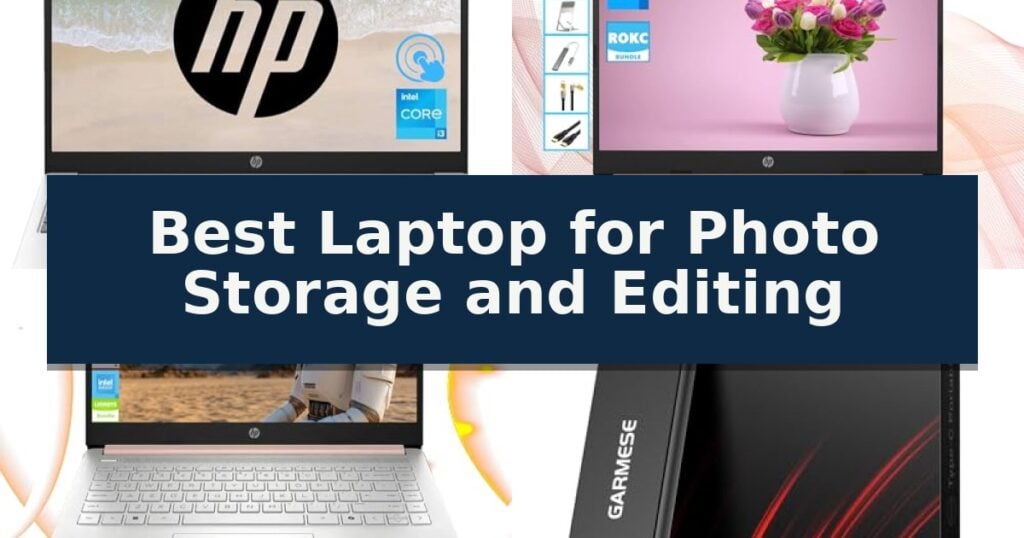
10 Best Laptop for Photo Storage and Editing in 2026 Reviews
Quick Comparison
| Product | Best For | Key Strength | Score |
|---|---|---|---|
| HP Touchscreen Laptop | Best Overall | 32GB of RAM allows for smooth multitasking with heavy editing software. | 4.9 |
| HP AI-Powered Laptop | Efficient Choice for Creative Editing | 16GB of high-bandwidth RAM for smooth multitasking. | 4.9 |
| HP Laptop | Reliable Daily Photo Management | 1TB of included cloud storage for offloading large photo libraries. | 4.3 |
| GARMESE Portable External SSD | Fast Transfers for Large Libraries | High-speed USB 3.2 Gen 2 performance with up to 1000MB/s read speeds. | 4.9 |
| Gigastone M.2 NVMe SSD | High-Speed Internal Storage Upgrade | High-speed PCIe Gen4x4 interface reaching up to 5,000MB/s. | 4.3 |
| SCICNCE Dual Interface Flash Drive | Quick Backup for Mobile Photographers | Dual interface design supports both USB-C and USB-L connections for broad compatibility. | 4.8 |
| Gulloe Dual Interface Flash Drive | Seamless Cross-Device Photo Transfer | Dual interface design supports seamless transfers between USB-C and USB-L devices. | 4.5 |
| EATOP Dual Interface Flash Drive | Portable Backup for Creative Media | Universal compatibility with USB, USB-L, Micro USB, and USB-C ports. | 4.8 |
| AUAMOZ Dual Interface Flash Drive | Simple Storage for On-the-Go | Universal connectivity with integrated USB, USB-L, Micro USB, and USB-C interfaces. | 4.9 |
| Techkey USB Flash Drive | Secure Backup for Mobile Files | 3-in-1 connectivity covering Lightning, USB, and Type-C ports. | 4.8 |
How We Chose
Selecting the right hardware for digital media requires evaluating how a machine handles large data throughput. We focus on the intersection of processing power and storage architecture, ensuring that the chosen laptops and accessories provide the necessary bandwidth to support demanding photo editing software and long-term file archiving without performance degradation.
- Storage capacity and drive type (SSD vs. HDD)
- RAM allocation for multitasking across editing applications
- Processor capability for rendering and file handling
- Display resolution and color accuracy
- Connectivity options for external peripherals and drives
1 HP Touchscreen Laptop — Best for Multitasking Photo Projects
Managing high-resolution image libraries and complex editing workflows requires a machine that balances raw processing power with substantial data capacity. The HP 15.6" Touchscreen Laptop addresses this by pairing a 6-core Intel Core i3 processor with a massive 32GB of RAM, ensuring that memory-intensive applications remain responsive even when multiple browser tabs and editing suites are open simultaneously.
For photographers who prioritize storage, this model offers a versatile 2.5TB total capacity, utilizing a combination of internal SSD and external storage to keep large RAW files and project folders accessible. The inclusion of a 15.6-inch touchscreen display provides an intuitive interface for quick adjustments and file management, while the integrated numeric keypad simplifies data entry tasks often associated with cataloging.
Designed with modern connectivity in mind, the laptop features a USB-C port alongside traditional USB-A and HDMI connections, allowing for seamless integration with external monitors, high-speed card readers, and backup drives. The unit also incorporates practical office-ready features, such as a built-in webcam with a privacy shutter, which adds a layer of security for remote collaboration or client meetings.
While the 1366 x 768 resolution is optimized for general productivity and entertainment, users focusing on professional-grade color grading may find the display specifications modest compared to high-end workstation panels. However, for students, business professionals, and hobbyists requiring a reliable, high-capacity machine for daily photo management, the HP 15.6" Touchscreen Laptop provides a robust hardware foundation.
Best for: Users who require high-capacity storage and significant RAM for multitasking across photo-editing applications and general office tasks.
Skip if: Professional photographers who require high-resolution, color-accurate displays for critical color grading and print-ready output.
- 32GB of RAM allows for smooth multitasking with heavy editing software.
- 2.5TB total storage provides ample space for large photo libraries.
- Integrated touchscreen enhances navigation and file management efficiency.
- Camera privacy shutter offers added security for personal and business use.
- 1366 x 768 display resolution may limit detail for professional-level color correction.
- Intel UHD Graphics is designed for general tasks rather than high-end 3D rendering.
2 HP AI-Powered Laptop — Efficient Choice for Creative Editing
Managing high-resolution image libraries and complex editing workflows requires a reliable foundation, and the HP AI-Powered Laptop provides a specialized hardware configuration tailored for these creative demands. With its 16GB of high-bandwidth RAM, this machine is engineered to handle multiple resource-intensive applications, such as photo-editing software and browser-based research, simultaneously without compromising system responsiveness.
The device is built around the Intel Core i3-N305 processor, featuring an 8-core, 8-thread architecture with a max boost clock up to 3.8 GHz. This processing power, paired with Intel UHD Graphics, ensures that users can navigate through large RAW files and perform standard editing adjustments with efficiency. The inclusion of a 15.6-inch FHD SVA BrightView display offers a clear workspace for detailed color correction and composition tasks.
Storage flexibility is a primary focus of this bundle, which includes a 128GB SSD for the operating system and a 512GB card along with a 128GB portable SSD for external file management. This multi-tiered storage approach allows photographers to keep active projects on the internal drive while offloading finished catalogs to the included portable media, effectively managing large file sizes.
Connectivity is streamlined through a versatile array of ports, including USB-A, USB Type-C, and HDMI, allowing for easy integration with external monitors, drawing tablets, or high-speed card readers. The AI-Powered Windows 11 Home operating system further optimizes background processes, ensuring that system resources remain focused on the creative task at hand.
Best for: Photographers and digital creators who need a versatile, multi-drive storage solution and sufficient RAM for multitasking on a budget.
Skip if: Users who require high-end dedicated graphics cards for intensive 4K video rendering or professional-grade color-accurate displays.
- 16GB of high-bandwidth RAM for smooth multitasking.
- Comprehensive storage bundle including internal SSD, card, and portable SSD.
- 8-core Intel processor capable of reaching 3.8 GHz.
- Versatile connectivity options including USB Type-C and HDMI.
- Limited internal SSD capacity requires reliance on external storage for large libraries.
- Integrated Intel UHD Graphics may struggle with the most demanding professional video editing suites.
3 HP Laptop — Reliable Daily Photo Management
Managing a growing collection of digital photos requires a balance of processing speed and reliable storage, and the HP Laptop addresses this by integrating an efficient 4-core Intel processor with 8GB of high-speed memory. This hardware configuration is designed to handle the simultaneous demands of photo editing software and browser-based cloud management, ensuring that users can switch between tasks without significant lag.
The device features a 14-inch HD micro-edge WLED display, which provides a clear workspace for reviewing image details during the editing process. For long-term storage, the system utilizes 128GB of UFS storage, known for its fast boot-up times, and includes a one-year subscription to 1TB of cloud storage to offload large high-resolution files from the local drive.
Connectivity is a primary focus for this model, as it includes a comprehensive bundle of accessories such as a USB/Type-C hub and a 4-in-1 data cable. These additions facilitate the transfer of photos from external cameras or memory cards, while the inclusion of USB-C, USB-A, and HDMI ports allows for easy connection to external monitors or high-capacity storage drives.
Operating on Windows 11 Home in S Mode, the laptop emphasizes security and streamlined performance for daily productivity tasks. While the internal storage is modest, the combination of cloud integration and external connectivity options makes it a practical choice for those who prioritize organized, accessible photo storage over massive local drive capacity.
Best for: Users who need a portable, entry-level device for light photo editing and cloud-based file management.
Skip if: Professional photographers requiring massive local storage or high-performance hardware for intensive RAW file processing.
- 1TB of included cloud storage for offloading large photo libraries.
- Versatile accessory bundle including a USB/Type-C hub for easier file transfers.
- Fast UFS storage for quick system boot-ups and application loading.
- 8GB of high-speed memory for efficient multitasking.
- Limited 128GB local storage capacity requires reliance on cloud or external drives.
- Windows 11 in S Mode restricts software installation to verified apps.
4 GARMESE Portable External SSD — Fast Transfers for Large Libraries
Managing high-resolution image libraries and 4K video projects requires reliable, high-speed storage that keeps pace with modern creative workflows. The GARMESE Portable External SSD addresses this demand by utilizing USB 3.2 Gen 2 technology to deliver read speeds up to 1000MB/s and write speeds up to 900MB/s, ensuring that large files transfer in seconds rather than minutes.
Designed for versatility, this drive features a plug-and-play interface that requires no driver installation, making it compatible with Mac, PC, Android, and game consoles right out of the box. The package includes both a USB-A to USB-C cable and an adapter, providing the necessary connectivity for various laptop ports without requiring additional hardware purchases.
Portability is a core design focus, with the unit measuring just 0.38 inches in height. The sturdy shell construction is engineered to be shock-resistant, offering a layer of protection for your data during transit. To further enhance its travel-ready nature, the drive includes a protective pouch to prevent surface scratches while stored in a bag or pocket.
For photographers and editors, this 1TB drive serves as a compact, high-performance solution for offloading memory cards or expanding limited internal laptop storage. Its combination of speed and physical durability provides a practical balance for professionals who need to maintain an efficient editing workflow while working on location or in the studio.
Best for: Photographers and video editors who need high-speed, portable storage to manage large media files across multiple devices.
Skip if: Users who require multi-terabyte storage capacities or specialized ruggedized ratings beyond standard shock resistance.
- High-speed USB 3.2 Gen 2 performance with up to 1000MB/s read speeds.
- Plug-and-play compatibility with no driver setup required.
- Includes USB-A to USB-C cable and adapter for broad device support.
- Slim, lightweight design with a protective pouch for travel.
- Limited to 1TB capacity options.
- Performance relies on the host device's port capabilities.
5 Gigastone M.2 NVMe SSD — High-Speed Internal Storage Upgrade
Managing high-resolution image files and video projects requires consistent, high-speed data access that traditional hard drives often struggle to provide. The Gigastone M.2 NVMe SSD addresses this bottleneck by utilizing a PCIe Gen4x4 interface to deliver read speeds up to 5,000MB/s, significantly reducing the time spent waiting for large files to load or render.
Designed for demanding workloads, this internal storage solution features a pre-installed low-profile heatsink. This component is essential for maintaining thermal stability during intensive tasks like photo rendering or 3D modeling, as it actively dissipates heat to prevent performance-sapping thermal throttling. By keeping the drive at peak operating temperatures, it ensures consistent output during long editing sessions.
Beyond its performance in workstations, the Gigastone M.2 NVMe SSD offers broad compatibility, supporting Microsoft DirectStorage Technology and fitting standard M.2 slots found in modern laptops and desktops. Its 1TB capacity provides a substantial buffer for active projects, allowing creators to keep high-bandwidth assets readily accessible without relying on slower external storage.
For those integrating this into a professional setup, the drive is backed by a 3-year replacement warranty and lifetime technical support. While it is optimized for high-performance computing, users should verify their laptop or motherboard supports the PCIe Gen4 standard to fully leverage the advertised 5,000MB/s speeds.
Best for: Content creators and photographers who need high-speed internal storage to accelerate file loading and rendering times in demanding editing software.
Skip if: Users with older laptops that lack an M.2 NVMe slot or those who require portable, external storage that can be easily disconnected and moved between devices.
- High-speed PCIe Gen4x4 interface reaching up to 5,000MB/s.
- Integrated low-profile heatsink to prevent thermal throttling during heavy workloads.
- Wide compatibility with standard M.2 slots and Microsoft DirectStorage.
- 3-year replacement warranty and lifetime technical support.
- Internal installation required, which may not be suitable for all laptop configurations.
- Performance limited by the host device's PCIe generation support.
6 SCICNCE Dual Interface Flash Drive — Quick Backup for Mobile Photographers
Managing high-resolution photo libraries and 4K video projects requires reliable, portable storage that integrates seamlessly with mobile devices and computers. The SCICNCE 512GB Dual Interface USB Flash Drive provides a versatile solution for offloading media directly from smartphones and tablets without the need for cloud subscriptions or internet connectivity.
Designed with both USB-C and USB-L interfaces, this 512GB external storage stick allows for direct file transfers between iPhones, iPads, Android devices, and PCs. The plug-and-play functionality simplifies the backup process, enabling users to move large files, contacts, and documents with a single click. For iOS users, the drive is managed through the native "Files" app, while Android users can access it via standard file managers on OTG-enabled devices.
The drive utilizes upgraded high-speed chips to facilitate efficient data movement, supporting read speeds of up to 30MB/s. This performance helps reduce wait times when backing up massive video projects or high-resolution photo collections while traveling or working on the go. Its compact design—measuring just 1.6 inches in length—ensures it remains a portable tool for content creators who need to free up device space instantly.
Users should note that the physical connection may be obstructed by thick phone cases, requiring the case to be removed for a secure fit. Additionally, while the drive offers substantial capacity, actual usable space may vary slightly due to formatting requirements. This device is backed by a 2-year warranty, providing long-term support for your digital storage needs.
Best for: Mobile photographers and content creators needing a portable, offline backup solution for high-resolution media across multiple device platforms.
Skip if: Users requiring high-speed data transfer rates for professional-grade video editing or those who prefer cloud-based synchronization services.
- Dual interface design supports both USB-C and USB-L connections for broad compatibility.
- Plug-and-play functionality eliminates the need for extra apps or internet connectivity.
- High-capacity 512GB storage provides ample space for 4K videos and high-resolution photos.
- Compact and portable form factor ideal for on-the-go file management.
- Physical connection interference may occur if the phone case is too thick.
- Read speeds up to 30MB/s may be slower than dedicated desktop solid-state drives.
7 Gulloe Dual Interface Flash Drive — Seamless Cross-Device Photo Transfer
Managing high-resolution media across multiple devices is simplified by the Gulloe 512GB Dual Interface Flash Drive, which utilizes a versatile design to bridge the gap between mobile phones, tablets, and computers. By incorporating both USB-C and USB-L interfaces, this storage solution allows for direct file management without relying on cloud services or internet connectivity.
The drive is engineered for plug-and-play functionality, requiring no dedicated applications for iPhone or iPad users running iOS 13 or higher. For Android users, the device supports OTG-enabled file management, allowing for the quick transfer of 4K videos and high-resolution photos directly through the native file manager. This hardware-based approach eliminates monthly subscription fees associated with cloud storage.
Performance is driven by upgraded high-speed chips, providing read speeds up to 30MB/s to facilitate the movement of large video projects or extensive photo libraries. The compact, portable form factor is designed for content creators who need to offload media while traveling or working on location, ensuring that mobile device storage remains available for new captures.
To ensure consistent connectivity, users should note that thick phone cases may interfere with the physical port connection; removing the case is recommended for a secure fit. Additionally, as with all flash media, the 512GB capacity reflects total storage, with a portion reserved for formatting and system functions, meaning actual usable space may vary slightly.
Best for: Users needing a portable, offline storage solution to quickly offload high-resolution photos and 4K videos from mobile devices to computers.
Skip if: Users who require high-speed data transfer rates for professional-grade, multi-gigabyte video editing workflows, as this drive is optimized for storage and backup rather than high-performance active editing.
- Dual interface design supports seamless transfers between USB-C and USB-L devices.
- No app required for iOS, simplifying the backup process.
- Offline storage eliminates the need for recurring cloud subscription fees.
- Compact, portable build ideal for content creators on the move.
- Potential physical interference from bulky phone cases during connection.
- Read speeds capped at 30MB/s, which may be limiting for very large file transfers.
8 EATOP Dual Interface Flash Drive — Portable Backup for Creative Media
Managing high-resolution photo libraries and large video projects requires reliable, portable storage that functions across multiple device ecosystems. The EATOP 512GB Flash Drive simplifies this workflow by offering a dual-interface design that bridges the gap between mobile devices and desktop workstations without requiring cloud subscriptions or internet connectivity.
Engineered for versatility, this drive features independent ports including USB, USB-L, Micro USB, and USB-C. This multi-connector approach allows users to transfer files directly from an iPhone or iPad to a PC or Android device. By utilizing the native "Files" app on iOS or "File Manager" on Android, the drive enables plug-and-play operation, eliminating the need for third-party software or complex setup procedures.
Performance is driven by upgraded high-speed chips capable of reaching up to 30 MB/s read speeds and 15 MB/s write speeds. While these speeds are optimized for portable convenience, they provide a functional solution for offloading 4K video files and high-resolution images to free up internal device storage instantly. The drive is compact, measuring 1.6 inches in length, making it a highly portable accessory for content creators working in the field.
Users should note that the drive's physical connection can be obstructed by bulky phone cases, which may require removal for a secure fit. Additionally, as with all flash media, the 512GB capacity reflects total storage before formatting and system overhead. Backed by a 2-year warranty, this storage stick provides a straightforward, hardware-based method for managing digital assets across diverse computing platforms.
Best for: Users needing a portable, cross-platform storage solution to offload media from mobile devices to computers without cloud services.
Skip if: Users requiring high-speed data transfer rates for professional-grade 4K video editing or those who prefer cloud-based synchronization.
- Universal compatibility with USB, USB-L, Micro USB, and USB-C ports.
- No app required for iOS or Android operation.
- Plug-and-play functionality via native file management systems.
- 2-year warranty included for long-term support.
- Physical interference from thick phone cases may prevent proper connection.
- Transfer speeds are limited to 30 MB/s, which may be slow for massive file batches.
9 AUAMOZ Dual Interface Flash Drive — Simple Storage for On-the-Go
Managing high-resolution photo libraries and 4K video projects requires reliable, portable storage that bridges the gap between mobile devices and workstations. The AUAMOZ 256GB Flash Drive for iPhone Photo Stick USB Memory Stick provides a versatile solution by integrating multiple connectors into a single, compact chassis, allowing for direct file transfers without relying on cloud services or internet connectivity.
Designed for cross-platform compatibility, this drive features an independent interface system including USB, USB-L, Micro USB, and USB-C ports. This hardware configuration enables seamless data movement between iPhones, iPads, Android devices, and standard computers. By utilizing the native "Files" app on iOS or "File Manager" on Android, users can perform backups without the need for additional third-party software or recurring subscription fees.
The drive utilizes upgraded high-speed chips to facilitate mass file transfers, supporting read speeds up to 30 MB/s and write speeds up to 15 MB/s. This performance profile is intended for offloading large media files to free up internal device storage quickly. Its plug-and-play functionality ensures that users can initiate backups immediately upon connection, provided the host device supports OTG functionality.
While the drive offers significant utility, users should note that physical fitment can be a factor; bulky phone cases may obstruct the connection, requiring the case to be removed for proper seating. Additionally, as with all flash media, the actual usable capacity may be slightly less than the nominal 256GB due to formatting and system requirements. This device serves as a practical, cable-free tool for photographers and content creators who need to move assets between mobile and desktop environments.
Best for: Users who need a portable, multi-interface storage solution to offload photos and videos from mobile devices to computers without cloud dependency.
Skip if: Users requiring high-speed data transfer for professional-grade, multi-gigabyte video editing workflows, as the 30 MB/s read speed may be a bottleneck.
- Universal connectivity with integrated USB, USB-L, Micro USB, and USB-C interfaces.
- No app required for iOS and iPadOS, utilizing the native Files app for management.
- Internet-free operation eliminates the need for cloud storage subscriptions.
- Compact and portable design weighing only 0.0075 pounds.
- Physical interference from thick phone cases may prevent a secure connection.
- Transfer speeds are limited to 30 MB/s read and 15 MB/s write, which may be slow for massive file sets.
10 Techkey USB Flash Drive — Secure Backup for Mobile Files
Managing digital assets across multiple devices requires a reliable bridge, and the Techkey USB Flash Drive provides a versatile solution with its 3-in-1 interface. Featuring USB, Lightning, and Type-C connectors, this storage stick simplifies the process of moving files between iOS devices, Android phones, and computers without relying on cloud services.
Designed for efficiency, the drive offers one-click backup for photos, videos, and contacts via a dedicated app. For those who capture content directly, the in-app camera automatically saves media to the device, facilitating easier organization and storage management. The 256GB capacity ensures ample room for high-resolution files, while the high-speed read/write performance reduces wait times during large transfers.
Security is integrated through the software, allowing users to enable Touch ID or passcode encryption for the entire drive or specific sensitive files. Constructed from high-quality metal, the hardware is built with dustproof, drop-proof, and anti-magnetic properties. Its compact, lightweight design includes a keychain, making it a practical tool for mobile photographers and travelers needing secure, portable backup.
Compatibility is broad, supporting iOS 12.1 and above, Android devices with OTG, and Windows 7 or Mac 10.6 and newer. While iOS users must install the U-Disk app, Android and PC users can utilize the drive as a standard plug-and-play storage device, ensuring broad utility across various hardware ecosystems.
Best for: Users needing a multi-platform storage solution to back up and transfer media between mobile devices and computers without cloud dependency.
Skip if: Users who require extreme high-speed data transfer for professional 4K video editing workflows, where a dedicated SSD or high-performance NVMe drive would be more appropriate.
- 3-in-1 connectivity covering Lightning, USB, and Type-C ports.
- One-click backup functionality for rapid mobile data offloading.
- Hardware-level security options including Touch ID and passcode encryption.
- Durable metal construction with dustproof and drop-proof design.
- App dependency required for full functionality on iOS devices.
- Transfer speeds may be limited compared to dedicated desktop-grade external SSDs.
Best Laptop for Photo Storage and Editing Buying Guide
The Importance of Storage Architecture
Photo editing involves working with large RAW files that demand fast read and write speeds. An internal solid-state drive (SSD) is essential for quick boot times and rapid application loading, which significantly improves the editing experience.
For long-term storage, relying solely on internal capacity can be limiting. Many professionals opt for a hybrid approach, using a fast internal SSD for active projects and high-capacity external drives for archiving completed work.
Memory and Multitasking
Editing software often consumes significant system memory, especially when multiple layers or high-resolution images are open simultaneously. A minimum of 16GB of RAM is generally recommended to prevent system stuttering during intensive tasks.
If you frequently run browser tabs alongside your editing suite, having more RAM ensures that the system remains responsive. Higher memory capacity allows the processor to focus on rendering images rather than managing background processes.
Display Considerations
The display is your primary interface for color correction and detail work. While resolution is important, the color accuracy and brightness levels of the panel determine how reliably you can edit your photos.
For mobile editing, look for screens with anti-glare coatings and wide viewing angles. These features ensure that your work remains visible and consistent even when you are not in a controlled studio environment.
Connectivity for Creative Workflows
A laptop for photo editing must accommodate various peripherals, including drawing tablets, external monitors, and high-speed storage devices. Multiple USB-A and USB-C ports are vital for maintaining a clean and efficient workspace.
HDMI ports are also useful for connecting to larger external displays, which can provide more screen real estate for complex editing tasks. Ensure the laptop supports the transfer speeds required by your external storage hardware.
Balancing Portability and Power
There is often a trade-off between the power of a workstation and the portability of a thin-and-light laptop. For field work, a lighter machine with efficient power management is often preferable to a heavy, high-performance desktop replacement.
Consider your specific use case: if you primarily edit at a desk, a larger screen and more robust cooling might be better. If you travel frequently, prioritize battery life and a durable, compact chassis.
Frequently Asked Questions
How much storage do I really need for photo editing?
It depends on your volume of work. For most users, a 512GB or 1TB internal SSD is a good starting point, supplemented by external drives for long-term storage.
Is an external SSD better than a flash drive for photo storage?
Yes, external SSDs typically offer significantly faster transfer speeds and better reliability, making them much more suitable for active editing and frequent file access.
Does the processor matter as much as RAM?
Both are critical. The processor handles the actual rendering and calculations, while RAM ensures the system can hold enough data to keep the processor fed without waiting.
Can I use a laptop with 8GB of RAM for photo editing?
You can perform basic edits, but you will likely experience performance issues when working with large files or multiple applications, so 16GB is highly recommended.
What is the benefit of a touchscreen for editing?
A touchscreen can be useful for quick navigation and making precise adjustments in certain software, though it is not a replacement for a mouse or drawing tablet.
Conclusion: Our Top Pick
Our top pick is HP Touchscreen Laptop. Choosing the right equipment for photo storage and editing requires a balance between internal performance and external storage flexibility. Prioritizing RAM and SSD speeds will provide the most immediate improvement to your workflow efficiency.
By evaluating your specific needs for portability versus raw power, you can select a solution that supports your creative process. Whether you choose a high-capacity laptop or a modular setup with external drives, ensure your hardware can scale with your growing library.