
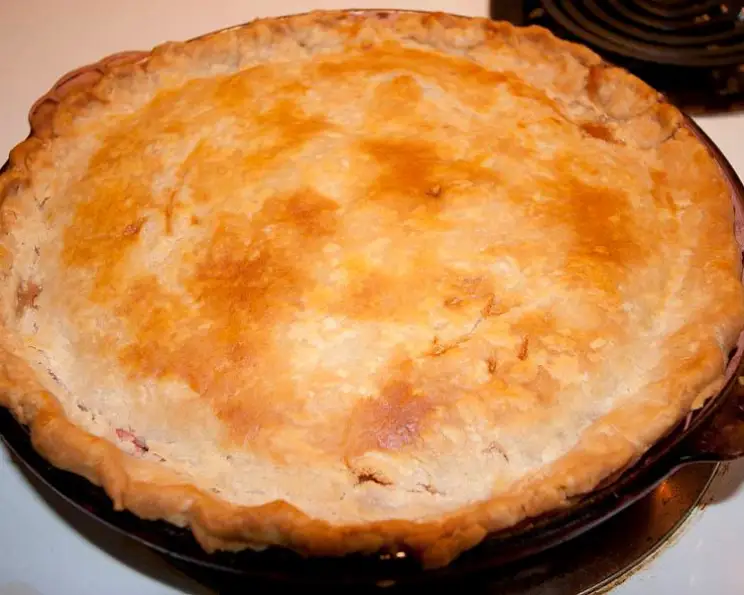
Creamy Rhubarb Custard Pie: A Springtime Delight
The first blush of spring always brings a certain thrill to my kitchen, and for me, that thrill is inextricably linked to the ruby-red stalks of rhubarb. There’s a unique tang, a delightful tartness that only rhubarb possesses, and when it’s cradled in a creamy, sweet custard and encased in a flaky, buttery crust, it becomes pure magic. I remember my grandmother making this pie every year, the tart scent of simmering rhubarb filling her sun-drenched kitchen. It was a rite of passage, signaling the end of winter’s hibernation and the joyful arrival of fresh, vibrant produce. This pie, my friends, is more than just a dessert; it’s a nostalgic hug, a taste of sunshine, and a testament to the simple brilliance of early spring flavors.
Recipe Overview
- Prep Time: 30 minutes
- Cook Time: 40 minutes
- Total Time: 1 hour 10 minutes
- Servings: 6
- Yield: 1 (9-inch) pie
- Dietary Type: Vegetarian
Ingredients
This recipe calls for a wonderfully simple yet incredibly effective pie crust, a true testament to the power of minimal ingredients yielding maximum flakiness, followed by a luscious custard filling.
For the Pie Crust:
- 2 cups all-purpose flour
- 2 teaspoons salt
- 2/3 cup vegetable oil (Wesson oil is preferred for its neutral flavor and texture)
- 1/3 cup milk
For the Pie Filling:
- 2 cups sugar
- 4 tablespoons all-purpose flour
- 1/2 teaspoon nutmeg
- 2 tablespoons butter, softened
- 3 eggs, beaten
- 4 cups rhubarb, cut into 1-inch pieces
Equipment Needed
To bring this delightful pie to life, you’ll want to have a few essential kitchen tools on hand:
- A 9-inch pie plate
- A large mixing bowl for the crust
- A medium mixing bowl for the filling
- A whisk
- A rolling pin (or a sturdy, flat-bottomed glass)
- Waxed paper or parchment paper
- A measuring cup set and measuring spoon set
- An oven
- A wire cooling rack
Instructions
Creating this Creamy Rhubarb Custard Pie is a rewarding journey, starting with a foolproof crust and culminating in a warm, comforting filling. Follow these steps carefully for a truly exceptional result.
- Begin by preheating your oven to a robust 450°F (230°C). This initial high heat is crucial for setting the crust beautifully.
- Now, let’s prepare the pie crust. In your large mixing bowl, combine the 2 cups of all-purpose flour and 2 teaspoons of salt. Give it a quick whisk to ensure they are evenly distributed.
- Pour in the 2/3 cup of vegetable oil and the 1/3 cup of milk. Stir everything together with a fork until it just begins to come together into a shaggy dough. Avoid overmixing, as this can develop the gluten too much, resulting in a tough crust.
- Turn the dough out onto a lightly floured surface. Gently bring it together into a cohesive ball. This is designed for a two-crust pie, so you’ll want to divide the dough into two portions, one slightly larger than the other for the bottom crust.
- Place one portion of dough between two sheets of waxed paper (or parchment paper). Using your rolling pin, carefully roll out the dough from the center outwards, creating a circle about 12 inches in diameter. The waxed paper makes this dough incredibly easy to handle, preventing sticking and ensuring a flaky texture.
- Gently peel off the top layer of waxed paper. Carefully invert the rolled-out dough into your 9-inch pie plate. Press the dough gently into the bottom and up the sides of the plate, being careful not to stretch it. Trim any excess dough, leaving about a 1-inch overhang.
- Now, let’s move on to the luscious filling. In your medium mixing bowl, whisk together the 2 cups of sugar, 4 tablespoons of all-purpose flour, and 1/2 teaspoon of nutmeg. Ensure there are no lumps of flour.
- Add the 2 tablespoons of softened butter to the sugar mixture. Use your fingers or a pastry blender to incorporate the butter until the mixture resembles coarse crumbs.
- In a separate small bowl, beat the 3 eggs until they are light and well-combined.
- Gradually add the beaten eggs to the sugar and flour mixture, whisking continuously until the filling is smooth and creamy.
- Gently fold in the 4 cups of cut-up rhubarb into the custard mixture. Be tender with the rhubarb to avoid breaking it down too much at this stage.
- Pour the prepared rhubarb filling into the unbaked pie crust, spreading it evenly.
- Prepare the top crust. Roll out the second portion of dough between two sheets of waxed paper, similar to how you prepared the bottom crust, to fit the top of your pie.
- Carefully place the top crust over the filling. Trim and crimp the edges of the top and bottom crusts together to seal them. You can make decorative vents in the top crust with a sharp knife if you wish.
- Place the pie on a baking sheet (this will catch any potential drips). Bake for 10 minutes at 450°F (230°C). This initial burst of heat helps to set the crust and begin the baking process.
- After 10 minutes, reduce the oven temperature to 350°F (175°C). Continue to bake for an additional 30 minutes, or until the crust is golden brown and the filling is set. You can test for doneness by gently shaking the pie; the center should have a slight jiggle but not be liquid. A knife inserted near the center should come out mostly clean.
Expert Tips & Tricks
- For a Flakier Crust: Ensure your butter is softened but not melted when you add it to the flour mixture. The oil also plays a significant role in creating that desirable tender, flaky texture in this unique crust recipe.
- Preventing a Soggy Bottom: While this recipe doesn’t call for blind baking the bottom crust, the initial high heat of 450°F does a good job of setting it. If you find your pies tend to have a soggy bottom, you can try placing a baking sheet in the oven while it preheats and placing your pie directly on that hot sheet.
- RhRhubarb Selection: For the best flavor and texture, choose firm, bright red stalks. Avoid any that are bruised or mushy. Younger, more tender stalks will be less fibrous.
- Sweetness Adjustment: Rhubarb’s tartness can vary. If your rhubarb is particularly tart, you might consider adding an extra tablespoon or two of sugar to the filling, though the 2 cups provided is generally a good balance.
Serving & Storage Suggestions
This Creamy Rhubarb Custard Pie is best served slightly warm or at room temperature. A dollop of lightly sweetened whipped cream or a scoop of vanilla bean ice cream is an absolute classic pairing, allowing the tartness of the rhubarb and the creamy custard to shine. For a more elegant touch, consider a sprinkle of toasted slivered almonds over the top just before serving.
Leftover pie can be stored, loosely covered, at room temperature for up to 2 days if your kitchen is cool. For longer storage, wrap it tightly in plastic wrap and then aluminum foil and refrigerate for up to 4 days. To reheat, place a slice in a 300°F (150°C) oven for about 10-15 minutes, or until warmed through. Freezing is not typically recommended for this custard pie, as the texture of the filling can be compromised upon thawing.
Nutritional Information
Here’s an estimated breakdown of the nutritional content for one serving of this delicious pie. Please note that these are approximate values and can vary based on specific ingredients and brands used.
| Nutrient | Amount per Serving | % Daily Value |
|---|---|---|
| Calories | 742.5 kcal | |
| Calories from Fat | 284 kcal | |
| Total Fat | 31.6 g | 48% |
| Saturated Fat | 6.8 g | 34% |
| Cholesterol | 105.1 mg | 35% |
| Sodium | 80.8 mg | 3% |
| Total Carbohydrate | 107.7 g | 35% |
| Dietary Fiber | 2.8 g | 11% |
| Sugars | 67.7 g | 270% |
| Protein | 9.3 g | 18% |
Variations & Substitutions
While this recipe stands beautifully on its own, here are a few ideas to personalize your Creamy Rhubarb Custard Pie:
- Spice It Up: If you enjoy a warmer spice profile, consider adding a pinch of ground ginger or cinnamon to the filling along with the nutmeg.
- Citrus Zest: A teaspoon of lemon zest or orange zest folded into the filling can add a bright, fresh counterpoint to the sweetness and tartness.
- Berry Boost: For a delightful twist, try adding 1 cup of fresh strawberries or raspberries along with the rhubarb. The berries will add a lovely color and a complementary sweetness.
- Crust Options: If you’re short on time or prefer a different texture, a store-bought pie crust can be used, though the homemade version is truly exceptional.
FAQs (Frequently Asked Questions)
Q: Why is the oven temperature so high at the beginning?
A: The initial high temperature of 450°F (230°C) is crucial for ensuring the bottom crust bakes up crisp and flaky, preventing a soggy bottom, before the temperature is reduced to finish cooking the filling.
Q: How do I know when the pie is done baking?
A: The pie is done when the crust is golden brown and the filling is set. It should have a slight jiggle in the center when gently shaken, but it shouldn’t be liquid. You can also insert a knife near the center; it should come out mostly clean.
Q: Can I use frozen rhubarb?
A: Yes, you can use frozen rhubarb. Thaw it completely and drain off any excess liquid before adding it to the filling. You may need to slightly increase the baking time as frozen rhubarb can release more moisture.
Q: What makes this pie “custard”?
A: The eggs are the key ingredient that transform the rhubarb mixture into a creamy, custard-like filling as it bakes, providing a smooth and rich contrast to the tart fruit.
Q: Is this pie very sweet?
A: The sweetness is balanced by the natural tartness of the rhubarb. The 2 cups of sugar is a standard amount for this type of pie, but you can slightly adjust it to your preference if your rhubarb is exceptionally tart or if you prefer a less sweet dessert.
Final Thoughts
There’s a profound satisfaction in baking a pie from scratch, especially one that captures the fleeting beauty of a season. This Creamy Rhubarb Custard Pie is a celebration of spring, a testament to simple ingredients coming together in perfect harmony. Whether you’re a seasoned baker or just starting your culinary journey, I encourage you to try this recipe. The aroma that will fill your home as it bakes is intoxicating, and the first bite, with its perfect balance of sweet, tart, and creamy, is pure bliss. Serve it warm with a dollop of cream, and share the joy – it’s a recipe that’s sure to become a cherished favorite.