
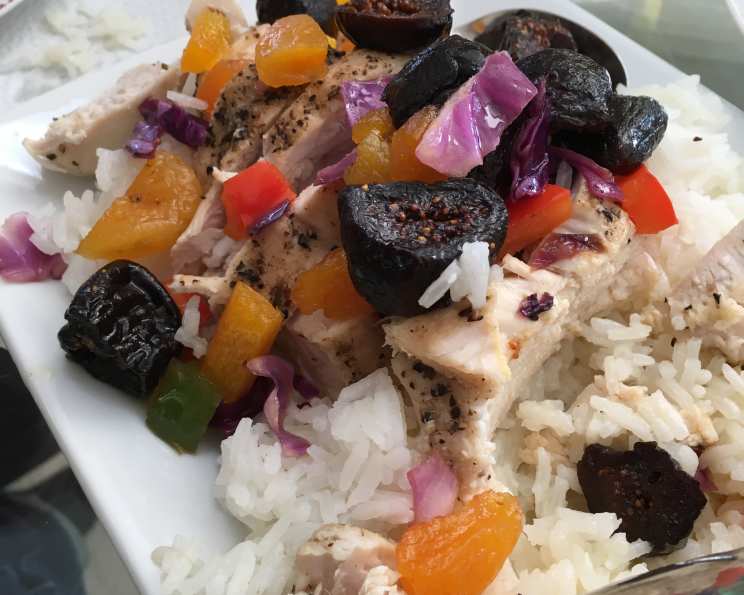
Fig and Apricot Chicken: A Symphony of Sweet and Savory
I remember the first time I tasted fig and apricot chicken. It was at a small, unassuming bistro tucked away on a side street in Provence, a place I’d stumbled upon during a particularly memorable culinary pilgrimage. The air was thick with the scent of herbs and sun-warmed stone, and when this dish arrived, it was a revelation. The chicken, impossibly tender, sang with the deep, concentrated sweetness of dried figs and apricots, balanced by a subtle savory broth that hinted at something complex and deeply comforting. It wasn’t just a meal; it was an experience, a captured moment of French countryside charm that I’ve carried with me ever since. This recipe, in its straightforward elegance, aims to recreate that magic, bringing a touch of rustic sophistication to your own table.
Recipe Overview
- Prep Time: 15 minutes
- Cook Time: 12 minutes
- Total Time: 27 minutes
- Servings: 4
- Yield: Serves 4
- Dietary Type: Chicken
Ingredients
Gather your ingredients, and let’s begin this delightful culinary journey. The beauty of this dish lies in its simplicity, allowing the quality of the ingredients to truly shine.
- 4 boneless, skinless chicken breasts, cut into bite-sized pieces. The cut ensures even cooking and allows the chicken to absorb the beautiful flavors of the sauce.
- 2 teaspoons oil. A neutral oil like vegetable or canola oil will work perfectly, allowing the other flavors to take center stage.
- 50 grams dried figs. Choose plump, sweet figs. If they seem a bit dry, a brief soak in warm water can rehydrate them.
- 50 grams dried apricots. Similar to the figs, ensure they are moist and flavorful. The combination of figs and apricots offers a nuanced sweetness.
- 1/4 cup chopped fresh carrot. This adds a subtle sweetness and a delightful textural contrast.
- 3/4 cup pineapple juice. This is key to the dish’s unique sweetness and acidity, helping to tenderize the chicken.
- 3/4 cup chicken stock. Use a good quality stock for the best flavor base.
- 3 tablespoons French onion soup mix. This is a secret weapon, adding a depth of savory, umami flavor that binds everything together beautifully.
- Salt, to taste.
- Black pepper, to taste.
- 2 tablespoons chopped fresh parsley, for garnishing. The fresh green herb offers a bright, visual appeal and a hint of fresh flavor.
Equipment Needed
To create this delightful dish, you’ll primarily need a good wok or a large, deep skillet that can handle sautéing and simmering. You’ll also want a stirring spoon or spatula for mixing, and measuring cups and spoons for accuracy.
Instructions
Follow these steps carefully, and you’ll be rewarded with a truly delicious meal.
- Heat the oil: Begin by heating the 2 teaspoons of oil in your wok or large skillet over medium-high heat. You want the oil to be shimmering but not smoking.
- Brown the chicken: Add the bite-sized pieces of chicken breast to the hot oil. Sear them for a few minutes on each side until they are nicely browned. This step is crucial for developing flavor and ensuring the chicken is juicy. Don’t overcrowd the pan; cook in batches if necessary.
- Add the fruits and vegetables: Once the chicken is browned, add the 50 grams of dried figs, 50 grams of dried apricots, and 1/4 cup of chopped fresh carrot to the wok. Stir these around for about a minute to lightly toast them and release their aromas.
- Introduce the liquids and soup mix: Pour in the 3/4 cup of pineapple juice and the 3/4 cup of chicken stock. Then, sprinkle in the 3 tablespoons of French onion soup mix. Stir everything together well to ensure the soup mix is incorporated and begins to dissolve.
- Simmer and cook: Bring the mixture to a medium-high heat and let it cook for 12 minutes. This simmering time allows the flavors to meld, the fruits to soften and release their sweetness, and the sauce to thicken slightly.
- Stir halfway: Remember to stir the dish once after 6 minutes of simmering. This prevents anything from sticking to the bottom of the pan and ensures even cooking.
- Season to perfection: Once the 12 minutes of simmering are complete, add salt and black pepper to taste. Give it a final stir to distribute the seasoning evenly.
- Garnish and serve: Remove the wok from the heat. Garnish generously with 2 tablespoons of chopped fresh parsley. This adds a burst of freshness and vibrant color. Serve hot, and enjoy the wonderful aroma and taste.
Expert Tips & Tricks
As a chef, I’ve learned that a few small adjustments can elevate even the simplest dishes. For this Fig and Apricot Chicken, here are a few insights:
- Uniformity is key: When cutting your chicken, aim for pieces of roughly the same size. This ensures they cook evenly, so you don’t end up with some pieces overcooked and others undercooked.
- Don’t skip the browning: The initial browning of the chicken isn’t just for aesthetics; it creates a flavorful crust through the Maillard reaction, adding depth to the final dish.
- Adjusting sweetness: If your dried fruits are exceptionally sweet, you might want to slightly reduce the pineapple juice or ensure your chicken stock is not overly salty. Conversely, if they are less sweet, the pineapple juice is your best friend for balancing.
- Thickening the sauce: If you prefer a thicker sauce, you can easily achieve this by creating a slurry of 1 tablespoon of cornstarch mixed with 2 tablespoons of cold water. Stir this into the simmering sauce during the last minute of cooking.
- The power of French onion soup mix: This often-overlooked pantry staple is a fantastic shortcut to complex, savory flavor. It’s more than just soup; it’s a flavor enhancer that provides a wonderfully savory base.
Serving & Storage Suggestions
This Fig and Apricot Chicken is wonderfully versatile and pairs beautifully with a variety of sides.
- Serving: It is traditionally served hot, allowing the aromas to fully develop. It’s fantastic spooned over fluffy steamed rice or creamy mashed potatoes, which will soak up the delicious sauce. A side of steamed green beans or a light, crisp salad can offer a refreshing contrast to the richness of the dish.
- Storage: Leftovers can be stored in an airtight container in the refrigerator for 2 to 3 days.
- Reheating: To reheat, gently warm the chicken and sauce in a saucepan over low heat, or microwave it until heated through. Be careful not to overcook the chicken when reheating.
Nutritional Information
Here’s an approximate nutritional breakdown for this delightful dish.
| Nutrient | Amount per Serving | % Daily Value |
|---|---|---|
| Calories | 248.1 kcal | |
| Calories from Fat | ||
| Total Fat | 4.5 g | 6% |
| Saturated Fat | 0.8 g | 4% |
| Cholesterol | 69.8 mg | 23% |
| Sodium | 150.8 mg | 6% |
| Total Carbohydrate | 22.3 g | 7% |
| Dietary Fiber | 2.2 g | 8% |
| Sugars | 16.9 g | 67% |
| Protein | 29.4 g | 58% |
Note: Nutritional values are estimates and can vary based on specific ingredients and portion sizes used.
Variations & Substitutions
While this recipe is wonderful as is, it also offers room for a touch of personalization.
- Poultry Alternatives: While chicken breasts are classic, boneless, skinless chicken thighs would also work beautifully, offering a richer, more succulent texture. Their slightly longer cooking time will be easily accommodated by the simmering process.
- Dried Fruit Flexibility: If you don’t have both figs and apricots, you can adjust the quantities. Raisins or prunes could be used as partial substitutes, though they will alter the flavor profile slightly.
- Aromatic Boost: For an extra layer of complexity, consider adding a finely minced shallot or a clove of garlic to the pan just before adding the fruits and vegetables. Sauté them briefly until fragrant.
- A Touch of Spice: For those who enjoy a hint of heat, a pinch of red pepper flakes added with the spices can provide a subtle warmth that complements the sweetness.
FAQs
Q: Can I use fresh figs and apricots instead of dried?
A: While fresh fruits can be used, their water content is much higher, and their sugars are less concentrated. You would likely need to adjust the liquid amounts and cooking times significantly, and the characteristic flavor might be less pronounced. Dried fruits are recommended for this specific recipe.
Q: What kind of oil is best for this dish?
A: A neutral-flavored oil like vegetable oil, canola oil, or even a light olive oil is best. This allows the flavors of the chicken, fruits, and aromatics to be the stars.
Q: How do I prevent the chicken from drying out?
A: The key is to sear the chicken properly at the beginning to lock in juices and to not overcook it during the simmering process. The sauce also helps keep the chicken moist.
Q: Can I make this ahead of time?
A: Yes, this dish holds up well. You can prepare it a day in advance and gently reheat it on the stovetop or in the oven. The flavors often meld even further overnight.
Q: Is this dish suitable for a special occasion?
A: Absolutely! The slightly sweet and savory profile, coupled with the elegance of the figs and apricots, makes this a dish that can impress guests at a dinner party while remaining relatively easy to prepare.
Final Thoughts
This Fig and Apricot Chicken is more than just a recipe; it’s a gateway to a cherished culinary memory. It’s a testament to how simple ingredients, thoughtfully combined, can create something truly extraordinary. I encourage you to try it, to taste the balance of sweet and savory, and to perhaps create your own delicious memories around your table. It’s a dish that speaks of comfort, a touch of indulgence, and the joy of sharing good food. Serve it with pride, and savor every bite.