
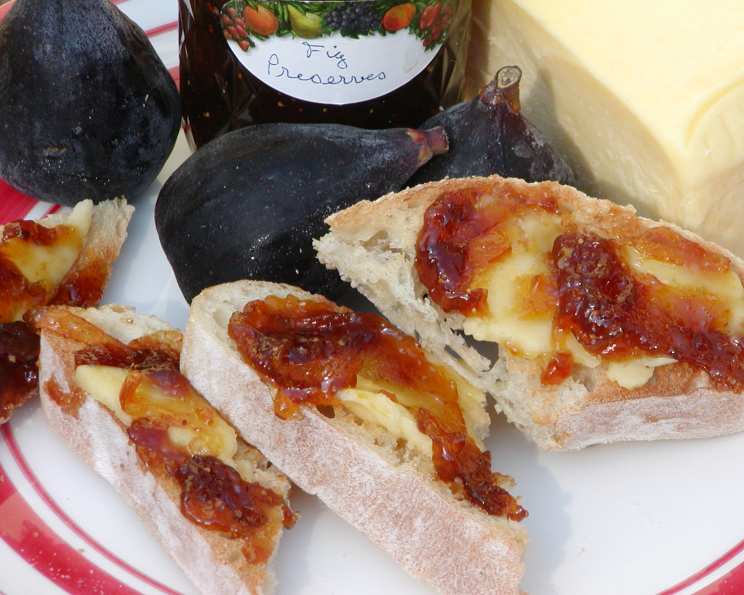
The Sun-Kissed Sweetness: Crafting Perfect Fig Preserves
There’s a certain magic that happens when ripe figs meet a patient hand in the kitchen. I remember a summer so hot and humid that the air itself seemed to shimmer, and my grandmother’s fig tree, usually a stoic presence, was practically groaning under the weight of its bounty. We spent an entire afternoon up to our elbows in sticky, fragrant fruit, transforming that abundance into jewel-toned preserves. The aroma of simmering figs, laced with lemon and sugar, still conjures up those lazy, sun-drenched days, a tangible taste of summer captured for the colder months ahead. This recipe, unearthed from the vast expanse of the internet, perfectly encapsulates that nostalgic sweetness, promising a delightful journey from orchard to jar.
Recipe Overview
- Prep Time: 15 minutes
- Cook Time: 30-40 minutes
- Total Time: 12-24 hours (plus processing time)
- Servings: Approximately 10 half-pints
- Yield: About 10 1/2 pints
- Dietary Type: Vegetarian, Gluten-Free
Ingredients
- 7 cups granulated sugar
- ¼ cup fresh lemon juice
- 1 ½ quarts hot water
- 2 quarts peeled firm-ripe figs (approximately 4 ½ pounds)
- 2 lemons, thinly sliced
Equipment Needed
- Large, heavy-bottomed pot or Dutch oven
- Wooden spoon or heat-resistant spatula
- Sharp knife
- Cutting board
- Ball jars or canning jars with lids and rings
- Water bath canner or a large pot with a rack
- Jar lifter
- Canning funnel (optional, but helpful)
- Ladle
Instructions
The journey to perfect fig preserves begins with meticulous preparation and a slow, steady simmer. This recipe emphasizes capturing the natural essence of the figs, enhanced by the bright acidity of lemon and the sweet embrace of sugar.
- In your large, heavy-bottomed pot, combine the 7 cups of granulated sugar and the ¼ cup of fresh lemon juice.
- Carefully pour in the 1 ½ quarts of hot water. Stir these ingredients together until the sugar is completely dissolved. This creates the base for our preserve’s syrup.
- Bring this sugar syrup mixture to a boil.
- Once boiling, add the 2 quarts of peeled firm-ripe figs to the pot. It’s crucial that the figs are firm-ripe; overripe figs will break down too much during the cooking process.
- Cook the figs rapidly for 10 minutes. While cooking, stir occasionally to prevent the figs and syrup from sticking to the bottom of the pot. This initial rapid boil helps the figs begin to soften and absorb the syrup.
- After the initial 10 minutes of rapid cooking, add the 2 lemons, thinly sliced, to the pot. Ensure the slices are evenly distributed among the figs.
- Continue cooking rapidly until the figs become clear. This process will take approximately 10 to 15 minutes. As the figs cook, they will become translucent, signaling that they have absorbed enough of the syrup and are nearing perfection.
- Important Note on Syrup Consistency: If, during this final cooking stage, the syrup appears to be becoming too thick before the figs have become clear, you can adjust it. Add boiling water, ¼ cup at a time, stirring gently, until the desired consistency is reached. This ensures the figs don’t overcook while the syrup thins appropriately.
- Once the figs are clear and the syrup has reached a satisfactory consistency, remove the pot from the heat.
- Carefully cover the pot and allow the preserves to stand for 12 to 24 hours in a cool place. This resting period is vital. It allows the flavors to meld and the figs to fully absorb the sweet, tangy syrup, resulting in a richer, more delicious preserve.
- After the resting period, prepare your Ball jars (or other canning jars) for filling. Ensure they are clean and sterilized.
- Using a ladle and a canning funnel (if you have one), carefully place the fig preserves into the jars, leaving a ¼-inch headspace. The headspace is the empty space between the top of the food and the rim of the jar.
- Adjust the lids and rings on the jars. Make sure the rings are fingertip tight – not too loose, not too tight.
- Process the half-pints and pints in a boiling water bath. Place the filled jars on a rack in your water bath canner, ensuring they are submerged by at least 1 inch of water.
- Process for 30 minutes at a temperature between 180°F and 185°F. The processing time is crucial for creating a proper seal and ensuring shelf stability.
- Once the processing time is complete, carefully remove the jars from the canner using a jar lifter and place them on a towel-lined counter to cool completely. You will likely hear the satisfying “ping” as the lids seal.
Note on Unpeeled Figs: Although the product will not be of as high quality, figs may be preserved without peeling. If you choose this method, it’s recommended to cover the unpeeled figs with water and boil them for 15 to 20 minutes. After boiling, drain them thoroughly before adding them to the prepared syrup. This step helps to tenderize the skins and make them more palatable in the preserve.
Expert Tips & Tricks
- Fig Selection is Key: For the best preserves, seek out firm-ripe figs. They should yield slightly to gentle pressure but not be mushy. Varieties like Black Mission, Brown Turkey, or Calimyrna are excellent choices.
- The Power of Lemon: Don’t be tempted to reduce the lemon juice. It plays a critical role not only in flavor balance, cutting through the sweetness, but also acts as a natural pectin, helping the preserves thicken. The lemon slices themselves add a wonderful aromatic complexity.
- Stirring Smart: When stirring occasionally during the cooking process, be gentle. You want to avoid breaking up the figs too much, preserving their beautiful shape and texture. A wooden spoon is ideal for this.
- Achieving a Perfect Seal: Ensure your jars and lids are impeccably clean and free from any residue. A proper seal is essential for long-term storage. If a jar does not seal, refrigerate it and use it within a few weeks.
- Water Bath Temperature: Maintaining the correct temperature in your water bath is paramount. If your stovetop struggles to keep a steady boil, consider using an electric water bath canner for more precise temperature control.
Serving & Storage Suggestions
These luscious fig preserves are incredibly versatile. Their rich, sweet, and slightly tart flavor profile makes them a perfect accompaniment to a wide array of dishes.
- Breakfast Bliss: Spread generously on warm toast, bagels, or scones. They are also divine dolloped atop pancakes or waffles, or swirled into yogurt or oatmeal.
- Cheese Board Star: Elevate your next cheese board by serving these preserves alongside creamy brie, sharp cheddar, or tangy goat cheese. The sweetness of the figs beautifully complements the savory notes of the cheese.
- Savory Sidekick: Don’t underestimate their savory potential! A dollop of fig preserves can add a delightful sweet counterpoint to roasted meats like pork or duck, or be incorporated into glazes and marinades.
- Baking Bonanza: Use them as a filling for tarts, cakes, or cookies, or swirl them into muffins for bursts of fruity flavor.
Storage: Properly processed and sealed jars of fig preserves can be stored in a cool, dark, and dry place for up to a year. Once opened, refrigerate the jar and consume the preserves within 3-4 weeks for optimal quality. They do not require refrigeration before opening if properly processed.
Nutritional Information
The following nutritional information is an estimate and can vary based on the specific ingredients used and portion size.
| Nutrient | Amount per Serving (approx. 2 tbsp) | % Daily Value |
|---|---|---|
| Calories | 130-150 kcal | 7-8% |
| Total Fat | 0 g | 0% |
| Saturated Fat | 0 g | 0% |
| Cholesterol | 0 mg | 0% |
| Sodium | < 5 mg | 0% |
| Total Carbohydrate | 33-38 g | 12-13% |
| Dietary Fiber | 0-1 g | 0-4% |
| Sugars | 32-37 g | 64-74% |
| Protein | < 1 g | 0% |
Note: The high sugar content is inherent in preserving fruit. The majority of the calories come from the added sugar.
Variations & Substitutions
While this recipe yields a classic and delicious fig preserve, there are always ways to explore and adapt.
- Aromatic Infusions: Consider adding a cinnamon stick or a few star anise pods to the simmering preserves along with the lemon slices for a warmer, more complex flavor profile. Remove these aromatics before jarring.
- Spiced Figs: For a touch of heat, add a pinch of red pepper flakes to the simmering syrup. This creates a delightful sweet and spicy contrast.
- Balsamic Kiss: A tablespoon or two of balsamic vinegar added with the lemon slices can introduce a sophisticated, slightly tangy depth to the preserves.
FAQs (Frequently Asked Questions)
Q: Why are my figs not becoming clear?
A: This can happen if the figs are not ripe enough, if the heat isn’t high enough for rapid cooking, or if the syrup has become too thick too quickly. Ensure you are using firm-ripe figs and maintaining a steady, vigorous simmer.
Q: Can I use dried figs to make preserves?
A: This recipe is designed for fresh, ripe figs. Dried figs have a very different texture and sugar content, and would require a completely different approach and recipe.
Q: How thick should the syrup be before I jar the preserves?
A: The syrup should be slightly thickened, coating the back of a spoon. It will continue to thicken as it cools and during the resting period. Overcooking can lead to a candy-like consistency.
Q: What is the purpose of letting the preserves stand overnight?
A: This crucial step allows the figs to fully absorb the flavors and syrup, resulting in a more evenly sweetened and tender preserve. It also helps the preserves thicken naturally.
Q: My jars didn’t seal. What should I do?
A: If jars fail to seal, they should be refrigerated immediately and used within a few weeks. You can also reprocess them if they are still hot, ensuring proper headspace and processing time.
Final Thoughts
There’s a profound satisfaction in opening a jar of homemade fig preserves on a crisp winter morning, knowing you’ve captured a piece of summer’s fleeting bounty. This recipe is more than just a set of instructions; it’s an invitation to connect with the seasons, to appreciate the simple perfection of fruit at its peak, and to create something truly special to share. So, gather your figs, embrace the process, and let the sweet, sun-kissed flavor of the orchard fill your home. I encourage you to experiment with the variations, discover your own favorite pairings, and savor every spoonful. Happy preserving!