
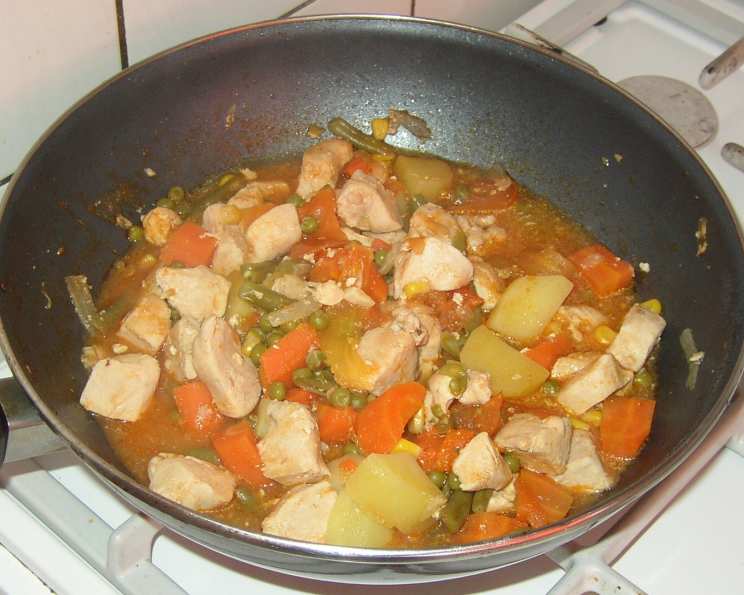
Filipino Chicken Afritada: A Comforting Embrace in a Bowl
My earliest memories of Filipino cooking are intertwined with the comforting aroma of simmering stews. Chicken afritada, in particular, holds a special place. I recall my Lola (grandmother) standing over a well-loved wok, her movements practiced and sure, coaxing vibrant flavors from humble ingredients. The rich, tomato-based sauce, studded with tender chicken, soft potatoes, and sweet carrots, was a weekly ritual, a dish that promised warmth and sustenance. It was more than just a meal; it was a testament to the power of simple, well-executed comfort food, a dish that always felt like a warm hug from home.
Recipe Overview
- Prep Time: Approximately 15 minutes
- Cook Time: Approximately 35 minutes
- Total Time: Approximately 50 minutes
- Servings: 3-4
- Dietary Type: Dairy-Free, Gluten-Free (ensure ketchup is gluten-free if required)
Ingredients
This hearty Filipino classic relies on readily available ingredients to create its signature savory-sweet flavor profile.
- 1 ½ lbs chicken, cut into 1 ½-inch cubes
- 2 medium potatoes, peeled and sliced into 1-inch cubes
- 2 medium carrots, peeled and sliced into 1-inch cubes
- 1 teaspoon garlic, minced
- 1 small onion, sliced
- ¼ kg beans (such as green beans or snap peas), trimmed and cut into bite-sized pieces
- 1 teaspoon salt, or to taste
- 3 medium tomatoes, sliced
- 125 g green peas, fresh or frozen
- 135 g tomato ketchup
- 2 tablespoons cooking oil
Equipment Needed
For this straightforward recipe, you won’t need any highly specialized equipment.
- A large wok or a deep, heavy-bottomed pot or Dutch oven
- A knife for chopping ingredients
- A cutting board
- A stirring spoon or spatula
Instructions
Crafting a delicious Chicken Afritada is a simple, satisfying process. Follow these steps to bring this beloved Filipino dish to your table.
- Begin by preparing your aromatics and vegetables. Mince the garlic and slice the onion and tomatoes. Peel and cube the potatoes and carrots, ensuring they are roughly the same size for even cooking. Trim and cut the beans into manageable pieces. If using frozen green peas, have them ready to go.
- In your wok or pot, heat the 2 tablespoons of cooking oil over medium-high heat.
- Once the oil is shimmering, carefully add the minced garlic. Sauté until it becomes fragrant and just begins to turn a light golden brown. Be careful not to burn it, as this can impart a bitter flavor.
- Immediately follow the garlic with the sliced onion. Sauté for about 10 seconds, just until the onion starts to soften and become translucent.
- Now, introduce the chicken cubes to the wok. Stir them well, ensuring they are coated in the fragrant oil. Cook until the chicken is golden brown on all sides. This searing step helps to lock in moisture and develop a richer flavor.
- Add the cubed potatoes and carrots to the wok. Stir everything together for about 20 seconds, allowing them to slightly absorb the flavors from the chicken and aromatics.
- Next, put in the prepared beans and the sliced tomatoes.
- Pour in enough water to create your desired sauce consistency. You want enough liquid to allow the ingredients to simmer and the flavors to meld, but not so much that it becomes watery. Let the mixture come to a boil.
- Once the liquid is boiling, it’s time for the key flavor enhancer: pour in the tomato ketchup. Stir it well to distribute it evenly throughout the sauce.
- Continue to simmer the dish. The goal is to let the sauce become thick and for the potatoes and carrots to become tender. This usually takes about 15-20 minutes, depending on the heat and the size of your vegetable cubes.
- Periodically check on the dish, stirring occasionally to prevent sticking. Taste the sauce and add salt as needed, remembering that the tomato ketchup also contains some salt.
- When the sauce has thickened to your liking and the vegetables are tender, turn off the heat.
- Allow the dish to rest for a few minutes before serving. This allows the flavors to further meld and the sauce to set slightly.
- Serve the Chicken Afritada hot, spooning generous amounts of the flavorful sauce over the chicken and vegetables.
Expert Tips & Tricks
To elevate your Chicken Afritada from good to exceptional, consider these seasoned chef’s insights. Achieving that perfect balance of flavors and textures is all about attention to detail.
- Chicken Choice: While any chicken cut will work, using bone-in pieces like thighs and drumsticks will yield a richer broth due to the natural gelatin and fat. If you opt for boneless, skinless chicken breast, be mindful of cooking times to prevent it from drying out; adding it a little later in the cooking process can help.
- Vegetable Uniformity: Ensure your potatoes and carrots are cut into similarly sized cubes. This guarantees they cook evenly, preventing some pieces from being mushy while others remain firm.
- The Searing Step: Don’t rush the browning of the chicken. This Maillard reaction is crucial for developing deep, savory flavors that form the foundation of the afritada.
- Sauce Consistency Control: The amount of water you add is key. If you prefer a thicker sauce, start with less water and add more gradually as needed. Conversely, if you find your sauce is too thick, a splash of hot water can easily loosen it up.
- Tomato Power: For an even richer tomato flavor, consider adding a tablespoon or two of tomato paste along with the ketchup. It deepens the color and intensifies the umami.
- Adding Peas: Frozen green peas are a convenient addition. Add them in the last few minutes of cooking to ensure they retain their vibrant color and a slight bite. If using fresh peas, they might require a little longer.
Serving & Storage Suggestions
Chicken Afritada is a versatile dish that shines as a centerpiece for a Filipino meal.
- Serving: The most classic and perhaps most satisfying way to serve Chicken Afritada is over a bed of steaming hot white rice. The fluffy grains are perfect for soaking up every last drop of the delicious tomato-based sauce. A sprinkle of fresh cilantro or chopped green onions can add a burst of freshness and color. It also pairs beautifully with a simple side salad or some lightly sautéed greens.
- Storage: Leftover Chicken Afritada can be stored in an airtight container in the refrigerator for up to 3-4 days.
- Reheating: To reheat, gently warm it on the stovetop over low heat, stirring occasionally, or microwave it in short intervals until heated through. Adding a splash of water or chicken broth can help to loosen the sauce if it has thickened too much during storage. It does not freeze particularly well, as the vegetables can become mushy upon thawing.
Nutritional Information
The following nutritional information is an estimate per serving and can vary based on exact ingredients and portion sizes.
| Nutrient | Amount per Serving | % Daily Value |
|---|---|---|
| Calories | 548.6 kcal | |
| Calories from Fat | 195 g | |
| Total Fat | 21.7 g | 33% |
| Saturated Fat | 6.1 g | 30% |
| Cholesterol | 103.5 mg | 34% |
| Sodium | 1419.7 mg | 59% |
| Total Carbohydrate | 56.2 g | 18% |
| Dietary Fiber | 9.3 g | 37% |
| Sugars | 20.9 g | 83% |
| Protein | 34.3 g | 68% |
Variations & Substitutions
While the classic Chicken Afritada is beloved for its simplicity, there’s always room for creative adaptation.
- Pork Afritada: For a different protein, substitute the chicken with cubed pork shoulder or pork belly. Adjust cooking times as needed to ensure the pork is tender.
- Spicy Kick: If you enjoy a bit of heat, add a sliced chili pepper (like a siling labuyo or jalapeño) along with the tomatoes and beans, or a pinch of red pepper flakes.
- Vegetable Medley: Feel free to add other sturdy vegetables such as bell peppers (sliced), potatoes (sweet potatoes can offer a nice sweetness), or even some edamame for extra protein and fiber.
- Ketchup Alternatives: While tomato ketchup is traditional, you can experiment with a combination of tomato sauce and a touch of sugar or honey if you’re looking to control sweetness or avoid specific additives in ketchup.
FAQs
Q: What is the key difference between Afritada and other Filipino tomato-based stews like Menudo or Kaldereta?
A: Afritada is generally simpler, with a focus on a purely tomato-based sauce often enhanced by ketchup, and usually contains fewer ingredients than the richer, more complex stews like Menudo (which often includes liver and raisins) or Kaldereta (which typically features liver spread and is more robust).
Q: Can I make Chicken Afritada in a slow cooker or Instant Pot?
A: Yes, you can adapt this recipe for a slow cooker or Instant Pot. For a slow cooker, sear the chicken and sauté the aromatics first, then add all ingredients and cook on low for 4-6 hours or high for 2-3 hours. For an Instant Pot, sauté aromatics and chicken, then add remaining ingredients and pressure cook on high for 8-10 minutes, followed by a natural pressure release.
Q: My sauce is too thin. How can I thicken it?
A: You can thicken the sauce by simmering it uncovered for a longer period, allowing excess liquid to evaporate. Alternatively, create a slurry by mixing 1 tablespoon of cornstarch with 2 tablespoons of cold water, then stir this mixture into the simmering stew until it thickens.
Q: Is it okay to use frozen vegetables for Chicken Afritada?
A: Absolutely! Frozen vegetables, particularly green peas and beans, are a convenient substitute for fresh and will work wonderfully in this dish. Add them towards the end of the cooking process.
Q: Why is the chicken browned before adding other ingredients?
A: Browning the chicken, also known as searing, develops a deeper flavor through the Maillard reaction and helps to seal in its juices, resulting in a more tender and flavorful final dish.
Final Thoughts
Chicken Afritada is more than just a recipe; it’s a taste of home, a culinary hug that warms you from the inside out. Its simple yet profound flavors are a testament to the Filipino approach to cooking – utilizing fresh, accessible ingredients to create deeply satisfying meals. Whether you’re new to Filipino cuisine or a seasoned admirer, this dish offers a delightful journey of comfort and flavor. I encourage you to gather your ingredients, embrace the aroma as it fills your kitchen, and experience the joy of this classic dish. Serve it proudly, share it generously, and savor every spoonful. It’s a dish that truly nourishes the soul.