
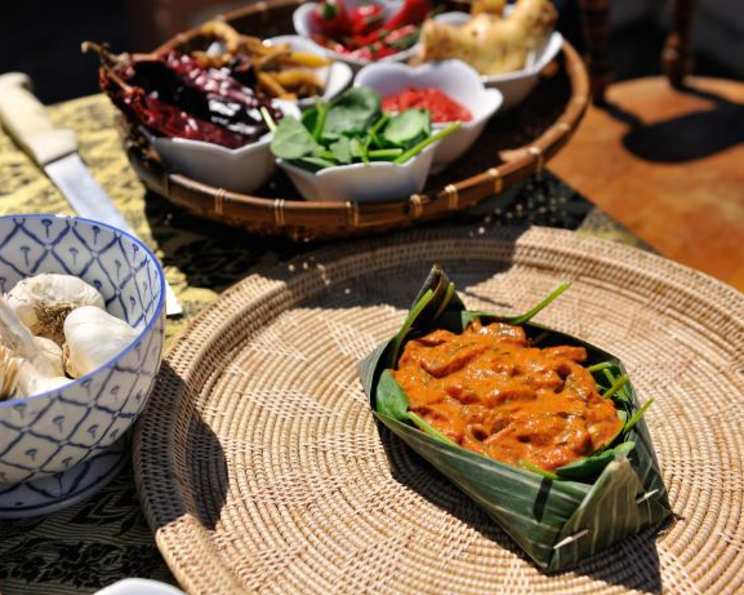
Fish Amok: A Cambodian Culinary Jewel
There are certain aromas that transport me instantly back to humid Southeast Asian nights, the air thick with the scent of exotic spices and the murmur of distant markets. For me, the unmistakable perfume of lemongrass, galangal, and kaffir lime, gently steaming, always brings to mind Cambodia, and specifically, the sublime dish known as Fish Amok. I remember a particular evening, tucked away in a small eatery in Phnom Penh, where a humble banana leaf parcel revealed a custard-like steamed fish dish, fragrant and utterly captivating. It wasn’t just food; it was a whispered story of tradition, a testament to the delicate balance of flavors that Cambodian cuisine so artfully masters.
Recipe Overview
- Prep Time: 25 minutes
- Cook Time: 20 minutes
- Total Time: 45 minutes
- Servings: 4
- Yield: 4 amok servings
- Dietary Type: Gluten-Free, Dairy-Free
Ingredients
This iconic dish relies on the foundational Cambodian curry paste, known as kreung, to build its complex flavor profile.
For the Kreung Paste:
- 5 kaffir lime leaves, ribs removed, thinly sliced
- 3 california dried red chilies, soaked in water until soft, drained, seeds discarded, chopped
- 3 slices galangal, peeled and chopped
- 3 garlic cloves, thinly sliced
- 3 slices lesser ginger (kacheay), peeled and chopped
- 3 shallots, thinly sliced
- 2 stalks lemongrass, bottom parts only, thinly sliced
- 2 small pieces fresh turmeric, peeled and sliced (or 1 teaspoon ground turmeric)
For the Fish Amok:
- 1/2 cup coconut milk, plus another 1/2 cup for garnish
- 1 tablespoon chili paste
- 1 tablespoon fish sauce
- 1 tablespoon sugar
- 1 teaspoon shrimp paste
- 1/2 teaspoon salt
- 1 egg, lightly beaten
- 1 lb boneless skinless meaty white fish, cut into 1/4-inch-thick slices (such as cod, tilapia, or snapper)
- 8 banana leaves
- 4 handfuls baby spinach leaves
- 4 fresh red chilies, cut lengthwise several times from the tip to 1/4 inch from the stem end
- Steamed white jasmine rice, for serving
Equipment Needed
To prepare Fish Amok, you will need a few key tools:
- Mortar and pestle: Essential for creating the authentic texture of the kreung paste.
- Steamer: A stovetop steamer, bamboo steamer, or even a large pot with a steaming rack will work.
- Bamboo toothpicks: To secure the banana leaf parcels.
- Large bowl: For mixing the amok marinade.
- Sharp knife and cutting board: For preparing ingredients.
Instructions
The magic of Fish Amok lies in its gentle steaming, which transforms a simple paste and fish into a delicate, fragrant custard.
-
Prepare the Kreung Paste: Begin by creating the heart of the amok’s flavor. In a mortar and pestle, combine the kaffir lime leaves, california dried red chilies, galangal, garlic, kacheay (lesser ginger), shallots, lemongrass, and turmeric. Pound these ingredients together, working in batches if necessary, until a fine, aromatic paste forms. This process releases the essential oils and creates a depth of flavor that is hard to replicate with a blender.
-
Marinate the Fish: In a large bowl, whisk together the prepared kreung paste with 1/2 cup of coconut milk, chili paste, fish sauce, sugar, shrimp paste, salt, and the lightly beaten egg. Mix until well combined. Add the sliced fish to this mixture and gently coat each piece with the marinade. Set aside and let the fish marinate for at least 15 minutes to allow the flavors to infuse.
-
Assemble the Banana Leaf Bowls (Konthoangs): While the fish is marinating, prepare your steaming vessels. Take two banana leaves and place them one on top of the other. Fold them into small, rectangular bowls, ensuring the tapered sides are folded up to create a contained parcel. Secure these folds with bamboo toothpicks. You will need to make 4 konthoangs in total.
-
Layer and Fill: Place a bed of baby spinach leaves at the bottom of each prepared konthoang. This not only adds a vibrant green layer but also helps to prevent the fish from sticking to the bottom. Evenly divide the marinated fish among the four konthoangs, arranging it on top of the spinach. Spoon approximately 2 tablespoons of coconut milk over each serving of fish. Finally, top each parcel with a decorative fresh red chili.
-
Steam the Amok: Set up your steamer by bringing water to a simmer. Carefully place the filled konthoangs (amoks) into the steamer basket, ensuring they are not overcrowding each other. Steam until the fish is cooked through, which should take approximately 20 minutes. The fish will turn opaque and flake easily, and the custard will be set.
-
Serve: Enjoy your fragrant Fish Amok immediately, served alongside steamed white jasmine rice.
Cook’s Note: While traditionally made with fish, this versatile recipe can also be prepared with boneless, skinless slices of chicken or peeled and deveined large shrimp. The cooking time may need slight adjustments based on the protein used.
Expert Tips & Tricks
- The Power of the Mortar and Pestle: While a food processor can speed things up, the distinct texture and flavor derived from pounding the kreung paste with a mortar and pestle is truly superior. It bruises the ingredients just enough to release their aromatics without pulverizing them.
- Banana Leaf Preparation: To make your banana leaves pliable and easier to fold, briefly pass them over a low flame or dip them in hot water. This softens them and also imparts a subtle, pleasing aroma to the dish.
- Achieving the Perfect Custard: Don’t over-steam! Overcooking can make the amok rubbery. The fish should be just cooked through and the mixture should have a tender, custard-like consistency.
- Balancing the Flavors: The kreung paste is the soul of this dish. Taste your marinade before adding the fish. If you prefer it spicier, add a pinch more chili paste or a finely minced fresh chili to the mixture. If it needs more saltiness, a touch more fish sauce will do the trick.
Serving & Storage Suggestions
Fish Amok is best enjoyed fresh from the steamer. The aroma alone is enough to set the stage for a delightful meal. Serve each banana leaf parcel directly to your guests for an authentic presentation. The steamed white jasmine rice acts as a perfect canvas to soak up the rich, flavorful custard.
Leftovers can be stored in an airtight container in the refrigerator for up to 2 days. While the texture might change slightly upon reheating, the flavors will still be delicious. To reheat, gently warm the amok in a covered microwave-safe dish or in a steamer on low heat to preserve its delicate texture. Avoid high heat, which can toughen the fish.
Nutritional Information
While precise nutritional values can vary based on specific ingredients and brands used, here is an estimated breakdown per serving.
| Nutrient | Amount per Serving | % Daily Value |
|---|---|---|
| Calories | 135.2 kcal | – |
| Calories from Fat | – | – |
| Total Fat | 7.6 g | 11 % |
| Saturated Fat | 5.8 g | 28 % |
| Cholesterol | 46.5 mg | 15 % |
| Sodium | 682.6 mg | 28 % |
| Total Carbohydrate | 14.8 g | 4 % |
| Dietary Fiber | 1.4 g | 5 % |
| Sugars | 7.6 g | 30 % |
| Protein | 4.7 g | 9 % |
Variations & Substitutions
This recipe is remarkably forgiving and open to personal preference.
- Seafood Lover’s Dream: Feel free to substitute the white fish with succulent prawns or firm scallops. Ensure they are cut into manageable, bite-sized pieces.
- Vegetarian Amok: For a vegetarian or vegan twist, use firm tofu or tempeh, cut into cubes. You might want to add a little more vegetable broth to the marinade to ensure it coats the protein well.
- Spice Level Adjustment: If you’re sensitive to heat, reduce the number of dried and fresh chilies. For those who love an extra kick, add a few more chilies or a pinch of red pepper flakes to the kreung paste.
- Aromatic Boost: A few finely chopped Thai basil leaves stirred into the marinade can add another layer of herbaceous complexity.
FAQs
Q: What is “kacheay” and can I substitute it?
A: Kacheay is also known as lesser ginger or fingerroot. It has a distinct, slightly bitter and peppery flavor that is essential to authentic kreung. If you absolutely cannot find it, you can substitute with a little extra fresh ginger, but the flavor will be slightly different.
Q: Can I make the kreung paste ahead of time?
A: Yes, you can make the kreung paste a day or two in advance and store it in an airtight container in the refrigerator. Its flavor will intensify over time.
Q: My banana leaves are tearing when I fold them. What should I do?
A: Gently warm the banana leaves over a low flame or briefly immerse them in hot water. This will make them more pliable and less prone to tearing.
Q: How do I know when the fish is cooked through?
A: The fish will turn opaque and flake easily when gently prodded with a fork. The mixture should also have a set, custard-like consistency.
Q: Is Fish Amok spicy?
A: The spice level can vary depending on the amount of chilies used. This recipe has a moderate amount, but you can adjust it to your preference.
Final Thoughts
Fish Amok is more than just a dish; it’s an experience. It’s a journey into the heart of Cambodian culinary tradition, a delicate dance of aromatic spices and tender fish, all wrapped in the earthy embrace of banana leaves. Whether you’re a seasoned home cook or embarking on your first adventure into Southeast Asian flavors, this recipe offers a rewarding and incredibly delicious outcome. I encourage you to gather your ingredients, embrace the process, and savor the moment as the fragrant steam envelops your kitchen. Don’t hesitate to share your creations and any culinary discoveries you make along the way – that’s the true joy of cooking.