
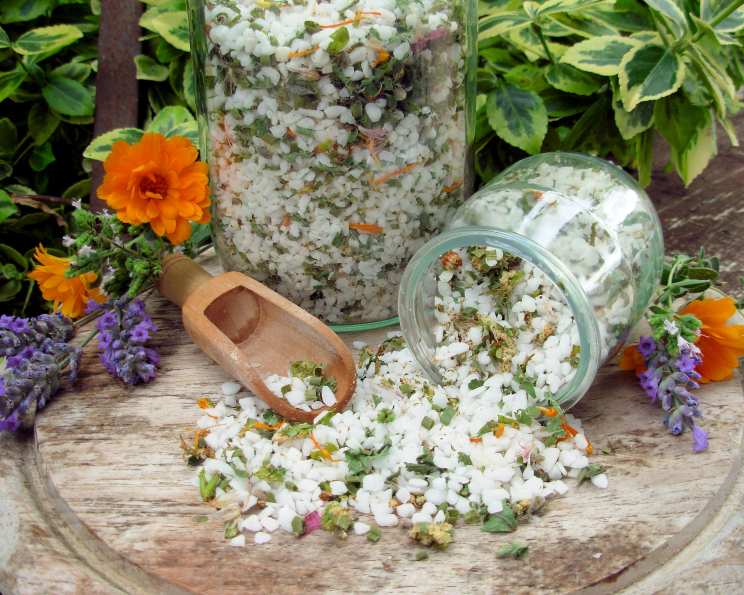
The Scent of Sunshine and Earth: Crafting Your Own Flower and Herb Salt
There are certain aromas that transport me instantly back to my grandmother’s sun-drenched kitchen, a place where magic wasn’t just in the oven, but in the very air. She had an uncanny knack for infusing everyday ingredients with extraordinary flavor, and one of my fondest memories is watching her meticulously dry herbs from her garden, their fragrant leaves destined for… well, for this very salt. It wasn’t just a seasoning; it was an edible tapestry, a whisper of summer meadows and garden pathways captured in a jar, promising to elevate any dish with its subtle, earthy perfume.
This Flower and Herb Salt is a true culinary treasure, a sophisticated yet incredibly simple way to imbue your cooking with layers of nuanced flavor. Unlike ordinary table salt, which primarily offers salinity, this blend brings forth the delicate floral notes of calendula, the bright herbaceousness of parsley and lovage, and the subtle pungency of chives and dill, all grounded by the savory whispers of garlic and onion. It’s a testament to the power of nature’s pantry, a reminder that the most profound flavors often come from the simplest of sources. Adapted from the wonderful “Salt of the Earth” by Jo Ann Gardener, this recipe is an invitation to connect with your food on a deeper level, to taste the earth and the blossoms in every pinch.
Recipe Overview
- Prep Time: 15 minutes
- Cook Time: 30 minutes
- Total Time: 45 minutes
- Servings: N/A (Continuous)
- Yield: 8 cups
- Dietary Type: Vegan, Gluten-Free, Dairy-Free
Ingredients
This recipe is wonderfully forgiving, allowing you to adjust the herb and flower ratios to your preference. The key is to ensure your botanicals are thoroughly dried before combining them with the salt.
- 2 cups table salt or 2 cups sea salt (choose fine or flaky, depending on your desired texture)
- 2 cups finely flaked dried lovage or 2 cups celery leaves (dried lovage offers a more intense celery-like flavor)
- 1 cup finely flaked dried parsley
- 1 cup dried chives
- A generous handful of dried chive blossoms (for color and a delicate oniony hint)
- A generous handful of dried calendula flowers (for their subtle peppery-floral notes and vibrant color)
- ½ tablespoon garlic powder or ½ cup finely flaked dried garlic sprouts (use dried garlic sprouts if available for a fresher, more nuanced flavor)
- ½ tablespoon onion powder
- ½ tablespoon ground black pepper
- ⅛ cup paprika
- ½ – 1 tablespoon pulverized dill (start with ½ tablespoon and add more to taste)
Equipment Needed
The beauty of this recipe lies in its simplicity, requiring minimal specialized equipment.
- A large mixing bowl
- A dry, airtight container for storage (glass jars are ideal)
- A fine-mesh sieve (optional, for sifting if you prefer an ultra-fine salt)
- A food processor or mortar and pestle (optional, for further pulverizing ingredients if desired)
Instructions
Crafting this exceptional salt is a straightforward process, primarily involving the careful combination of dried ingredients. The “cooking” aspect here refers to the drying of the herbs and flowers, which ideally should be done prior to making the salt.
- Prepare Your Dried Ingredients: Ensure all your herbs and flowers are thoroughly dried. This is crucial for preventing clumping and ensuring a long shelf life. You can air-dry them by spreading them on screens in a well-ventilated area, or use a dehydrator set to a low temperature (around 95-115°F or 35-46°C) until they are brittle and crumble easily. If using store-bought dried herbs, ensure they are fresh and fragrant.
- Combine Dry Ingredients: In your large mixing bowl, combine the table salt or sea salt, finely flaked dried lovage or celery leaves, finely flaked dried parsley, dried chives, dried chive blossoms, dried calendula flowers, garlic powder or finely flaked dried garlic sprouts, onion powder, ground black pepper, paprika, and pulverized dill.
- Mix Thoroughly: Using your hands or a large spoon, mix all the ingredients together very well. Ensure that the herbs, flowers, and spices are evenly distributed throughout the salt. You want a uniform blend for consistent flavor in every pinch.
- Adjust to Taste (Optional but Recommended): If you have extra dried herbs or spices on hand, this is your opportunity to add more to taste. Perhaps you prefer a stronger garlic note, or more of the delicate dill flavor. Gently incorporate any additional seasonings, mixing thoroughly after each addition.
- Storage: Once thoroughly mixed, store your Flower and Herb Salt in glass jars. Make sure the jars are well sealed to protect the salt from moisture and air. Keep the jars well away from light and excessive heat to preserve the fragrance and flavor of the herbs and flowers.
Expert Tips & Tricks
Leveraging years in the kitchen has taught me that a little extra care can elevate even the simplest of preparations. Here are some insights to help you make the most of your Flower and Herb Salt:
- The Art of Drying: The success of this salt hinges on perfectly dried herbs and flowers. If air-drying, ensure good air circulation and humidity below 50%. If using a dehydrator, check frequently to avoid over-drying, which can diminish flavor. Lovage can be a bit more robust; ensure it’s completely brittle.
- Texture is Key: The original recipe mentions “finely flaked” dried herbs. If your dried herbs are in larger pieces, you can gently pulse them in a food processor or grind them with a mortar and pestle until they reach a finer consistency. Be careful not to turn them into a powder; a slightly flaky texture is desirable for visual appeal and a more interesting mouthfeel.
- Salt Selection: While both table salt and sea salt work, consider the visual and textural impact. Fine sea salt blends seamlessly, while flaky sea salt adds little pockets of texture and visual interest. Kosher salt can also be a good option, but be mindful of its larger crystal size.
- Herb Variety: Feel free to experiment with other culinary herbs! Rosemary, thyme, oregano, and marjoram are excellent additions. Just ensure they are dried thoroughly and used in moderation, as their flavors can be quite potent.
- Flower Power: Beyond calendula and chive blossoms, consider edible flowers like lavender (use sparingly!), rose petals (ensure they are unsprayed and food-grade), or borage flowers for a cucumber-like note. Again, dryness is paramount.
- The Garlic and Onion Debate: Using fresh, dried garlic sprouts offers a distinct flavor profile compared to garlic powder. If you have access to dried garlic sprouts, they can bring a more authentic, slightly sweeter garlic essence to your salt. The same applies to dried onion flakes versus onion powder.
- Patience with Paprika: The paprika is not just for color; it adds a subtle smoky or sweet undertone depending on the type you use. Ensure it’s well-mixed for even flavor distribution.
- Dill Dynamics: Dill can be quite assertive. Starting with ½ tablespoon of pulverized dill is wise. You can always add more, but you can’t take it away. Pulverizing it helps its flavor meld more readily with the salt.
Serving & Storage Suggestions
This Flower and Herb Salt is incredibly versatile, acting as a finishing salt and a seasoning agent for a myriad of dishes.
- As a Finishing Salt: Sprinkle it over roasted vegetables, grilled meats and fish, salads, soups, eggs, or even avocado toast. It adds an immediate burst of flavor and a beautiful visual appeal with the flecks of herbs and flowers.
- In Cooking: Use it in place of regular salt when preparing marinades, rubs, or as a seasoning for bread dough and focaccia. Remember, it’s a salt-based flavoring, so you’ll likely need less of it than you would ordinary salt. Jo Ann Gardener recommends using two-thirds to one-half as much Flower and Herb Salt when substituting it for table salt in any recipe.
- Storage: Properly stored in airtight glass jars, away from light and heat, this Flower and Herb Salt will maintain its quality for several months, ideally up to a year. Check for any signs of moisture or clumping, which would indicate it’s time to replenish. Since it contains dried ingredients, refrigeration is not typically necessary, but ensure your storage area is cool and dry.
Nutritional Information
While this salt is primarily a flavor enhancer and used in small quantities, here’s an estimated nutritional breakdown per serving (assuming a small pinch as a serving, though this is highly variable based on usage).
| Nutrient | Amount per Serving (approx.) | % Daily Value |
|---|---|---|
| Calories | 17.7 kcal | |
| Calories from Fat | ||
| Total Fat | 0.4 g | 0 % |
| Saturated Fat | 0.1 g | 0 % |
| Cholesterol | 0 mg | 0 % |
| Sodium | 28337.5 mg | 1180 % |
| Total Carbohydrate | 3.6 g | 1 % |
| Dietary Fiber | 1.7 g | 6 % |
| Sugars | 0.7 g | 2 % |
| Protein | 1.1 g | 2 % |
Note: The high sodium content is inherent to salt. The percentages are based on a 2,000-calorie diet and will vary significantly based on actual salt consumption.
Variations & Substitutions
The beauty of making your own Flower and Herb Salt is the endless potential for customization.
- Spicy Kick: Add a pinch of dried chili flakes or a touch of cayenne pepper for a subtle heat.
- Citrus Zest: Incorporate finely grated and thoroughly dried citrus zest (lemon, lime, or orange) for a bright, aromatic lift. Ensure the zest is completely dry to avoid moisture.
- Woodsy Notes: For a more robust, earthy flavor, consider adding finely chopped dried rosemary or thyme.
- Savory Depth: A small amount of nutritional yeast can add a cheesy, umami depth without any dairy.
- Floral Elegance: Experiment with edible rose petals or lavender buds, but use them very sparingly as their aromas can be overpowering.
- Herbal Blends: If you don’t have lovage, increase the celery leaves, or opt for a blend of parsley and cilantro for a different fresh green note.
FAQs
Q: How much Flower and Herb Salt should I use when substituting for regular salt?
A: It’s recommended to start by using two-thirds to one-half the amount of regular salt called for in a recipe, as this blend is a concentrated flavor enhancer. Taste and adjust as needed.
Q: My herbs and flowers are still a bit flexible. Can I still make the salt?
A: No, it’s crucial that all botanicals are completely brittle before mixing with salt. Moisture can lead to clumping and spoilage. You may need to dry them further.
Q: How long will my Flower and Herb Salt last?
A: When stored properly in an airtight container away from light and heat, it can last for several months, typically up to a year, though the vibrancy of the herbs may diminish over time.
Q: Can I use fresh herbs instead of dried?
A: No, fresh herbs contain too much moisture and will cause the salt to clump and spoil. Only use thoroughly dried herbs and flowers.
Q: What if I don’t have specific herbs like lovage?
A: You can substitute with other herbs that have similar flavor profiles, such as increasing the amount of parsley or celery leaves. The goal is a balanced, aromatic blend.
Final Thoughts
Creating your own Flower and Herb Salt is more than just a recipe; it’s an act of culinary alchemy, a way to bottle the essence of the garden and infuse your cooking with a touch of nature’s artistry. It’s a beautiful reminder that complexity and profound flavor can arise from the simplest of ingredients, thoughtfully combined. So, gather your dried botanicals, embrace the process, and let the fragrant magic of your homemade salt transform your everyday meals into something truly special. I encourage you to try this, experiment with your favorite herbs, and savor the delicious results. Perhaps share a jar with a fellow food lover, or sprinkle it generously over a simple roasted chicken or a fresh green salad – the possibilities are as boundless as your imagination.