
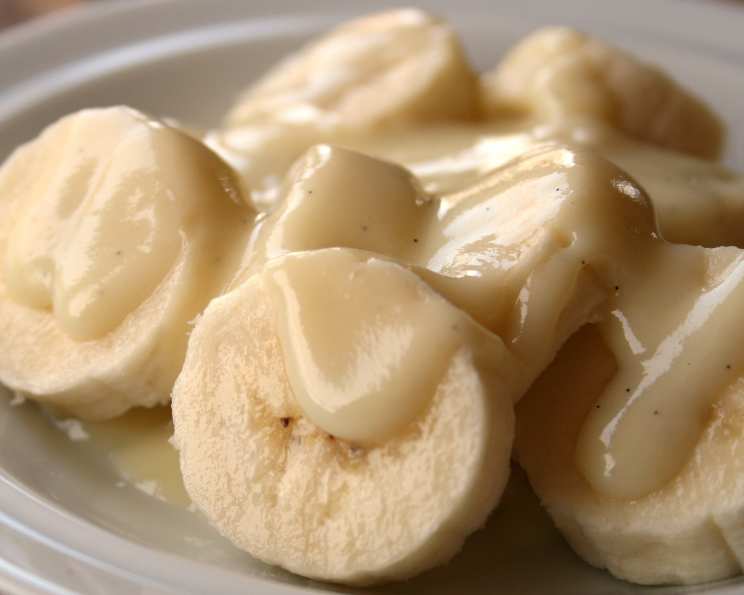
The Lighter Side of Luxury: Mastering Low-Fat French Custard Sauce (Crème Anglaise)
There are few things in the culinary world that evoke the pure comfort and elegant simplicity of a classic French custard sauce. I remember my first encounter with a truly sublime crème anglaise, spooned over a warm, humble apple tart. It was a revelation – rich, creamy, and imbued with the delicate perfume of vanilla. For years, I believed that such luxurious texture and depth of flavor were inextricably linked to copious amounts of butter and cream. It was a revelation, then, when I learned to master a lighter version, proving that you don’t need to compromise on indulgence to create a healthier, yet equally divine, crème anglaise. This low-fat adaptation has become a staple in my repertoire, a testament to the fact that classic techniques can be thoughtfully refined.
Recipe Overview
- Prep Time: 10 minutes
- Cook Time: 15 minutes
- Total Time: 25 minutes
- Servings: 6
- Yield: 2 cups
- Dietary Type: Low-Fat
Ingredients
- 2 tablespoons all-purpose flour
- 1 3⁄4 cups low-fat milk (1%)
- 1 vanilla bean, split lengthwise
- 2 large eggs
- 1⁄4 cup sugar, plus
- 1 tablespoon sugar
Equipment Needed
- Medium nonstick saucepan
- Whisk
- Small bowl
- Fine-mesh sieve
- Clean bowl for straining
- Airtight container for storage
Instructions
The creation of a perfect crème anglaise, even a lighter version, is a dance of gentle heat and constant attention. It’s a process that rewards patience and a watchful eye, transforming simple ingredients into a silken elixir.
- In a medium nonstick saucepan, begin by whisking together the 2 tablespoons of all-purpose flour and 1⁄2 cup of the low-fat milk. Ensure you whisk until completely smooth, with no lumps of flour remaining. This forms the base of our sauce.
- Next, whisk in the remaining 1 1⁄2 cups of low-fat milk. Continue whisking until all the milk is incorporated and the mixture is homogenous.
- Now, for that signature vanilla essence. Scrape the seeds from the split vanilla bean directly into the saucepan. You can also add the vanilla bean pod itself to the mixture, allowing its aromatic oils to infuse into the milk as it heats.
- Place the saucepan over medium heat. Bring the mixture to a boil, stirring constantly to prevent any scorching on the bottom of the pan. Once it reaches a boil, reduce the heat to low.
- Allow the mixture to cook for 1 minute, continuing to stir constantly. You will notice the sauce beginning to thicken slightly.
- While the milk mixture is gently simmering, prepare your egg base. In a small bowl, whisk together the 2 large eggs and the 1⁄4 cup of sugar. Whisk vigorously until the mixture is pale yellow and slightly thickened.
- This is a crucial step known as tempering the eggs. To prevent them from scrambling, slowly drizzle a small amount of the hot milk mixture into the egg and sugar mixture, while beating the eggs constantly. Continue adding the hot milk in a slow, steady stream, beating continuously, until about half of the hot milk mixture has been added to the eggs. This gradually raises the temperature of the eggs without cooking them.
- Now, pour the tempered egg mixture back into the saucepan with the remaining milk mixture.
- Continue to cook over low heat, stirring constantly with a whisk. This gentle cooking process is key to achieving a smooth, luscious sauce. Cook for approximately 5 minutes, or until the sauce has thickened enough to coat the back of a spoon. Be patient here; the thickening will happen gradually. You should be able to draw a line on the back of a spoon with your finger, and the line should hold its shape.
- Once thickened, strain the sauce through a fine-mesh sieve into a clean bowl. This will catch any small bits of cooked egg or vanilla bean pod, ensuring a perfectly smooth texture. Discard the vanilla bean pod.
- The sauce can be used warm, or it can be chilled. For chilling, cover the surface of the sauce directly with plastic wrap to prevent a skin from forming.
- Store any leftover sauce in an airtight container in the refrigerator for up to 2 days.
Expert Tips & Tricks
Achieving that perfect, velvety texture in crème anglaise is all about controlling the heat and the tempering process. For an even richer vanilla flavor, consider infusing the milk with the vanilla bean and a strip of lemon zest overnight in the refrigerator before proceeding with the recipe. If you find your sauce has thickened a bit too much or has a few tiny bits of cooked egg, don’t despair! You can sometimes rescue it by whisking in a tablespoon or two of cold milk until smooth, or by straining it a second time. For a truly luxurious mouthfeel, even in this lighter version, ensure you are using a good quality vanilla bean – the flavor difference is remarkable.
Serving & Storage Suggestions
This low-fat crème anglaise is incredibly versatile. Serve it warm spooned generously over freshly baked fruit tarts, simple pound cakes, or poached pears. It’s also divine poured over fresh berries or a light sponge cake. When serving chilled, it becomes an elegant accompaniment to fruit salads or a delicate panna cotta. For storage, an airtight container in the refrigerator is best, and it will maintain its quality for up to two days. Reheat gently over low heat, stirring constantly, or warm through in the microwave in short bursts, stirring in between, until the desired temperature is reached.
Nutritional Information
| Nutrient | Amount per Serving | % Daily Value |
|---|---|---|
| Calories | 170 kcal | 8% |
| Total Fat | 4.5 g | 6% |
| Saturated Fat | 2 g | 10% |
| Cholesterol | 65 mg | 22% |
| Sodium | 55 mg | 2% |
| Total Carbohydrate | 25 g | 9% |
| Dietary Fiber | 0.1 g | 0% |
| Sugars | 23 g | 46% |
| Protein | 7 g | 14% |
Note: Nutritional values are approximate and can vary based on specific ingredients and brands used.
Variations & Substitutions
While this recipe celebrates the purity of vanilla, you can easily adapt it to your taste. For a subtle citrus note, add a strip of lemon or orange zest to the milk during the infusion stage. A whisper of cinnamon or a pinch of ground cardamom can also add delightful warmth. If you prefer a dairy-free option, you could experiment with unsweetened almond milk or oat milk, though the texture and richness may vary. Always ensure you are using a plant-based milk that is suitable for cooking and has a neutral flavor.
FAQs
Q: Why is my crème anglaise not thickening?
A: This can happen if the heat was too low, or if it wasn’t cooked long enough. Ensure you are cooking over low heat after tempering the eggs and stirring constantly for at least 5 minutes until it coats the back of a spoon.
Q: My crème anglaise has lumps. How can I fix it?
A: Lumps typically indicate that the eggs may have scrambled slightly. Straining the sauce through a fine-mesh sieve is crucial. If there are still lumps, you can try to vigorously whisk the sauce until they break down, or re-strain it.
Q: Can I make this sauce ahead of time?
A: Yes, absolutely! Crème anglaise can be made a day in advance and stored in the refrigerator in an airtight container. Ensure you cover the surface directly with plastic wrap to prevent a skin from forming.
Q: How can I make the vanilla flavor more intense?
A: Using a high-quality vanilla bean is paramount. You can also consider infusing the milk with the vanilla bean for several hours, or even overnight, before starting the cooking process.
Q: Is it important to use low-fat milk for this recipe?
A: For this specific low-fat adaptation, using 1% milk is key to achieving the desired outcome. While you could experiment with other milk types, it might alter the final texture and fat content.
Final Thoughts
Embracing a lighter approach to classic dishes doesn’t mean sacrificing elegance or flavor. This low-fat crème anglaise is a testament to that philosophy, offering a taste of French sophistication that feels both indulgent and mindful. It’s a versatile sauce that brings a touch of magic to everyday desserts. I encourage you to try it, experiment with its applications, and share your creations. Perhaps a drizzle over some fresh berries at your next brunch, or a comforting pour alongside a slice of warm apple pie on a cool evening. The possibilities are as delightful as the sauce itself.