
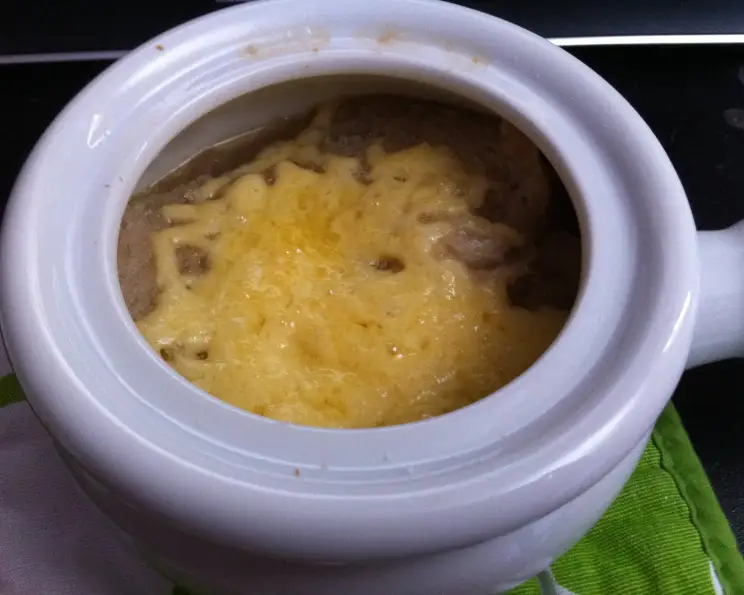
The Soul-Warming Embrace of French Onion Soup
There are some dishes that, for me, are more than just food; they are memories steeped in a rich broth of experience. French Onion Soup is one of them. I recall vividly, on a chilly autumn evening in Paris, being ushered into a tiny, dimly lit bistro tucked away on a side street in Le Marais. The air was thick with the aroma of caramelizing onions and something deeply savory, a scent that promised comfort and warmth. When the earthenware bowl arrived, crowned with its molten blanket of cheese and a perfectly toasted slice of bread, it felt less like a meal and more like a hug from the inside out. That bowl of soup, with its profound depth of flavor, became my benchmark, a culinary touchstone I’ve strived to recreate ever since.
Recipe Overview
- Prep Time: 20 minutes
- Cook Time: 1 hour 10 minutes
- Total Time: 1 hour 30 minutes
- Servings: 4
- Yield: 4 servings
- Dietary Type: Contains Dairy, Not Vegan
Ingredients
This soup is built on simplicity, yet the magic lies in the patience and quality of each component.
- 1 ½ lbs onions, very thinly sliced
- 3 shallots, finely diced
- 2 tablespoons butter
- 1 tablespoon cognac
- ½ cup red wine
- 3 cups beef stock
- Salt and black pepper, to taste
- 4 ½ slices Vienna bread, roasted in the oven until dry (or other crusty bread)
- 1 cup Gruyère cheese, grated, for garnish
Equipment Needed
A few essential tools will make this process smooth:
- A large, heavy-bottomed soup pot or Dutch oven
- A sharp knife for slicing onions
- A baking sheet
- Oven-proof soup bowls
Instructions
The journey to a truly exceptional French Onion Soup is one of patient caramelization and gentle simmering. Don’t rush this process, as each step contributes to the soup’s remarkable depth.
- Begin by melting the butter in your soup pot over medium-low heat. Add the very thinly sliced onions to the pot. The key here is to cook the onions slowly and patiently, allowing them to soften and caramelize without burning. Stir occasionally to prevent sticking. This process should take at least 20 minutes. You want the onions to become incredibly soft and take on a rich, golden-brown hue.
- Once the onions have reached this state of tender sweetness, carefully add the cognac and the red wine to the pot. Increase the heat slightly and cook for one minute, stirring constantly to scrape up any browned bits from the bottom of the pot. This deglazing step is crucial for adding another layer of flavor.
- Pour in the beef stock. Bring the soup to a gentle simmer, then cover the pot and let it simmer for 45 minutes. This extended simmering time allows the flavors to meld and deepen beautifully.
- After 45 minutes, check the seasonings. Taste the soup and add salt and black pepper as needed. Remember that the cheese will also add some saltiness, so season judiciously.
- While the soup is simmering, prepare your bread. Roast the slices of Vienna bread (or your chosen crusty bread) in the oven until they are dry and lightly golden. This will prevent them from becoming soggy in the soup. If you desire a more intense garlic flavor, you can rub the roasted bread slices with a clove of garlic before adding them to the soup bowls.
- Ladle the hot soup into oven-proof soup bowls. It’s helpful to set these bowls on a baking sheet for easier handling in and out of the oven.
- Top each bowl with a croûte (the roasted Vienna bread slice).
- Sprinkle the top generously with grated Gruyère cheese.
- Finally, broil the soup in the oven until the cheese is lightly brown and bubbly, which should take approximately 2 minutes. Keep a close eye on it, as broilers can vary in intensity.
Expert Tips & Tricks
- Onion Slicing: For the most even caramelization, aim for uniformly thin slices. A mandoline can be your best friend here, but a sharp knife and a steady hand will also suffice.
- Butter and Oil: While this recipe calls for butter, some chefs opt for a combination of butter and olive oil. The butter provides richness, while the oil has a higher smoke point, which can be helpful during the initial sautéing.
- Beef Stock Quality: The quality of your beef stock will significantly impact the final flavor of the soup. If possible, use homemade beef stock for the most authentic and robust taste.
- Broiling Nuances: Every oven and broiler is different. Watch your soup closely during the broiling stage. You’re looking for that perfect golden-brown, slightly blistered cheese topping, not burnt cheese. If your broiler is very aggressive, you might lower the oven rack slightly.
- Bread Choice: While Vienna bread is traditional, any good quality, sturdy, crusty bread will work. Sourdough, baguette, or even a country loaf can offer delightful variations. Ensure it’s well-toasted to hold its form.
Serving & Storage Suggestions
French Onion Soup is best served piping hot, directly from the broiler. The molten cheese and intensely flavored broth create a truly comforting experience. Serve it as an appetizer or a light main course.
Leftovers can be stored in an airtight container in the refrigerator for up to 2 days. However, the magic of the toasted croûte and bubbly cheese topping is best enjoyed fresh. If you must reheat, ladle the soup into oven-proof bowls, top with fresh bread and cheese, and reheat under the broiler as directed in the instructions. Avoid reheating the soup with the bread already submerged, as it will become too soft.
Nutritional Information
This classic is rich and satisfying, a testament to the simple power of onions and beef stock.
| Nutrient | Amount per Serving | % Daily Value |
|---|---|---|
| Calories | 604 kcal | |
| Calories from Fat | 154 kcal | |
| Total Fat | 17.1 g | 26% |
| Saturated Fat | 9.6 g | 47% |
| Cholesterol | 45 mg | 14% |
| Sodium | 1397.9 mg | 58% |
| Total Carbohydrate | 82.9 g | 27% |
| Dietary Fiber | 5.6 g | 22% |
| Sugars | 10.4 g | 41% |
| Protein | 25.6 g | 51% |
Note: Nutritional values are estimates and can vary based on specific ingredients and portion sizes.
Variations & Substitutions
- Vegetarian Version: For a vegetarian twist, substitute the beef stock with a rich, homemade vegetable stock or a good quality mushroom broth. The depth of flavor will be different but still delicious.
- Different Cheeses: While Gruyère is classic, feel free to experiment with other melting cheeses like Emmental, Comté, or even a sharp white cheddar for a different flavor profile. A combination of cheeses can also be wonderful.
- Herbs: A sprig of thyme or a bay leaf added during the simmering process can infuse an extra layer of herbaceous complexity. Remember to remove them before serving.
- Wine Swap: If red wine isn’t your preference, a dry sherry or even white wine can be used, though red wine contributes a lovely color and depth.
FAQs
Q: Why are my onions not caramelizing properly?
A: Patience is key! Ensure you are cooking them over medium-low heat and stirring occasionally. If they brown too quickly, the sugar hasn’t had time to develop, and you’ll end up with burnt onions rather than sweet, caramelized ones.
Q: Can I use pre-sliced onions from the store?
A: While it’s possible, pre-sliced onions are often not as fresh and may have already lost some of their moisture and flavor. For the best results, it’s recommended to slice your onions fresh.
Q: My soup seems a bit thin. How can I thicken it?
A: If your soup is thinner than you’d like, you can simmer it uncovered for an additional 10-15 minutes to allow some of the liquid to evaporate. Alternatively, you can create a slurry with a tablespoon of cornstarch and a few tablespoons of cold water, then whisk it into the simmering soup until thickened.
Q: Is it possible to make French Onion Soup ahead of time?
A: Yes, the soup base can be made a day or two in advance and stored in the refrigerator. Reheat it thoroughly on the stovetop, then ladle into bowls and top with bread and cheese before broiling. It’s best to add the bread just before serving to prevent it from becoming soggy.
Q: What kind of bread is best for the croûte?
A: A sturdy, crusty bread that can stand up to the broth is ideal. Vienna bread is traditional, but baguettes, country loaves, or even sourdough slices work wonderfully. The key is to toast them until they are completely dry and slightly crisp.
Final Thoughts
There’s a profound satisfaction that comes from mastering a classic, and French Onion Soup is a testament to the beauty of simple ingredients transformed by time and technique. It’s a dish that speaks of tradition, comfort, and the sheer joy of sharing a warm, soul-satisfying meal. I encourage you to embrace the process, savor the aromas that will fill your kitchen, and delight in the rich, layered flavors of this beloved French classic. Gather your loved ones, serve it with a sense of occasion, perhaps alongside a simple green salad, and raise a spoon to the enduring magic of French Onion Soup.